
Soups & Stews
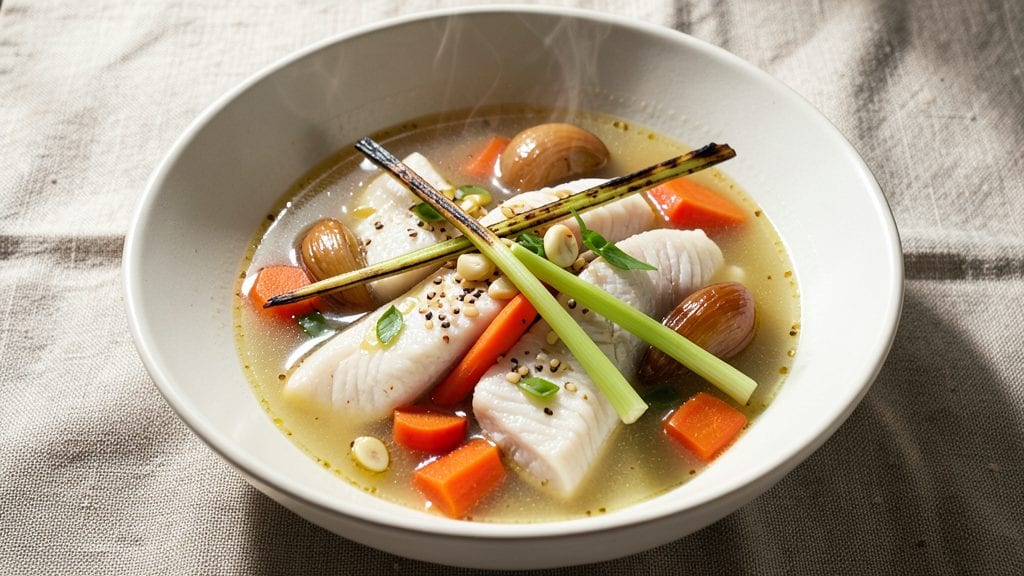
A boiled fish soup recipe brings light, comforting flavors to your table with minimal effort—just one pot and 30 minutes to transform simple ingredients into a nourishing meal.
The secret lies in selecting firm white fish like cod or snapper, simmered gently in aromatic broth until tender yet flaky, while herbs and vegetables infuse every spoonful with brightness.
This isn’t just soup; it’s a restorative dish that feels like a hug in a bowl, perfect for chilly evenings or when you crave something wholesome without heavy prep.
What sets this recipe apart is its adaptability—whether you lean into Thai-inspired lemongrass and galangal, Japanese-style kombu and daikon, or West African palm oil and peppers, the base technique remains the same.
The broth builds flavor through slow simmering, while the fish cooks just until it flakes effortlessly, ensuring each bite is tender and infused with the surrounding aromatics. No need for fancy equipment: a sturdy pot, basic ingredients, and a little patience deliver restaurant-quality results at home.
By the time you finish, you’ll have a steaming bowl of one-pot comfort—clear, fragrant broth with delicate fish pieces floating amid vibrant vegetables and herbs. The texture is perfect: silky fish, crisp-tender greens, and just enough body to satisfy without weighing you down.
This is the kind of dish that pairs beautifully with crusty bread or a side salad, making it versatile for weeknight dinners or light lunches.
Ready to make it? We’ll cover fish selection, broth-building secrets, and how to balance flavors so every spoonful feels like a well-crafted meal. Let’s get started.
Ingredients for boiled fish soup
Simple ingredients, aromatic flavors—this one-pot fish soup delivers restaurant-quality comfort with minimal effort.
| Ingredient | Amount | Notes |
|---|---|---|
| White Fish Fillets 🐟 | 1 ½ lb | Cod, snapper, or halibut preferred |
| Fresh Lemongrass 🌿 | 1 whole | Bruised stalks for aroma |
| Garlic Cloves 🧄 | 4 cloves | Smashed for deeper flavor |
| Carrots 🥕 | 2 medium | Julienned into matchsticks |
| Celery Stalk 🧅 | 2 whole | Cut into 1-inch pieces |
| Onion 🧅 | 1 medium | Diced, yellow or white |
| Low-Sodium Chicken Broth 💧 | 4 cups | Homemade or high-quality |
| Fresh Cilantro 🌿 | ¼ cup | Chopped, stems removed |
| Lime Juice 🍋 | 2 tbsp | Freshly squeezed |
| Fish Sauce 🍶 | 1 tbsp | Red Boat preferred |
| Vegetable Oil 🫒 | 2 tbsp | For initial sauté |
| Sea Salt 🧂 | 1 ½ tsp | Diamond Crystal preferred |
| Black Pepper 🌶️ | ½ tsp | Freshly ground |
| Thai Chili Peppers 🌶️ | 2 whole | Sliced thin, optional heat |
| Green Onions 🧅 | 2 whole | Sliced, for garnish |
The fish is the star, so pick firm, white fillets—cod or snapper hold up best to gentle simmering. I always check for bright, translucent flesh at the seafood counter, and Whole Foods or local fish markets have the freshest cuts. The broth matters too: homemade is ideal, but Pacific Foods or Imagine brands are solid shortcuts. Don’t skip the lemongrass—it’s the secret behind that fragrant aroma. Grab a bunch at the Asian market if you can, or use the frozen stalks from Trader Joe’s in a pinch.
No lemongrass? Double the garlic and add a splash of lime zest—it’s not the same, but close. Fresh Thai chili peppers giving you pause? Substitute red pepper flakes at half the amount. The fish sauce can be swapped for soy sauce plus a pinch of sugar, but trust me, the umami punch is worth it. Carrots and celery can be swapped for daikon radish or bok choy if you’re going for an Asian-inspired twist. Just make sure your veggies are cut evenly so they cook through at the same rate as the fish.
This soup tastes even better the next day—let the flavors meld overnight. Store in an airtight container in the fridge for up to 4 days, or freeze portions for 3 months. I always make a double batch because it reheats beautifully and makes for perfect lunches. The broth reduces slightly when chilled, so add a splash of water if it seems too thick when reheating. Garnish with fresh cilantro and lime just before serving—that bright pop of acidity is what ties it all together.
Why You'll Love This Recipe
- One-Pot Magic: I swear by this recipe when I’m too tired to deal with multiple pans. Toss everything—fish, lemongrass, garlic, veggies—into a single pot, add water, and let it simmer. No chopping like a pro, no fancy techniques. Just done.
- Lemongrass Kiss: That first whiff of lemongrass and garlic hitting the broth? Instant mood booster. The fish stays tender while the carrots and celery soak up all that bright, zesty flavor—like a lighter, fresher take on fish stew. (Honestly, I’ll take this over heavy cream any day.)
- Weeknight to Weekend: This soup works for everything. Too busy? Throw it together for lunch. Hosting friends? Double the batch and call it a crowd-pleaser. Even my picky teen asks for seconds—rare, but true.
- Budget-Friendly Leftovers: Fish fillets stretch further than you’d think, especially with carrots and celery bulking it out. Make a big pot on Sunday, and you’ve got three easy lunches. Freezes like a dream too, so no wasted ingredients here. (Between us, this is how I feed a family of four for half the cost of takeout.)
Step-by-step instructions for boiled fish soup
Here's how to create a fragrant, comforting one-pot dish that balances delicate fish with bold Southeast Asian flavors.
Prepare the Aromatic Base
Heat the 2 tablespoons vegetable oil in a large pot over medium heat. Add the 1 medium onion and 2 whole celery stalk cut into 1-inch pieces, cooking for 5 minutes until the onion becomes translucent and the celery softens slightly. Here's the thing—don't rush this step. The vegetables need time to release their natural sweetness and form the foundation of your soup's flavor profile.
Add the 2 medium carrots julienned into matchsticks and continue cooking for another 3 minutes until they begin to soften. The carrots should hold their shape but lose their raw bite. This is where the soup starts building its depth—each ingredient contributes something unique to the final flavor. Now's the time to add the 4 cloves garlic cloves smashed with the side of your knife, and the 1 whole fresh lemongrass bruised by pounding it gently with a rolling pin or the bottom of a glass. Cook these together for 1 minute until fragrant—you'll know it's working when the kitchen fills with that unmistakable citrusy, garlicky aroma.
Build the Flavor Foundation
Pour in the 4 cups low-sodium chicken broth and bring to a gentle simmer. This is where the magic begins—the broth should be just below a rolling boil, creating gentle bubbles that ripple across the surface. Add the 1.5 teaspoons sea salt, 0.5 teaspoon black pepper, and 1 tablespoon fish sauce, stirring until fully dissolved. The fish sauce might seem like a small amount, but it carries a concentrated umami punch that elevates the entire dish.
Here's the moment that matters: add the 2 whole Thai chili peppers sliced thin. If you're sensitive to heat, you can remove the seeds first, but I like to keep them for a subtle kick. Let the soup simmer for 10 minutes to allow all the flavors to meld together. You'll notice the broth takes on a deeper golden hue and develops a complex aroma that combines the sweetness of the vegetables with the savory notes of the fish sauce and lemongrass.
Cook the Fish to Perfection
While the broth simmers, prepare the 1.5 lb white fish fillets. Pat them dry with paper towels—this step is crucial for achieving crispy edges. Season both sides generously with additional sea salt and black pepper if needed, though the broth already contains seasoning. Gently place the fish fillets into the simmering broth, being careful not to break them apart. The fish should float just below the surface of the liquid.
Simmer for 8-10 minutes until the fish is just cooked through. You'll know it's ready when the edges begin to flake easily with a fork and the center remains slightly translucent. Overcooking is the enemy here—fish continues to cook slightly after removal, so err on the side of underdone. The broth should now be infused with the delicate flavor of the fish, creating a light yet satisfying base for your soup.
Finish and Serve
Remove the fish from the broth and set it aside on a plate. Strain the broth through a fine-mesh sieve to remove any vegetable pieces, but don't discard them completely—you can use them to make a quick vegetable salad if you like. Return the strained broth to the pot and bring it to a gentle simmer again. Here's where it gets fun—stir in the 2 tablespoons lime juice and taste. The acidity brightens all the flavors, cutting through the richness of the fish and fish sauce.
Add the 0.25 cup fresh cilantro chopped and stir gently to incorporate. The cilantro adds a fresh, herbaceous note that balances the dish perfectly. Return the fish to the pot and let it warm through for 1-2 minutes. Ladle the soup into bowls, garnishing each serving with 2 whole green onions sliced. The green onions add a fresh contrast to the warm, comforting broth. Serve immediately while the fish is still warm and the flavors are at their peak.
Pro Tips For Making Boiled Fish Soup
- STEAM THE FISH FIRST: I learned this the hard way—dropping raw fish into boiling water turns it rubbery. Instead, parboil the fillets for 2-3 minutes in salted water before adding them to the soup. This keeps them tender while the broth builds flavor.
- SLICE LEMONGRASS LENGTHWISE: Whole stalks release flavor slowly. Smash 2-3 stalks with the flat side of your knife, then slice them diagonally into 1-inch pieces. They’ll infuse the broth faster and disappear without bitterness.
- DON’T OVERCOOK THE VEGETABLES: Carrots and celery should be fork-tender, not mushy. Add them to the broth 5 minutes before the fish, then pull them out early if they soften too soon. You can always reheat the soup later.
- USE COLD WATER FOR THE BROTH: Sounds weird, but it works—start with cold water and bring it to a boil. This prevents the fish from curling up or breaking apart. Once boiling, add your aromatics and proceed as usual.
Wine and beer pairings for this dish
Thai-Inspired White Wine
For a Thai-inspired twist, I reach for a crisp Sauvignon Blanc from New Zealand—its bright citrus and herbal notes mirror the lemongrass and lime in your soup.
Look for a bottle like Cloudy Bay or Oyster Bay, which balance acidity with tropical fruit undertones that complement the fish sauce and chili. Serve slightly chilled (45-50°F) to enhance the soup’s refreshing qualities. 🍷
Japanese Sake Pairing
If you’re leaning into a Japanese-inspired version (think kombu broth or daikon radish), a dry junmai sake like Dassai or Gekkeikan elevates the dish beautifully. The sake’s clean, slightly nutty profile harmonizes with the umami-rich fish and delicate broth.
Serve it warm (70-80°F) to deepen its aromatic qualities and create a seamless pairing. 🍶
Light Beer Options
A crisp lager like Asahi Super Dry or Heineken works wonders with this soup’s lightness. The beer’s subtle malt sweetness and effervescence cut through the fish sauce’s saltiness, while its clean finish lets the soup’s flavors shine.
For a craft option, try a Belgian witbier like Hoegaarden—its coriander and citrus notes echo the lemongrass and lime. 🍺
Palm Oil-Inspired Red
For a West African-inspired version with palm oil and peppers, a light-bodied red wine like Pinot Noir from Oregon or Beaujolais adds enough fruitiness to stand up to the bold flavors.
Avoid heavy tannins—opt for a Meiomi or La Crema to keep the pairing smooth and balanced. Serve at 60-65°F to let the wine’s red fruit notes complement the spice. 🍇
Non-Alcoholic Refreshers
Skip the alcohol? A sparkling yuzu soda or ginger beer (like Fever-Tree) adds a zesty contrast to the soup’s richness. For something herbal, try hibiscus iced tea—its tartness mirrors the lime juice and balances the fish sauce’s umami. Serve over ice for a refreshing finish. 💧
Nutrition facts
Frequently asked questions
What's the best fish to use for this light broth?
Stick with firm, white fish like cod, snapper, or halibut—they hold their shape beautifully in gentle simmering. Avoid delicate varieties like tilapia or flounder, which can turn mushy. Look for fillets with bright, translucent flesh and minimal fishy odor at the seafood counter.
Can I make this soup vegetarian?
Swap the fish for tofu or mushrooms like shiitake. Use vegetable broth instead of chicken broth, and add seaweed or kombu for umami depth. The same aromatic base of garlic, lemongrass, and chili will work perfectly.
Why does my broth taste bland after simmering?
Bland broth usually means insufficient seasoning or rushed cooking. Always simmer gently for 10-15 minutes to let flavors meld, and taste before adding fish—adjust with fish sauce, salt, or a squeeze of lime. For extra depth, add a bay leaf or piece of kombu while simmering.
How do I prevent the fish from breaking apart?
Pat the fish very dry before adding to the broth, and cook it at a gentle simmer (not a rolling boil) for 8-10 minutes max. Place fillets skin-side down first—the skin acts as a protective barrier. Remove fish immediately when it reaches 145°F internally.
Can I make this ahead of time?
Yes! Assemble everything except the fish, then refrigerate the broth mixture for up to 24 hours. When ready to cook, bring to a simmer and add fish for the final 8-10 minutes. For freezing, store components separately—broth (up to 3 months) and cooked fish (up to 2 months)—then reheat gently.