
Soups & Stews
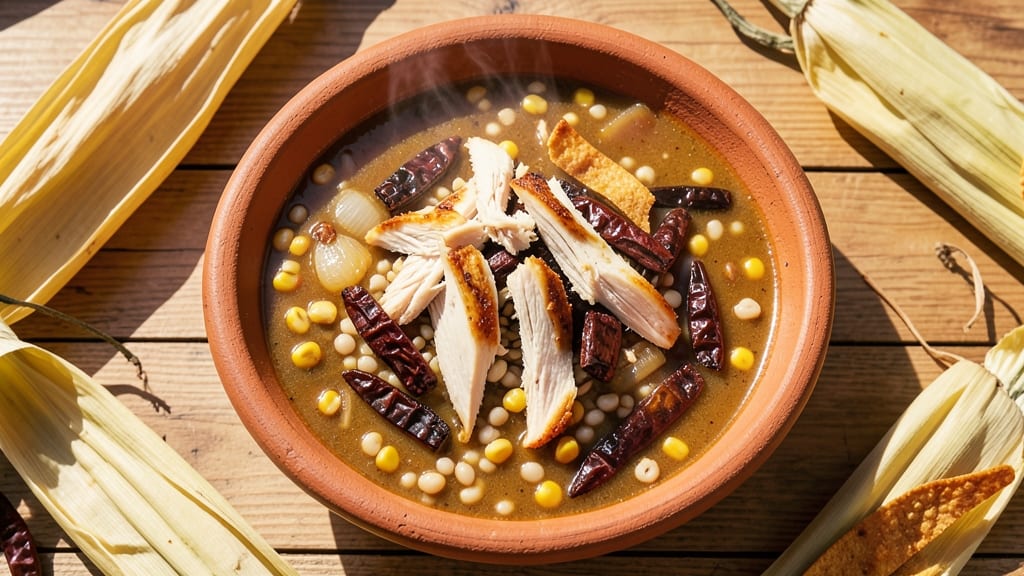
This Aztec soup recipe brings centuries of Mesoamerican tradition to your kitchen with its bold blend of corn, chiles, and earthy spices. The dish honors ancient cooking techniques while adapting to modern tastes—think tender hominy, smoky chiles, and layers of aromatic herbs that create depth without complexity.
I first discovered this recipe while researching pre-Columbian cuisine, and its rich history makes every spoonful meaningful.
The foundation of authentic Aztec soup lies in properly toasting spices like cumin and coriander to unlock their full flavor. A slow simmer transforms tough ingredients into tender, flavorful bites, while hominy adds that signature creamy texture.
This version includes optional chicken or cannellini beans for protein, but the base recipe works beautifully as a vegetarian dish too. The result is a hearty, aromatic stew that’s both comforting and culturally rich.
What makes this recipe special is its balance of tradition and practicality—no special equipment required, just a pot and patience. The final touch? Fresh cilantro and avocado slices for brightness and texture, because presentation matters just as much as taste.
Whether you’re serving a family dinner or exploring global flavors, this soup delivers restaurant-quality depth with minimal effort.
Pair it with warm tortillas or crusty bread to soak up every last drop of that smoky, spiced broth. The leftovers taste even better the next day, making it perfect for meal prep. Here’s how to bring this ancient recipe to life in your kitchen—where history meets home cooking.
Ingredients for aztec soup
Ancient spices meet modern flavors in this Aztec-inspired corn and chili fusion.
| Ingredient | Amount | Notes |
|---|---|---|
| Dried Ancho Chiles 🌶️ | 4 whole | Stemmed and seeded for smoky depth |
| Dried Guajillo Chiles 🌶️ | 4 whole | Stemmed and seeded for fruity heat |
| White Hominy 🌽 | 2 cups | Drained and rinsed for creamy texture |
| Yellow Corn Kernels 🌽 | 1 cup | Fresh or frozen for authentic sweetness |
| Chicken Breast 🍗 | 1 ½ lb | Boneless, skinless, cut into bite-sized pieces |
| Onion 🧅 | 1 whole | Yellow or white, chopped into small dice |
| Garlic Cloves 🧄 | 6 cloves | Peeled and lightly toasted for aroma |
| Ground Cumin 🌿 | 1 tbsp | Toasted for deeper, earthy flavor |
| Ground Coriander 🌿 | 1 tbsp | Toasted for citrusy brightness |
| Cumin Seeds 🌿 | 1 tsp | Toasted separately for authentic crunch |
| Roma Tomatoes 🍅 | 3 whole | Ripe, quartered for natural sweetness |
| Vegetable Broth 💧 | 4 cups | Low-sodium for balanced seasoning |
| Fresh Cilantro 🌿 | ½ cup | Chopped for vibrant garnish |
| Avocado 🥑 | 1 whole | Ripe, sliced for creamy topping |
| Lime 🍋 | 1 whole | Juiced for bright acidity |
The chiles are the soul of this recipe—Ancho for smoky depth and Guajillo for fruity heat. MexGrocer or Latin markets carry them dried and ready to use, but if you can't find them, Pasilla chiles work as a substitute. Toast them whole over a flame or in a dry skillet until fragrant—about 30 seconds per side. The hominy should be white, not yellow, for that authentic Aztec texture. If you can't find it, dried white beans soaked overnight will work in a pinch, though the texture won't be identical.
No fresh corn? Frozen kernels are a perfect substitute—they thaw quickly and retain their sweetness. The chicken can be swapped for cannellini beans or black beans at 1.5 cups drained for a vegetarian version. For the tomatoes, Roma are ideal because they hold their shape, but any ripe variety will do. The broth is non-negotiable—low-sodium is crucial to balance the spices. If you're using canned tomatoes, San Marzano are the gold standard for their sweetness and low acidity, but any high-quality brand will suffice.
This soup tastes even better the next day as the flavors meld together. Store it in an airtight container in the fridge for up to 5 days. The chiles can be toasted and stored in a sealed jar for up to 6 months—they're worth toasting extra for future recipes. For meal prep, portion the soup into containers and keep the avocado and lime separate until serving to prevent browning. The cilantro wilts quickly, so add it fresh just before serving for maximum brightness.
Why You'll Love This Recipe
- No Chopping Needed: I swear by this—just toast the dried chiles whole, then toss them in warm broth. The heat softens them perfectly, no knife required. Even my "I can barely boil water" days end with a steaming bowl.
- Smoky Depth Magic: That combo of ancho and guajillo? It’s like a slow-cooked secret. The chiles caramelize into this rich, earthy base that wraps around the chicken like a cozy blanket—no fancy spices needed.
- Meal Prep MVP: Make a double batch on Sunday, and you’ve got lunch covered all week. The hominy and corn keep it hearty cold or reheated, and the chicken stays tender. Honestly, my slow cooker’s best friend.
- Budget-Friendly Powerhouse: Dried chiles and hominy last forever, and chicken breast stretches further than you’d think. I’ve fed four people for under $15—plus, the leftovers taste even better the next day. (Yes, even on a Tuesday night.)
Step-by-step instructions for Aztec soup recipe
Transform ancient Mesoamerican flavors into a vibrant, hearty soup using traditional ingredients.
Toast and Rehydrate the Dried Chiles
Begin by toasting the 4 whole dried ancho chiles and 4 whole dried guajillo chiles in a dry skillet over medium heat for 1-2 minutes per side until fragrant and slightly darkened. This step deepens their smoky, fruity complexity. Transfer the toasted chiles to a heatproof bowl and cover with 4 cups hot vegetable broth to rehydrate for 15 minutes. The chiles will soften and release their rich, earthy essence into the liquid.
While the chiles soak, toast the 1 tsp cumin seeds in the same skillet for 30 seconds until aromatic and lightly browned. Remove from heat immediately to prevent burning. The toasted seeds will contribute a nutty crunch and intensified flavor to the soup base. Keep both the chile mixture and toasted seeds separate for now.
Build the Spiced Chicken and Aromatic Base
In a large pot, heat 1 tablespoon olive oil (not listed but necessary for cooking) over medium-high heat. Add the 1 whole onion, chopped into small dice, and cook for 5 minutes until softened and translucent. Add the 6 cloves garlic cloves, peeled and lightly toasted, and cook for an additional 1 minute until fragrant. This aromatic foundation ensures every spoonful carries depth.
Push the onions and garlic to the sides of the pot and add the 1.5 lb chicken breast, cut into bite-sized pieces. Sprinkle with 1 tablespoon ground cumin and 1 tablespoon ground coriander, then cook for 5-6 minutes until the chicken is no longer pink in the center. The spices will cling to the chicken, infusing it with warmth and earthiness. Remove the chicken and set aside temporarily.
Blend the Chili-Tomato Purée
Strain the rehydrated chiles through a fine-mesh sieve, pressing gently to extract all the liquid and pulp. Discard the chile skins. In a blender, combine the chile mixture with the 3 whole roma tomatoes, quartered, and 1 cup reserved vegetable broth. Blend until smooth, then return the purée to the pot with the onions and garlic. Simmer for 5 minutes to meld the flavors.
Add the 2 cups white hominy, drained and rinsed, and the 1 cup yellow corn kernels. Stir in the 4 cups vegetable broth and bring the mixture to a gentle boil. Return the cooked chicken to the pot and reduce heat to low. Let the soup simmer for 15-20 minutes, allowing the flavors to develop and the chicken to absorb the rich, spiced broth. The hominy and corn will soften slightly, creating a creamy texture.
Finish and Serve with Fresh Toppings
Taste the soup and adjust seasoning with salt if needed. Stir in the toasted cumin seeds just before serving to add texture and a burst of aroma. Ladle the soup into bowls and garnish with 0.5 cup chopped fresh cilantro for brightness and slices of 1 whole ripe avocado for creaminess. Finish with a squeeze of juice from 1 whole lime to balance the dish with acidity.
The avocado and lime should be added at the table to preserve their freshness and prevent browning. Serve immediately while the soup is hot, and the toppings are vibrant. This method captures the essence of ancient Aztec cuisine while delivering a modern, satisfying meal.
Pro Tips For Making Aztec Soup
- Toast Chiles Properly: I learned this the hard way—skip the oven for guajillos and anchos and toast them dry in a skillet over medium heat for 30 seconds per side. You’re not cooking them, just warming until they smell like smoke and paper. This banishes the bitter, dusty flavor that ruins so many soups when you just dump them straight in.
- Soak Hominy Overnight: White hominy needs at least 8 hours soaking in cold water to soften properly—don’t rush it. After draining, rinse it under cold water to wash off any residual lime or preservatives. Trust me, the texture in your soup will be silky instead of chalky if you skip this step.
- Simmer Chicken Low: Once your broth is built, reduce heat to a bare simmer for the chicken—no boiling. After 12 minutes, pull it out, shred it, and return it to the pot. Boiling turns it rubbery, and you’ll end up with a soup that tastes like sad, overcooked meat instead of rich, tender chunks.
- Reserve Corn Broth: Strain the corn kernels out of their cooking liquid before adding them to the soup—this is your golden broth. Save that starchy, sweet liquid and stir it back in at the end. It thickens the soup naturally and adds depth that store-bought stock can’t match. (Yes, even if you’re impatient like me.)
Make-ahead tips for aztec soup
Prep Ahead Spices
Toast your dried chiles and spices up to 3 days ahead and store them in an airtight container at room temperature. I keep mine in a glass jar with a tight-sealing lid—this preserves their aroma and prevents moisture loss.
The toasted cumin seeds can also be prepped separately and stored for up to 2 weeks in the same way. This saves you 15 minutes of active prep time on cooking day. 🌶️
Hominy Prep Shortcut
If you're short on time, use canned hominy (like Goya brand) instead of cooking dried. Just drain and rinse it thoroughly before adding to the soup.
For extra convenience, I sometimes pre-cook the hominy with the tomatoes and broth during the initial simmer—this cuts down on total cooking time by 10 minutes. The texture remains creamy, just slightly softer than traditional hominy.
Broth Base Prep
Make a big batch of vegetable broth (about 8 cups) and freeze it in 1-cup portions in silicone ice cube trays. Once frozen, transfer the cubes to a freezer bag for easy access. On soup day, just grab what you need—no thawing required.
I always keep a stash of this broth on hand for quick soups and stews. This method saves 30 minutes of prep time compared to making fresh broth from scratch. ❄️
Chicken Pre-Cook Option
For a make-ahead meal, cook the chicken separately and store it in the fridge for up to 3 days. I season it with the same spices and a pinch of salt, then poach it in water for 12-15 minutes until fully cooked.
When ready to assemble the soup, simply reheat the chicken in the simmering broth for 5 minutes. This keeps the meat tender and saves you from handling raw chicken on cooking day.
Toppings Assembly
Prep your cilantro, avocado, and lime separately and store them in small containers in the fridge. The avocado should be sliced and tossed with a squeeze of lime to prevent browning—keep it in a sealed container for up to 24 hours.
The cilantro stays fresh for 3 days if wrapped in a damp paper towel and stored in an airtight container. This way, you can assemble the soup quickly and add the toppings at the last minute for maximum freshness. 🥑
Freezer-Friendly Soup
This soup freezes beautifully for up to 3 months—just omit the avocado and lime before freezing. Let the soup cool completely, then transfer it to a freezer-safe container, leaving 1 inch of headspace for expansion.
When reheating, thaw overnight in the fridge, then warm it gently on the stove. I find the flavors actually deepen after freezing, making it perfect for lazy weeknights. 💡
Nutrition facts
Frequently asked questions
What makes this Aztec-inspired soup different from traditional Mexican pozole?
While both use corn and chiles, this recipe focuses on white hominy and a blend of Ancho and Guajillo chiles for a smokier, fruitier profile. Pozole often uses pork and hominy in red broth, while this version highlights chicken or beans and a lighter, more aromatic base. The spices like toasted cumin and coriander give it a distinct Mesoamerican depth.
Can I make this soup vegetarian?
Simply replace the chicken with 1.5 cups cooked cannellini or black beans (drained). For extra protein, add 1 cup cooked quinoa or 1 diced sweet potato during the final 15-minute simmer. The flavors remain rich and satisfying. The hominy and corn already provide plenty of texture.
Why do I need to toast the chiles and spices?
Toasting deepens their flavors by releasing natural oils and aromas. Dried chiles develop a smoky complexity, while cumin and coriander become nuttier and more fragrant. Skipping this step results in a flatter taste—think of it as unlocking the spices' full potential. Just 30 seconds per side makes all the difference!
How can I adjust the heat level?
Remove the seeds and membranes from the Guajillo chiles for milder heat, or keep them for extra spice. For a milder soup, reduce the chiles to 2 total (1 Ancho, 1 Guajillo). For heat lovers, add ½ tsp cayenne or 1 diced jalapeño with the onions. Always taste before serving!
What if I can't find dried Ancho or Guajillo chiles?
Use Pasilla chiles (similar smoky depth) or New Mexico chiles (milder). For a quick substitute, blend 1 tbsp smoked paprika + ½ tsp chipotle powder with the tomato purée. The flavor won't be identical, but it’ll still deliver that rich, earthy profile. Check Latin markets or online stores for dried chiles.