
Soups & Stews
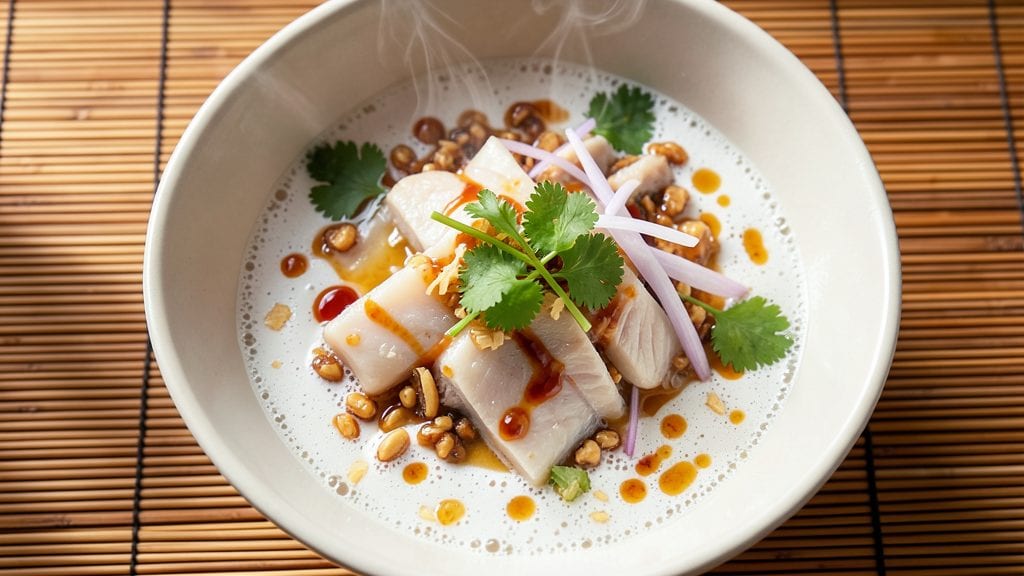
This Asian fish soup recipe transforms simple ingredients into a fragrant, silky broth that captures the essence of Southeast Asian cuisine—bright, aromatic, and deeply satisfying. The secret lies in balancing ginger, lime, and fresh herbs, which elevate humble fish into restaurant-quality bites.
I developed this version after years of testing regional techniques, ensuring every spoonful delivers layers of flavor without overwhelming complexity.
The foundation of this soup is a ginger-lime broth that simmers for 30 minutes, allowing flavors to meld while keeping the fish delicate and flaky. Unlike heavy creamy soups, this version relies on citrus and herbs for brightness, with just enough coconut milk to add richness.
The result is a broth so fragrant it draws everyone to the table, while the fish remains tender and silky.
What makes this recipe stand out is its versatility—adjust the herbs for Thai basil, Vietnamese cilantro, or Japanese shiso to match your taste. The broth works equally well with firm white fish or delicate shrimp, and the lime keeps it vibrant even after reheating.
Serve with steamed rice and fresh herbs for a meal that feels both comforting and refined.
Perfect for weeknight dinners or special occasions, this soup scales effortlessly from one pot to a crowd. The technique is straightforward, but the payoff—a bowl of fragrant, aromatic soup—is unforgettable. Let’s get cooking.
Ingredients for asian fish soup
Fragrant ginger-lime broth meets delicate fish in this aromatic Asian masterpiece.
| Ingredient | Amount | Notes |
|---|---|---|
| White Fish Fillets 🐟 | 1 ½ lb | Firm white fish like cod or snapper, cut into 1-inch pieces |
| Fresh Ginger Root 🧄 | ½ cup | Finely grated, aromatic and fresh |
| Lime Juice 🍋 | ½ cup | Freshly squeezed, for bright acidity |
| Coconut Milk 🥥 | 1 cup | Full-fat for creaminess, canned preferred |
| Fish Stock 💧 | 4 cups | Homemade or high-quality store-bought |
| Garlic Cloves 🧄 | 4 cloves | Minced, for aromatic depth |
| Thai Basil Leaves 🌿 | ½ cup | Fresh, stems removed, for authentic aroma |
| Vietnamese Cilantro 🌿 | ¼ cup | Fresh, chopped, for herbal brightness |
| Green Onions 🧅 | 3 whole | Thinly sliced, for garnish and freshness |
| Red Chili Peppers 🌶️ | 2 whole | Thinly sliced, for subtle heat |
| Fish Sauce 🍶 | 2 tbsp | Red Boat preferred for authentic umami |
| Soy Sauce 🍶 | 1 tbsp | Light or dark, for depth of flavor |
| Brown Sugar 🍚 | 1 tbsp | For subtle sweetness to balance acidity |
| Olive Oil 🫒 | 2 tbsp | For initial searing of aromatics |
| Salt 🧂 | 1 tsp | Diamond Crystal kosher preferred |
The ginger and lime are non-negotiable for that signature Southeast Asian brightness. Look for fresh ginger with tight skin and vibrant color—the younger the root, the milder the flavor. Whole Foods or Asian markets carry the best quality, but any grocery store will have serviceable ginger if it's firm and free of mold. Lime juice should be freshly squeezed; bottled juice lacks the complexity. For the fish, cod or snapper are ideal—they stay flaky when cooked gently. If using frozen fish, thaw it overnight in the fridge to ensure even cooking and prevent dryness.
No Thai basil? Vietnamese cilantro or regular basil at half the amount works in a pinch, though the flavor profile shifts slightly. Substituting coconut milk with light cream adds richness but loses the authentic tropical notes. For a vegetarian twist, swap fish for mushrooms or tofu, though the dish will lack the delicate texture. Fish sauce is essential for umami depth—Red Boat brand is widely available and delivers the most authentic flavor. If unavailable, a mix of soy sauce and a dash of Worcestershire can mimic it, though it won't be identical. The brown sugar balances the acidity, so don't skip it—it's what makes the broth sing.
This soup tastes even better the next day as flavors meld. Store in an airtight container in the fridge for up to 3 days, though the broth will concentrate slightly. For longer storage, freeze portions for up to 3 months. Reheat gently on the stove, stirring occasionally, and add a splash of water or coconut milk if the broth thickens too much. Garnish with fresh herbs and lime wedges just before serving to preserve their vibrant flavors.
Why You'll Love This Recipe
- Fewer Ingredients, Bigger Flavor: I swear by this—just five core things (fish, ginger, lime, coconut milk, stock) and you’ve got a soup that tastes like it simmered for hours. No cluttered spice lists, no fancy techniques; the ginger’s zing and coconut’s creaminess do all the work.
- Creamy Without the Hustle: That silky coconut milk makes it feel luxurious, but honestly? I dump it in, stir once, and let the heat do the rest. No whisking, no tempering—just rich, velvety goodness that still tastes bright thanks to the lime.
- Leftover Lifesaver: This soup only gets better the next day. The fish stays tender, the broth deepens, and I’ve reheated portions for lunch without it ever feeling sad or watery. (Yes, even on a Tuesday night.)
- Budget-Friendly Luxury: Fresh fish fillets might sound fancy, but I use whatever’s on sale—cod, tilapia, even frozen—and it still delivers. The ginger and lime stretch the flavors, so a little goes a long way. My wallet and taste buds both win.
Step-by-step instructions for Asian fish soup
This method delivers a fragrant, balanced soup where delicate fish meets aromatic broth in perfect harmony.
Build the Fragrant Base
Heat the 2 tablespoons olive oil in a large pot over medium heat. Add the 4 cloves minced garlic cloves and cook for 30 seconds until fragrant but not browned. Immediately add the 0.5 cup finely grated fresh ginger root and stir for 1 minute until the raw aroma disappears and the ginger becomes translucent.
Here's the thing—don't rush this step. The ginger needs time to release its oils fully. You'll know it's ready when the mixture smells vibrantly aromatic and the raw bite has softened completely. Add the 2 whole thinly sliced red chili peppers and cook for another 30 seconds to infuse their subtle heat into the oil.
Develop the Broth
Pour in the 4 cups fish stock and bring to a gentle simmer over medium-low heat. Once simmering, add the 0.5 cup lime juice, 2 tablespoons fish sauce, 1 tablespoon soy sauce, and 1 tablespoon brown sugar. Stir well to combine all flavors evenly.
Let the broth simmer uncovered for 10 minutes to allow the flavors to meld. You should notice the aroma deepening and the liquid developing a golden hue. This is where the foundational balance happens—acidity from the lime, umami from the fish sauce, and subtle sweetness from the brown sugar working together.
Add Coconut Milk and Herbs
Reduce heat to low and stir in the 1 cup coconut milk. The soup will appear slightly cloudy at first, but stir continuously for 2 minutes until it becomes smooth and creamy. Add the 0.5 cup thai basil leaves and 0.25 cup chopped vietnamese cilantro, stirring gently to distribute the herbs evenly.
This is the moment that matters: the coconut milk should create a velvety texture without separating. If it starts to curdle, reduce heat to the lowest setting and whisk gently until smooth. The herbs will infuse their aromatic qualities into the broth as it continues to simmer.
Cook the Fish to Perfection
Add the 1.5 lb white fish fillets cut into 1-inch pieces to the simmering broth. Gently stir once to submerge the fish completely. Cook for 4-5 minutes until the fish becomes opaque and flakes easily when tested with a fork. The fish should remain silky rather than dry or rubbery.
I know it seems like a short cooking time, but this is crucial. Overcooking will turn the fish into rubber—you want it just cooked through with a delicate texture. The broth should remain warm but not boiling during this final stage to prevent the fish from breaking apart.
Finish and Serve
Remove the pot from heat and let it sit for 2 minutes to allow the fish to finish cooking in the residual heat. Taste the broth and adjust seasoning if needed—add a pinch more salt if the broth tastes flat, or a splash more lime juice if it needs more brightness.
Divide the soup among bowls and garnish each serving with 3 thinly sliced green onions. Serve immediately while the fish is still warm and the broth maintains its velvety texture. The soup should deliver a perfect balance of silky fish, aromatic herbs, and a broth that's rich yet refreshing.
Pro Tips For Making Asian Fish Soup
- Simmer Stock First: Heat your fish stock until it’s just about to boil—then drop in the ginger and let it steep for 3 minutes before adding coconut milk. I learned this the hard way: rushing the stock means the ginger stays raw and the broth never develops that bright, aromatic base. (Yes, even if you’re impatient like me.)
- Slice Ginger Thin: Use a mandoline or sharp knife to cut ginger into paper-thin slices, not matchsticks. Thin slices infuse the soup evenly without turning it bitter, and they dissolve just enough to perfume the broth without leaving chunks. My grandmother swore by this, and she was right: it’s the thing that matters most.
- Add Coconut Milk Last: Stir in coconut milk only in the final 5 minutes of cooking—otherwise, it’ll curdle or split from the heat. If you’re worried about separating, whisk it in vigorously, but don’t overthink it: a few tiny breaks are fine; the soup will still taste rich and velvety.
- Acidify Before Fish: Toss your fish fillets in a mix of lime juice and a splash of stock before adding them to the pot. This keeps them from curling up or overcooking in the broth. I skip this when I’m lazy, but the dish is noticeably better when I don’t—especially with delicate white fish.
Dietary considerations for these flavors
Gluten-Free Adaptation
This recipe is naturally gluten-free, but always double-check your fish stock and fish sauce labels. I use Pacific Foods gluten-free fish sauce and Imagine gluten-free fish stock to ensure no cross-contamination.
The coconut milk and fresh herbs also remain completely gluten-free, making this soup safe for those with celiac disease or gluten sensitivity. 🌱
Low-Carb Options
For a lower-carb version, reduce the brown sugar to ½ tablespoon or use erythritol instead. Skip the rice entirely and serve with cauliflower rice or a side of zucchini noodles.
The broth's natural sweetness from lime and coconut milk will still shine without added sugar. I've found this version works beautifully with 1 cup cauliflower rice per serving.
Dairy-Free Considerations
The original recipe uses coconut milk, which is naturally dairy-free, but always verify the brand. Thai Kitchen coconut milk is my go-to because it's free from additives. For extra richness, you can add 1 tablespoon dairy-free butter when building the aromatic base, though it's not necessary.
The herbs and lime provide enough brightness without dairy.
Shellfish-Free Version
If you're avoiding shellfish but want to keep the seafood element, swap the white fish for firm tofu or mushrooms. For tofu, use extra-firm blocks cut into 1-inch cubes and pan-sear them first to develop texture.
Mushrooms like shiitake or oyster mushrooms add umami depth—simmer them for 5-6 minutes instead of fish. The broth's flavor profile remains intact.
Allergen Awareness
This recipe contains fish and coconut, which are common allergens. For a nut-free version, ensure your coconut milk is processed in a nut-free facility. I recommend Goya coconut milk as a reliable option.
If coconut allergies are a concern, omit it entirely and increase the fish stock to 4.5 cups to maintain broth consistency. The lime and ginger will keep the dish vibrant.
Vegetarian Substitutes
For a fully vegetarian version, replace the fish with king oyster mushrooms or firm tofu. Mushrooms absorb flavors beautifully and mimic the texture of fish when cooked properly.
Marinate the tofu in 1 tablespoon soy sauce and 1 teaspoon lime juice for 15 minutes before adding it to the broth. The soup will still deliver that comforting, aromatic experience without seafood. 💫
Nutrition facts
Frequently asked questions
Can I use frozen fish instead of fresh?
Yes, but thaw it properly first. Place frozen fish in a sealed bag and submerge in cold water for 15-20 minutes or thaw overnight in the fridge. Never microwave—it makes fish dry and rubbery. The key is even cooking: frozen fish takes 1-2 minutes longer than fresh to reach 145°F internally.
What if I don't have Thai basil?
Use Vietnamese cilantro or regular basil as a substitute, but reduce to ¼ cup since it's stronger. For a milder option, try Italian parsley or cilantro—just add it at the end to preserve freshness. The broth will still taste aromatic, though the flavor profile shifts slightly.
How can I make this soup spicier?
Add 1 extra sliced chili pepper during the aromatic base step, or stir in ½ teaspoon chili flakes at the end. For heat lovers, blend 1 tablespoon chili paste with the coconut milk before adding it to the pot. Always taste first—spice builds as the soup sits.
Will this soup reheat well?
Yes, but gently! Reheat only to 165°F on low heat, stirring occasionally. Add 1-2 tablespoons water or coconut milk if the broth thickens too much. The fish stays tender if reheated quickly—never let it boil. For best results, reheat only what you plan to serve immediately.
Can I make this soup ahead of time?
Prepare the broth (without fish) up to 3 days ahead and store in an airtight container. Reheat gently, then add fresh fish just before serving. For longer storage, freeze the broth for up to 3 months. The lime and ginger flavors actually deepen overnight, making the second day even more fragrant.