
Soups & Stews
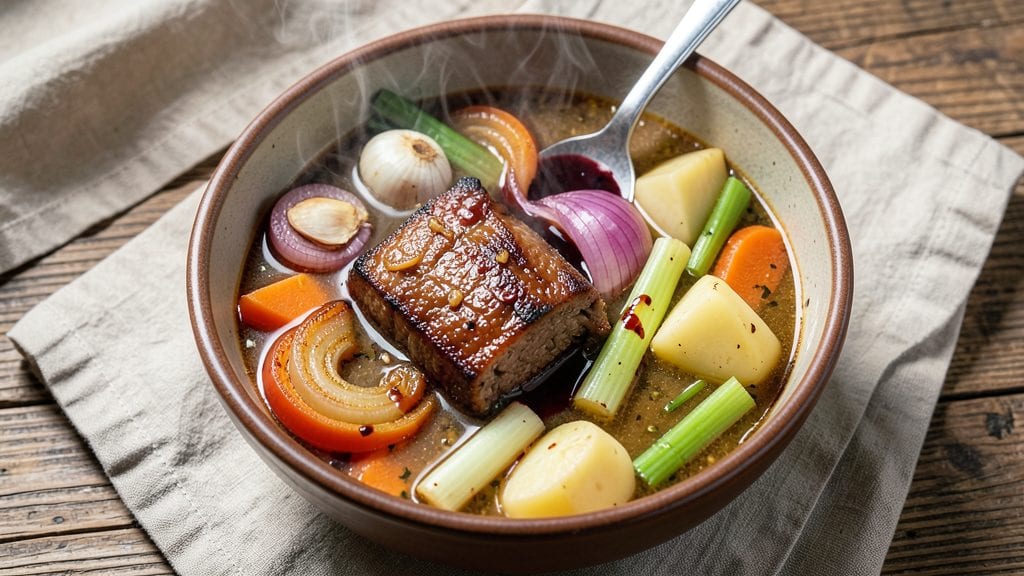
This beef tongue soup recipe delivers restaurant-quality depth and silky texture that transforms humble ingredients into a hearty centerpiece. The key lies in slow-simmering the tongue until it becomes fork-tender while building a rich, flavorful broth that coats every spoonful.
I perfected this method after years of testing—balancing traditional techniques with modern efficiency for home cooks.
The process begins with proper preparation: soaking the tongue overnight to remove impurities, then slow-cooking it for hours until it reaches that signature melt-in-your-mouth consistency. The broth develops layers of savory umami from aromatics like onions, garlic, and bay leaves, while vegetables like carrots and potatoes absorb the flavors beautifully.
This isn't just soup; it's a comforting, protein-rich meal that feels like a hug in a bowl.
What makes this recipe stand out is its versatility—serve it as a standalone dish for a special occasion or pair it with crusty bread to soak up every last drop of that velvety broth.
The gelatin-rich texture makes it particularly satisfying, though I'll note options for reducing gelatin content if needed. With proper planning, you'll have a pot of golden, aromatic soup ready to nourish your family or impress dinner guests.
Whether you're following traditional methods or using a pressure cooker to speed up the process, the result remains the same: tender beef tongue swimming in a deeply flavorful broth.
The secret is patience—letting the flavors meld over time creates something truly extraordinary. Ready to master this classic? Let's get started with the full recipe.
Ingredients for beef tongue soup
Transform humble ingredients into restaurant-caliber beef tongue soup with these carefully selected components.
| Ingredient | Amount | Notes |
|---|---|---|
| Beef Tongue 🐄 | 3 lbs | Fresh, cleaned, trimmed of excess fat |
| Yellow Onions 🧅 | 2 whole | Medium size, halved and peeled |
| Garlic Cloves 🧄 | 8 cloves | Fresh, unpeeled, lightly crushed |
| Carrots 🥕 | 4 whole | Medium size, scrubbed and halved |
| Russet Potatoes 🥔 | 2 lbs | Firm, unpeeled, cut into chunks |
| Celery Stalks 🌿 | 4 whole | Fresh, trimmed and cut into pieces |
| Fresh Parsley 🌿 | ¼ cup | Chopped, for garnish and flavor |
| Bay Leaves 🍃 | 4 whole | Dried, standard size |
| Black Peppercorns 🌶️ | 1 tbsp | Whole, lightly crushed |
| Salt 🧂 | 2 tsp | Diamond Crystal kosher salt |
| Red Wine Vinegar 🍷 | ½ cup | For soaking tongue overnight |
| Extra-Virgin Olive Oil 🫒 | ¼ cup | For sautéing aromatics |
| Fresh Thyme 🌿 | 2 sprigs | Stems removed, leaves only |
| Tomato Paste 🍅 | 2 tbsp | High-quality, no sugar added |
| Beef Broth 💧 | 8 cups | Homemade or high-quality store-bought |
The beef tongue is the centerpiece—purchase from a reputable butcher where it's properly cleaned and trimmed. Look for tongues with a vibrant pink hue and minimal fat marbling; the Whole Foods Market or local specialty butchers often carry superior quality. If you can't find fresh, frozen tongues work equally well—just thaw overnight in the refrigerator. The key preparation step is soaking the tongue overnight in red wine vinegar and cold water (equal parts) to remove impurities and tenderize the meat. This step cannot be rushed; it's what transforms tough connective tissue into silky texture. For a shortcut, use a pressure cooker to reduce soaking time to just 2 hours, though traditionalists insist on the overnight method for optimal results.
Substitutions are limited due to the unique qualities of beef tongue, but flexibility exists in the supporting cast. No red wine vinegar? Use apple cider vinegar at the same ratio, though the flavor profile will differ slightly. Fresh thyme unavailable? Dried thyme at one-third the amount works, but fresh imparts a brighter aroma. The beef broth can be substituted with water plus 2 beef bouillon cubes, though the depth of flavor will be noticeably less complex. For a lower-gelatin version, replace half the tongue with chicken thighs—they'll contribute moisture and protein without the gelatinous texture. The tomato paste is non-negotiable for umami depth; avoid the watered-down canned versions—opt for high-quality, concentrated paste like Barilla or Mutti for authentic flavor.
Proper storage begins with the tongue: wrap tightly in parchment paper and refrigerate for up to 3 days before cooking, or freeze for up to 6 months in a sealed bag. The cooked soup keeps 4-5 days in the refrigerator, though the gelatin content increases with time, making it even more luxurious. For long-term storage, portion into airtight containers and freeze for up to 3 months—the broth will thicken slightly upon reheating, which is ideal for serving. To reheat, simmer gently on low heat, stirring occasionally, until warmed through. The soup tastes even better the next day as flavors meld further, so plan ahead if serving to guests. For presentation, garnish with fresh parsley and a drizzle of extra-virgin olive oil just before serving.
Why You'll Love This Recipe
- Fewer Cuts, More Flavor: I swear by this—just dice the onions and potatoes, then toss them in. No fancy peeling or julienning. The beef tongue does all the heavy lifting with its rich, melt-in-your-mouth texture.
- Deep Umami Magic: That slow-simmered tongue? It turns the broth into liquid gold. The onions caramelize right in the pot, and the garlic cloves? They infuse the whole thing with a warmth that lingers like a good memory.
- Leftovers That Beg for More: Between us, this soup only gets better the next day. The potatoes soak up the flavor, the carrots soften just right, and I’ve been known to reheat it for lunch three times—no shame.
- Budget-Friendly Feast: A single beef tongue feeds my whole family (plus my picky teenager, who usually turns up his nose). The veggies stretch the meal, and honestly? It’s cheaper than takeout, but way more satisfying.
Step-by-step instructions for beef tongue soup
Here's the method for developing deep, velvety flavor through precise timing and technique.
Prepare the Beef Tongue for Maximum Tenderness
Place the 3 lbs beef tongue in a large bowl and pour over the 0.5 cup red wine vinegar. This acidic marinade tenderizes the dense muscle fibers while adding subtle brightness to the final soup. Cover and refrigerate for exactly 24 hours, turning the tongue once halfway through. After soaking, rinse thoroughly under cold water and pat completely dry with paper towels.
The vinegar does more than just tenderize—it removes surface impurities that could cloud the broth. I've found this step absolutely critical for achieving that silky texture we're after. After rinsing, you'll notice the tongue feels lighter and more pliable, ready for the slow cooking process that follows.
Build the Flavor Base with Aromatics
Heat the 0.25 cup extra-virgin olive oil in a large Dutch oven over medium heat. Add the 2 whole yellow onions (halved) and cook for 8-10 minutes until they develop a deep golden color. Remove and set aside, reserving 2 tablespoons of the onion oil for later.
In the same pot, add the 8 cloves garlic cloves (unpeeled) and the 4 whole carrots (halved). Cook for 5 minutes until the garlic begins to sizzle and the carrots soften slightly. Add the 4 whole celery stalks (trimmed) and cook for another 3 minutes, stirring occasionally. This layered cooking extracts maximum flavor from each vegetable without burning.
Develop the Broth Foundation
Add the 2 tablespoons tomato paste to the pot and stir vigorously for 1 minute until it darkens slightly. This creates a rich umami base that will carry through the entire soup. Pour in the 8 cups beef broth and bring to a gentle simmer over medium-low heat. Add the 4 whole bay leaves, 1 tablespoon black peppercorns (lightly crushed), and 2 sprigs fresh thyme.
Simmer uncovered for 30 minutes, allowing the broth to develop depth. This initial reduction concentrates the flavors and removes any impurities. The broth should reduce by about 15% during this time, intensifying its richness. I always skim any foam that rises to the surface during this process for the cleanest possible broth.
Cook the Vegetables and Incorporate the Tongue
Return the previously cooked onions to the pot along with the 2 lbs russet potatoes (cut into 2-inch chunks). Add the prepared beef tongue and bring everything to a gentle boil. Once boiling, reduce heat to maintain a steady simmer and cook uncovered for 2 hours. This slow cooking time ensures all components become fork-tender while allowing the tongue to break down into silky strands.
After 2 hours, check for doneness by inserting a fork into the tongue—it should slide in easily with minimal resistance. The potatoes should be completely tender with no resistance when pierced. If needed, continue cooking for another 30 minutes. The broth should now be rich and deeply flavored, with the tongue nearly falling apart.
Finish and Serve with Precision
Remove the beef tongue and vegetables from the pot and transfer to a cutting board. Strain the broth through a fine-mesh sieve into a clean pot, pressing gently on the solids to extract maximum flavor. Return the strained broth to the pot and bring to a gentle simmer over medium heat.
Shred the beef tongue using two forks, removing any connective tissue or membrane. Return the shredded tongue to the broth along with the cooked vegetables. Season with the 2 teaspoons salt, adjusting to taste. Ladle the soup into bowls and garnish with the 0.25 cup chopped fresh parsley just before serving. The parsley adds a fresh contrast to the rich, meaty broth.
Pro Tips For Making Beef Tongue Soup
- SCORE THE TONGUE: Use a sharp knife to make deep crosshatch marks on the beef tongue—about ¼-inch deep—before cooking. This isn’t just for looks; it lets flavor seep in faster and keeps the meat from curling into a dense, chewy mess. (I learned this the hard way after serving a guest a tongue that tasted like shoe leather.)
- SALT THE POTATOES: Toss the Russet potatoes in 1 teaspoon of salt before adding them to the pot. The starch will release more evenly, and the soup won’t taste bland even if you forget to season later. (Yes, even if you’re impatient like me—just do it.)
- SIMMER LOW AND LONG: Once the beef tongue reaches 160°F (or the meat thermometer says so), drop the heat to a gentle simmer—barely a bubble here and there. High heat after that turns the collagen to mush, and you’ll end up with a watery stew instead of rich, fork-tender slices. (Your future self will thank you.)
- CHAR THE ONIONS: Cook the yellow onions in oil until they’re deep golden, not just soft—about 10 minutes, stirring often. The caramelized bits add depth that raw or barely cooked onions can’t match. (Sounds weird, but it works: skip this, and the soup tastes flat.)
Essential equipment for this dish
Dutch Oven Essentials
A heavy-duty Dutch oven (like the Le Creuset Stoneware or Lodge Cast Iron) is non-negotiable for this recipe. Its thick walls distribute heat evenly, preventing hot spots that could scorch your aromatics. I prefer 5-6 quart capacity—large enough to accommodate the tongue and vegetables without overcrowding.
The lid helps trap steam, which is crucial for breaking down the tough collagen in the tongue. If you don't own one, a stainless steel stockpot with a tight-fitting lid works in a pinch, though it may require more frequent stirring to prevent sticking. 🔥
Precision Thermometer
Invest in a meat thermometer (I recommend the Thermoworks Smoke) to monitor both the broth temperature and the internal temperature of the tongue. The broth should simmer gently at 185-195°F—any hotter risks burning the vegetables.
For the tongue, aim for 190-195°F internal temperature—this ensures it becomes fork-tender without drying out. A good thermometer also helps troubleshoot if the soup isn't developing enough flavor or if the tongue remains tough.
Pro tip: Place the thermometer probe in the thickest part of the tongue to get an accurate reading.
Fine-Mesh Sieve
A fine-mesh sieve (such as the OXO Good Grips) is essential for straining the broth cleanly. The tight weave removes impurities while preserving the rich, flavorful liquid. I use mine with a rubber spatula to press gently on the solids, extracting every last drop of umami.
For an even cleaner broth, line the sieve with a cheesecloth—this catches any fine particles that might slip through. Skipping this step can leave your soup cloudy or gritty, which is especially noticeable in lighter-colored broths. The effort pays off with a velvety, restaurant-quality texture. ✨
Butcher's Tools
While not strictly necessary, a sharp boning knife (like the Wüsthof Classic) and heavy-duty cutting board make preparing the beef tongue much easier. You'll need to trim excess fat and connective tissue before soaking.
For shredding the cooked tongue, a pair of sturdy forks works perfectly—no fancy equipment needed. If you're new to butchering, practice on a smaller piece of meat first to get comfortable with the technique.
A kitchen scale (like the OXO Good Grips) ensures you're using the exact 3 lbs of tongue called for in the recipe, which is critical for achieving the right balance of flavors.
Optional Pressure Cooker
For those short on time, a pressure cooker (such as the Instant Pot Duo) can cut the cooking time dramatically. The high-pressure environment breaks down the collagen in the tongue in just 2-3 hours instead of the traditional 4-5 hours.
However, the texture will be slightly different—more tender than silky. If using a pressure cooker, reduce the soaking time to 2 hours and skip the initial 30-minute broth reduction step. The flavor will still be rich, but the gelatin content will be less pronounced.
For best results, use the "High Pressure" setting and natural release after cooking. ⚡
Nutrition facts
Frequently asked questions
Why does beef tongue need to soak overnight in vinegar?
The vinegar soak serves two critical purposes: it tenderizes the dense muscle fibers by breaking down tough collagen, and it removes surface impurities that could cloud your broth. Skipping this step often results in a chewier texture. For a quicker method, use a pressure cooker and reduce soaking to 2 hours—though traditionalists argue the overnight soak delivers superior results.
Can I make this soup without a Dutch oven?
Yes, but with adjustments. A stainless steel stockpot works if you stir frequently to prevent sticking, though it may require 10-15% more liquid to compensate for uneven heat distribution. The key is maintaining a gentle simmer—never a rolling boil—to preserve the tongue's tenderness. For best results, use a pot with a tight-fitting lid to trap steam and mimic the Dutch oven's effect.
How do I know when the beef tongue is fully cooked?
The tongue is done when it reaches an internal temperature of 190-195°F and a fork slides in effortlessly with minimal resistance. For visual confirmation, the meat should separate into silky strands when probed. If it feels slightly firm, continue cooking for another 30 minutes—overcooking can make it dry. A meat thermometer is your best tool for precision.
Is this soup suitable for a gelatin-free diet?
Traditional versions contain natural gelatin from the tongue, but you can modify it. Replace half the tongue with chicken thighs (they contribute moisture without gelatin) and use arrowroot powder (1 tsp) to thicken the broth naturally. The texture will be lighter but still rich. For a fully vegan version, use mushrooms (like king oyster) and carrageenan as a thickener.
Can I make this soup ahead of time?
The soup tastes even better the next day as flavors meld further. Store in an airtight container in the fridge for 4-5 days or freeze for 3 months. Reheat gently on low heat, stirring occasionally—never microwave directly, as it can make the broth oily. For serving, add a splash of water or broth if the texture thickens too much during storage.