
Tips
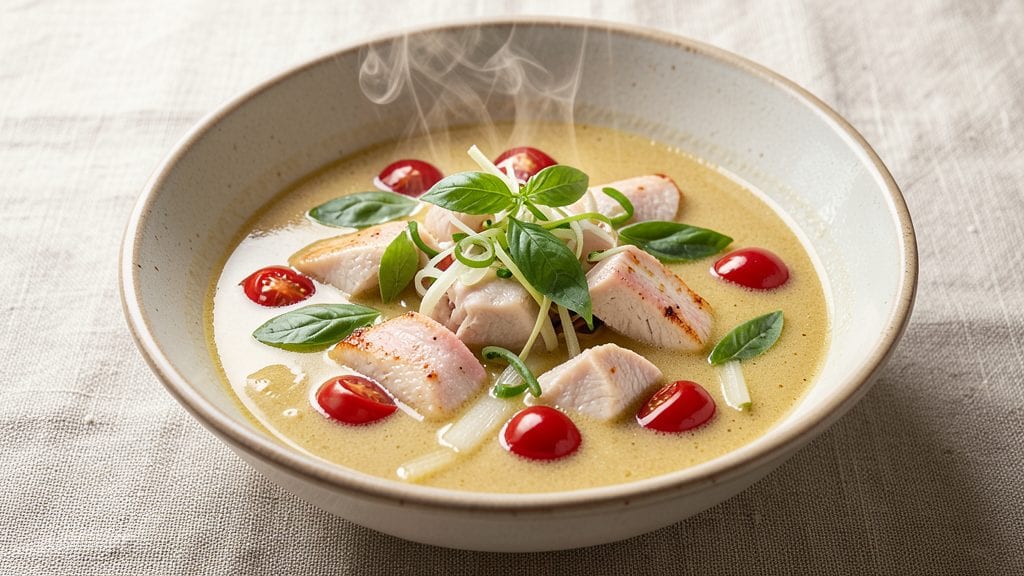
The magic of cornstarch lies in its ability to transform thin broths into velvety textures without altering flavor.
Unlike flour, which can add a slight graininess, cornstarch dissolves completely when properly mixed into a cold slurry, creating a glossy finish that’s perfect for clear soups like tomato or consommé. 🌟 The key is patience—adding it too fast or to boiling liquid triggers clumping, so gradual stirring at a gentle simmer ensures even distribution and that signature smoothness.
💡 In This Article
- How Cornstarch Thickens Soup at a Molecular Level
- Step-by-Step Guide: Perfect Cornstarch Slurry for Soup
How cornstarch thickens soup at a molecular level
Cornstarch works its magic through two key components: amylose and amylopectin. When you whisk cornstarch into cold water, these starch molecules remain tightly packed in their native crystalline form.
But as heat reaches around 140-160°F, water molecules begin penetrating the starch granules, causing them to swell dramatically—up to 50-100 times their original size. This swelling disrupts the hydrogen bonds holding the starch structure together, releasing individual molecules that can evenly disperse throughout your soup.
The result is a smooth gel network that traps liquid without altering the soup's clarity or flavor. Unlike flour, which develops a slight opaque quality when cooked, cornstarch dissolves completely when properly activated.
This is why it's ideal for delicate broths—its neutral taste and fine texture let the soup's natural flavors shine. For comparison, flour requires 2-3 times more by weight to achieve the same thickening power, and it often leaves a faint floury aftertaste.
Here's what's actually happening during the thickening process: Heat breaks the starch's hydrogen bonds, allowing water to enter and hydrate the granules. This hydration triggers a phase transition where the starch goes from a solid to a viscous gel state.
The key is maintaining a gentle simmer (195-205°F)—boiling would cook the starch too quickly, creating lumps instead of a smooth dispersion. This is why we always add the slurry to simmering (not boiling) soup.
What most people don't realize is that cornstarch's thickening power comes from its high amylopectin content (about 75-80% of its composition). Amylopectin has a branched molecular structure that creates more cross-linking points when hydrated, forming a stronger gel network than amylose alone.
This is why cornstarch can thicken liquids with just 1-2 tablespoons per cup of liquid, compared to 3-4 tablespoons needed for flour.
For visual contrast, imagine stirring cornstarch into cold water first creates microscopic "seeds" that grow when heated. Each granule becomes a tiny thickening agent, expanding uniformly throughout the soup.
The science behind this involves gelatinization—the process where starch granules absorb water and swell, creating that signature silky texture we crave in soups. This is why cornstarch works best for clear broths—it doesn't cloud the liquid like flour or roux would.
One advanced technique to maximize thickening involves adding a small amount of acid (like ½ teaspoon lemon juice) to the slurry before mixing. The acid slightly breaks down the starch molecules, creating even more surface area for hydration and resulting in a more stable, glossy finish.
This is particularly useful for acidic soups like tomato or citrus-based broths where the acidity might otherwise weaken the starch's thickening power over time.
The beauty of cornstarch lies in its versatility—it works equally well in hot or cold applications, though for soup we always use heat activation. What makes it superior to flour is its ability to create a completely clear, neutral-thickened base that won't interfere with your soup's intended flavor profile. 🔥