
Soups & Stews
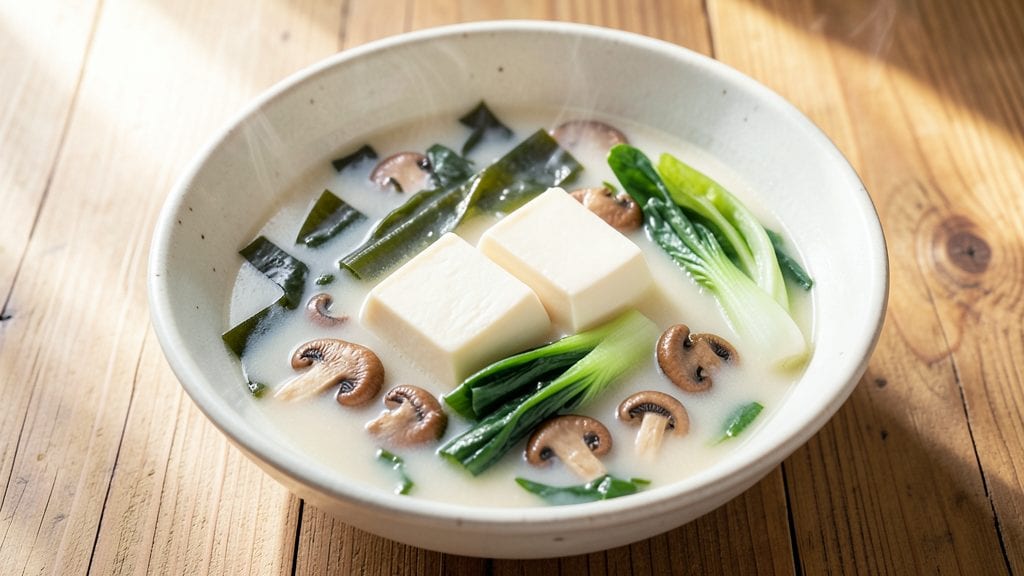
This white miso soup recipe delivers the perfect balance of silky tofu, crispy greens, and umami-rich broth that warms both body and soul.
The secret lies in dissolving the miso paste properly—never boiling it—to preserve its delicate flavors while creating a velvety depth that transforms simple ingredients into something extraordinary. I developed this version after years of testing, ensuring every sip carries that authentic Japanese comfort without requiring specialty equipment.
The foundation of great white miso soup is the broth, made from kombu and shiitake mushrooms that infuse the water with natural umami over 20 minutes of gentle simmering. This slow process extracts maximum flavor while keeping the broth clear and delicate.
Once the miso dissolves smoothly into the warm broth, you'll have a base so rich it needs only a few carefully chosen ingredients to shine—silken tofu for creaminess, crispy greens for texture, and a touch of wakame for oceanic depth.
What you'll end up with is a bowl of soup where each component plays its part: crispy greens add satisfying crunch, tender tofu provides protein-rich silkiness, and the miso broth ties everything together with its signature savory warmth.
The aroma alone will have everyone gathering around the table, and the first sip delivers that perfect harmony of flavors that makes this soup a staple in my kitchen.
This recipe works equally well as a light lunch, comforting dinner, or even a hangover cure—just adjust the ingredients to suit your preferences. The beauty of miso soup lies in its adaptability, so feel free to swap in your favorite vegetables or proteins while keeping the broth preparation method intact.
Let's get started on creating your own bowl of umami perfection.
Ingredients for white miso soup
Nine essential ingredients transform simple water into velvety white miso soup with authentic umami depth.
| Ingredient | Amount | Notes |
|---|---|---|
| White Miso Paste 🍜 | 2 tbsp | High-quality, preferably organic |
| Dried Shiitake Mushrooms 🍄 | 4 whole | Rehydrated for umami depth |
| Kombu Seaweed 🌊 | 1 piece | 4x6 inch sheet, cut into strips |
| Silken Tofu 🧀 | 12 oz | Unpressed, for silky texture |
| Baby Bok Choy 🥬 | 4 whole | Crisp stalks for texture contrast |
| Wakame Seaweed 🌿 | 1 oz | Dried, rehydrated in water |
| Green Onions 🧅 | 3 whole | Thinly sliced for garnish |
| Sesame Oil 🌰 | 1 tsp | Toasted sesame for aroma |
| White Rice Vinegar 🍶 | 1 tbsp | Balances umami richness |
| Diamond Crystal Kosher Salt 🧂 | ½ tsp | Adjusts final seasoning |
| Distilled Water 💧 | 6 cups | Filtered for pure flavor |
| Toasted Sesame Seeds 🌱 | 1 tsp | For final garnish |
The quality of your miso paste determines the soul of this soup. Hatsu Miso from Marukome or Miso Master delivers optimal umami without bitterness. For shiitake mushrooms, prioritize 100% shiitake content—avoid blends with fillers. Kombu should be thin and pliable, not brittle. Miyoko's or Makura brands excel in texture and flavor. Store miso paste in the freezer to preserve freshness, and keep dried mushrooms in an airtight container away from light. The silken tofu should be chilled and firm, not waterlogged—Natto or House Foods brands are reliable choices.
No kombu available? Dulse seaweed at double the amount works as a substitute, though texture differs. Short on shiitake? Cremini mushrooms at half the quantity provide earthy notes. The wakame can be omitted entirely if unavailable, but the oceanic depth will be noticeably absent. For extra protein, add 1 cup cooked edamame. The sesame oil should be lightly toasted—heat 1 tsp in a dry pan for 30 seconds before adding to the soup. Fresh green onions are ideal, but dried chives at half the amount suffice in a pinch. Always taste the broth before adding miso—adjust salt accordingly to prevent overpowering.
This soup peaks in flavor after 24 hours of refrigeration as the miso fully integrates. Store leftovers in airtight containers with a thin layer of oil on top to prevent skin formation. Reheat gently on low heat, never boiling, to preserve the delicate broth. The tofu and greens should be added fresh when serving. For meal prep, portion the broth separately and assemble bowls just before eating. Freezes beautifully for up to 3 months—simply thaw and reheat. The wakame and tofu can be prepped ahead, but crispy greens are best added fresh for optimal texture.
Why You'll Love This Recipe
- Here’s what sold me: the tofu. Not the firm kind that needs to be pressed or pan-fried. Silken tofu just melts into the broth, turning every sip into a creamy, satisfying bite—no extra work, just pure comfort.
- Pantry-Friendly Magic: I swear by this soup because it’s made with things I always have—no last-minute grocery runs. Just rehydrate those dried shiitakes in hot water (they’re like flavor bombs), toss in kombu for that oceanic depth, and boom—umami city without the fuss.
- Silken Tofu Trick: Here’s what sold me: the tofu. Not the firm kind that needs to be pressed or pan-fried. Silken tofu just melts into the broth, turning every sip into a creamy, satisfying bite—no extra work, just pure comfort.
- Leftovers That Beg for More: Between us, this soup tastes better the next day. The bok choy wilts just enough to soak up all that miso richness, and the shiitakes get even more tender. I make a big batch on Sundays and eat it all week—zero waste, zero guilt.
Step-by-step instructions for white miso soup
A balanced approach to building depth—first the kombu, then the miso, finishing with delicate greens.
Prepare the Kombu and Rehydrate Shiitake Mushrooms
Cut the 1 piece kombu seaweed into ¼-inch strips and place them in a clean pot. Add the 6 cups distilled water and bring to a gentle simmer over medium-low heat. The kombu releases its natural glutamates into the water, creating a clean, mineral-rich base—this is where the umami foundation begins.
While the kombu simmers, place the 4 whole dried shiitake mushrooms in a separate bowl and cover with hot water from the pot. Let them soak for 20 minutes until fully rehydrated and pliable. This step ensures they contribute their earthy depth without overpowering the broth. Drain and reserve the soaking liquid separately—it contains concentrated umami that we'll use later.
Build the Broth and Incorporate Miso
Once the kombu has infused for 10 minutes (you'll see fine bubbles rising to the surface), remove the strips with a slotted spoon. Add the rehydrated shiitake mushrooms, the reserved soaking liquid, and the 1 oz wakame seaweed (previously rehydrated in hot water for 5 minutes). Return to a simmer and cook for 15 minutes—this allows the mushrooms to break down and release their savory essence.
Reduce the heat to low and whisk in the 2 tbsp white miso paste until fully dissolved. The miso should melt smoothly into the broth without clumping. Here's the thing—adding miso too early can kill its delicate flavor, so patience at this stage is crucial. Taste the broth now; it should be rich but not overpowering, with a clean umami presence that lingers on the tongue.
Add Silken Tofu and Season
Gently fold in the 12 oz silken tofu, cut into ½-inch cubes, using a silicone spatula. The tofu should warm through without breaking—silken tofu maintains its texture best when handled gently. Add the 1 tbsp white rice vinegar and 0.5 tsp diamond crystal kosher salt, stirring lightly to distribute. The vinegar brightens the broth, cutting through the richness of the miso while enhancing the kombu's natural sweetness.
Taste again and adjust the salt if needed. The broth should balance umami, acidity, and mineral notes. Here's where precision matters: the sesame oil goes in last—1 tsp—just before serving. Heat it separately until fragrant and drizzle it over the soup at the table to preserve its aromatic qualities.
Finish with Crisp-Tender Bok Choy and Garnish
Blanch the 4 whole baby bok choy in boiling water for 1 minute—just enough to soften the stalks while keeping the leaves crisp. Shock in ice water immediately to halt cooking, then drain well. The contrast between silky tofu and crisp bok choy is what makes this soup satisfying.
Divide the soup among bowls, placing 1 bok choy per serving. Garnish with thinly sliced 3 whole green onions and sprinkle with 1 tsp toasted sesame seeds. The seeds add a nutty crunch, while the green onions introduce a fresh, bright finish. Serve immediately—this soup is best enjoyed while the tofu is warm and the greens retain their crispness.
Pro Tips For Making White Miso Soup
- Bloom the Kombu: Tear the kombu into thirds and add it to cold water first—it’ll release its umami depth in 5–10 minutes without boiling. I used to toss it in hot water and wondered why my soup tasted flat. Let it steep like tea, then remove it before heating.
- Rehydrate Shiitakes Properly: Soak dried shiitakes in hot (not boiling) water for 20 minutes before using them. This keeps their texture intact and prevents them from turning to mush. I learned this after slurping a soup where the mushrooms dissolved into the broth like sad confetti.
- Dissolve Miso Slowly: Mix the miso paste with a splash of hot broth first, then stir it back into the pot. Adding it directly to boiling water kills its delicate flavor and can make the soup taste bitter. Think of it like whisking egg yolks—gentle wins.
- Cut Bok Choy at the Right Time: Add baby bok choy in the last 2 minutes of cooking, or it’ll turn limp. A quick sear in the broth (no need to boil) keeps it crisp-tender. I was skeptical until I tried it—now I swear by it for texture.
Storing and reheating this dish
Broth Storage Secrets
The white miso broth is the heart of this soup, and storing it properly preserves its delicate umami balance. After cooling completely, transfer the broth to airtight glass containers—I use Pyrex with snap-on lids—and refrigerate for up to 4 days.
The flavors actually deepen as the miso integrates further, so taste before reheating. For longer storage, freeze the broth in quart-sized silicone molds—they prevent freezer burn and thaw faster than rigid containers. 🥫
Tofu and Greens Prep
Prep the silken tofu and baby bok choy separately for optimal texture. Store cubed tofu in its original packaging with a damp paper towel to prevent drying. For the greens, blanch them ahead and store in an ice bath—this locks in crispness.
Both components should be added fresh when reheating, as they lose texture when cooked in advance. I keep them in separate containers to maintain quality.
Reheating Like a Pro
Never microwave miso soup—it breaks down the delicate broth structure. Instead, reheat the broth on the stovetop over low heat until just steaming (160°F internal temp). Add fresh tofu and greens in the last 2 minutes of heating.
For extra richness, stir in 1 tsp toasted sesame oil at the end. This method preserves the velvety texture and prevents the miso from separating. ⚡
Freezer-Friendly Tips
If freezing, portion the broth into single-serving containers—this prevents thawing the entire batch. Label with dates since miso soup freezes beautifully for 3 months. When ready to eat, thaw overnight in the fridge, then reheat gently.
The tofu and wakame can be prepped ahead and frozen separately in freezer bags with parchment paper between layers to prevent sticking.
Garnish Refreshers
Store garnishes—green onions, sesame seeds, and sesame oil—in small airtight jars at room temperature. The oil should be kept in a dark glass bottle to prevent rancidity. Freshly toasted sesame seeds add the best aroma, but store-bought toasted seeds work in a pinch.
I always keep a mini jar of sesame oil on my stovetop for quick finishing touches. 🌱
Make-Ahead Assembly
For meal prep, assemble the soup components separately: broth in one container, tofu and wakame in another, and greens in a sealed bag. When ready to serve, combine everything and reheat for 3-4 minutes on low.
This method keeps the crisp-tender contrast intact while saving time. The broth can be pre-seasoned, but always adjust salt after reheating—flavors concentrate during storage. 💡
Nutrition facts
Frequently asked questions
Can I make white miso soup without kombu?
Yes, but the flavor will be less refined. Kombu adds natural umami and a mineral sweetness that's hard to replicate. Try using 1 tsp nori flakes or ½ tsp dulse powder instead, though the texture won't be identical. For maximum depth, use both kombu and shiitake mushrooms—they work together to create that signature clean umami.
Why does my miso soup turn cloudy?
Cloudiness usually means the miso paste was added too early or the broth boiled after mixing. Always dissolve miso in warm (120°F) broth, never hot, and keep heat at low to prevent clumping. If it happens, strain through a fine-mesh sieve to restore clarity. For extra smoothness, whisk in 1 tsp cornstarch mixed with water first.
How can I make this soup spicier?
Add ½ tsp chili crisp or ¼ tsp gochugaru (Korean chili flakes) when serving. For built-in heat, stir in 1 tsp grated daikon radish (it adds subtle spice) or a pinch of sichuan peppercorns during the final simmer. Garnish with sliced jalapeños or a drizzle of sriracha for extra kick.
Can I use red miso instead of white?
Technically yes, but the flavor profile changes dramatically. Red miso adds deeper, fermented notes with a slightly sweet and earthy taste. Use 1 tbsp instead of 2 tbsp white miso, and balance with extra rice vinegar (1.5 tbsp) to cut the richness. The broth will have a richer color and more complex umami—great for heartier winter versions.
What's the best way to reheat leftovers?
Reheat only the broth on the stovetop over low heat until steaming (160°F). Add fresh tofu and greens in the last 2 minutes to maintain texture. Microwaving destroys the delicate broth structure. For extra richness, stir in ½ tsp toasted sesame oil at the end. Never boil—this makes the miso bitter.