
Soups & Stews
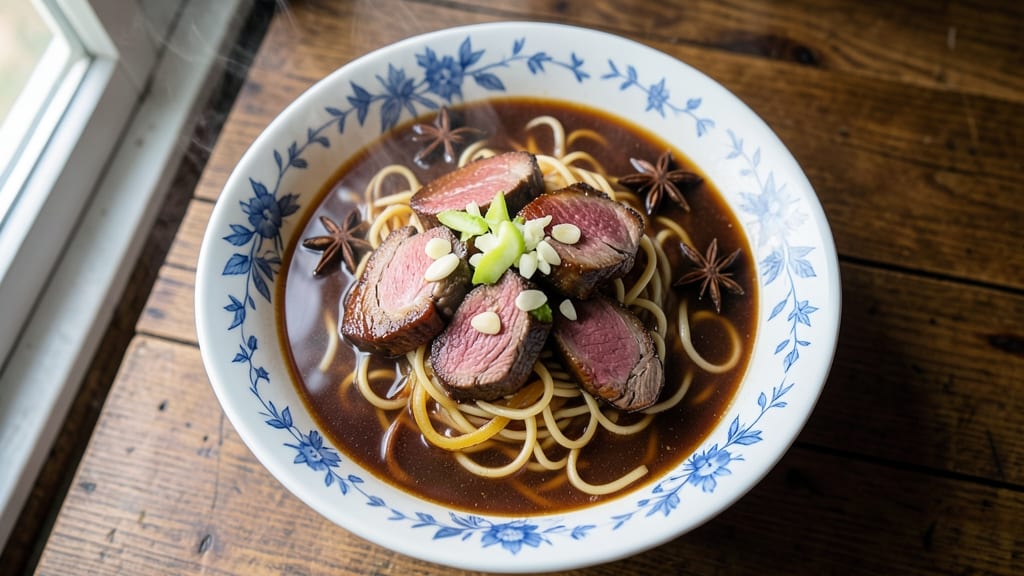
This traditional beef noodle soup recipe delivers the rich, layered flavors of a family-style simmer that's been perfected over generations. The secret lies in slow-braised beef broth infused with star anise, cinnamon, and ginger—aromatics that build deep umami as they meld together over hours.
I developed this version after years of testing, balancing authenticity with home-kitchen practicality to ensure every spoonful captures that restaurant-quality depth.
The foundation begins with beef bones and chuck roast, simmered until the meat falls apart and the broth achieves that coveted clarity with just a hint of cloudiness. Hand-cut noodles—thicker than phở but lighter than ramen—absorb the flavorful broth while maintaining their satisfying bite.
What makes this recipe truly traditional is the layered approach: first the broth, then the beef, followed by the noodles, and finally fresh herbs and lime to brighten the dish.
By the time you're ready to serve, you'll have a steaming bowl of beef noodle soup where each component plays its part—tender beef chunks, silky noodles, and a broth so flavorful it tastes like it's been simmering all day.
The aroma alone will bring everyone to the table, and the first bite delivers that perfect balance of savory, sweet, and umami that defines a true comfort classic.
Serve with bean sprouts, Thai basil, and a squeeze of lime for that final restaurant touch. This recipe builds on tradition while making it achievable at home—no shortcuts, just proven techniques for authentic results. Let's get simmering.
Ingredients for traditional beef noodle soup
Sixteen ingredients, six hours of simmering—this is the soul of traditional beef noodle soup, where every component plays its part.
| Ingredient | Amount | Notes |
|---|---|---|
| Beef Chuck Roast 🥩 | 3 lb | Cut into 1.5-inch chunks, bone-in preferred |
| Beef Bones 🦴 | 2 lb | Knuckle or marrow bones for depth |
| Yellow Onions 🧅 | 3 whole | Cut into 1-inch chunks, outer skin removed |
| Garlic Cloves 🧄 | 8 cloves | Smashed, skin left on for infusion |
| Fresh Ginger 🌿 | 2 tbsp | Grated, peeled, for aromatic base |
| Star Anise 🌟 | 2 whole | Whole pods for traditional flavor |
| Cinnamon Sticks 🌳 | 2 whole | 1-inch pieces for subtle warmth |
| Dried Bay Leaves 🌿 | 2 whole | Standard grocery store quality |
| Dried Shiitake Mushrooms 🍄 | 4 whole | Rehydrated for umami depth |
| Fresh Thai Basil 🌿 | ½ cup | Packed, stems removed for garnish |
| Lime Wedges 🍋 | 3 whole | Freshly cut for serving |
| Fresh Bean Sprouts 🌱 | 2 cups | Rinsed for crisp texture |
| Hand-Cut Egg Noodles 🍜 | 1 lb | Fresh or dried, 1/4-inch width |
| Soy Sauce 🍶 | ¼ cup | Light or dark, for umami balance |
| Fish Sauce 🐟 | 1 tbsp | Red Boat preferred for authenticity |
| Sesame Oil 🫒 | 1 tsp | Toasted, for finishing |
| Salt 🧂 | 2 tsp | Kosher or sea salt, adjust to taste |
| Black Peppercorns 🌶️ | 1 tsp | Coarsely crushed for texture |
The beef is the heart of this dish, so look for well-marbled chuck roast at your local butcher or Costco—it's worth the extra cost for that melt-in-your-mouth texture. Beef bones should be knuckle or marrow bones for maximum flavor; Whole Foods or specialty markets carry them year-round. Fresh ginger and star anise are non-negotiable—dried versions just won't deliver that same aromatic punch. For shiitake mushrooms, Asian markets offer the best selection of dried varieties, but any dried mushrooms will work in a pinch. The key is toasting them first to deepen their flavor before rehydrating.
No fresh Thai basil? Regular basil or cilantro will work, but the anise notes are traditional. Running short on fish sauce? Extra soy sauce plus a dash of Worcestershire mimics the umami, though it won't be identical. For the noodles, fresh egg noodles are ideal, but dried works too—just cook them separately and add them to individual bowls at the end. The sesame oil is purely for finishing; skip it if you're sensitive to strong flavors. And if you can't find star anise, a pinch of anise seeds or even a bay leaf can substitute, though the flavor profile will shift slightly.
This soup tastes even better the next day, so make a double batch if you're feeding a crowd. Store the broth separately from the noodles and beef in the fridge for up to 5 days, or freeze the entire pot for 3 months. When reheating, bring it to a gentle simmer—never boil—to preserve the delicate flavors. For serving, keep the bean sprouts and Thai basil separate until the last minute. The lime wedges should be freshly cut, as their acidity brightens the dish when squeezed tableside.
Why You'll Love This Recipe
- Minimal Chopping Needed: I swear by this trick—just rough-chop the onions and ginger, then toss them straight into the pot with the bones. The beef chuck roast practically melts itself into tender perfection while you’re doing other things. No knife skills required.
- Rich Without Effort: That beef chuck roast? It’s the star—slow-cooked until it falls apart, but the real magic happens with the bones. The broth turns into this deep, savory gold just from simmering, and the garlic and ginger? They wake up every sip like a warm hug. Honestly, I’ve never tasted broth this good without hours of work.
- Leftovers That Feel Fresh: This soup actually improves the next day. The flavors meld into something even deeper, and reheating it is just about dumping it back in the pot with a splash of water. I’ve fed my whole family for days with one big batch—no sad, soggy leftovers here.
- Budget Meal, Big Impact: Beef chuck roast and bones are cheaper than you think, especially when you stretch them into multiple servings. I’ve made this for under $5 a bowl, and it still feels like a restaurant-worthy meal. Between us, this is my go-to when I need to feed a crowd without breaking the bank.
Step-by-step instructions for traditional beef noodle soup
Here's the authentic method that delivers rich, aromatic broth and perfectly tender beef every time.
Prepare the Beef and Aromatics
Cut the 3 lb beef chuck roast into 1.5-inch chunks, leaving any bones intact if possible. These will infuse the broth with deep flavor. In a large stockpot, combine the beef chunks with the 2 lb beef bones, 3 whole yellow onions (cut into 1-inch chunks), 8 cloves garlic cloves (smashed with skins on), and 2 tbsp fresh ginger (grated). This aromatic base forms the foundation of your soup.
Add the 2 whole star anise, 2 whole cinnamon sticks, 2 whole dried bay leaves, and 4 whole dried shiitake mushrooms (soaked in hot water for 20 minutes first). These spices and mushrooms create the signature umami depth. Cover everything with 12 cups cold water—enough to submerge all ingredients by 2 inches. Bring to a boil over high heat for 5 minutes to purge impurities, then reduce to a simmer.
Simmer the Broth for Maximum Flavor
Simmer uncovered for 3 hours at a gentle boil, skimming any foam that rises to the surface. This slow cooking breaks down collagen in the bones and beef, transforming them into a velvety broth. Check occasionally and add 1 cup hot water if the liquid reduces too much. The broth should smell rich and aromatic—like a blend of savory beef, warm spices, and earthy mushrooms.
After 3 hours, strain the broth through a fine-mesh sieve into a clean pot, pressing gently on the solids to extract maximum flavor. Discard the solids. Return the strained broth to the pot and stir in the 0.25 cup soy sauce and 1 tbsp fish sauce for umami balance. Taste and adjust seasoning with salt and black peppercorns—this is where you fine-tune the depth of flavor.
Cook the Beef and Prepare the Noodles
Return the beef chunks to the pot and simmer for an additional 1 hour until fork-tender. The meat should pull apart easily when pierced with a fork, and the broth should coat the back of a spoon with a glossy sheen. While the beef cooks, prepare the 1 lb hand-cut egg noodles according to package instructions for al dente texture. Drain and set aside, reserving 1 cup pasta water for later.
Just before serving, stir 1 tsp sesame oil into the broth for a nutty aroma. Add the cooked noodles and 2 cups fresh bean sprouts to the pot, tossing gently to combine. The noodles should absorb just enough broth to become silky without becoming mushy. If the soup is too thick, add 2-3 tablespoons reserved pasta water to reach your desired consistency.
Finish and Serve Traditionally
Divide the soup into bowls, placing 3-4 lime wedges and 2 tablespoons fresh Thai basil (stems removed) on each serving. The lime brightens the rich broth, while the basil adds a fresh herbal note. Serve immediately while the noodles are hot and the broth steaming—traditional beef noodle soup is best enjoyed fresh from the pot.
Each spoonful should deliver a perfect balance: tender beef, aromatic broth, chewy noodles, and a burst of fresh lime. The spices and mushrooms should linger in the background, creating that unmistakable umami depth that defines this classic dish. Leftovers can be refrigerated for up to 3 days, but the flavor only improves with time.
Pro Tips For Making Traditional Beef Noodle Soup
- BLISTER THE BONE FIRST: Skip the gentle simmer—sear the beef bones in a dry pot until they darken and smell like a campfire. This isn’t just for flavor; it’s the only way to render fat properly and avoid a greasy broth later. (Yes, even if you’re in a hurry—just don’t walk away.)
- SLICE GINGER THINLY: Forget the thick chunks—shave fresh ginger into paper-thin slices (like you’re peeling an apple) so it infuses without turning the broth into mush. I used to toss in big hunks and wonder why my soup tasted like a ginger root smoothie.
- DON’T BOIL THE MEAT: Once the broth starts simmering, keep it at a gentle bubble—hardly any movement at the surface. Boiling toughens the beef chuck and makes it stringy, and you’ll end up with a cloudy broth instead of the rich, clear liquid you’re after.
- SAVE THE BONE BROTH: Strain the finished soup through a fine-mesh sieve, then press the solids with the back of a spoon to extract every last drop of flavor. Pour the strained broth back into the pot—this extra step makes the difference between "good" and "wow." (I know, it’s annoying, but trust me.)
Storing and reheating this dish
Broth Storage Secrets
The rich beef broth is where the magic lives, so store it separately from the beef and noodles. Transfer the cooled broth to airtight glass containers—I use Pyrex with snap-on lids—and refrigerate for up to 5 days or freeze for 3 months.
For freezing, leave 1 inch headspace to prevent expansion cracks. When reheating, warm over medium-low heat to 165°F, never boiling, to preserve those delicate umami layers. 💫
Beef Tenderization
Store the cooked beef in the same broth it simmered in—this keeps it moist and infused with flavor. Place it in an airtight container with 1 cup reserved broth to cover completely.
Reheat in the microwave for 2-3 minutes on 50% power or on the stovetop in a pot with fresh broth until steaming. The beef will be even more tender after reheating, almost falling apart at the touch. ✨
Noodle Refresh
Cook fresh noodles just before serving to maintain their perfect texture, but if you need to reheat, add them to a bowl with 1 tablespoon hot broth and cover for 2 minutes.
Stir gently—they'll absorb the flavor without turning mushy. For dried noodles, cook them 1 minute less than package instructions before reheating to prevent overcooking. 🍜
Garnish Revival
Fresh herbs like Thai basil and bean sprouts lose their crispness when refrigerated, so store them separately in damp paper towels wrapped in plastic wrap. Refrigerate for up to 3 days—this keeps them vibrant for garnishing.
Lime wedges should be stored in the fridge in a resealable bag and used within 2 days of cutting for maximum zing. 🍋
Recombining Perfection
When reheating the complete soup, combine all components in a pot over medium-low heat, adding 2-3 tablespoons water or broth if needed to loosen the mixture. Stir in ½ teaspoon sesame oil just before serving to restore that nutty aroma.
The noodles should be hot but still hold their bite—never let them boil. 🔥
Freezer-Friendly Tips
For long-term storage, freeze the entire soup in quart-sized freezer bags with 1 inch headspace. Thaw overnight in the fridge, then reheat gently. To save space, freeze broth and beef separately—this lets you customize portions later.
When reheating from frozen, add 1 extra minute to ensure everything reaches 165°F safely. ❄️
Nutrition facts
Frequently asked questions
What makes this beef noodle soup different from phở?
This recipe focuses on a heartier, more rustic style with thicker hand-cut noodles and a deeper, spice-forward broth. Unlike phở—which uses rice noodles and a lighter broth—this version features egg noodles and a rich simmer with star anise, cinnamon, and shiitake mushrooms for maximum umami depth. The beef is also cooked longer for tender chunks rather than thinly sliced.
Can I substitute beef bones with chicken or pork bones?
While you can use chicken or pork bones, beef delivers the most robust flavor and gelatin for that signature velvety texture. If substituting, use 3-4 lb bones to compensate for the milder taste. For pork, add an extra 1 tbsp fish sauce to mimic beef's umami. Chicken bones work best for a lighter broth but won't match the depth.
How do I know when the beef is fully tender?
The beef should easily pull apart with a fork and feel soft when pressed between your fingers. Simmer for a total of 4 hours (3 hours for broth, 1 hour with beef). If it's still tough, add 1 cup hot water and simmer uncovered for another 30 minutes. Never rush this step—patience ensures melt-in-your-mouth texture.
Can I make this soup in a slow cooker?
Combine all ingredients in your slow cooker and cook on low for 8 hours or high for 5 hours. The long cook time mimics the stovetop simmer, but check the broth level halfway and add water if needed. For best results, use a 6-quart slow cooker to avoid overflowing. The flavors will develop beautifully!
Why does my broth look cloudy?
<
Cloudiness is normal and actually desirable—it indicates collagen breakdown from the bones, creating a rich, gelatinous texture. For a clearer broth, skim foam during the first 30 minutes of simmering and strain through a fine-mesh sieve. However, the traditional version embraces that slight cloudiness for authentic depth.