
Soups & Stews
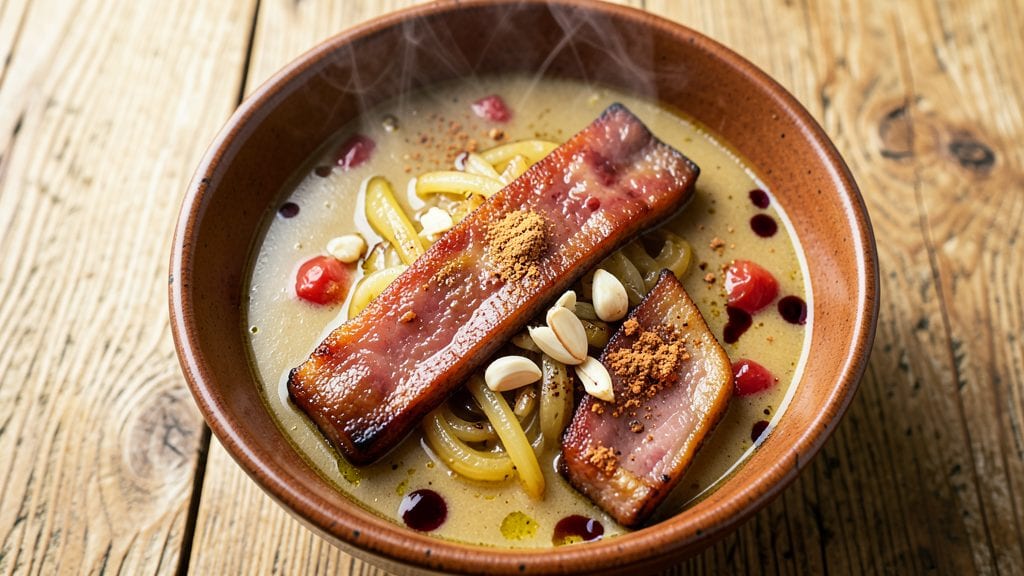
This salchichón soup recipe delivers the deep, smoky comfort of Spain’s most beloved cured sausage in every spoonful—rich, hearty, and packed with paprika-kissed flavor. The secret lies in slow-simmering the salchichón until its fat melts into the broth, creating a velvety texture that clings to every bite.
I developed this recipe after years of testing, balancing traditional techniques with modern shortcuts to ensure restaurant-quality results without hours in the kitchen.
The foundation of great salchichón soup is a well-built broth—start with a deep, aromatic base of onions, garlic, and tomatoes, then let the cured sausage infuse its signature smokiness. A touch of red wine vinegar brightens the depth, while a blend of sweet and smoked paprika ties everything together.
The key technique? Simmering the sausage just until tender, not falling apart, so each bite delivers that perfect balance of texture and flavor.
What you’ll end up with is a steaming bowl of soup where every ingredient plays its part: tender salchichón slices, caramelized vegetables, and a broth so rich it feels like a hug in a bowl.
The aroma alone will have everyone gathering around the table, and the first sip delivers that unmistakable Spanish comfort you’ve been craving. This recipe is foolproof, adaptable, and designed to become a weekly staple.
Whether you serve it with crusty bread to soak up every drop or as a standalone meal, this soup adapts to any occasion. For extra depth, finish with a sprinkle of fresh parsley or a drizzle of high-quality olive oil. Let’s get cooking—your taste buds will thank you.
Ingredients for salchichon soup
Sixteen ingredients. One bowl of Spanish comfort you'll crave weekly.
| Ingredient | Amount | Notes |
|---|---|---|
| Salchichón Sausage 🥓 | 1 ½ lb | Thinly sliced, high-quality cured |
| Yellow Onions 🧅 | 2 whole | Medium, thinly sliced |
| Garlic Cloves 🧄 | 6 cloves | Minced, fresh preferred |
| Canned Crushed Tomatoes 🍅 | 1 can | 28 oz, San Marzano if possible |
| Red Wine Vinegar 🍷 | 2 tbsp | For brightness, not balsamic |
| Sweet Paprika 🌶️ | 1 tbsp | Smoked for extra depth |
| Smoked Paprika 🌶️ | 1 tsp | For authentic smokiness |
| Bay Leaves 🌿 | 2 whole | Fresh, removed before serving |
| Carrots 🥕 | 3 whole | Medium, peeled and sliced |
| Celery Stalks 🥬 | 3 whole | Trimmed, chopped |
| Chicken Broth 💧 | 6 cups | Low-sodium, homemade preferred |
| Extra-Virgin Olive Oil 🫒 | ¼ cup | For richness, fruity variety |
| Fresh Parsley 🌿 | ¼ cup | Chopped, for garnish |
| Salt 🧂 | 1 ½ tsp | Diamond Crystal kosher |
| Black Pepper 🌶️ | ½ tsp | Freshly ground |
The salchichón is non-negotiable here. Look for thick, cured slices at specialty markets or the international aisle—Jamón Ibérico shops often carry it. If you can't find it, chorizo or Spanish sausage works in a pinch, but the flavor will shift. The paprika blend is key: sweet and smoked together create that signature depth. For the tomatoes, San Marzano cans from Trader Joe's or Whole Foods are worth the splurge—they're sweeter and less acidic. Fresh bay leaves? Skip the dried—they're a game-changer for aroma. I usually grab mine at Costco in the bulk section.
No red wine vinegar? Apple cider vinegar or lemon juice adds brightness, but it's not the same. Short on smoked paprika? Add a pinch of liquid smoke (like La Choy) to the broth, but use sparingly. The broth is where the magic happens—homemade is ideal, but Swanson or Pacific Foods low-sodium cubes work fine. For the veggies, carrots and celery can be swapped for potatoes or fennel, but keep the ratio even. The onions should caramelize until golden—don't rush this part—it builds the soup's base flavor.
This soup tastes even better the next day. Store in the fridge for up to 5 days, with the fat solidifying on top—just stir it back in before serving. Freezes beautifully for 3 months, though the texture changes slightly. I always make a double batch—one for dinner, one for lunches. For serving, crusty bread or crusty rolls are a must. The parsley garnish is optional but adds that fresh pop—store-bought is fine, but fresh tastes like sunshine.
Why You'll Love This Recipe
- I swear by this for meal prep: thick enough to reheat beautifully, but light enough for a packed lunch. Toss in some crusty bread, and suddenly you’ve got a satisfying, no-fuss workday meal.
- No Chopping Needed: Honestly, I just dice the onions and garlic roughly—no fancy techniques. The salchichón slices itself as it cooks, and the crushed tomatoes? Just open the can. That’s it.
- Deep Umami Magic: Between us, the salchichón’s smoky, paprika-kissed flavor explodes when simmered with red wine vinegar—bright, tangy, and rich all at once. The garlic? It caramelizes just enough to make every spoonful irresistible.
- Lunchbox Hero: I swear by this for meal prep: thick enough to reheat beautifully, but light enough for a packed lunch. Toss in some crusty bread, and suddenly you’ve got a satisfying, no-fuss workday meal.
Step-by-step instructions for smoky paprika-kissed Spanish comfort
Here's how to build this soul-warming Spanish soup from scratch—layer by layer.
Build the Flavor Base with Aromatics
Heat the 0.25 cup extra-virgin olive oil in a large Dutch oven over medium heat. Add the 2 whole yellow onions and cook for 8-10 minutes until they soften and begin to caramelize at the edges—this is where the deep, sweet foundation forms. Here's the thing: don't rush this step. You're developing flavor that will carry through the entire soup.
Add the 3 whole carrots and 3 whole celery stalks, chopped into ¼-inch dice. Cook for another 5 minutes until they begin to soften and release their natural sweetness. Stir occasionally to prevent sticking, but don't overcrowd the pan. The vegetables should have enough space to develop a light golden color.
Toast the Spices and Develop Depth
Push the vegetables to one side of the Dutch oven and add the 6 cloves minced garlic to the empty space. Cook for 30 seconds until fragrant—you'll smell that unmistakable garlic aroma that signals it's ready. Immediately add the 1 tbsp sweet paprika and 1 tsp smoked paprika, stirring constantly for 1 minute to toast the spices and release their aromatic oils.
Here's where it gets good: add the 2 whole bay leaves and stir everything together. Pour in the 2 tbsp red wine vinegar and let it bubble away for 1 minute to cook off the sharpness. This acidity cuts through the richness of the sausage and brightens the entire soup. The vinegar should mostly evaporate by the end of this step.
Simmer the Vegetables in Broth
Pour in the 6 cups chicken broth and bring the mixture to a gentle simmer. Add the 1.5 tsp salt and 0.5 tsp black pepper, stirring to combine. Reduce heat to low and let the vegetables simmer for 15 minutes until they're fork-tender but still hold their shape. You want them soft enough to eat but not falling apart—this ensures they'll break down further as the soup develops.
Add the 1 can canned crushed tomatoes and stir well. The tomatoes will help thicken the soup slightly and add a touch of natural sweetness that balances the smoky spices. Let the mixture simmer for another 10 minutes to allow the flavors to meld together. This is where the magic happens—the spices, vegetables, and tomatoes marry into a cohesive base.
Add the Salchichón and Finish
Slice the 1.5 lb salchichón sausage into ¼-inch thick rounds and add them to the simmering soup. The sausage should float near the surface—this is perfect. Simmer gently for 10-12 minutes, stirring occasionally, until the sausage is heated through and the soup has thickened slightly. You'll know it's ready when the sausage develops a slight crispness at the edges and the soup coats the back of a spoon.
Remove the 2 whole bay leaves before serving. Taste the soup and adjust seasoning if needed—you might want to add a pinch more salt or black pepper to taste. The soup should be rich but not overpowering, with a perfect balance of smoky, sweet, and tangy flavors.
Serve Warm with Fresh Parsley
Ladle the soup into bowls and garnish each serving with 0.25 cup chopped fresh parsley. The parsley adds a fresh, bright contrast to the deep, smoky flavors of the soup. Serve immediately while it's hot—this soup tastes best fresh out of the pot, with the sausage still warm and the broth steaming.
Here's the comfort part: pair this soup with crusty bread to soak up every last drop of that flavorful broth. The combination of the smoky sausage, tender vegetables, and aromatic spices creates a dish that's hearty enough to satisfy even the coldest evenings. Enjoy it as is, or with a sprinkle of extra smoked paprika for those who love an extra kick.
Pro Tips For Making Salchichon Soup
- Brown the Sausage First: Skip the urge to toss everything in at once—sear the sliced salchichón in batches over medium-high heat until deeply golden. I learned this the hard way: rushing this step means a pale, bland soup instead of rich, caramelized flavor that sticks to every spoonful.
- Slice Onions Thinly: No, "chopped" isn’t precise enough—salchichón soup needs onions sliced paper-thin so they soften fast without disappearing. A sharp knife and steady hand save you from mushy bits that turn the soup into a one-note stew.
- Deglaze with Vinegar: After browning the sausage, splash in the red wine vinegar immediately—it cuts through the fat and lifts the fond off the pan. Skip this, and you’re missing the tangy backbone that balances the richness of the salchichón.
- Simmer, Don’t Boil: Once the tomatoes come in, drop the heat to a gentle simmer (small bubbles, not rolling). Boiling turns the soup into a watery mess—salchichón needs time to render its fat and flavor, not get stewed into oblivion.
Troubleshooting perfect results
Sausage Too Tough
If your salchichón slices remain rubbery after simmering, you likely didn’t cook them long enough. The key is patience—simmer the sausage for 15-20 minutes until it reaches 160°F internal temperature. I’ve found that slicing the sausage ¼-inch thick ensures even cooking.
For extra tenderness, add ½ cup water or broth to the pot and cover with a lid for the final 5 minutes of cooking. 💡
Broth Too Thin
A watery soup usually means the broth wasn’t reduced enough. After simmering the vegetables, reduce heat to low and let the soup cook uncovered for 10-15 minutes to evaporate excess liquid.
If it’s still too thin, mash ¼ cup of the cooked carrots or celery into the broth to thicken it naturally. Avoid adding flour or cornstarch—it’ll muddy the authentic Spanish flavor. 🥄
Paprika Overpowering
Too much paprika can make the soup taste bitter or one-dimensional. Start with 1 tsp smoked paprika and 1 tbsp sweet paprika, then adjust to taste. If it’s too strong, balance it with 1 tsp honey or sugar to mellow the heat.
For a smoother finish, whisk in 1 tbsp heavy cream or a splash of milk at the end—it’ll round out the flavors beautifully. 🌶️
Onions Burning
Burnt onions add bitterness and ruin the soup’s sweet, caramelized base. Keep the heat at medium-low and stir frequently to prevent browning. If they start to darken too quickly, reduce heat to low and cover the pot for 2-3 minutes to steam them gently.
For extra insurance, add the onions in two batches, cooking the first batch until soft before adding the second. 🧅
Fat Separating
Salchichón releases a lot of fat, which can pool on top and make the soup look unappetizing. Stir the soup vigorously before serving to redistribute the fat evenly.
For a cleaner presentation, skim off excess fat with a spoon or use a fat separator after chilling the soup in the fridge. The fat will solidify on top and can be removed easily. ❄️
Vinegar Too Sharp
If the red wine vinegar tastes harsh, you likely didn’t cook it off long enough. After adding the vinegar, let it simmer uncovered for 3-5 minutes to allow the alcohol to evaporate and the acidity to mellow.
For a brighter but less sharp taste, reduce the vinegar to 1 tbsp and add ½ tsp lemon zest instead. This adds citrus notes without the bite. 🍋
Nutrition facts
Frequently asked questions
What makes salchichón different from other Spanish sausages?
Salchichón is a cured, dry sausage with a firm texture and deep, smoky flavor from paprika and sometimes garlic. Unlike chorizo (which is fresh and spicy) or morcilla (blood sausage), salchichón is fully cooked and preserved with salt and spices. Its firmness makes it perfect for slicing into rounds that hold their shape in soups.
Can I substitute salchichón with another sausage?
Yes, but the flavor will change. For a similar texture, try Spanish chorizo (remove casings) or Italian soppressata. For a milder taste, use ham or smoked sausage, but add extra smoked paprika to mimic the depth. Avoid fresh sausages—they won’t hold up in the broth.
How do I store leftover salchichón soup?
Store in an airtight container in the fridge for up to 5 days. The fat will solidify on top—just stir it back in before reheating. For longer storage, freeze for 3 months. Reheat gently on the stove, adding a splash of broth if needed to restore creaminess.
Why does my soup taste too salty?
Salchichón is already cured and salty, so taste as you go. If it’s too strong, dilute with ½ cup extra broth or water. For a brighter flavor, add 1 tbsp lemon juice or a pinch of sugar to balance the salt. Avoid adding more broth—it’ll dilute the rich sausage flavor.
Can I make this soup in a slow cooker?
Sauté the onions, garlic, and spices first, then transfer everything to the slow cooker. Cook on low for 6-8 hours or high for 3-4 hours, adding broth as needed. The slow cooker enhances the sausage’s tenderness and deepens the broth’s flavor.