
Soups & Stews
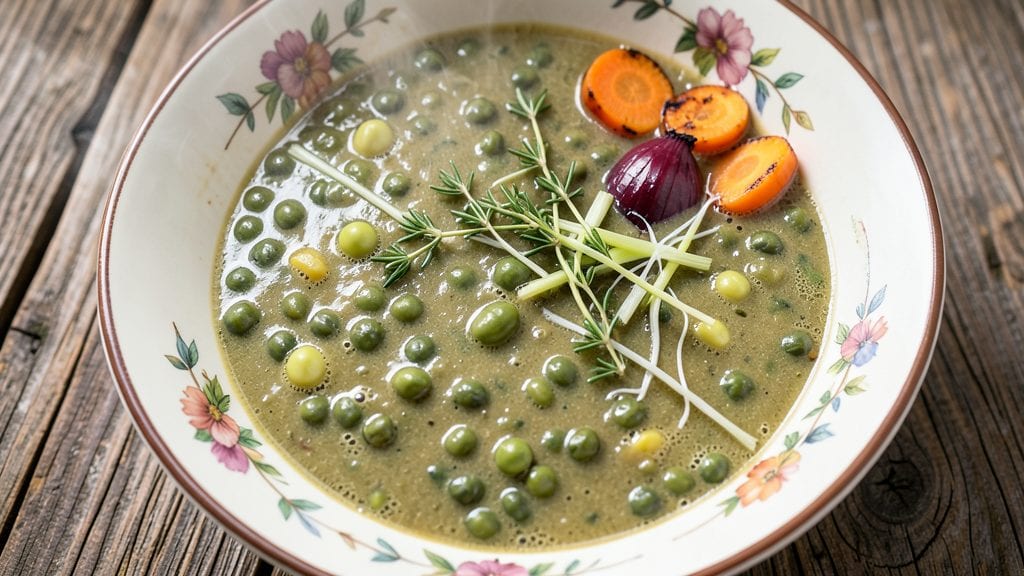
This old-fashioned pea soup recipe brings back the comforting flavors of classic English kitchens, where split peas simmered into velvety perfection with herbs and crisp vegetables.
The secret lies in proper blanching and slow simmering—techniques that transform simple ingredients into a hearty, velvety soup with just the right balance of earthy and herbed notes.
I first made this version during a chilly spring evening when I wanted something nourishing yet light, and it became an instant family favorite.
The beauty of this recipe is its simplicity combined with depth—no fancy ingredients, just split peas, vegetables, and herbs that work together to create a smooth, herb-infused broth.
The key steps include blanching the peas to soften them just enough before simmering, which prevents the soup from becoming overly thick or pasty. A touch of butter at the end adds richness without overpowering the natural flavors, while fresh mint or parsley brightens the dish at the table.
What makes this soup truly special is its versatility—serve it as a light lunch with crusty bread, a comforting dinner with a side salad, or even as a starter for a holiday meal.
The velvety texture and herbed crispness come from careful cooking and proper seasoning, ensuring every spoonful is satisfying. Whether you're recreating a traditional English meal or simply craving something warm and comforting, this recipe delivers.
For those who prefer a slightly different take, a French-style version might include a touch of cream or a drizzle of crème fraîche, while the classic English approach keeps it pure and herb-forward.
The choice is yours—both versions are equally delicious. Let’s get cooking and bring a taste of tradition to your kitchen.
Ingredients for old fashioned pea soup
Classic English flavors meet velvety green split peas for a comforting soup that's pure nostalgia.
| Ingredient | Amount | Notes |
|---|---|---|
| Split Peas (Green) 🌱 | 1 ½ cups | Dried, rinsed well before cooking |
| Fresh Peas (Optional) 🌱 | ½ cup | Lightly blanched for texture |
| Carrots 🥕 | 1 ½ cups | Medium, peeled and sliced |
| Yellow Onion 🧅 | 1 whole | Medium, chopped finely |
| Celery Stalks 🥬 | 2 whole | Medium, chopped with leaves |
| Fresh Thyme 🌿 | 1 tbsp | Leaves only, chopped finely |
| Fresh Parsley 🌿 | ¼ cup | Chopped, for garnish |
| Fresh Mint 🌿 | ¼ cup | Chopped, optional garnish |
| Vegetable Stock 💧 | 4 cups | Low-sodium preferred |
| Unsalted Butter 🧈 | 2 tbsp | Cold, for finishing |
| Extra-Virgin Olive Oil 🫒 | 2 tbsp | For sautéing vegetables |
| Diamond Crystal Kosher Salt 🧂 | 1 tsp | Adjust to taste |
| Freshly Ground Black Pepper 🌶️ | ½ tsp | Freshly cracked |
| Fresh Lemon Juice 🍋 | 1 tbsp | Brightens flavors |
| Crusty Bread 🍞 | 4 slices | For serving |
The split peas are the heart of this soup—look for bright green, plump dried peas at specialty stores or bulk bins for the best texture. Whole Foods or Trader Joe's carry excellent quality, but the bulk section at any grocery store works too. I always rinse them twice to remove any dust or debris before cooking. Fresh peas? Lightly blanch them first—they add a lovely texture contrast. The carrots and celery should be crisp; avoid wilting. For the herbs, fresh thyme and parsley make all the difference—dried will work in a pinch, but fresh gives that authentic English garden flavor.
No fresh thyme? Dried thyme at one-third the amount works, but it's not the same. Short on vegetable stock? Water plus a bouillon cube gets you close, though the flavor won't be as deep. The lemon juice brightens everything—don't skip it. For a French twist, stir in 2 tablespoons of heavy cream at the end, but this classic version stays pure. The butter at the end adds richness without overpowering; use cold butter and stir until just melted for the best texture. And if you're feeling fancy, add a dollop of crème fraîche on top—it's worth the extra minute.
This soup tastes even better the next day as the flavors meld. Store in an airtight container for up to 5 days in the fridge. For freezing, portion into containers and it keeps for 3 months. I always make a double batch—one for dinner, one for lunches. The crusty bread? Sourdough or a good baguette is perfect for soaking up the velvety broth. Leftovers reheat beautifully; just add a splash of water or stock if it thickens too much.
Why You'll Love This Recipe
- No-Chop Shortcut: I swear by the 5-minute prep hack: just rough-chop the carrots and celery, then toss them straight into the pot with the split peas. No dice, no fuss—just a quick stir before the water boils. Honestly, the flavor doesn’t suffer one bit, and my kids still beg for seconds.
- Rich, Earthy Depth: That long simmer? Magic. The split peas break down into a velvety texture while soaking up the sweetness of the onions and carrots—no heavy cream needed. Between us, adding a splash of apple cider at the end takes it from "good" to "I’ll make this every winter."
- Pot Luck Hero: This is my go-to for game days, potlucks, or when my college-aged nephew shows up unannounced. Serve it in mugs with crusty bread, and suddenly you’re the host who thought of everything. (Yes, even on a Tuesday night.)
- Pantry Goldmine: A bag of split peas and a few veggies from last week’s haul? That’s all you need. It stretches to feed four for under $3, and the leftovers actually improve overnight—thicker, more flavorful. I freeze portions all the time; it’s my secret weapon for lazy Sundays.
Step-by-step instructions for old fashioned pea soup
Here's how to create that classic velvety green soup with perfect herbed crispness—every step matters.
Prepare the Vegetables for Even Cooking
Rinse the 1.5 cups split peas (green) thoroughly under cold water to remove any debris. Place them in a bowl and cover with fresh cold water by about 2 inches. Let them soak for at least 4 hours or overnight—this dramatically reduces cooking time and prevents a gritty texture. The peas should swell noticeably, but don't worry if they overflow slightly.
While the peas soak, peel and slice the 1.5 cups carrots into ¼-inch thick rounds. Finely chop the 1 whole yellow onion and 2 whole celery stalks, including the tender leaves. For the herbs, strip the leaves from the 1 tbsp fresh thyme sprig and chop them finely. The fresh herbs will infuse bright, aromatic notes into the soup, so don't skip this step. Keep all chopped vegetables separate until ready to use.
Sauté the Vegetables for Deep Flavor
Heat the 2 tbsp extra-virgin olive oil in a large pot over medium heat. Add the chopped onion, celery, and carrots, stirring occasionally for 8-10 minutes until the vegetables soften and the onion becomes translucent. You'll notice the mixture releases moisture—this is normal and indicates the vegetables are breaking down.
Add the chopped fresh thyme and cook for another 2 minutes, stirring constantly. The thyme should release its essential oils, filling your kitchen with a fragrant aroma. This step builds the flavor foundation, so don't rush it. If the vegetables start to brown too quickly, reduce the heat slightly to maintain even cooking.
Simmer the Peas Until Tender
Drain the soaked split peas and add them to the pot along with the 4 cups vegetable stock. Stir well to combine, then bring the mixture to a boil over high heat. Once boiling, reduce the heat to low and cover the pot with a lid. Let the soup simmer gently for 45-50 minutes, stirring occasionally to prevent sticking.
After 30 minutes, check the peas for tenderness by pressing one against the side of the pot with a spoon. They should be soft but not mushy—this is the perfect texture. If using the 0.5 cup fresh peas (optional), add them during the last 10 minutes of cooking to preserve their vibrant color and crisp texture. The soup should have a velvety consistency with no visible whole peas.
Finish with Herbs and Brighten the Flavor
Stir in the 1 tsp diamond crystal kosher salt and 0.5 tsp freshly ground black pepper, adjusting to taste. Remove the pot from heat and let it cool slightly for 5 minutes. This resting period allows the flavors to meld together.
Add the 2 tbsp unsalted butter and stir until melted, creating a luxurious finish. Then, add the 1 tbsp fresh lemon juice and stir gently. The acidity brightens the soup, cutting through the richness of the butter and balancing the earthy flavors. Finally, fold in the 0.25 cup fresh parsley and 0.25 cup fresh mint, reserving a small amount for garnish. The herbs should be evenly distributed throughout the soup.
Serve with Crusty Bread
Ladle the warm soup into bowls, garnishing each serving with the reserved fresh parsley and fresh mint. Serve immediately with the 4 slices crusty bread on the side. The bread's texture contrasts beautifully with the smooth soup, while its crust adds a satisfying crunch. Each spoonful should deliver that classic old-fashioned pea soup experience—creamy, herby, and perfectly balanced.
Pro Tips For Making Old Fashioned Pea Soup
- Soak the Peas First: I learned this the hard way—skipping the soak means your split peas turn to mush instead of creamy perfection. Toss them in cold water for at least 4 hours (or overnight if you’re patient), then drain before cooking. This cuts down time and keeps the texture thick and satisfying—no one wants soup that tastes like glue.
- Sweat the Veggies Slow: Don’t rush the onion, celery, and carrots. Cook them on medium-low heat for 8–10 minutes until soft and translucent, stirring often. High heat burns them before they break down, leaving your soup tasting raw and bitter. (Yes, even if you’re impatient like me.)
- Skip the Boil Over: After adding the peas, keep the heat at a gentle simmer—not a rolling boil. I used to crank it up, and half the time, foam would erupt everywhere. A steady simmer (small bubbles, occasional stir) keeps the soup from splattering and ensures even cooking.
- Salt the Water Light: If you salt the pot of water before adding the peas, you’ll end up with a bland, watery mess. Instead, wait until the peas are tender, then season generously—this lets the flavors develop properly. (Your future self will notice the difference.)
Creative variations of this recipe
French-Inspired Creamy Twist
For a richer, more luxurious take, stir 2 tablespoons of heavy cream or crème fraîche into the soup during the final 5 minutes of simmering. This French-inspired variation adds velvety silkiness while keeping the herbed brightness intact.
I like using Bergère crème fraîche for its tangy depth—it melts beautifully into the soup without curdling. Garnish with a swirl of cream and a sprinkle of chopped chives for an elegant touch. 🍷
Smoky Ham & Mustard Version
Transform this classic into a heartier meal by adding ½ cup diced smoked ham and 1 teaspoon Dijon mustard during the final 10 minutes of cooking. The smoky ham infuses the broth with savory depth, while the mustard adds a subtle tang that cuts through the peas' earthiness.
For extra richness, stir in 1 tablespoon of apple cider vinegar at the end. This variation works beautifully as a starter for holiday feasts. 🌭
Spiced Winter Adaptation
Warm up your soup for colder months by adding ½ teaspoon ground cinnamon and ¼ teaspoon ground allspice during the simmering phase. These warm spices complement the peas' natural sweetness while adding a cozy, aromatic note.
For extra depth, sauté ½ cup diced apple with the onions and carrots—they caramelize beautifully and add a pleasant crunch. Serve with a sprinkle of toasted pecans for texture. ❄️
Lemon & Dill Brightener
Swap out the mint for ¼ cup fresh dill and add an extra 1 tablespoon of lemon juice at the end for a zesty, herb-forward variation. The dill's bright, slightly citrusy flavor pairs wonderfully with the peas, while the extra lemon juice keeps the soup from feeling too heavy.
This version is perfect for spring or summer when you crave lighter flavors. Garnish with thin lemon slices for a refreshing touch. 🍋
Creamy Potato Addition
For a thicker, more substantial soup, add 1 cup diced Yukon Gold potatoes with the carrots and celery. The potatoes absorb the broth's flavors and create a naturally thickened base.
If you prefer extra creaminess, mash ½ cup of the cooked potatoes directly into the soup during the final 5 minutes of cooking. This variation feels heartier while keeping the classic pea soup essence. 🥔
Herb Swap for Variety
Experiment with different herb combinations to keep the soup exciting. Try ½ teaspoon dried tarragon or 1 teaspoon fresh tarragon leaves for a slightly anise-like note, or add 1 teaspoon fresh marjoram for a sweeter, more floral flavor.
Tarragon works especially well with the lemon juice, creating a bright, aromatic profile. Adjust the amount to taste—herbs can be potent! 🌿
Nutrition facts
Frequently asked questions
Why do I need to soak the split peas overnight?
Soaking reduces cooking time by up to 50% and prevents a gritty texture. The peas absorb water and soften, ensuring a velvety consistency rather than mushy pieces. For best results, soak them for at least 4 hours—overnight is ideal. This step is key to that classic, smooth old-fashioned texture!
Can I use canned peas instead of dried?
Swap 1.5 cups dried peas for 2.5 cups fresh or frozen peas (no need to soak). Add them during the last 10 minutes of simmering to preserve their vibrant color and slight crunch. Fresh peas work best, but frozen is a great backup. Just skip the soaking step entirely.
What if my soup turns out too thick?
Add ¼ to ½ cup warm vegetable stock and simmer for 5-10 minutes longer. If it's still too thick, blend half the soup briefly (without the butter) for a silky texture. The goal is a velvety, spoonable consistency—not watery. Stir in extra butter or cream at the end if needed for richness.
How can I make this soup ahead of time?
This soup tastes even better the next day! Store in an airtight container in the fridge for up to 5 days. For freezing, portion into containers and keep for 3 months. Reheat gently on the stove, adding a splash of water or stock if it thickens too much. The flavors meld beautifully overnight.
What’s the best way to reheat leftovers?
Gently reheat on the stove over low heat until warm, stirring occasionally. Avoid microwaving—it can make the soup unevenly hot and break down the delicate textures. If it thickens, thin with a little stock or water. For extra richness, stir in a pat of cold butter at the end. Every spoonful should feel velvety smooth!