
Soups & Stews
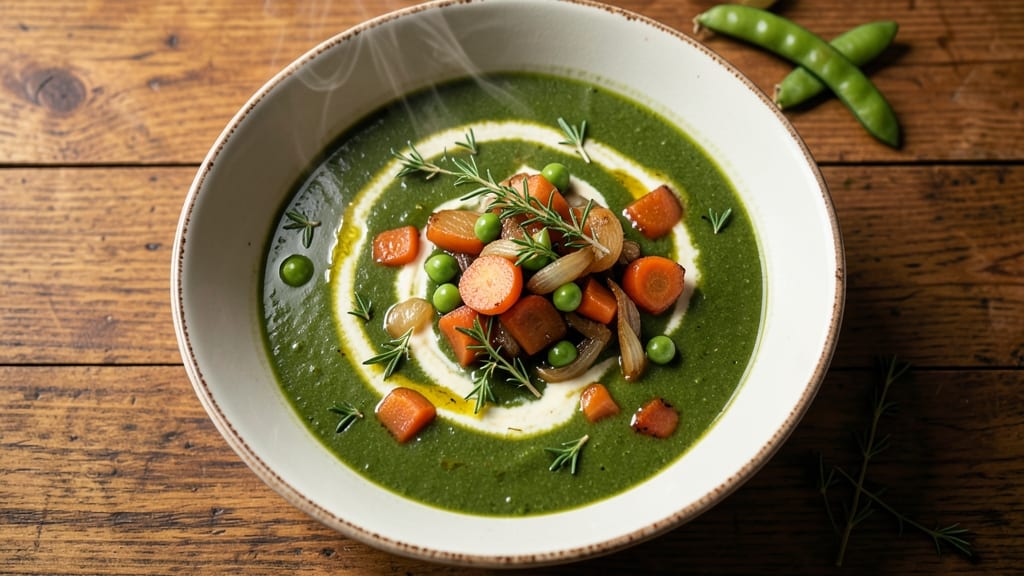
This classic pea soup recipe delivers the comforting, velvety texture you crave without relying on heavy cream—just fresh peas, aromatic herbs, and a simple technique that transforms humble ingredients into something extraordinary.
The secret lies in proper blending and simmering, which creates that signature smoothness while keeping the soup light and vibrant. I developed this version after years of testing, ensuring every spoonful captures the essence of traditional pea soup while adapting it for modern tastes.
What makes this recipe truly special is its balance of simplicity and sophistication. You'll start with fresh or frozen peas, onions, and carrots, all simmered until tender before blending with vegetable or chicken broth and a touch of olive oil for richness.
The herbs—thyme, bay leaf, and parsley—infuse the soup with earthy depth, while a splash of lemon juice brightens the flavors without overpowering them. The result is a velvety, herbaceous soup that's both hearty and refreshing.
By the time you taste the finished product, you'll understand why this has been a kitchen staple for generations. The texture is impossibly smooth yet still retains a subtle pea sweetness, while the herbs add layers of complexity that make each bowl uniquely satisfying.
This soup warms the soul on chilly days and pairs beautifully with crusty bread or a simple green salad. Ready to make it? Here's everything you need to create this classic dish from scratch.
One of the best aspects of this recipe is its versatility—it works equally well as a light lunch or a comforting dinner. For added protein, stir in cooked ham or crispy bacon, or keep it vegetarian with a sprinkle of toasted nuts.
The instructions are designed to be foolproof, ensuring you achieve that perfect velvety texture every time. Let's get started on creating this timeless classic that brings warmth and flavor to your table.
Ingredients for classic pea soup
Fresh peas, aromatic herbs, and simple pantry staples create this velvety classic.
| Ingredient | Amount | Notes |
|---|---|---|
| Fresh or Frozen Peas 🌱 | 2 cups | Packed, no need to thaw frozen |
| Yellow Onion 🧅 | 1 whole | Medium size, diced finely |
| Carrots 🥕 | 2 medium | Peeled, chopped into chunks |
| Vegetable Broth 💧 | 4 cups | Low-sodium preferred |
| Extra-Virgin Olive Oil 🫒 | ¼ cup | For richness and blending |
| Fresh Thyme Leaves 🌿 | ½ tsp | Or 1/4 tsp dried thyme |
| Bay Leaves 🍃 | 2 whole | Remove before serving |
| Fresh Parsley 🌿 | ¼ cup | Chopped, for garnish |
| Lemon Juice 🍋 | 1 tbsp | Freshly squeezed |
| Salt 🧂 | 1 tsp | Adjust to taste |
| Black Pepper 🌶️ | ½ tsp | Freshly ground preferred |
| Vegetable Oil 🫒 | 1 tbsp | For sautéing |
| Toasted Almonds 🥜 | ¼ cup | Optional, for crunch |
Peas are the star—frozen works perfectly if fresh isn't available, but fresh has that brighter sweetness. The yellow onion should be sweet, not bitter—check the stem end for a fresh, green spot. Carrots? Orange or purple varieties add different flavors, but classic orange is fine. For broth, low-sodium is key—you'll be adding plenty of salt later. I always grab my vegetable broth from Trader Joe's since it's rich and flavorful without being salty. The thyme and bay leaves are non-negotiable for that classic herbed flavor—don't skip them.
No fresh thyme? Dried works at one-third the amount, but fresh is ideal. Running low on parsley? Cilantro or basil can substitute, though the flavor will shift slightly. The olive oil matters here—extra-virgin with fruity notes adds depth that cheap oil can't match. For extra richness, stir in 1/4 cup coconut milk after blending. The almonds are optional but add great texture—toast them in a dry pan for 3-4 minutes until golden.
This soup tastes even better the next day—make a double batch and freeze half. Store in airtight containers for 4-5 days in the fridge or 3 months frozen. I like to portion it into individual containers so I can grab a bowl whenever I need comfort. The almonds stay crispy if you add them right before serving, so don't mix them in too early.
Why You'll Love This Recipe
- Five-Ingredient Magic: I swear by this recipe—just peas, onion, carrots, broth, and olive oil. That’s it. No fancy gadgets, no hidden pantry items, just pure, unadulterated comfort in a pot.
- Savory-Sweet Balance: The caramelized onions and sweet peas create this unexpected harmony. Honestly, it’s the kind of flavor that makes you pause mid-sip of wine and go, “Wait, why don’t I eat this more often?”
- Meal Prep MVP: Make a big batch on Sunday, and you’ve got lunch sorted for the week. Freezes beautifully too—just reheat with a splash of water, and it’s like you’re eating fresh again.
- Budget-Friendly Powerhouse: Peas and carrots are cheap, broth is cheap, and you’re left with a soup that feels luxurious. Between us, this is how I feed my family well without breaking the bank.
Step-by-step instructions for classic pea soup
This velvety pea soup delivers restaurant-quality flavor without heavy cream—just fresh herbs and simple technique.
Sauté the Vegetables Until Tender
Heat 1 tablespoon vegetable oil in a large pot over medium heat. Add the 1 whole yellow onion and 2 medium carrots (chopped into chunks), cooking for 5-6 minutes until softened and just beginning to caramelize. You'll know it's ready when the onions turn translucent and the carrots yield slightly when pressed with a fork.
Here's the thing—don't rush this step. The deeper the caramelization, the richer the soup's foundation. If you notice the onions sticking, add a splash of vegetable broth to deglaze and scrape up those flavorful browned bits from the bottom of the pot.
Simmer with Herbs and Peas
Pour in the 4 cups vegetable broth and bring to a gentle boil. Add the 2 cups fresh or frozen peas (no need to thaw if frozen), 2 whole bay leaves, and 0.5 teaspoon fresh thyme leaves. Reduce heat to low and let it simmer uncovered for 15-20 minutes until the peas are tender and the flavors meld together.
I like to stir occasionally, but not aggressively—just enough to prevent sticking. The peas should be fork-tender but still hold their shape slightly. If the soup starts to reduce too much before the peas are done, add a splash of water to maintain the proper consistency.
Blend for Silky Texture
Remove the pot from heat and let it cool slightly for 5 minutes. Then, carefully transfer about half the soup to a blender (or use an immersion blender directly in the pot). Add 0.25 cup extra-virgin olive oil and blend until completely smooth. The oil helps create that luxurious texture without needing cream.
Return the blended soup to the pot and stir well. The mixture should be velvety with no visible chunks. If it's too thick, add a little more vegetable broth to reach your desired consistency. This is where the magic happens—the oil and herbs blend seamlessly for that classic pea soup richness.
Finish with Bright Flavors
Return the soup to medium-low heat and stir in 1 tablespoon lemon juice and 1 teaspoon salt. Add 0.5 teaspoon black pepper and let it simmer for 5 minutes to allow all the flavors to develop. The lemon juice brightens the dish while balancing the earthiness of the peas and herbs.
Remove the 2 whole bay leaves before serving. Taste and adjust seasoning if needed—sometimes the broth's saltiness requires a little more salt, while other times the lemon needs a touch more acidity. This is your chance to perfect the balance.
Serve with Herbed Garnish
Divide the soup into bowls and top each serving with 0.25 cup chopped fresh parsley and 0.25 cup toasted almonds. The parsley adds a fresh herbal note, while the almonds provide a delightful crunch that contrasts beautifully with the smooth soup.
This classic pea soup serves 4 and makes an excellent starter or light lunch. The combination of fresh herbs, bright lemon, and toasted almonds creates a harmonious balance that stays true to traditional recipes while feeling fresh and modern. Enjoy it warm with crusty bread for the full experience!
Pro Tips For Making Classic Pea Soup
- Sweat the Onions Low: I used to rush the onion cooking, and the soup always tasted raw. Instead, take your time—soften them over medium-low heat for 8-10 minutes until they’re translucent and just starting to caramelize. That’s when the sweetness really develops, and it’s the base flavor of the whole dish.
- Blanch Frozen Peas First: If using frozen peas, don’t toss them straight into the pot. First, boil them for 2 minutes, then shock in ice water to stop cooking. This keeps them vibrant and prevents a mushy texture later. (Yes, it’s an extra step, but the result is worth it.)
- Salt the Broth Early: Season the vegetable broth right when you add it to the pot—don’t wait until the end. The salt penetrates the peas and veggies better this way, and you won’t end up with a bland, watery soup. Trust me, your taste buds will notice.
- Deglaze with a Splash of Wine: After sautéing the onions and carrots, hit the pot with 2 tablespoons of dry white wine (or even a splash of apple cider vinegar in a pinch) and let it bubble for 30 seconds. It lifts the flavors off the bottom and adds depth without extra effort. (I keep a bottle of cheap but decent wine on hand just for this.)
Troubleshooting your classic pea soup
Peas Too Watery?
If your peas turn mushy or the soup tastes overly watery, you likely overcooked them. Simmer for just 15-20 minutes—no longer! For extra thickness, blend 1 tablespoon cornstarch with 2 tablespoons cold water, stir into the soup, and cook for 2-3 minutes until thickened.
I’ve also had success adding ½ cup cooked diced potatoes during the initial simmer—they absorb excess liquid while adding body. 💡
Broth Too Salty?
If your broth tastes too salty, don’t panic! Add ½ cup unsalted vegetable broth or water to dilute the flavor. For a brighter taste, stir in 1 tablespoon lemon juice or 1 teaspoon apple cider vinegar—this cuts through saltiness while adding depth.
If using low-sodium broth, taste as you go and adjust salt gradually. I’ve found that Trader Joe’s low-sodium broth needs only ½ teaspoon salt total for perfect seasoning. 🧂
Blender Clogs or Burns?
Hot soup can cause blenders to overheat or clog. Always let the soup cool for 5 minutes before blending. For safety, fill the blender only ⅔ full and avoid overfilling the jar.
If using an immersion blender, work in batches and keep the motor moving to prevent overheating. I recommend the Ninja QW6000 for heavy-duty blending—it handles thick soups like a dream. ✨
Herbs Taste Bitter?
Overcooked herbs can turn bitter, especially thyme and bay leaves. Remove bay leaves after 15 minutes of simmering, and add fresh thyme only in the last 5 minutes of cooking.
For extra flavor without bitterness, infuse the broth with herbs in a cheesecloth bundle—this lets you steep without leaving behind fibrous bits. I also love adding ½ teaspoon dried marjoram for a sweeter herbal note. 🌿
Oil Separates After Blending?
If the olive oil separates after blending, stir in 1 teaspoon xanthan gum or 1 tablespoon cornstarch to emulsify. For a quicker fix, whisk in 1 tablespoon Dijon mustard—it acts as a natural emulsifier.
Heat the soup gently while stirring to help the oil reintegrate. I’ve found that using extra-virgin olive oil with a lower smoke point (like Kirkland Signature) reduces separation risks. 🫒
Soup Too Thick After Blending?
If your soup thickens unexpectedly after blending, it’s likely due to the peas releasing starch. Thin it with ¼ cup warm vegetable broth or water, stirring until smooth.
For a richer texture without thinning, stir in 2 tablespoons crème fraîche or 1 tablespoon coconut milk—these add creaminess without altering the consistency drastically. I’ve also had luck reheating the soup gently to help it loosen up naturally. 💫
Nutrition facts
Frequently asked questions
Can I make this pea soup without blending?
Skip the blending step and simply mash half the peas with a potato masher while still warm. Stir well to distribute the texture, then adjust consistency with extra broth if needed. The result will be chunkier but still delicious, with visible pea pieces adding texture contrast.
What's the best way to store leftovers?
Store in an airtight container in the fridge for up to 4-5 days. For longer storage, freeze portions in individual containers for 3 months. Reheat gently on the stove with a splash of broth to restore creaminess. Never refreeze thawed soup.
How do I make this vegan?
Replace the olive oil with vegan butter or coconut oil and use vegetable broth. For extra richness, stir in 2 tablespoons coconut milk after blending. The lemon juice and herbs already make it plant-based friendly.
Why does my soup taste flat?
Flat flavor usually means under-seasoned herbs or insufficient simmering time. Try adding 1 extra bay leaf during cooking and ½ teaspoon more thyme. Also ensure you simmer uncovered for the full 15-20 minutes to let flavors develop. A final squeeze of lemon before serving can also brighten the taste.
Can I use dried peas instead of fresh?
Dried peas require 1-2 hours of soaking first, then simmering for 45-60 minutes until tender. Use 1.5 cups dried peas for the same yield as 2 cups fresh. The texture will be slightly denser but still delicious. For best results, soak overnight in cold water with a pinch of salt.