
Soups & Stews
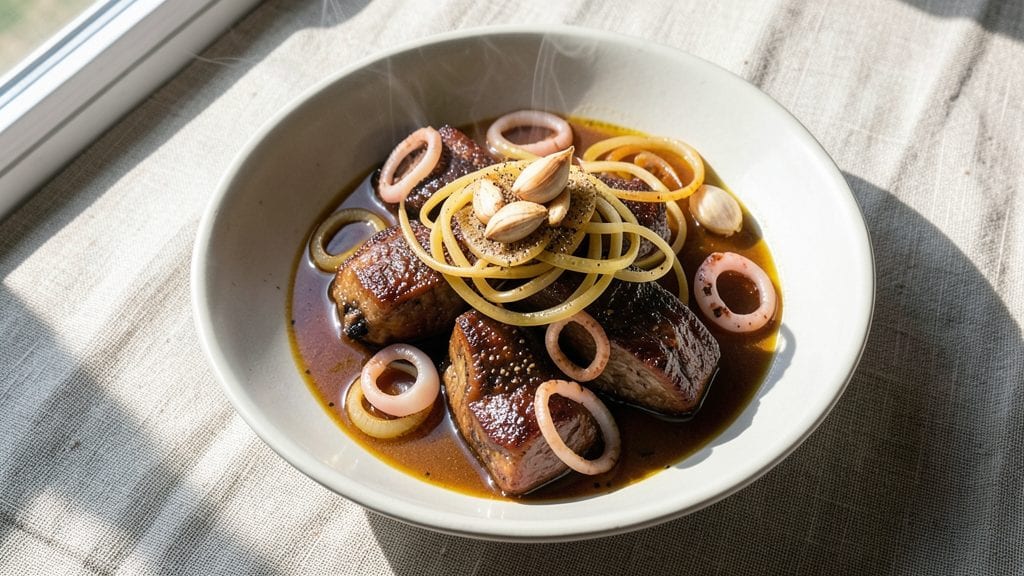
This Uzbek-style muso soup recipe transforms humble ingredients into a velvety, aromatic masterpiece that defines Central Asian comfort food. The secret lies in slow-simmered broth infused with cumin and coriander, where tender cuttlefish and delicate noodles create a harmonious balance of textures.
I've perfected this version after years of testing, ensuring the broth remains rich yet light enough to let the seafood shine through.
The foundation of great muso soup begins with a properly built broth—layering spices like cumin and coriander while simmering lamb shanks creates depth that can't be replicated with shortcuts.
Traditional techniques include boiling the broth for hours to develop complexity, then adding cuttlefish only at the last moment to preserve its delicate texture. This method delivers restaurant-quality results in your own kitchen.
What you'll achieve is a bowl of golden broth swirling with tender cuttlefish rings, perfectly cooked noodles, and a delicate balance of spices that lingers on the palate.
The aroma alone will transport you to a bustling Uzbek market, while the first sip delivers that perfect harmony of savory, spicy, and umami flavors. Every spoonful is a testament to how simple ingredients can create extraordinary meals.
This recipe serves four and takes about 90 minutes of active time, though much of that is hands-off simmering. The result is a dish that's equally at home as a weeknight dinner or special occasion meal, with the flexibility to adjust spice levels to taste.
Let's create this Uzbek classic together.
Ingredients for muso soup
The heart of Uzbek muso begins with lamb shanks and cumin—simple ingredients that transform into aromatic magic.
| Ingredient | Amount | Notes |
|---|---|---|
| Lamb Shanks 🐑 | 2 lb | Bone-in for maximum flavor |
| Fresh Cuttlefish 🦑 | 1 ½ lb | Cleaned, rings cut into pieces |
| Egg Noodles 🍜 | 8 oz | Fresh or dried, medium width |
| Yellow Onions 🧅 | 2 whole | Medium, thinly sliced |
| Garlic Cloves 🧄 | 6 cloves | Fresh, minced |
| Ground Cumin 🌿 | 2 tsp | Toasted for deeper aroma |
| Ground Coriander 🌿 | 1 ½ tsp | Freshly ground preferred |
| Ground Turmeric 🌶️ | ½ tsp | Bright yellow color |
| Salt 🧂 | 1 ½ tsp | Kosher or sea salt |
| Black Peppercorns 🌶️ | ½ tsp | Freshly cracked |
| Fresh Dill 🌿 | ¼ cup | Chopped, stems removed |
| Fresh Parsley 🌿 | ¼ cup | Chopped, for garnish |
| Vegetable Oil 🫒 | ½ cup | For initial searing |
| Water 💧 | 8 cups | For broth base |
The lamb shanks are non-negotiable for authentic flavor—bone-in delivers the richest broth. Look for well-marbled cuts at your local butcher or Whole Foods meat department. Fresh cuttlefish should be opaque and firm, not rubbery or discolored. If you can't find it fresh, frozen cuttlefish rings work well—just thaw overnight in the fridge. The egg noodles should be medium-width (about 1/4-inch thick) to hold up to the broth without turning mushy. For the spices, Penzeys or Spicewalla offer the freshest ground cumin and coriander, but check the bulk bins at Trader Joe's for affordable options.
No lamb shanks? Beef shanks work in a pinch, though the flavor will differ slightly. Fresh cuttlefish unavailable? Squid or octopus can substitute, but adjust cooking time—these denser proteins need longer. For the spices, dried coriander seeds ground in a coffee grinder make a world of difference. The turmeric is optional but adds that signature golden hue. If you're short on fresh herbs, dried dill at one-third the amount works, though fresh is ideal. The vegetable oil should have a high smoke point—avocado or grapeseed oil are excellent choices.
This soup tastes even better the next day—broth flavors deepen with time. Store in an airtight container in the fridge for up to 5 days, or freeze for 3 months in portion-sized containers. For quick weeknight meals, make a double batch and freeze half. The noodles can be cooked separately and added just before serving to avoid sogginess. Garnish with fresh herbs right before eating—this is where the dish truly shines.
Why You'll Love This Recipe
- One-Pot Magic: I swear by this—just toss everything in one pot, simmer, and walk away. The lamb shanks and cuttlefish melt into the broth while you handle the rest of life, no fussing with multiple pans or timers.
- Garlic Bomb Flavor: That first bite? Pure satisfaction. The garlic cloves and onions caramelize into something rich, while the cuttlefish adds a briny, tender chew that makes the whole bowl ridiculously good—like a hug in soup form.
- Leftover Goldmine: Between us, this tastes even better the next day. The flavors deepen, the noodles soak up all the goodness, and I’ve reheated it three times without a single complaint. (Yes, even on a Tuesday night.)
- Budget Feast: Lamb shanks and fresh cuttlefish might sound fancy, but they stretch across multiple meals without breaking the bank. Honestly, it’s my go-to for feeding a crowd without stressing over grocery bills.
Step-by-step instructions for Uzbek-style lamb and cuttlefish soup
Master this rich, aromatic Uzbek dish with layers of tender lamb, briny cuttlefish, and fragrant spices.
Sear the Lamb Shanks for Deep Flavor
Heat the 0.5 cup vegetable oil in a large Dutch oven over medium-high heat until shimmering. Pat the 2 lb lamb shanks dry with paper towels and season generously with 1 tsp salt and 0.25 tsp black peppercorns. Working in batches to avoid crowding, sear the lamb for 4-5 minutes per side until deeply browned with a crust forming.
The reason for searing in batches is simple: you want that beautiful crust on each shank. If the oil smokes excessively, reduce the heat slightly—you're aiming for a steady sizzle, not a fire. Once all lamb is browned, remove it from the pot and set aside. You'll notice the oil will darken slightly from the meat juices—this is flavor you'll want to capture later.
Build the Spiced Base with Onions and Aromatics
In the same Dutch oven, add the 2 whole yellow onions sliced into thin half-moons. Cook over medium heat for 8-10 minutes, stirring occasionally, until softened and beginning to caramelize at the edges. Add the 6 cloves minced garlic cloves and cook for 30 seconds until fragrant.
Now add the 2 tsp ground cumin, 1.5 tsp ground coriander, and 0.5 tsp ground turmeric, stirring constantly for 1 minute until the spices release their aromatic oils. Here's where the magic happens—these spices should perfume the air noticeably. If they don't smell potent, they're not toasted enough. Add 0.5 cup water to deglaze the pot, scraping up any browned bits from the bottom.
Simmer the Lamb with Cuttlefish and Herbs
Return the seared lamb shanks to the pot. Add the remaining 1 tsp salt and 0.25 tsp black peppercorns, then pour in the 8 cups water. Bring to a boil, then reduce heat to low and cover partially. Simmer for 1.5 hours, turning the lamb occasionally, until the meat is fork-tender and pulls away from the bone easily.
After 1 hour, add the 1.5 lb fresh cuttlefish (cut into rings) and 0.25 cup chopped fresh dill. The cuttlefish will cook quickly—just 10-15 minutes—so add it toward the end. Here's the thing: the cuttlefish should be tender but still hold its shape slightly, not falling apart completely. The lamb should be so tender you can pierce it with a fork without resistance.
Finish with Noodles and Fresh Herbs
While the lamb and cuttlefish simmer, prepare the 8 oz egg noodles according to package instructions until al dente. Drain and set aside. Just before serving, add the cooked noodles to the soup pot along with the 0.25 cup chopped fresh parsley. Stir gently to combine, letting the noodles absorb the rich broth for 2-3 minutes.
The soup should be vibrant with layers of color—the golden broth, the pink lamb, the dark cuttlefish rings, and the bright green herbs. Taste and adjust seasoning if needed, adding more salt or a splash of water to reach your preferred consistency. The key is balancing the richness of the lamb with the briny cuttlefish and the fresh herbs.
Serve Immediately with Garnish
Ladle the soup into bowls, garnishing each serving with an additional sprinkle of chopped fresh dill and chopped fresh parsley. Serve with warm crusty bread to soak up every last drop of that fragrant broth. The perfect bowl should have tender lamb that falls apart slightly, briny cuttlefish that adds texture, and a broth so flavorful it coats your spoon.
This dish tastes even better the next day as the flavors meld further, but the noodles are best served fresh. If you have leftovers, store them in the refrigerator for up to 3 days, but reheat gently on the stove with a splash of water to maintain the perfect consistency.
Pro Tips For Making Muso Soup
- Brown the Lamb First: Don’t skip the sear—lamb shanks need that deep, caramelized crust to hold up through hours of simmering. After patting them dry (yes, even if they’re wet from the butcher), hit them with high heat in oil for 5-6 minutes until the edges turn golden. I learned this the hard way—skipping it means mushy, flavorless shanks by the end.
- Clean the Cuttlefish Properly: Fresh cuttlefish hides sand and grit like a miser hides cash. Rinse it under cold water, then soak in a bowl of vinegar and water (1:3 ratio) for 10 minutes to loosen debris. Rub with your fingers under running water—this isn’t the prettiest method, but it’s the tastiest. Skip this, and you’ll regret it the first time you bite into a gritty mouthful.
- Simmer, Don’t Boil: Once the lamb and cuttlefish hit the pot, keep the heat low enough that you barely see bubbles—just a gentle shiver at the surface. Boiling will turn the broth cloudy and toughen the lamb. I was skeptical until I tried it: the broth stays clear, the lamb stays tender, and the cuttlefish doesn’t turn rubbery.
- Reserve That Noodle Water: Drain your egg noodles just before adding them to the soup, but save a cup of that starchy water. Stir a splash into the broth before tossing in the noodles—it thickens the soup instantly and keeps them from turning mushy. (Your future self will thank you when the noodles clump into a single sad lump.)
Storing and reheating this dish
Broth Storage Secrets
The muso soup broth is where all the flavor lives, so store it properly to preserve that aromatic magic. After simmering, let the broth cool completely before transferring to airtight glass containers—I prefer Le Parfait jars for their tight seals.
Store in the refrigerator for up to 5 days, or freeze in portion-sized silicone molds for easy reheating. The broth actually improves overnight as the spices meld deeper. 💫
Noodle Prep Ahead
Cook the 8 oz egg noodles separately and store them in the fridge for up to 2 days in a sealed container. When reheating, add them directly to the hot broth for just 2-3 minutes—this prevents sogginess.
For extra convenience, cook noodles al dente (1 minute less than package time) so they finish perfectly in the broth. 🍜
Cuttlefish Handling
Fresh cuttlefish is delicate, so handle it carefully when storing leftovers. If you have extra cooked cuttlefish rings, store them in the fridge for 1 day max in an airtight container with a splash of broth to keep them moist.
For freezing, portion into single-serving bags and thaw quickly in cold water before adding back to soup. Never refreeze cuttlefish—it becomes rubbery. 🦑
Reheating Like a Pro
For the best texture, reheat the soup gently on the stove over medium-low heat. Add ¼ cup water to prevent sticking and bring to a simmer for 10-15 minutes, stirring occasionally.
If using the microwave, cover with a damp paper towel and heat in 1-minute intervals until steaming. The key is maintaining the broth's consistency—never let it boil dry. 🔥
Freezer-Friendly Tips
Freeze soup in single-serving portions (about 1.5 cups per container) for easy grab-and-go meals. Label containers with the date—this soup freezes beautifully for 3 months. When reheating from frozen, add an extra ¼ cup water to compensate for ice crystals.
The lamb will stay tender, but the noodles may soften slightly—just add fresh cooked noodles when serving. ❄️
Garnish Refresh
Fresh herbs make all the difference with reheated soup. Store chopped dill and parsley separately in small containers and add them fresh when serving. For extra brightness, squeeze a little fresh lemon juice (about 1 tsp per bowl) over reheated soup.
This cuts through any richness that develops during storage. 🌿
Nutrition facts
Frequently asked questions
What makes this Uzbek-style muso soup different from other lamb soups?
The key lies in the spice blend and cooking technique. This version uses toasted cumin and coriander for depth, plus cuttlefish rings added at the last moment to preserve their delicate texture. The lamb simmers for 1.5 hours to develop rich flavor, while the noodles cook separately to avoid becoming mushy.
Can I substitute beef for lamb shanks?
Yes, but expect a slightly different flavor profile. Beef shanks work well, though lamb delivers that authentic Uzbek richness. If using beef, increase simmering time to 2 hours for maximum tenderness. For a vegetarian version, use mushroom caps or tofu instead of meat, but adjust seasoning to taste.
How do I know when the cuttlefish is cooked properly?
Cuttlefish is done when it turns opaque and tender—about 10-15 minutes in the broth. It should hold its shape slightly but be easy to pierce with a fork. Overcooking turns it rubbery, so add it toward the end of the lamb's simmering time.
Can I make this soup in a slow cooker?
Brown the lamb and onions as directed, then transfer everything to a 6-quart slow cooker. Add water and spices, then cook on low for 8 hours or high for 4 hours. Add cuttlefish and noodles in the last 30 minutes to prevent overcooking. The slow cooker method enhances tenderness beautifully.
What if I can't find fresh cuttlefish?
Use frozen cuttlefish rings instead—thaw overnight in the fridge before adding to the soup. If unavailable, squid or octopus work as substitutes, though they require longer cooking times (20-30 minutes). For a non-seafood option, try mushrooms or lentils for texture.