
Soups & Stews
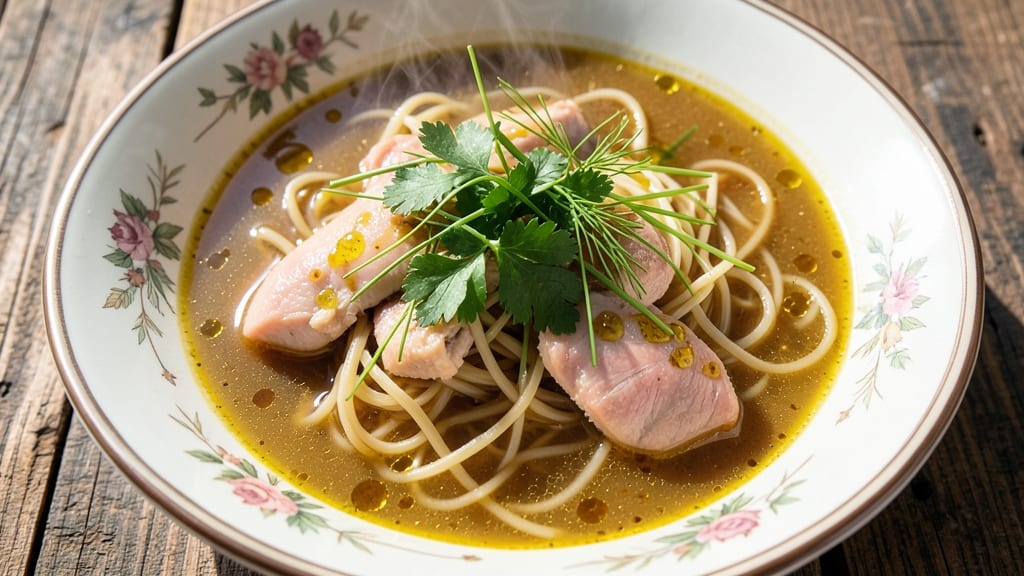
This Iranian soup recipe captures the soul of Persian home cooking with its bright lemon and fragrant herb broth that feels like a warm embrace.
The secret lies in the clarified broth, where herbs like parsley and tarragon infuse the liquid with delicate complexity, while lemon juice adds a refreshing tang that balances the richness. I developed this version after years of studying traditional recipes, simplifying techniques without sacrificing authenticity.
The magic begins with a clarified broth that's crystal clear yet deeply flavorful, achieved through careful straining and simmering. This method removes impurities while preserving the aromatic essence of the herbs and spices.
The soup's versatility makes it perfect for any season—light enough for summer yet comforting enough for winter nights when paired with crusty bread.
What you'll achieve is a soup that's both elegant and approachable, with a velvety broth that coats the palate and fresh herbs that add vibrant color and texture. The lemon brightens each spoonful, creating harmony between the earthy herbs and the richness of the broth.
This recipe delivers restaurant-quality results with just a few simple ingredients and precise techniques.
Whether you serve it as a starter or a main dish, this Iranian soup brings the flavors of Persia to your table with professional ease. The instructions will guide you through each step, ensuring your broth achieves that perfect balance of clarity and depth. Let's create this timeless dish together.
Ingredients for iranian soup
Fresh herbs and bright lemon create this elegant Persian-inspired soup's signature clarity and depth.
| Ingredient | Amount | Notes |
|---|---|---|
| Fresh Parsley Stems 🌿 | 1 cup | Tough stems for broth base |
| Fresh Tarragon Stems 🌿 | ½ cup | Tough stems preferred |
| Fresh Dill Stems 🌿 | ½ cup | Tough stems for flavor |
| Fresh Lemon Juice 🍋 | ½ cup | Freshly squeezed |
| Chicken Broth 💧 | 6 cups | Low-sodium preferred |
| Extra-Virgin Olive Oil 🫒 | ¼ cup | For finishing drizzle |
| Fresh Flat-Leaf Parsley 🌿 | ½ cup | Leaves only, chopped |
| Fresh Tarragon Leaves 🌿 | ¼ cup | Finely chopped |
| Fresh Dill Leaves 🌿 | ¼ cup | Finely chopped |
| Salt 🧂 | 1 ½ tsp | Adjust to taste |
| Fresh Lemon Zest 🍋 | 1 tsp | Brightens the broth |
| Crusty Bread 🍞 | 4 slices | For serving |
| Unsalted Butter 🧈 | 2 tbsp | For finishing |
The herb stems are the secret to that crystal-clear broth. Look for fresh, vibrant stems at your local farmers market—they've got more flavor than anything from the grocery store's plastic containers. Whole Foods or local Persian markets often carry the best quality tarragon and dill. If you can't find fresh stems, dried herbs work in a pinch (use half the amount), but the texture won't be as smooth. The parsley and dill leaves you'll add later should be bright green with no yellowing—those wilted ones at the back of the fridge won't cut it here. (Trust me, you'll taste the difference.)
No fresh tarragon? Fresh marjoram or basil can stand in, though the flavor will shift slightly. Running low on lemon juice? Substitute lime juice at the same amount, but the color will be different. The broth is flexible—if you're serving this to guests who prefer it richer, stir in 1 tbsp of heavy cream per serving at the end. For extra depth, add 1 tsp of saffron threads steeped in 2 tbsp warm water when you strain the broth. (It's worth the splurge for special occasions.)
This soup tastes even better the next day as flavors meld. Store the broth in an airtight container in the fridge for up to 5 days—the herbs keep their brightness surprisingly well. For longer storage, freeze portions in ice cube trays (they thaw perfectly for quick meals). The butter and olive oil should be added fresh when reheating—always drizzle them in at the end to maintain that velvety texture. Serve with the crusty bread slices toasted in the oven for 3-5 minutes at 375°F.
Why You'll Love This Recipe
- Herb Stems Save Time: I swear by this trick—no chopping leaves, just rough-chop the stems. Those parsley, tarragon, and dill stems infuse flavor while you simmer, so I’m not wasting fresh herbs or my energy.
- Bright, Tangy Magic: That lemon juice isn’t just for taste—it cuts through the richness of the broth and makes the whole soup pop. Honestly, the first time I skipped it, I almost felt like I’d missed something.
- Meal Prep MVP: This soup tastes just as good the next day, which means I can make a big batch on Sunday and have effortless lunches all week. Plus, the herbs keep it fresh longer than you’d think.
- Budget-Friendly Luxury: Chicken broth is my go-to base, but even if I use store-bought, it’s still cheaper than takeout. Between us, this recipe feels fancy but costs next to nothing—my wallet’s favorite.
Step-by-step instructions for herbed lemon and herb clarified broth
Here's how to create a bright, aromatic Iranian-inspired broth that's light yet deeply flavorful.
Simmer the Herb Stems for Deep Flavor
In a large pot, combine the 1 cup fresh parsley stems, 0.5 cup fresh tarragon stems, and 0.5 cup fresh dill stems with the 6 cups chicken broth. Bring to a gentle boil over medium-high heat, then immediately reduce to a simmer and cover partially. Let it cook for 20 minutes—this draws out all the herbal essence without making the broth bitter.
I like to stir the stems gently after 10 minutes to prevent them from sticking to the bottom. The broth should develop a vibrant green hue and a fragrant aroma that fills your kitchen. This is the foundation of your soup's complex flavor profile, so don't rush this step.
Strain and Infuse with Citrus
After simmering, carefully strain the broth through a fine-mesh sieve into a clean pot, pressing gently on the stems to extract maximum flavor. Discard the used stems. Return the strained broth to the pot and add the 0.5 cup fresh lemon juice and 1 tsp fresh lemon zest. Stir well to combine.
Bring the broth back to a simmer over medium heat for 5 minutes to let the citrus brighten the flavors. The lemon zest will infuse the broth with its signature tangy aroma—this is what makes this soup distinctly Iranian. Taste and adjust seasoning with the 1.5 tsp salt if needed, remembering that the broth will reduce slightly as it cooks further.
Clarify the Broth for a Silky Texture
In a separate bowl, whisk together the 0.5 cup fresh flat-leaf parsley, 0.25 cup fresh tarragon leaves, and 0.25 cup fresh dill leaves with the 0.25 cup extra-virgin olive oil. This creates a natural clarifying agent that will give your broth that signature silky texture. Slowly whisk this mixture into the simmering broth while stirring continuously.
Let the broth simmer gently for 10 minutes uncovered. You'll notice the herbs will rise to the surface and form a frothy layer. This is completely normal—it's the oils and fine particles clarifying. Carefully ladle the broth through a fine-mesh strainer into a clean pot, leaving the frothy layer behind. This final straining step is what gives this soup its characteristic clarity and refined texture.
Finish and Serve with Crusty Bread
Return the clarified broth to medium-low heat and let it warm through for 2-3 minutes. In a small saucepan, melt the 2 tbsp unsalted butter over low heat until just melted. Drizzle the butter into the broth while stirring gently—this adds richness without overpowering the delicate herbal notes.
Ladle the finished broth into bowls and serve immediately with the 4 slices crusty bread. The contrast between the silky broth and the hearty bread creates the perfect balance. Each spoonful should deliver bright citrus notes, fresh herbal aromas, and just the right amount of body. This soup is best enjoyed fresh while the herbs are at their peak flavor.
Pro Tips For Making Iranian Soup
- Trim the Stems Right: Snip the parsley, tarragon, and dill stems at a 45-degree angle—about 2 inches from the base—before simmering. This exposes more surface area for flavor infusion without making the soup look like confetti exploded in your pot.
- Simmer, Don’t Boil: Keep the broth at a gentle simmer (tiny bubbles, not rolling) once the herbs are added. I learned this the hard way—boiling turns the tarragon bitter and dulls the dill’s bright punch. A low flame preserves the delicate flavors you’re paying good money for.
- Strain, Then Taste: After simmering, strain out the stems—but save a handful for garnish. Then, before adding lemon juice, taste the broth plain. The acidity needs to cut through the richness, not get lost in it. Adjust gradually, or you’ll end up with a sad, flat soup.
- Lemon Juice Last: Add the lemon juice after the broth has cooled slightly off the heat. The acid reacts with the hot broth and can make it cloudy or even curdle if dumped in too early. Wait 2 minutes—it’s worth the pause.
Regional styles of this recipe
Tehran's Classic Ash-e Shireh
This elegant Persian soup from Tehran’s culinary tradition replaces the clarified broth with a delicate chicken and rice base. Start with 1 lb boneless chicken thighs poached in 4 cups water with 1 bay leaf and ½ tsp turmeric until tender.
Shred the meat and combine it with ½ cup basmati rice, 1 cup yogurt, and 1 tbsp dried fenugreek leaves (a key Persian herb). Simmer until rice is tender, then finish with 2 tbsp chopped mint and 1 tsp saffron steeped in warm water.
The result is a creamy, herbaceous soup that’s lighter than the clarified version but equally comforting. 🌿
Isfahan's Spiced Lamb Soup
Isfahan’s version, Ash-e Ghavami, transforms this soup into a hearty lamb stew. Brown 1 lb lamb shoulder in 2 tbsp ghee, then add 1 large onion (diced), 3 garlic cloves (minced), and 1 tsp ground cinnamon.
Deglaze with 1 cup white wine, then add 6 cups chicken broth, 1 cup chickpeas, and 1 cup spinach. Simmer until lamb is tender, then finish with 1 tbsp lemon juice and 2 tbsp chopped cilantro.
The lamb adds deep umami richness, while the chickpeas and spinach create a satisfying texture contrast. The cinnamon and wine give it a sophisticated depth that’s distinctly Isfahani. 🍷
Northern Azerbaijan's Herb-Forward Ash
In Azerbaijan’s northern regions, this soup becomes Ash-e Sabzi, a vibrant herb-forward dish. Replace the clarified broth with a thick green paste made from 2 cups finely chopped parsley, 1 cup cilantro, ½ cup dill, ½ cup mint, and 1 garlic clove.
Cook the paste in 2 tbsp olive oil for 5 minutes, then add 4 cups chicken broth, 1 cup shredded chicken, and 1 tbsp lemon juice. The paste gives the soup a bold, herby flavor that’s almost like a pesto-infused broth.
Serve with lavash bread for dipping—this version is a staple in Azerbaijan’s highland cuisine. 🌱
Yazd's Clarified Broth with Pomegranate
Yazd’s arid climate inspired a fruit-infused twist on the clarified broth. After clarifying the broth as directed, stir in ¼ cup pomegranate molasses and 1 tsp rose water for a sweet-tart balance. Garnish with 2 tbsp pomegranate seeds and a drizzle of extra-virgin olive oil.
The pomegranate adds a juicy contrast to the silky broth, while rose water lends a floral note that’s quintessential to Yazd’s culinary style. This version is especially popular during Persian New Year (Nowruz) celebrations. 🍇
Modern Iranian Fusion: Clarified Broth with Shrimp
For a coastal-inspired twist, add 1 lb shrimp (peeled and deveined) to the clarified broth during the final 5 minutes of simmering. The shrimp absorb the herbal and citrus flavors beautifully, turning this into a lighter, seafood-forward soup.
Finish with 1 tbsp chopped chives and a squeeze of lemon. This fusion version works perfectly as a summer starter or light main course, especially when paired with grilled flatbread. The shrimp’s sweetness complements the broth’s brightness without overpowering it. 🦐
Vegetarian Adaptation with Lentils
To make this soup vegetarian-friendly, replace the chicken broth with 6 cups vegetable broth and add 1 cup green lentils during the initial 20-minute simmer. The lentils absorb the herbal flavors while adding protein and earthiness. For extra richness, stir in 2 tbsp tahini at the end.
This version is just as satisfying and aligns with Iran’s long tradition of plant-based soups, like Ash-e Laleh. It’s a great option for those who want to keep the soup’s elegance without meat. 🌱
Nutrition facts
Frequently asked questions
What makes this Iranian soup different from other herb soups?
The clarified broth technique sets this apart—it creates a silky, crystal-clear liquid that's lighter than traditional Persian soups like Ash-e Reshteh. The combination of fresh herb stems (parsley, tarragon, dill) with lemon juice and zest delivers a bright, aromatic profile that's distinctly Iranian.
Can I use dried herbs instead of fresh?
For the stems, dried herbs won't work as well—they lack the depth of flavor. However, you can substitute 1 tbsp dried parsley and 1 tsp dried tarragon/dill for the fresh leaves in the final clarification step. For best results, use high-quality dried herbs and reduce the amount by half. The texture won't be as refined, but the flavor will still shine.
How do I adjust the recipe for spicier flavors?
Add 1-2 tsp of ground sumac or ½ tsp red pepper flakes when infusing the lemon juice. For heat, stir in 1 tbsp of chopped fresh mint (which has a subtle spicy note) or a pinch of cayenne. The clarified broth technique means you can easily adjust spice levels without overpowering the delicate herbal notes.
Why does the broth turn cloudy?
Cloudiness usually means the broth wasn't strained properly or the herbs weren't cooked long enough. For a crystal-clear result, press the herb stems firmly through a fine-mesh sieve and simmer the broth uncovered during the final clarification step. If it's slightly cloudy, it's still delicious—just less refined. The key is patience with straining!
What's the best way to reheat leftovers?
Gently reheat only until warm (medium-low heat) to preserve the delicate flavors. Never boil—this can break the broth's silky texture. Add a splash of water if needed, then finish with fresh herbs and butter. Store leftovers in an airtight container for up to 5 days. The broth actually improves overnight as flavors meld!