
Soups & Stews
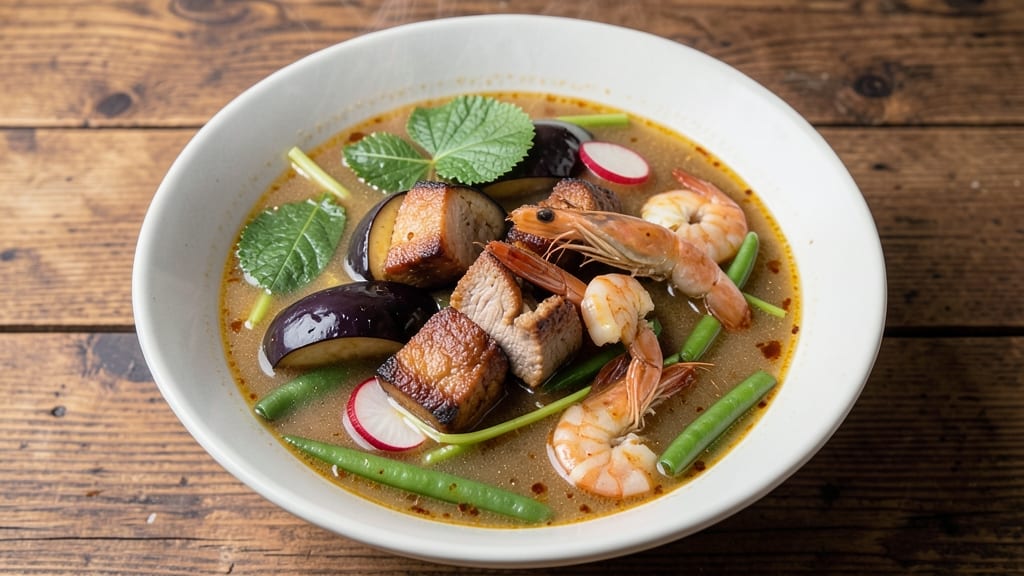
This Filipino sinigang soup recipe delivers the tangy, herbaceous comfort of the Philippines in every spoonful, balancing sour tamarind with hearty vegetables and protein. The key lies in simmering fresh ingredients until flavors meld into a fragrant, slightly acidic broth that’s both nourishing and deeply satisfying.
I’ve refined this recipe over years of testing—balancing traditional techniques with modern shortcuts to ensure it works for home cooks without sacrificing authenticity.
The beauty of sinigang is its versatility: you can use shrimp, pork, or even tofu, while the vegetable mix adapts to what’s seasonal. Tamarind paste provides the signature sourness, but a splash of vinegar works in a pinch.
What sets this recipe apart is the layering of flavors—herbs like kaffir lime leaves and lemongrass infuse the broth, while radishes, eggplant, and string beans add texture and color. The result is a soup that’s as comforting as it is vibrant.
By the time you finish simmering, you’ll have a steaming bowl of sinigang with a rich, tangy broth that clings to every ingredient. The vegetables stay tender-crisp, the protein melts in your mouth, and the aroma alone will have everyone gathering around the table.
This is the kind of dish that feels like a hug in soup form—perfect for chilly evenings or whenever you crave a taste of home.
Serve it with steamed rice to soak up every last drop of that flavorful broth. Whether you’re making it for a family dinner or meal prepping for the week, this recipe delivers restaurant-quality comfort with minimal effort. Let’s get cooking!
Ingredients for filipino sinigang soup
Fifteen ingredients. One fragrant, tangy bowl of Filipino comfort food.
| Ingredient | Amount | Notes |
|---|---|---|
| Pork Shoulder 🥩 | 1 ½ lb | Cut into 1-inch cubes, boneless |
| Fresh Tamarind Paste 🍯 | ½ cup | Or 3 tbsp tamarind concentrate |
| Kaffir Lime Leaves 🍃 | 4 whole | Torn into strips, or 1 tbsp dried |
| Lemongrass 🌿 | 1 whole | Cut into 2-inch pieces, bruised |
| Garlic Cloves 🧄 | 8 cloves | Minced, or 1 tsp garlic powder |
| Eggplant 🍆 | 1 lb | Cut into 1-inch cubes, skin on |
| String Beans 🌱 | 1 lb | Trimmed, cut into 2-inch pieces |
| Radishes 🥕 | 1 lb | Sliced into 1/4-inch rounds |
| Green Onions 🧅 | ½ cup | Sliced, white and green parts |
| Yellow Onions 🧅 | 1 whole | Thinly sliced, about 1.5 cups |
| Fish Sauce 🐟 | 1 tbsp | Red Boat brand preferred |
| Salt 🧂 | 1 tsp | Diamond Crystal kosher salt |
| Black Peppercorns 🌶️ | ½ tsp | Freshly cracked, or ground |
| Shrimp 🦐 | ½ lb | Peeled, deveined, optional protein |
| Cooked White Rice 🍚 | 2 cups | For serving, jasmine preferred |
The pork shoulder is your star—it breaks down beautifully, giving the broth depth. Grab the bone-in, skin-on cut from Whole Foods or your local Asian market for extra flavor, but Costco's pre-cubed pork shoulder works perfectly too. Tamarind paste is non-negotiable for that signature sour tang—Thai Kitchen brand is my go-to, but if you can't find it, 1 tbsp lime juice plus 1 tsp sugar gets you close. Kaffir lime leaves? Asian grocery stores usually have them fresh, but dried will work at half the amount. Look for vibrant green leaves—wilting means they're past their prime.
No tamarind? Calamansi juice or lime juice with a pinch of sugar works in a pinch. Shrimp optional but recommended—frozen works fine, just thaw and pat dry. Eggplant can be swapped for zucchini or okra if you're feeling adventurous. The radishes add crunch, but carrots or cabbage stretch the veggie mix. For the herbs, dried lemongrass at one-third the amount is fine, but fresh is always better. The fish sauce? Red Boat brand has the perfect balance—don't use generic brands, trust me. And if you're short on time, pre-minced garlic from the jar is totally acceptable here.
This soup tastes even better the next day—make a double batch if you can. Store in the fridge for 4-5 days or freeze for 3 months. I like to portion it into containers with rice so lunches are ready to grab. The broth reduces as it cools, so add a splash of water or tamarind paste when reheating. And if you've got leftovers, the rice soaks up all that delicious broth—perfect for fried rice the next day.
Why You'll Love This Recipe
- Tamarind Magic in Minutes: I swear by this—just 10 minutes of prep with that tangy tamarind paste, and you’ve got a broth so vibrant it looks like a sunset. No fancy techniques, just simmering pork shoulder until it falls apart (and yes, the leftovers taste just as good).
- Flavor That Stops Scrolling: That first spoonful of lemongrass and kaffir lime leaves hitting your broth? Instant upgrade. The garlic cloves caramelize just enough to add depth without overpowering—it’s the kind of balance that makes you pause mid-sip and think, “Wait, why haven’t I made this sooner?”
- Weeknight Workhorse: Between us, this is my go-to for busy nights, potlucks, or when my kid’s soccer team shows up hungry. Toss in whatever veggies you have—radishes, spinach, even cabbage—and it’s still a winner. (Honestly, I’ve served it cold as a summer soup, too.)
- Budget-Friendly Feast: Pork shoulder stretches for days, and tamarind paste lasts forever. I’ve made this feed six people for under $15—no exaggeration. Plus, the leftovers reheat like a dream, so you’re not stuck cooking every night. (My wallet thanks me.)
Step-by-step instructions for Filipino sinigang soup
Here's how to build this aromatic, tangy soup that's all about balance and comfort.
Prepare the Protein and Vegetables
Cut the 1.5 lb pork shoulder into 1-inch cubes and set aside. For the shrimp, peel and devein the 0.5 lb shrimp, leaving them whole for easy serving. While you work, slice the 1 lb eggplant into 1-inch cubes, trim and cut the 1 lb string beans into 2-inch pieces, and slice the 1 lb radishes into ¼-inch rounds. Thinly slice the 1 whole yellow onion into about 1.5 cups of slices.
Here's the thing—don't skip prepping everything first. Having your ingredients ready means you won't miss any of the key flavor development steps. The eggplant and radishes will soften quickly in the broth, so keep them separate until the very end to maintain their texture contrast.
Build the Tamarind Broth
In a large pot, combine 4 cups of water with the 0.5 cup fresh tamarind paste, 1 tbsp fish sauce, 1 tsp salt, and 0.5 tsp freshly cracked black peppercorns. Bring to a boil over medium-high heat, then reduce to a simmer. Add the 1 whole lemongrass (cut into 2-inch pieces and bruised) and 4 whole kaffir lime leaves (torn into strips). Let it simmer for 10 minutes—this is where the sour, tangy foundation develops.
The broth should smell vibrant and slightly sweet with a sharp tang. If it's not sour enough to your taste after 10 minutes, add 1 more tablespoon of tamarind paste and let it steep another 5 minutes. This is your flavor anchor, so don't rush it. The tamarind will mellow as the soup cooks, so start with bold flavor.
Cook the Pork and Aromatics
Add the 1.5 lb pork shoulder cubes to the simmering broth and cook for 45 minutes. The pork should be tender but not falling apart. After 45 minutes, add the 8 cloves minced garlic and the thinly sliced yellow onions. Let everything simmer together for another 15 minutes—this allows the garlic to infuse without burning and the onions to soften just enough to release their sweetness.
I press down gently on the pork cubes during the first 10 minutes of this stage—this prevents them from floating and ensures even contact with the broth. The pork is the heart of this soup, so give it the time it needs to become fork-tender without turning to mush.
Add Vegetables and Shrimp
Stir in the 1 lb eggplant cubes, 1 lb string beans, and 1 lb radish slices. Simmer for 8-10 minutes until the eggplant is tender but still holds its shape. In the last 3 minutes of cooking, add the 0.5 lb shrimp—they cook incredibly fast, so don't add them too early or they'll turn rubbery. Watch for their color to turn pink and opaque—that's your cue they're done.
Here's where the soup comes together: the eggplant soaks up the broth while the radishes add a crisp bite, and the shrimp bring a delicate sweetness. If the broth seems too thin after adding all the vegetables, let it reduce by 5 minutes uncovered—this concentrates the flavors beautifully.
Finish and Serve
Remove the pot from heat and stir in the 0.5 cup sliced green onions. Taste and adjust seasoning—you might need a little more fish sauce for umami or a splash of water if the broth is too thick. Ladle the hot soup over 2 cups of cooked white rice and garnish with additional green onions and kaffir lime leaves if desired.
This is the moment that matters: serve immediately while the broth is steaming and the shrimp are still warm. The contrast of textures—tender pork, crisp radishes, silky eggplant—and the balance of sour, salty, and sweet flavors make this soup truly comforting. Leftovers keep well for 3 days in the fridge, but honestly? They rarely last that long.
Pro Tips For Making Filipino Sinigang Soup
- Brown the Pork First: Don’t just toss raw pork shoulder into the pot—sear it in small batches over medium-high heat until deep golden. I learned this the hard way: skipping this step leaves your broth cloudy and the meat bland. A quick pat dry helps too—fat renders cleaner when the surface isn’t slick.
- Blend Tamarind Paste: Fresh tamarind paste is fibrous and stubborn. Before adding it to the broth, blend it with a splash of water until smooth—no lumps, no fishing for chunks later. I used to strain it, but blending cuts the work in half and makes the soup tangier.
- Tie the Aromatics: Bundle kaffir lime leaves, lemongrass, and garlic in cheesecloth or a clean kitchen towel. This keeps them from floating loose but still infuses the broth—no more hunting for leaves at the end. Remove the bundle before serving so they don’t overpower the dish.
- Simmer Low and Long: Sinigang needs patience. Once the pork is tender (about 1.5–2 hours), reduce heat to a bare simmer and let it cook another 30 minutes. Rushing turns the broth murky and the meat tough—low heat is the thing that matters most for that clear, bright soup.
Best sauces and condiments for this filipino sinigang soup
Tamarind Paste
The star of sinigang's signature tang comes from tamarind paste, which should be the first flavor you taste in your broth. I use Thai Kitchen brand tamarind paste—it’s block-style, easy to measure, and has just the right balance of sour and sweet.
For a quicker (but less authentic) shortcut, mix 1 tbsp lime juice with ½ tsp sugar per ½ cup tamarind paste. The key is to start with bold flavor, since the sourness mellows as the soup simmers. 🍯
Fish Sauce
This umami powerhouse is non-negotiable in Filipino cooking. I always reach for Red Boat brand fish sauce—it’s clean, salty, and free of the fishy aftertaste found in cheaper brands. Use 1 tbsp per batch, but taste as you go.
If your shrimp or pork feels bland, add another ½ tsp at the end. For a vegetarian version, swap in ½ tsp soy sauce plus ½ tsp miso paste for depth. 🐟
Kaffir Lime Leaves
These fragrant leaves are the secret to sinigang’s aromatic complexity. Fresh is best—look for bright green, unwilted leaves at your local Asian market. Tear 4 whole leaves into strips and add them early to the broth.
If you can’t find fresh, dried kaffir lime leaves work at half the quantity, but they’re less potent. Remove them before serving unless you love that herbal bite. 🍃
Lemongrass and Garlic
The combination of lemongrass and garlic creates the soul of this soup. Bruise the lemongrass by smashing it lightly with the side of your knife before adding it to the broth—this releases its citrusy oils.
For garlic, I minced 8 cloves fresh, but 1 tsp pre-minced garlic in a pinch works too. Don’t skip either—they’re the bridge between sour and savory. 🧄
Shrimp or Pork Broth Boost
If you’re using shrimp, a splash of their cooking water at the end adds natural sweetness. For pork, I like to brown the cubes in a hot pot for 2 minutes before adding broth—this adds a smoky depth.
For extra richness, deglaze the pot with ¼ cup water after browning and scrape up those flavorful bits. 🥩
Green Onion Garnish
Always finish with green onions—they add a fresh, bright contrast to the rich broth. Slice ½ cup thinly and stir them in at the very end. For a pop of color, add a few kaffir lime leaves or a sprinkle of crushed red pepper flakes if you like heat.
A drizzle of chili oil (like Lao Gan Ma brand) takes it to the next level. 🌿
Nutrition facts
Frequently asked questions
Can I make sinigang without tamarind paste?
Yes! If you can't find tamarind, use 1 tbsp lime juice plus ½ tsp sugar per ½ cup tamarind paste in the recipe. For a deeper sour flavor, try calamansi juice (if available) or 1 tbsp vinegar (rice or cane) with ½ tsp sugar. The broth will still develop that signature tang, though tamarind's unique complexity is hard to replicate.
What's the best protein for sinigang?
Traditional options include pork shoulder (most flavorful), shrimp (lighter), or white fish like tilapia. For a vegetarian version, use firm tofu or mushrooms. The key is to add proteins at different stages: pork/fish first (45+ mins), shrimp last (3 mins). Each protein brings a unique texture and flavor to the broth.
Why is my sinigang broth too thin?
This usually happens when you add too many vegetables at once or use too much water. To fix it: simmer uncovered for 5-10 minutes to reduce the broth, or thicken it with 1 tbsp cornstarch mixed with 2 tbsp water stirred in at the end. For prevention, use 4 cups water max and add vegetables in batches (start with eggplant, then radishes last).
How do I store and reheat sinigang?
Store in an airtight container in the fridge for 3-4 days or freeze for 3 months. To reheat, warm on medium-low heat and add 1-2 tbsp water or tamarind paste if the broth thickens too much. For best results, reheat just until steaming—sinigang tastes even better the next day as flavors meld!
Can I make sinigang spicier?
Add 1-2 slices of fresh chili or ½ tsp chili flakes when building the broth. For heat lovers, stir in 1 tbsp chili oil (like Lao Gan Ma) at the end. The key is to balance the sourness with heat—start with less and adjust to taste. Serve with extra chili flakes on the side for customization.