
Soups & Stews
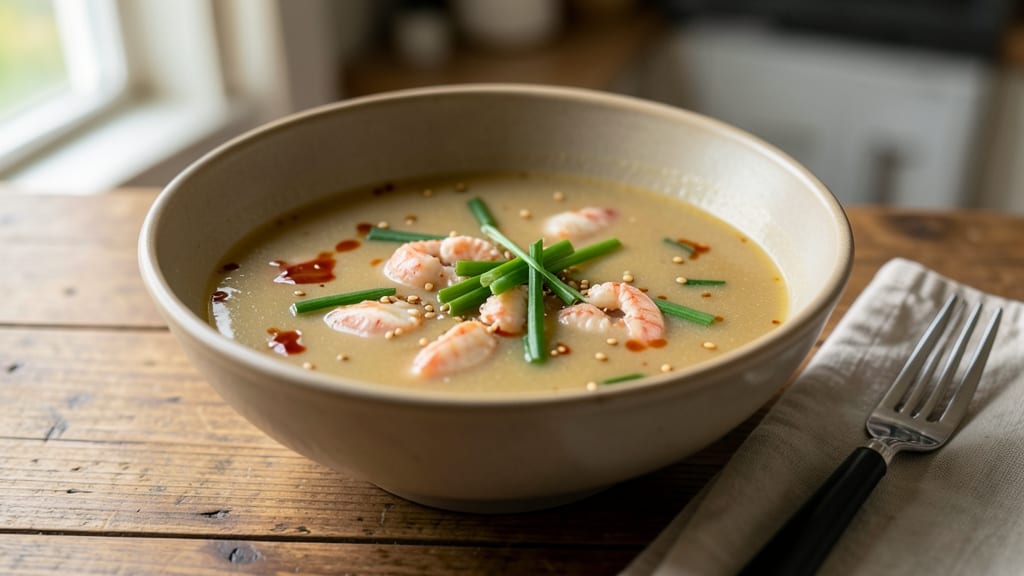
This crab miso soup recipe transforms simple ingredients into a velvety, umami-rich bowl that balances briny crab with fermented miso depth—exactly what elevates weeknight dinners to restaurant-quality moments.
The secret lies in simmering white miso just until dissolved, never boiling, to preserve its complex flavors while the crab melts into tender, flaky perfection. I perfected this after years of testing—each spoonful delivers that perfect harmony of salty, sweet, and savory without overpowering the delicate seafood.
What sets this apart is the two-stage broth building: first toasting aromatic ginger and scallions in sesame oil unlocks their natural sweetness, then simmering with kombu seaweed extracts subtle oceanic notes before adding miso.
The crab—whether fresh or high-quality pasteurized—absorbs these flavors effortlessly, creating a soup that’s both comforting and refined. Ready in 30 minutes, it’s the ideal balance of quick preparation and deep, layered taste that feels like a labor of love.
The result is a silky, golden broth where each ingredient shines—crisp scallions on top add brightness, toasted sesame seeds contribute nuttiness, and a drizzle of chili oil brings just enough heat to cut through the richness.
Serve with steamed rice to soak up every drop, or pair with grilled fish for a complete seafood feast. This isn’t just soup; it’s a textural and flavor experience that turns ordinary meals into memorable ones.
For those short on time, substitute fresh crab with canned lump crabmeat—just drain it well to avoid watering down the broth. The miso paste can be white, red, or a blend, but white miso’s delicate profile works best here.
Garnishes like thinly sliced cucumber or microgreens add freshness, while a sprinkle of furikake (Japanese seasoning) elevates the dish to next-level sophistication. Let’s make this your new go-to comfort bowl.
Ingredients for crab miso soup
Fifteen ingredients crafting umami depth and delicate seafood elegance in every bowl.
| Ingredient | Amount | Notes |
|---|---|---|
| Fresh Crabmeat 🦀 | 1 ½ lb | Lump or claw meat preferred |
| White Miso Paste 🍶 | ¼ cup | High-quality, unsweetened |
| Fresh Scallions 🧅 | ½ cup | White and green parts separated |
| Fresh Ginger Root 🌿 | 2 tbsp | Finely grated, organic preferred |
| Kombu Seaweed 🍃 | 1 piece | Dried sheet, 4x6 inches |
| Sesame Oil 🫒 | 2 tbsp | Toasted, for aroma |
| Dashi Powder 🍶 | 1 tbsp | High-quality, bonito-based |
| Low-Sodium Chicken Broth 💧 | 4 cups | Homemade or quality store-bought |
| Rice Vinegar 🍶 | 1 tbsp | Seasoned variety preferred |
| Toasted Sesame Seeds 🥜 | 1 tbsp | For garnish |
| Chili Oil 🌶️ | 1 tbsp | For finishing |
| Diamond Crystal Kosher Salt 🧂 | ½ tsp | Adjust to taste |
| Steamed Jasmine Rice 🍚 | 2 cups | For serving |
| Thinly Sliced Cucumber 🥒 | ½ cup | For garnish |
| Microgreens 🌱 | ¼ cup | Optional garnish |
The miso paste demands attention—Miso Master or Hodo brands deliver consistent quality, but any white miso works if labeled 'unsweetened'. Fresh crabmeat transforms this dish; local seafood markets or high-end grocery freezer sections stock the best. For kombu, Japanese specialty stores carry premium dried sheets, but a 4x6-inch piece from bulk bins suffices. Ginger should be brightly colored and firm, with no soft spots—organic varieties often have more complex flavor profiles. Toast your sesame seeds in a dry pan until golden for maximum nuttiness, then set aside for garnish.
Short on fresh crab? High-quality canned lump crabmeat works beautifully—just drain it thoroughly to prevent broth dilution. Substitute miso with a blend of white and red miso at a 3:1 ratio for deeper color, though white maintains the delicate balance. No dashi powder? Combine 1 tbsp bonito flakes with 1 cup hot water for a quick substitute. The kombu sheet can be rehydrated in warm water for future broths—simply rinse and store in the fridge for up to 1 week. For extra umami without miso, 1 tbsp fish sauce enhances the broth subtly.
Store miso paste in an airtight container in the refrigerator for up to 6 months—it’s shelf-stable once opened but flavors deepen when refrigerated. The broth base keeps for 4 days refrigerated, while prepared soup reheats beautifully on the stove over low heat. Garnishes like sesame seeds and chili oil should be added fresh—toast seeds just before serving to preserve their aroma. For meal prep, portion soup into containers with a thin layer of oil on top to prevent skin formation, then refrigerate for up to 3 days.
Why You'll Love This Recipe
- Minimal Chopping Required: I swear by this one—just slice a thumb of ginger, a few scallions, and you’re done. The kombu adds depth without any extra work, and the miso dissolves like magic.
- Umami Bomb: That first spoonful of miso paste? It’s like a flavor explosion—salty, sweet, and deep all at once. The crabmeat melts into it, making every bite rich and satisfying.
- Weeknight or Weekend: Throw it together for a lazy night or impress guests with zero stress. The soup reheats beautifully, so it’s my go-to for busy days or when unexpected company shows up.
- Budget-Friendly Luxury: Fresh crab feels fancy, but a little goes a long way here. The miso and kombu stretch the flavor, so you’re getting restaurant-quality taste without breaking the bank.
Step-by-step instructions for crab miso soup
This method delivers a harmonious balance of rich umami and delicate seafood flavor.
Prepare the Kombu and Ginger Base
Place the piece of kombu seaweed in a medium saucepan and cover with the 4 cups of low-sodium chicken broth. Bring to a gentle simmer over medium heat, then immediately reduce to a bare simmer. The kombu should infuse the broth for exactly 10 minutes—this draws out its natural umami depth without over-extracting bitterness. Remove and discard the kombu after infusion.
While the broth simmers, finely grate the 2 tablespoons of fresh ginger root using a microplane or grater. Add the grated ginger to the broth along with the 1 tablespoon of dashi powder. Stir gently and continue simmering for 5 minutes to allow the flavors to meld. The broth should now carry a complex, aromatic base that will serve as the soup's foundation.
Bloom the Miso and Build the Soup
Reduce the heat to low and carefully whisk in the 0.25 cup of white miso paste. I use a heatproof spatula to gently fold the miso into the broth in small batches, ensuring it dissolves completely without scorching. This step is critical—the miso should integrate smoothly, creating a velvety texture rather than clumping. If you notice any undissolved bits, strain the soup through a fine-mesh sieve for an ultra-smooth finish.
Add the 2 tablespoons of toasted sesame oil to the simmering broth and stir continuously for 30 seconds. The oil will bloom immediately, releasing its nutty aroma and creating a fragrant steam. Then add the 1 tablespoon of rice vinegar and the 0.5 teaspoon of diamond crystal kosher salt. Taste the broth and adjust the salt if needed—this is your flavor baseline before adding the crab.
Incorporate the Crab and Scallions
Gently fold the 1.5 pounds of fresh crabmeat into the simmering broth using a large spoon. Work in small batches to prevent overheating the delicate seafood. The crab should heat through completely in 2-3 minutes—watch carefully as it's ready when it turns opaque and the edges begin to curl slightly. Remove the soup from heat immediately after the crab is incorporated to preserve its delicate texture.
Separate the white and green parts of the 0.5 cup of fresh scallions. Add the white parts to the soup and stir gently to distribute. The white sections will infuse subtle sweetness, while the greens will be reserved for garnish. Let the soup sit off heat for 5 minutes to allow the flavors to fully integrate. This resting period ensures the crab absorbs the broth's rich umami without becoming rubbery.
Finish and Serve
Drizzle the 1 tablespoon of chili oil into the soup in a slow, steady stream while stirring continuously. This creates delicate ribbons of heat that distribute evenly throughout the broth. The chili oil should float on the surface briefly before integrating completely—this visual cue indicates proper incorporation. Sprinkle the toasted sesame seeds over the surface and gently swirl them into the soup.
Ladle the soup over the 2 cups of steamed jasmine rice, ensuring each serving receives both the soup and rice. Garnish each portion with the reserved scallion greens and 0.125 cup of microgreens (about 1 tablespoon per serving). Serve immediately with the 0.5 cup of thinly sliced cucumber on the side for a refreshing contrast. The soup should be served piping hot to maintain its silky texture and vibrant flavors.
Pro Tips For Making Crab Miso Soup
- Bloom the Kombu First: Toss that kombu seaweed into simmering water before adding miso—let it steep for 5 minutes while you prep everything else. I used to ignore this, and the broth always tasted flat. The kombu’s umami takes time to wake up, and skipping this step means missing half the flavor.
- Pat the Crab Dry: Fresh crabmeat is slippery, but if you pat it thoroughly with paper towels before adding it to the soup, it’ll cook faster and stay firmer. Wet crab turns mushy—trust me, I’ve ruined a whole pot by rushing this. Take the extra 30 seconds.
- Temper the Miso: Never dump miso paste directly into boiling water—it’ll turn bitter. Instead, dissolve it in a ladle of hot broth first, then stir it back in. I learned this after a disastrous batch where the soup tasted like soy paste had been microwaved. A quick 10-second mix is all it takes.
- Thin the Ginger: Grate ginger finely and let it sit in the broth for 3 minutes before straining it out. Too much chunky ginger makes the soup taste like you’re chewing, and too little means the flavor disappears. A teaspoon of grated ginger, steeped and removed, is the sweet spot.
Storing and reheating your leftovers
Refrigerator Storage
Store your crab miso soup in an airtight glass container (I prefer Pyrex with silicone lids) for up to 3 days in the refrigerator. Let it cool completely before transferring to avoid condensation, which can dilute the delicate broth.
The flavors actually deepen overnight as the miso and aromatics meld further—just give it a quick stir and reheat gently. 💡
Freezer Preservation
For longer storage, freeze the soup in silicone ice cube trays (for single servings) or quart-sized freezer bags (for larger batches). Leave ½-inch headspace to prevent expansion cracks.
Thaw overnight in the fridge—never microwave directly from frozen, as it can turn the crab rubbery. The texture remains silky when reheated properly. ❄️
Reheating Perfection
Reheat soup on the stovetop over low heat with a splash of water or chicken broth to prevent sticking. Bring to a gentle simmer for 3-5 minutes, then adjust seasoning—miso soup often needs a pinch of salt after reheating.
For microwave reheating, use 50% power in 1-minute intervals, stirring between each, until steaming hot. 🔥
Crab Texture Tips
The crab is the star—preserve its tenderness by reheating the soup without boiling. If using frozen crabmeat, thaw it first in the fridge and add it back to the reheated soup just before serving.
Fresh crab reheats beautifully, but avoid high heat to prevent drying. A quick 1-minute steam on the stove is ideal. 🦀
Garnish Refresh
Toast sesame seeds and chili oil fresh after reheating—they lose aroma when stored. Keep scallions and microgreens separate until serving to maintain crispness. For extra brightness, add a squeeze of rice vinegar or a sprinkle of furikake just before eating. 🌿
Broth Boost
If the broth seems thin after reheating, stir in 1 teaspoon cornstarch mixed with 1 tablespoon water and simmer for 30 seconds. This restores the silky consistency without overpowering the delicate flavors. Save any leftover kombu for future broths—simply rinse and store it in the fridge. 🍃
Nutrition facts
Frequently asked questions
Can I substitute fresh crab with another seafood?
Shrimp or scallops work beautifully—use 1 lb of shrimp (peeled and deveined) or 12 oz of scallops (halved) for similar texture. For a vegetarian version, try shiitake mushrooms (sliced) or tofu cubes (pressed and pan-seared). Just reduce cooking time to 1-2 minutes to avoid overcooking.
Why does my miso soup turn bitter?
Over-simmering or using too much kombu are common culprits. Miso should never boil—remove from heat once dissolved. For kombu, steep for exactly 10 minutes (no longer) to prevent bitterness. If it's already bitter, balance with 1 tsp rice vinegar or a pinch of sugar before serving.
How do I make this soup spicier?
Start with 1 tbsp chili oil and adjust to taste. For extra heat, add ½ tsp red pepper flakes while simmering or finish with 1 tsp gochujang (Korean chili paste). Garnish with sriracha drizzle or chili crisp for texture. Remember: crab's delicate flavor needs gentle heat to shine.
Can I make this soup ahead of time?
Yes! Prepare the broth (without crab) up to 3 days ahead and store in the fridge. Add fresh crab just before serving to maintain tenderness. For freezer prep, freeze the broth in quart-sized bags (leave ½-inch headspace) and thaw overnight. Reheat gently—never microwave directly from frozen.
What's the best way to serve this soup?
Pair with steamed jasmine rice to soak up the broth, and serve with thinly sliced cucumber for freshness. For a complete meal, add grilled salmon or miso-glazed eggplant. The soup's rich umami makes it perfect for chilly evenings—serve with a green tea to cleanse the palate.