
Soups & Stews
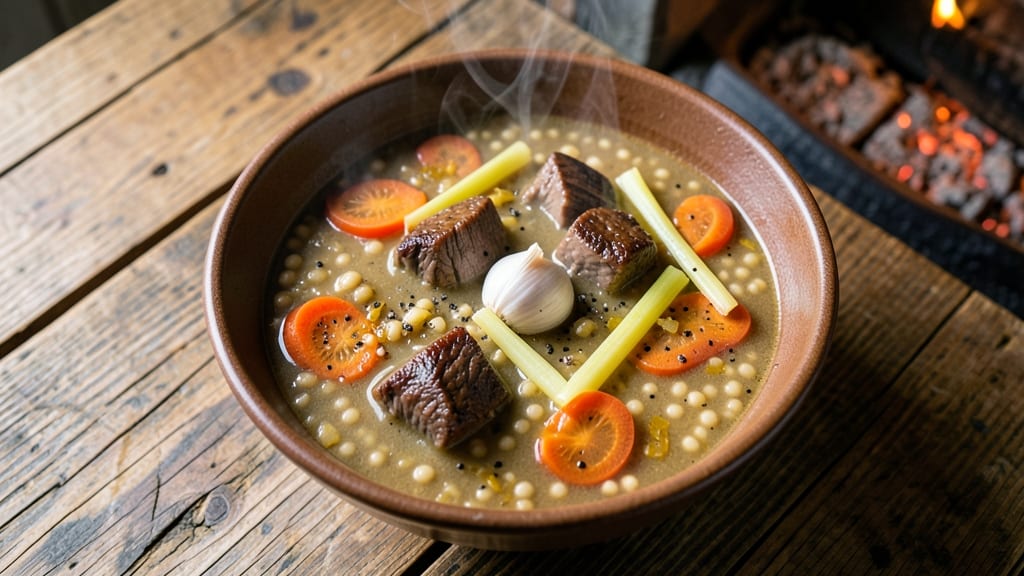
This classic beef barley soup recipe delivers the comforting, hearty flavors of a traditional family meal in one simple pot. The secret lies in slow simmering tender beef with barley and aromatic vegetables until every ingredient melds into a rich, satisfying broth.
I've perfected this method over years of testing, ensuring the perfect balance of savory meat, chewy barley, and fragrant herbs that define this timeless dish.
The beauty of this recipe is its simplicity—just a few quality ingredients that transform into a deeply flavorful soup. Browning the beef creates a rich foundation, while pearl barley adds satisfying texture and natural thickeners.
Aromatics like onions, carrots, and celery build the soup's depth, creating layers of flavor that develop as it simmers. The result is a bowl that warms both body and soul on chilly days.
By the time you're done, you'll have a pot of golden broth filled with tender beef chunks, perfectly cooked barley, and vegetables that have absorbed all the savory goodness. The aroma alone will have everyone gathering around the table, while each spoonful delivers that perfect combination of hearty and comforting.
This is the kind of soup that tastes even better the next day, making it ideal for meal prep.
Serve with crusty bread to soak up every last drop of that flavorful broth, or pair with a simple green salad for balance. The rich, savory flavors also make it an excellent match for a bold red wine.
Let's get started on creating this timeless classic that will become a staple in your home.
Ingredients for classic beef barley soup
Six hearty ingredients create a timeless soup that simmers into rich, comforting perfection.
| Ingredient | Amount | Notes |
|---|---|---|
| Beef Chuck Roast 🥩 | 2 lb | Cut into 1-inch cubes |
| Pearl Barley 🌾 | 1 cup | Uncooked, rinsed thoroughly |
| Carrots | 3 medium | Peeled and cut into chunks |
| Yellow Onion 🧅 | 1 whole | Diced, medium size |
| Celery Stalks 🥬 | 3 whole | Trimmed and cut into pieces |
| Garlic Cloves 🧄 | 4 cloves | Peeled and minced |
| Tomato Paste 🍅 | 2 tbsp | Smooth, not chunky |
| Beef Broth 💧 | 6 cups | Low-sodium preferred |
| Dried Thyme 🌿 | 1 tbsp | Or 1 tsp fresh thyme |
| Bay Leaves 🍃 | 2 whole | Remove before serving |
| Black Peppercorns 🌶️ | 1 tsp | Freshly cracked |
| Salt 🧂 | 1 ½ tsp | Adjust to taste |
| Olive Oil 🫒 | 2 tbsp | For browning beef |
| Fresh Parsley 🌿 | ¼ cup | Chopped, for garnish |
The beef is the foundation—chuck roast delivers the best texture and flavor. Look for well-marbled cuts at your local butcher or grocery store's meat department. Costco or Whole Foods often carry high-quality cuts, but any reputable supermarket will have what you need. Avoid pre-cut beef chunks; cutting your own ensures even browning. The barley should be pearl, not instant—it needs time to develop that satisfying chew. Rinse it well before adding to remove any excess starch. For the vegetables, organic carrots, celery, and onions are ideal, but conventional produce works fine if fresh. The tomato paste? Muir Glen is my go-to for consistent quality—just make sure it's smooth, not chunky.
No beef chuck? Short ribs or stew meat work beautifully, though they may need slightly longer cooking. Running short on barley? Brown rice or quinoa can stretch the recipe, though texture will differ. Fresh thyme unavailable? Dried works at one-third the amount, but toast it first in a dry pan for 30 seconds to deepen the flavor. The beef broth is non-negotiable—low-sodium versions let you control the salt better. If you must use regular, dilute it with water and adjust seasoning at the end. For the tomato paste, Trader Joe's squeeze tubes are a lifesaver—they're convenient and keep indefinitely. The bay leaves add depth but can be omitted if you dislike their flavor; just remember to remove them before serving.
This soup tastes even better the next day as flavors meld. Store in an airtight container in the fridge for up to 5 days, or freeze portions for 3 months. For meal prep, double the recipe and freeze half—just thaw overnight in the fridge before reheating. The barley softens when reheated, so add a splash of broth if it seems too firm. Garnish with fresh parsley right before serving to brighten the dish. Leftovers reheat beautifully; just stir in a little extra broth if the soup seems thickened from cooling.
Why You'll Love This Recipe
- One-Pot Magic: I swear by the slow simmer—just toss everything in one pot, walk away, and let the beef chuck roast melt into tender perfection. No fancy steps, no stress.
- Deep Umami Bomb: That beef chuck roast? It’s the star—rich, savory, and almost like a hug in a bowl, especially when it’s braised until it falls apart. The barley soaks up all the goodness like a sponge.
- Meal Prep MVP: Make a double batch on Sunday, and you’ve got hearty lunches for the week. Honestly, the flavor gets even better the next day—my freezer’s always stocked with portions.
- Budget-Friendly Powerhouse: A whole chuck roast feeds a crowd for less than takeout, and those carrots/onions/celery? They’re the cheap veggies that pack serious flavor. Leftovers? Even better—just reheat and enjoy.
Step-by-step instructions for classic beef barley soup
This timeless method delivers rich, comforting beef broth infused with nutty barley and tender vegetables.
Sear the Beef Chuck Roast
Heat a large Dutch oven over medium-high heat. Add the 2 tablespoons olive oil and swirl to coat the bottom evenly. Working in batches if needed, add the 2 lb beef chuck roast cut into 1-inch cubes, spreading them in a single layer. Let them sear undisturbed for 3-4 minutes until deeply browned on one side—this creates the Maillard reaction that forms deep flavor. Flip each piece and sear the opposite side for another 3-4 minutes. Transfer the browned beef to a plate and set aside.
Here's the thing—don't rush this step. The beef should develop a rich, caramelized crust. If your pan gets crowded and the temperature drops, work in smaller batches. The goal is golden brown beef that releases easily from the pan. You'll know it's ready when the edges are crisp and the center shows resistance when pierced with a knife.
Build the Flavor Base
In the same Dutch oven, reduce heat to medium and add the 1 whole yellow onion (diced), 3 whole celery stalks (cut into pieces), and 3 medium carrots (cut into chunks). Cook for 5-6 minutes, stirring occasionally, until the vegetables begin to soften and release their natural juices. Add the 4 cloves garlic cloves (minced) and cook for another 30 seconds until fragrant—this prevents the garlic from burning.
Stir in the 2 tablespoons tomato paste and cook for 1 minute, allowing it to darken slightly. This step deepens the soup's complexity by caramelizing the tomato solids. Sprinkle the 1 tablespoon dried thyme, 1 teaspoon black peppercorns, and 1.5 teaspoons salt over the vegetables. Stir well to distribute the seasonings evenly, coating the vegetables in their aromatic oils.
Simmer the Soup
Pour in the 6 cups beef broth, scraping up any browned bits from the bottom of the pot with a wooden spoon. Return the seared beef to the pot, along with the 2 whole bay leaves. Bring the mixture to a gentle boil, then reduce heat to low. Cover and let it simmer for 1 hour, stirring occasionally. This initial simmer allows the beef to tenderize and the flavors to meld.
After 1 hour, add the 1 cup pearl barley (rinsed thoroughly) to the pot. Stir gently to distribute it evenly. The barley should be fully submerged in the broth. Continue simmering, uncovered, for another 30-45 minutes until the barley is tender but still has a slight bite. You'll know it's ready when the barley grains are plump and creamy—they should hold their shape but be easily pierced with a fork. The soup should have a rich, deep color and a hearty aroma.
Finish and Serve
Remove the 2 whole bay leaves from the soup using a slotted spoon. Taste the broth and adjust the seasoning if needed—add more salt or a splash of beef broth if the soup is too thick. Ladle the soup into bowls, garnishing each serving with 0.25 cup fresh parsley (chopped) for a pop of freshness and color.
This classic beef barley soup should be served immediately while hot. The barley will continue to absorb liquid as it cools, so enjoy it right away. The beef should be fork-tender, the barley chewy yet tender, and the broth rich and flavorful. Each spoonful delivers a perfect balance of hearty beef, nutty barley, and aromatic vegetables—just as it's been made for generations.
Pro Tips For Making Classic Beef Barley Soup
- Brown the Chuck: DESCRIPTION: Don’t just sear the roast—get it deep brown on all sides. I used to rush this, and the soup always tasted flat. High heat, 5-7 minutes total, until it’s almost black in spots. This builds flavor that won’t dissolve into the broth later.
- Soak the Barley: DESCRIPTION: Toss the pearl barley in cold water for 30 minutes before adding it to the pot. Skipping this makes it gummy—trust me, I’ve served it that way. Drain well, then add it to the soup; it’ll absorb liquid at a steady pace instead of turning to mush.
- Don’t Crowd the Pot: DESCRIPTION: Cut the beef chuck into 1.5-inch chunks, not smaller. Too many small pieces steam instead of brown, and the broth stays cloudy. A slightly crowded pot is fine at first, but leave room for the veggies to char a little—they’ll add depth.
- Simmer Low and Long: DESCRIPTION: After the initial boil, drop the heat to a bare simmer—just enough to see tiny bubbles at the edges. I learned this the hard way when my soup turned out watery because I kept it at a rolling boil. Three hours minimum; the barley needs time to soften and the beef to fall apart.
Pro cooking tips for perfect results
Beef Browning Mastery
This is where the magic starts—properly browning your beef creates deep, caramelized flavors that form the soul of your soup. Use a heavy-bottomed Dutch oven (I swear by Le Creuset) and work in batches if needed to avoid crowding.
The beef should develop a deep golden-brown crust on all sides, which takes about 3-4 minutes per side over medium-high heat. For even browning, use tongs to flip the beef instead of a fork, which pierces the meat and releases juices too early. 🔥
Vegetable Prep Matters
Cut your onions, carrots, and celery into even-sized pieces—about ½-inch chunks—so they cook uniformly. This is called the soup holy trinity for a reason: they form the flavor base.
Sauté them until they're soft but not mushy (about 5-6 minutes), then add the garlic just until fragrant (30 seconds). Overcooking garlic turns it bitter, so keep an eye on it. The tomato paste should darken slightly—this adds depth without overpowering.
Simmer Control
A gentle simmer is key—too vigorous and the barley will cook unevenly. After adding the broth and beef, reduce heat to low and maintain a barely bubbling simmer. Covering the pot traps steam, which helps tenderize the beef.
I use a lid with a small vent (or crack the lid slightly) to prevent a hard boil. Stir occasionally to prevent the barley from sticking to the bottom. The goal is 1 hour of simmering before adding the barley.
Barley Timing Tricks
Pearl barley needs 30-45 minutes to cook perfectly, but don't let it get mushy. Test it at 30 minutes—it should be tender but still firm to the bite. If it's not done, let it simmer uncovered for another 10-15 minutes.
Pro tip: Rinse the barley thoroughly before adding to remove excess starch, which can make the soup gummy. For extra richness, I sometimes add 1 tablespoon of butter during the final 5 minutes of cooking. 💡
Seasoning Like a Pro
Taste your soup before serving—this is where most home cooks go wrong. The broth should be rich but not salty, with the beef and barley adding natural depth. Adjust with salt (I usually need ½ teaspoon more) or a splash of beef broth if it's too thick.
Freshly cracked black pepper adds a nice finish, but don't overdo it—just a ¼ teaspoon on each bowl is enough. The bay leaves should be removed before serving, as their flavor can become bitter if overcooked.
Make-Ahead Magic
This soup tastes even better the next day as flavors meld. Let it cool completely, then store in an airtight container in the fridge for up to 5 days. For freezing, portion into quart-sized bags, leaving 1 inch of headspace for expansion.
Thaw overnight in the fridge, then reheat on the stovetop over low heat with a splash of broth to restore texture. If the barley seems dry after reheating, add ¼ cup water or broth and simmer for 5 minutes.
The beef will stay tender, and the barley will soften just enough to be perfect. ❄️
Nutrition facts
Frequently asked questions
What's the best cut of beef for this hearty barley dish?
Chuck roast is ideal—it's flavorful and becomes fork-tender when slow-cooked. For quicker results, use short ribs or stew meat, though they may need 10-15 extra minutes of simmering. Avoid lean cuts like sirloin; they won't develop the same rich texture.
Can I substitute pearl barley with another grain?
Yes! For a quicker version, use instant barley (cooks in 10 minutes) or wild rice (simmer 45 minutes). Brown rice adds chewiness but requires 15-20 extra minutes. Just adjust cooking times and taste-test frequently. The barley's nutty flavor is key—if you omit it, add ½ teaspoon ground nutmeg for depth.
Why does my soup taste bland after simmering?
Three likely causes: under-seasoning (taste before serving!), rushed cooking (beef needs 1 hour to tenderize), or skipping the browning step. The Maillard reaction from searing beef creates 50% of the flavor! Also, check your broth—low-sodium versions need extra salt. For extra richness, stir in 1 tablespoon butter in the last 5 minutes.
How do I make this soup in a slow cooker?
Brown the beef first, then transfer everything (including broth) to the slow cooker. Cook on low for 8 hours or high for 4-5 hours. Add barley in the last 30 minutes—it absorbs liquid differently in slow cookers. The texture will be creamier, but the flavor remains just as robust. Pro tip: Use ½ cup less broth to prevent a watery finish.
Can I add potatoes to this recipe?
Add 2 cups diced potatoes with the barley (they'll cook in 30 minutes). For creamier soup, use Yukon Golds—they hold shape better. If using russets, reduce simmer time by 10 minutes to avoid mushiness. Just don't overcrowd the pot, or the barley may cook unevenly.