
Soups & Stews
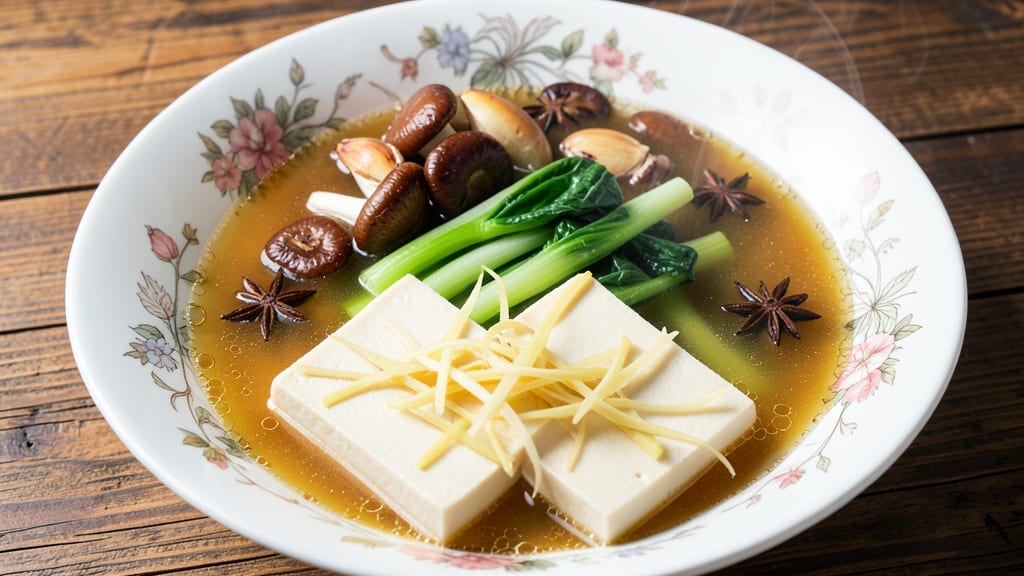
This Chinese veg soup recipe brings the comforting flavors of traditional Chinese cuisine to your kitchen without a single animal product. ✨ The secret lies in balancing aromatic spices like star anise and ginger with fresh vegetables and tofu, creating a light yet deeply satisfying broth that’s perfect for any season.
I developed this recipe after years of adapting classic Chinese techniques to plant-based ingredients, ensuring every spoonful delivers authentic flavor.
The beauty of this soup is its versatility—you can swap in seasonal vegetables, mushrooms, or even different types of tofu to match what’s available. Aromatic garlic, soy sauce, and a touch of sesame oil build the foundation, while fresh herbs like cilantro or scallions add brightness at the end.
The result is a soup that’s both nourishing and invigorating, with a clear, fragrant broth that highlights the natural flavors of the ingredients.
What makes this recipe stand out is its simplicity—just a handful of ingredients come together in a single pot, yet the flavors are complex and deeply satisfying. The tofu absorbs the broth beautifully, becoming tender and infused with the aromatic spices, while the vegetables add texture and freshness.
It’s the kind of dish that feels both comforting and light, perfect for a quick lunch or a soothing dinner.
Serve this soup with steamed rice or noodles to make it a complete meal, or enjoy it as is for a refreshing, plant-based experience. The instructions are straightforward, and the process is foolproof, so you’ll have a delicious bowl of Chinese veg soup ready in under an hour.
Let’s get started!
Ingredients for chinese veg soup
Just 15 ingredients transform into a fragrant, aromatic Chinese vegan soup bursting with umami and freshness.
| Ingredient | Amount | Notes |
|---|---|---|
| Extra-Firm Tofu 🍲 | 14 oz | Pressed and cubed for even cooking |
| Fresh Ginger Root 🌿 | 1 tbsp | Finely grated, aromatic quality |
| Garlic Cloves 🧄 | 4 cloves | Minced for robust flavor |
| Star Anise Pods 🌶️ | 2 whole | Whole pods for infusion |
| Dried Shiitake Mushrooms 🍄 | 4 whole | Rehydrated for umami depth |
| Bok Choy 🥬 | 2 whole | Baby variety for tender bite |
| Carrots 🥕 | 1 cup | Julienned for texture contrast |
| Green Onions 🧅 | ½ cup | Sliced, white and green parts |
| Fresh Cilantro 🌿 | ¼ cup | Chopped for bright finish |
| Vegetable Broth 💧 | 6 cups | Low-sodium for balanced flavor |
| Tamari or Soy Sauce 🍶 | 2 tbsp | Gluten-free tamari preferred |
| Sesame Oil 🫒 | 1 tbsp | Toasted sesame for aroma |
| Rice Vinegar 🍶 | 1 tbsp | Balances umami richness |
| Cornstarch 🌾 | 1 tsp | For tofu thickening |
| Diamond Crystal Kosher Salt 🧂 | 1 tsp | Adjust to taste |
The foundation begins with shiitake mushrooms and star anise—these are non-negotiable for authentic depth. Whole Foods or Asian markets carry the best dried shiitakes, often in bulk bins where you can control quality. For ginger and garlic, organic varieties from the produce section ensure maximum aromatic potency. The tofu must be extra-firm and pressed thoroughly—pat it dry between paper towels for 20 minutes before cubing to prevent a watery broth. Bok choy and baby carrots should be vibrant green and crisp; wilted leaves indicate age. Store all dried spices in airtight containers away from light to preserve their volatile oils.
No shiitake mushrooms? Cremini mushrooms at half the quantity work in a pinch, though they lack the earthy complexity. Star anise unavailable? 1 tsp ground fennel seed mimics its licorice notes. Tamari can be swapped for coconut aminos if gluten is a concern, though tamari's fermented depth is ideal. For the sesame oil, toasted rather than refined is critical—Kadoya or La Tourangelle brands deliver the nutty aroma. If your cilantro tastes soapy, substitute with 1 tbsp fresh basil instead. The cornstarch slurry is essential for velvety tofu—mix it with 2 tbsp cold water before adding to the pot.
This soup reheats beautifully, with flavors deepening overnight. Store in glass containers for up to 5 days in the refrigerator, or freeze for 3 months in portions. For meal prep, cook the broth and tofu separately, then assemble when ready to serve. Garnish with extra green onions and cilantro just before eating—this adds freshness that wilts during storage. The broth can also be repurposed for stir-fries or rice dishes within 3 days of cooking.
Why You'll Love This Recipe
- One-Pot Magic: I swear by this recipe’s simplicity—just a pot, a few ingredients, and 20 minutes of hands-off simmering. The tofu cubes and shiitakes practically cook themselves while the star anise and ginger infuse that deep, aromatic base.
- Umami Bomb: That first spoonful? Chef’s kiss. The dried shiitakes soak up water and explode with earthy flavor, while the star anise adds a subtle licorice warmth that lingers. Honestly, the tofu gets crispy in spots—exactly how I like it.
- Meal Prep MVP: Between us, this is my go-to for busy weeks. Double the batch, and you’ve got lunch for three days—reheat it, add a splash of soy sauce, and it’s like fresh. (Yes, even on a Tuesday night.)
- Budget-Friendly Powerhouse: Extra-firm tofu and dried mushrooms stretch for miles, and ginger/garlic are pantry staples. I’ve made this for $3 a serving, and my picky roommate still asks for seconds. Not the prettiest, but the taste makes up for it.
Step-by-step instructions for Chinese herb-infused vegetable soup
Here's the method for a vibrant, aromatic broth that balances umami and freshness perfectly.
🍳 Step 1: Rehydrate Shiitake Mushrooms and Build the Broth Base
Place the 4 whole dried shiitake mushrooms in a heatproof bowl and cover with 6 cups vegetable broth. Let them soak for 20 minutes while you prepare the rest. This rehydration step unlocks their deep, earthy umami that will infuse the entire soup.
In a clean pot, combine the rehydrated mushrooms (with their soaking liquid), 2 whole star anise pods, 1 tbsp finely grated fresh ginger root, and 4 minced garlic cloves. Bring to a gentle simmer over medium heat for 10 minutes. You'll notice the star anise pods bobbing and the broth developing an aromatic, slightly sweet fragrance—this is the foundation of your soup's complex flavor profile.
👨🍳 Step 2: Prepare and Thicken the Tofu
While the broth simmers, press the 14 oz extra-firm tofu between two heavy pans or use a tofu press to remove excess moisture. Cut into 1-inch cubes—uniform size ensures even cooking. In a small bowl, whisk together 1 tsp cornstarch with 2 tablespoons cold water to create a slurry.
Add the tofu cubes to the slurry and toss gently to coat. Let them sit for 5 minutes—this creates a light batter that will give your tofu a delicate texture rather than a heavy, fried crust. The cornstarch thickening also prevents the tofu from absorbing too much of the broth's delicate flavors.
🥘 Step 3: Add Vegetables and Season Gradually
Add the julienned 1 cup carrots and 2 whole baby bok choy (halved lengthwise) to the simmering broth. Cook for 5 minutes until the carrots soften slightly but retain their vibrant color. This stage is critical—overcooking will turn the carrots mushy and dull their natural sweetness.
Stir in the 2 tbsp tamari or soy sauce and 1 tbsp rice vinegar, then add the cornstarch-coated tofu cubes. Simmer gently for 4-5 minutes until the tofu is heated through but still holds its shape. The broth should now have a subtle sheen and the aroma of toasted sesame—this is where the soup begins to come together.
🍳 Step 4: Finish with Aromatics and Garnish
Reduce heat to low and stir in 1 tbsp sesame oil and 1 tsp diamond crystal kosher salt. The sesame oil should immediately perfume the air with its nutty aroma, while the salt enhances all the other flavors without overpowering them. Let the soup sit off heat for 2 minutes to allow the flavors to meld.
Just before serving, divide the soup among bowls and garnish with 0.5 cup sliced green onions and 0.25 cup chopped fresh cilantro. The green onions add a fresh, slightly sharp contrast to the rich broth, while the cilantro brightens the entire dish with its citrusy notes. Serve immediately while the tofu is still warm and the aromatics are at their peak.
Pro Tips For Making Chinese Veg Soup
- PREP SHIITAKES RIGHT: DESCRIPTION: Soak dried shiitakes in hot—not boiling—water for 10 minutes first. Cold water makes them chewy, and I learned this after serving a soup where the mushrooms felt like rubber. Rinse quickly after soaking to cut excess bitterness, then slice them thick enough to hold shape—thin slices disappear into mush.
- CRACK TOFU CLEAN: DESCRIPTION: Press extra-firm tofu for 20 minutes under a heavy pan, then slice it before cooking. The pressure releases water, and slicing afterward guarantees crisp edges—no soggy cubes. Pro move: Pat slices dry with a paper towel right before adding to the pot.
- GINGER SLICE THIN: DESCRIPTION: Mince fresh ginger into matchsticks, not paste. Thin slices infuse flavor without overpowering, and they dissolve slowly, giving the broth depth. I used to grate it fine, but the soup tasted harsh—like someone dumped a whole root in there.
- STAR ANISE LAST: DESCRIPTION: Toss star anise into the broth after the mushrooms and tofu have simmered 5 minutes. If you add it early, it can turn bitter and overpower the dish. Remove it before serving—unless you’re feeling fancy and want to keep it as a garnish.
Essential equipment for this recipe
Pot Essentials
Start with a wide, shallow pot—I recommend a 5-quart stainless steel stockpot like the All-Clad Stainless Stockpot—to maximize surface area for even heating. The shallow depth prevents vegetables from sinking too low, ensuring they cook uniformly.
If you don’t have one, a heavy-bottomed Dutch oven works too, though it may require slightly lower heat to prevent scorching. 🌡️
Tofu Press Must-Have
A tofu press is non-negotiable for this recipe. I use the KitchenCraft Tofu Press for its sturdy construction and adjustable pressure.
If you’re improvising, stack two heavy cast-iron pans with a towel-lined plate between them—place the tofu on the towel, weigh it down, and let it drain for 20 minutes. This step is critical: waterlogged tofu will dilute your broth and prevent proper texture.
High-Quality Knives
For precision chopping, invest in a sharp chef’s knife (I love the Mercer Culinary Genesis) and a slicing rock (like the J.A. Henckels International) for julienning carrots.
Dull knives crush vegetables, releasing bitter juices that muddy the broth’s clarity. Keep your knife sharp with a Wüsthof whetstone—it’s worth the splurge for frequent cooks. 🔪
Fine-Mesh Strainer
After simmering, strain the broth to remove star anise pods and shiitake stems using a fine-mesh sieve (I use the OXO Good Grips). This ensures your soup is pod-free and silky smooth.
If you skip this step, you risk a gritty texture or lingering bitterness from overcooked mushrooms. For extra clarity, line your strainer with a cheesecloth for a second pass.
Measuring Tools
Precision matters with spices and liquids. Use a stainless steel measuring spoon set (like OXO’s) for accurate 1 tbsp ginger and 1 tbsp sesame oil measurements—eyeballing can throw off the balance.
For the cornstarch slurry, a small glass jar with a lid works perfectly for mixing and storing. Avoid plastic, as it can absorb odors from previous ingredients.
Optional Upgrades
For next-level flavor, add a mortar and pestle to grind whole star anise into powder for deeper infusion. A digital thermometer (like Thermoworks SousVide) helps monitor broth temperature—ideal range is 195–205°F for gentle simmering.
If you love garnishes, a microplane (for fresh ginger) and sharp scissors (for cilantro) make prep faster. 💡
Nutrition facts
Frequently asked questions
Can I make this soup without tofu?
The tofu adds protein and texture, but you can substitute with 1 cup firm tempeh (cubed and pressed) or 1 cup extra-firm seitan for a meatier bite. For a completely vegetable-based option, try 1 cup king oyster mushrooms (sliced) or 1 cup baby potatoes (halved). Just adjust cooking times—mushrooms and potatoes need 5-7 minutes less than tofu.
How can I make this soup spicier?
Add heat by stir-frying 1 tsp chili crisp or ½ tsp chili flakes with the garlic and ginger at the start. For deeper spice, infuse the broth with 1 sliced Thai chili or ½ tsp Sichuan peppercorns (remove before serving). Finish with a drizzle of sriracha or a sprinkle of chili oil for extra kick.
Can I prepare this soup ahead of time?
Yes! The broth and tofu can be made 2 days ahead and stored in the fridge. Reheat gently on low heat or in the microwave (stirring occasionally) until warm. Add fresh vegetables and garnishes just before serving to preserve their texture. For freezing, store components separately—broth for 3 months and tofu/veggies for 1 month—then assemble when ready.
What if I don’t have star anise?
Star anise adds depth, but you can substitute with ½ tsp ground fennel seed or ½ tsp anise extract (use sparingly—it’s potent!). For a different but still aromatic profile, try 1 cinnamon stick or 2 whole cloves. These alternatives will give a warm, slightly sweet note instead of the licorice flavor of star anise.
How do I adjust the soup for a creamier texture?
For a velvety finish, blend ½ cup of the broth with ¼ cup silken tofu until smooth, then stir it back in. Alternatively, add 1 tbsp coconut milk or 1 tbsp cashew cream at the end for richness. Avoid heavy cream—it will break the delicate balance of this herb-infused broth.