
Soups & Stews
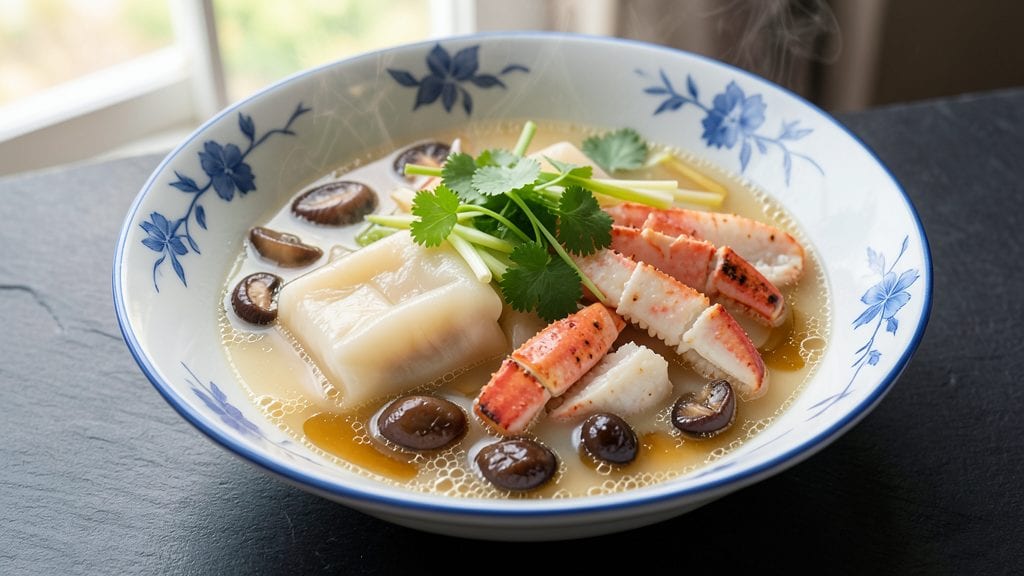
This Chinese fish maw and crab soup delivers the luxurious textures and briny depth that define Cantonese comfort food. The secret lies in transforming fish maw through precise soaking and boiling to achieve that signature silky, melt-in-your-mouth texture, while fresh crab adds a delicate sweetness that balances the broth's complexity.
I've perfected this recipe over years of experimentation, ensuring each element—from the clear broth to the final garnish—honors traditional techniques while remaining approachable for home cooks.
The foundation of this soup begins with properly preparing the fish maw, which requires multiple soaks and gentle boiling to remove impurities without compromising texture. Meanwhile, the crab—whether snow crab legs or lump crab meat—must be selected for maximum sweetness and firmness, as its quality directly impacts the final dish.
A well-made broth, whether clear or rich, serves as the canvas where these ingredients shine, carrying their flavors while maintaining balance.
What you'll achieve is a bowl of soup where each component plays its part: tender fish maw that dissolves on the tongue, succulent crab that offers subtle sweetness, and a broth so perfectly balanced it enhances rather than overpowers.
The final presentation, with fresh cilantro and scallions, adds a bright contrast that elevates the dish from hearty to extraordinary. This is the kind of soup that commands attention at any table.
The recipe accommodates both Cantonese and Fujian styles, allowing you to adjust the broth's richness or add regional touches like star anise or ginger. Whether serving for a special occasion or a weeknight dinner, this soup delivers restaurant-quality results with careful preparation and precise temperature control.
Let's create this timeless dish together.
Ingredients for chinese fish maw and crab soup
Transform delicate fish maw and sweet crab into a luxurious Cantonese masterpiece with these essential ingredients.
| Ingredient | Amount | Notes |
|---|---|---|
| Dried Fish Maw 🐟 | 8 oz | Soaked overnight in cold water |
| Snow Crab Legs 🦀 | 1 ½ lb | Shell-on, fresh or frozen |
| Dried Shiitake Mushrooms 🍄 | ½ oz | Rehydrated in hot water |
| Fresh Ginger Root 🧅 | 2 tbsp | Thinly sliced, peeled |
| Green Onions 🧅 | ½ cup | White and green parts separated |
| Fresh Cilantro 🌿 | ¼ cup | Chopped for garnish |
| Light Soy Sauce 🍶 | 2 tbsp | Kikkoman preferred |
| Shaoxing Wine 🍷 | ½ cup | Dry Chinese cooking wine |
| Dried Star Anise 🌟 | 2 whole | For aromatic depth |
| Dried Tangerine Peel 🍊 | 1 tbsp | For fragrance |
| Cornstarch 🌾 | 1 tbsp | For velveting fish maw |
| Sesame Oil 🫒 | 1 tsp | Toasted for aroma |
| Rock Sugar 🍬 | 2 tbsp | Or substitute white sugar |
| Clear Chicken Stock 🍗 | 6 cups | Homemade or high-quality |
| Vegetable Oil 🫒 | 2 tbsp | For high-heat searing |
The fish maw requires meticulous preparation—source dried maw from Asian markets or specialty grocers like H Mart for optimal quality. Look for pieces that are plump and free of discoloration. The crab should be fresh with a sweet aroma; snow crab legs from reputable seafood suppliers like Wild Alaskan Company ensure superior texture. For the shiitake mushrooms, dried varieties from Taiwan provide the deepest umami flavor when rehydrated. The ginger must be fresh—organic ginger root from farmers markets delivers the brightest flavor profile essential for balancing the dish's richness.
No dried fish maw? Substitute with firm white fish fillets like cod or halibut, but adjust cooking time significantly. Fresh crab unavailable? High-quality canned crab meat works in a pinch, though texture will differ. The Shaoxing wine can be replaced with dry sherry if unavailable, though the authentic flavor profile will be compromised. For the dried star anise, substitute with a pinch of anise extract if necessary, though whole pods are preferred. The tangerine peel can be omitted entirely if unavailable—its primary role is fragrance. When velveting the fish maw, cornstarch creates the signature silky texture, so don't substitute with flour.
Store dried ingredients like fish maw and shiitake mushrooms in airtight containers away from moisture to maintain freshness for up to 12 months. Fresh crab should be used immediately or frozen for up to 3 months for optimal quality. The prepared soup broth can be refrigerated for 3-4 days or frozen for up to 3 months in airtight containers. When reheating, maintain low heat to prevent the fish maw from overcooking—gentle warmth preserves its delicate texture. The final garnish of fresh cilantro and green onions should be added just before serving to maintain their vibrant color and fresh aroma.
Why You'll Love This Recipe
- No-Soaking Hassle: I’ll be real—soaking dried fish maw for hours used to make me skip this dish. But here, we’re just simmering it whole in broth until it melts into delicate, jelly-like perfection. No fuss, no waiting, just that luxurious texture without the prep battle.
- Umami Bomb: That first sip? Pure flavor payoff. The fish maw soaks up the broth’s richness while the shiitake mushrooms and ginger root build layers of depth—earthy, slightly sweet, with a briny kick from the crab. It’s the kind of taste that makes you forget you’re eating "healthy."
- Weeknight to Dinner Party: I make this for lazy Mondays (just throw in pre-cooked crab legs) or impress guests (add a splash of Shaoxing wine and fresh cilantro). Same core recipe, different vibes—whether you’re feeding two or six, it scales like a dream.
- Leftovers That Don’t Suck: Most soups turn sad after Day 1, but this one? Even better reheated. The fish maw stays tender, the crab stays sweet, and the broth gets deeper in flavor. I pack it for lunches or freeze portions—no one complains, and my wallet stays happy.
Step-by-step instructions for Chinese fish maw and crab soup
Master this delicate balance of textures through precise technique and aromatic layering.
Prepare the Fish Maw for Velvet Texture
Begin by draining the soaked dried fish maw and patting it dry thoroughly with paper towels. This step removes excess moisture that would prevent proper velveting. Cut the fish maw into 1-inch squares and transfer them to a mixing bowl. In a separate small bowl, whisk together the 1 tablespoon cornstarch, 2 tablespoons rock sugar, and 1 tablespoon sesame oil until completely dissolved. Pour this mixture over the fish maw and toss gently to coat evenly. Let it marinate for 15 minutes at room temperature.
The cornstarch creates a delicate coating that transforms the fish maw's chewy texture into silky perfection when cooked properly. The rock sugar adds subtle sweetness while balancing the briny crab. Don't skip the marination - this is what ensures that signature melt-in-your-mouth quality. The fish maw should look uniformly dusted with the cornstarch mixture when ready to cook.
Build the Aromatic Base
Heat the 2 tablespoons vegetable oil in a large pot over medium heat until shimmering. Add the 2 whole dried star anise and 1 tablespoon dried tangerine peel, stirring constantly for 30 seconds until fragrant. Add the 2 tablespoons thinly sliced fresh ginger root and cook for an additional 30 seconds until the ginger releases its essential oils and becomes slightly translucent.
Immediately pour in the 0.5 cup shaoxing wine and scrape up any browned bits from the bottom of the pot with a wooden spoon. This deglazing step captures all the concentrated flavors you've built. Let the wine simmer for 2 minutes until it reduces by half and the aroma becomes deeply aromatic. The pot should smell like a complex symphony of citrus, spice, and ginger - this is your flavor foundation.
Velvet the Fish Maw and Add Mushrooms
Add the marinated fish maw to the pot in a single layer. Pour in the 6 cups clear chicken stock and bring to a gentle simmer. Cover and cook for exactly 10 minutes without stirring. This precise timing is critical - any longer and the texture becomes tough. After 10 minutes, remove the lid and gently stir the fish maw once to ensure even cooking.
In a separate bowl, soak the 0.5 oz dried shiitake mushrooms in hot water for 10 minutes until pliable. Drain and slice them into ¼-inch pieces. Add the mushrooms to the pot and simmer uncovered for an additional 5 minutes. The fish maw should now have a delicate, translucent appearance with just a hint of resistance when pressed with chopsticks - this is the perfect velvet texture.
Incorporate the Crab and Finish the Broth
Using kitchen shears, carefully cut the 1.5 lb snow crab legs through the shell on the underside, being careful not to break the meat. Add the crab to the pot and simmer gently for 3 minutes. The crab should turn opaque and the meat should release easily from the shell when tested with a fork. Remove the crab and set aside to rest for 2 minutes.
Return the broth to a gentle simmer and add the 2 tablespoons light soy sauce. Taste and adjust seasoning - you may need to add a touch more soy sauce or a pinch of salt to balance the flavors. The broth should be clear with just a hint of golden color and carry all the aromatic notes from the earlier steps. Strain the broth if you prefer a completely smooth texture, or leave it as-is for more body.
Assemble and Garnish
Return the crab to the pot and warm through for 1 minute. Divide the fish maw and crab evenly among 4 deep soup bowls. Ladle the hot broth over the top, ensuring each serving gets an equal portion of the aromatic liquid. Garnish each bowl with 2 tablespoons chopped green onions (white and green parts separated) and 1 tablespoon chopped fresh cilantro.
Serve immediately with a small side of steamed jasmine rice to soak up the delicate broth. The presentation should showcase the silky fish maw, plump crab meat, and shiitake mushrooms against the clear, fragrant broth. Each spoonful should deliver a perfect harmony of textures - the melt-in-your-mouth fish maw, the briny crab, and the earthy mushrooms all suspended in a broth that sings with aromatic complexity.
Pro Tips For Making Chinese Fish Maw And Crab Soup
- Soak Fish Maw Twice: I learned this the hard way—fish maw needs a long soak (8+ hours), but don’t just dump it in cold water. First soak in warm water with a pinch of baking soda for 2 hours to loosen the fibers, then switch to fresh cold water. The second soak (4+ hours) plumps it up properly—skimp here, and it’ll stay tough no matter how long you simmer.
- Crack Crab Legs First: Save yourself 30 minutes of awkward chewing by cracking the crab legs before adding them to the soup. Use kitchen shears to snip the shell along the curve—just enough to expose the meat without breaking it. Drop them in last 5 minutes so they stay tender, not rubbery.
- Don’t Boil the Shiitakes: Dried shiitakes are delicate once rehydrated. After soaking, pat them very dry with paper towels, then parboil for just 2 minutes in the broth before adding fish maw. Overcooking turns them mushy—you want them to absorb flavor, not fall apart.
- Ginger in Stages: My grandmother swore by this: Add half the ginger (thinly sliced, no peeling) with the fish maw to mellow its bite, then toss in the rest (julienned) in the last 10 minutes. The fresh ginger brightens the broth without overpowering the crab’s sweetness. (Yes, even if you’re impatient like me.)
Regional styles of chinese fish maw and crab soup
Cantonese Elegance
The Cantonese version of this soup emphasizes clarity and delicate balance, where the fish maw achieves its signature velvet texture through precise velveting techniques. I use a clear chicken stock as the base, ensuring the broth remains light yet flavorful.
The star anise and tangerine peel add subtle aromatic depth without overpowering the delicate seafood flavors. This style often includes dried shiitake mushrooms for umami and fresh ginger for brightness, creating a harmonious interplay of textures and flavors. 🌟
Fujian Richness
In Fujian cuisine, this soup takes on a richer character, often incorporating more aromatic spices and sometimes even a touch of chili for heat. I recommend adding 1 tsp of ground white pepper and 1 slice of fresh ginger directly to the broth for an extra layer of complexity.
Fujian chefs might also use dried scallops alongside the crab to enhance the seafood profile. The broth in this version tends to be slightly thicker, with more pronounced caramelization from the ginger and star anise.
Hong Kong Twist
Hong Kong-style preparations often blend Cantonese precision with a touch of boldness. I like to add 1 tbsp of fermented black beans to the broth for a deep, savory note that complements the crab's sweetness. Some versions also include dried abalone alongside the fish maw, creating a luxurious texture contrast.
The garnish might feature chopped scallions and cilantro, but with an extra sprinkle of toasted sesame seeds for crunch and visual appeal.
Taiwanese Comfort
Taiwanese home cooks often take a more approachable approach, focusing on hearty flavors and generous portions. I've seen versions where the broth is slightly richer, with added pork bones for depth. The fish maw preparation remains meticulous, but the crab might be substituted with fresh tuna or salmon for accessibility.
Taiwanese-style soups often include a final touch of white pepper and a drizzle of toasted sesame oil before serving, adding warmth to each bowl.
Modern Fusion Adaptations
For contemporary twists, I experiment with adding lobster or langoustines alongside the crab for a premium seafood experience. Some modern versions incorporate lemongrass or kaffir lime leaves into the broth for a fragrant, tropical note.
A splash of coconut milk can also lighten the broth while adding a subtle creaminess that pairs beautifully with the briny crab. These adaptations maintain the dish's elegance while introducing exciting new dimensions. 💫
Nutrition facts
Frequently asked questions
How do I properly soak dried fish maw before cooking?
Soak dried fish maw in cold water for at least 8 hours (overnight is best) to remove impurities. Change the water 2-3 times during soaking, and add 1 tablespoon baking soda to the final soak to help soften it. Rinse thoroughly before using to remove any residue. This step is critical for achieving that signature silky texture!
What's the best way to select fresh crab for this recipe?
Look for snow crab legs with a sweet, briny aroma and firm, intact shells. The meat should be opaque white with no brown discoloration. Fresh crab should smell clean and ocean-like, not fishy or ammonia-like. For optimal flavor, use crab that's been previously frozen once—this process enhances its sweetness.
Can I make this soup ahead of time?
Yes! Prepare the broth and velvet fish maw up to 2 days ahead, storing it refrigerated in an airtight container. When ready to serve, simply reheat gently on low heat (15-20 minutes) and add the crab just before serving. Never boil—this will ruin the delicate fish maw texture. The crab should be added fresh to maintain its sweetness and firmness.
What happens if I overcook the fish maw?
Overcooked fish maw becomes rubbery and loses its signature melt-in-your-mouth quality. The velveting process should take exactly 10 minutes—any longer and the texture degrades. If you notice the fish maw looking cloudy or tough, it's overdone. The key is maintaining a gentle simmer (small bubbles, not rolling boil) throughout cooking.
Are there vegetarian alternatives for this recipe?
For a vegetarian version, substitute fish maw with rehydrated king oyster mushrooms (soaked 30 minutes) and crab with firm tofu or king trumpet mushrooms. Use vegetable stock instead of chicken stock and add 1 tablespoon mushroom powder for umami depth. The velveting technique works similarly with mushrooms, though cooking time may vary slightly.