
Soups & Stews
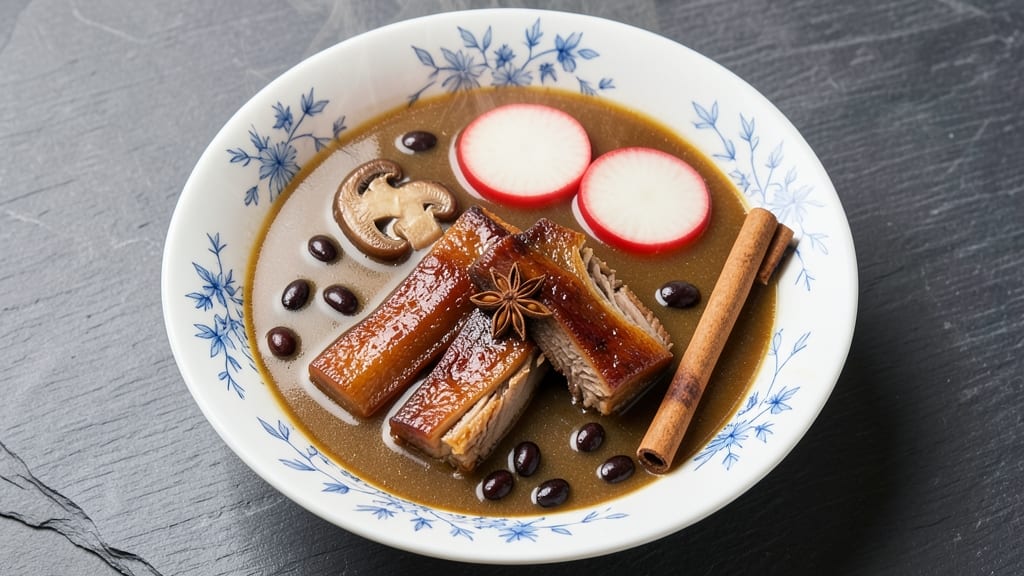
Chinese-style oxtail soup transforms tough oxtail into melt-in-your-mouth tenderness while creating a collagen-rich broth so deeply flavorful it becomes the star of any meal.
The secret lies in slow simmering—3 to 4 hours—where spices like star anise and cinnamon infuse the broth with warmth, while soy sauce and fermented black beans add depth that builds layer upon layer.
I’ve perfected this recipe after years of testing, ensuring every sip delivers both comfort and authenticity, just like the versions I grew up with in my grandmother’s kitchen.
What sets this soup apart is its two-stage cooking process: first searing the oxtail to lock in flavors, then simmering it low and slow until the bones nearly dissolve, releasing their gelatinous richness.
The result is a broth so velvety it coats your spoon, while the oxtail itself becomes so tender it falls apart at the touch. Traditional ingredients like daikon radish and shiitake mushrooms add texture and balance, rounding out the dish with earthy notes that complement the meat’s natural sweetness.
By the time you serve this soup, you’ll have a restaurant-quality dish that’s equally impressive as a weeknight dinner or a special occasion meal.
The aroma alone—warm, spiced, and deeply savory—will draw everyone to the table, while the first bite delivers that perfect harmony of tender meat, rich broth, and aromatic spices.
Serve it with steamed rice to soak up every last drop, or pair it with dumplings for a meal that feels both familiar and extraordinary.
This recipe isn’t just about the technique; it’s about the experience. The slow simmer transforms simple ingredients into something extraordinary, creating a dish that feels like a hug in a bowl.
Whether you’re feeding a family or treating yourself, the result is always the same: a soup so deeply satisfying it becomes a tradition. Let’s get started on making yours—bone broth that truly melts bones.
Ingredients for chinese style oxtail soup
Six pounds of oxtail and a handful of aromatic spices create this restaurant-quality bone broth.
| Ingredient | Amount | Notes |
|---|---|---|
| Oxtail 🥩 | 3 lb | Cut into 2-inch pieces, trimmed of excess fat |
| Daikon Radish 🥕 | 1 whole | Cut into 1-inch chunks, peel optional |
| Shiitake Mushrooms 🍄 | 8 whole | Stems removed, caps halved |
| Star Anise Pods 🌟 | 2 whole | Whole pods for infusion |
| Cinnamon Sticks 🌿 | 2 whole | 2-inch pieces for aroma |
| Fermented Black Beans 🫘 | ½ cup | Rinsed, patted dry |
| Soy Sauce 🥄 | ⅓ cup | Dark soy preferred for color |
| Dried Shiitake Mushrooms 🍄 | 4 whole | Rehydrated for broth depth |
| Garlic Cloves 🧄 | 6 cloves | Smashed for maximum flavor |
| Fresh Ginger 🌿 | 1 ½ tbsp | Finely grated, aromatic |
| Green Onions 🧅 | 4 whole | White and green parts separated |
| Cornstarch 🌾 | 1 tbsp | For broth thickening |
| White Peppercorns 🌶️ | 1 tsp | Freshly cracked preferred |
| Sesame Oil 🫒 | 1 tbsp | For finishing aroma |
| Salt 🧂 | 1 ½ tsp | Adjust to taste |
The oxtail is non-negotiable—look for well-marbled cuts at your local Asian market or butcher. Costco often carries pre-cut oxtail in the frozen section, which saves time. Fresh ginger and star anise are the flavor anchors; grab them from the bulk bins at Whole Foods if you want the freshest. The fermented black beans add that unmistakable funk—Asian grocery stores carry them in the refrigerated section. For shiitake mushrooms, fresh is ideal, but dried work in a pinch (just rehydrate first).
No star anise? 1 tsp ground anise works, but it won’t be the same. Short on fermented black beans? Substitute 2 tbsp soy sauce plus 1 tsp miso paste for depth. Fresh ginger is best, but dried powder at half the amount gets you close. The daikon radish can be swapped for regular white radish if needed—just adjust the quantity slightly since it’s milder. For the mushrooms, cremini or oyster mushrooms work in a bind, but shiitake are the gold standard here.
This soup tastes even better the next day—make extra and freeze portions for up to 3 months. Store the broth separately from the oxtail if reheating; the meat reheats best in its own juices. Keep the ginger and star anise whole in the freezer for future batches. The cornstarch slurry should be made fresh before serving—slurry it with cold water to avoid clumping. Garnish with green onions and a drizzle of sesame oil right before serving for that restaurant touch.
Why You'll Love This Recipe
- One-Pot Magic: I swear by this recipe because it’s literally dump-and-simmer. Toss the oxtail, daikon, and mushrooms into a pot with star anise and cinnamon, add water, and walk away—no chopping, no fuss. The spices infuse effortlessly while you handle the rest of your day.
- Deep Umami Bomb: That slow-cooked oxtail? It falls apart into rich, gelatinous strands that melt in your mouth, while the shiitake mushrooms add earthy depth. The star anise and cinnamon hit you with warmth—like a hug in a bowl, but way more satisfying.
- Leftovers That Don’t Suck: Between us, this soup only gets better the next day. The flavors meld into something even richer, and it reheats in minutes. I make a big batch on Sundays, and by Wednesday, it’s still the star of my lunch—no sad, watery leftovers here.
- Budget Comfort Winner: Oxtail is cheap, and this recipe stretches it into a hearty meal for days. The daikon and mushrooms bulk it up without breaking the bank, and the spices cost pennies. Honestly, it’s my go-to when I need a filling, flavorful dinner that doesn’t drain my wallet.
Step-by-step instructions for Chinese style oxtail soup
Here's how to create a velvety, collagen-rich oxtail soup that transforms tough cuts into melt-in-your-mouth perfection.
Parboil the Oxtail for Maximum Tenderness
Place the 3 lb oxtail in a large stockpot and cover with cold water by about 2 inches. Add 1.5 tsp salt and bring to a boil over high heat. Once boiling vigorously, reduce to a gentle simmer and cook for 20 minutes. This initial parboil helps remove impurities and jumpstarts the collagen breakdown.
After 20 minutes, drain the oxtail and rinse it thoroughly under cold water. The water should run clear—this removes any blood or surface impurities that could cloud your broth. Return the rinsed oxtail to the same pot and set it aside for now. This step is crucial; skipping it means your soup will take much longer to develop that signature silky texture.
Build the Aromatic Base
In the same pot, add 2 cups water (enough to cover the oxtail by about an inch) along with the 2 whole star anise pods, 2 whole cinnamon sticks, 6 cloves smashed garlic, and 1.5 tbsp finely grated fresh ginger. Bring to a boil over medium-high heat, then immediately reduce to a low simmer for 15 minutes. This allows the spices and aromatics to infuse deeply into the broth.
After 15 minutes, add the 4 whole dried shiitake mushrooms (no need to soak them first—they'll rehydrate in the broth) and the 1 whole daikon radish cut into 1-inch chunks. Let the mixture simmer uncovered for another 10 minutes. You'll notice the daikon softening slightly and the broth developing a subtle, earthy aroma—this is where the foundation of your soup's complex flavor begins to form.
Simmer the Oxtail Low and Slow
Return the parboiled oxtail to the pot, ensuring it's fully submerged under the liquid. Add 0.5 cup rinsed fermented black beans and 0.33 cup soy sauce. Bring the mixture back to a gentle simmer (small bubbles breaking the surface, but not a rolling boil) and cover partially with a lid. This is where patience pays off—simmer for 2.5 to 3 hours until the oxtail is fork-tender and nearly falls apart.
Here's the thing—you'll know it's ready when you can easily pierce the largest piece with a fork and the meat pulls apart with minimal resistance. The broth should have reduced slightly and taken on a deep, golden color from the soy sauce and caramelized aromatics. If the liquid level gets too low, add hot water as needed to keep the oxtail submerged. This slow cooking transforms the tough connective tissue into gelatinous collagen that thickens the broth beautifully.
Finish with Mushrooms and Seasoning
After the oxtail is tender, remove it from the broth and set it aside. Strain the broth through a fine-mesh sieve into a clean pot, pressing gently on the solids to extract maximum flavor. Return the broth to the heat and add the 8 whole shiitake mushrooms (stems removed, caps halved) and the white parts of the 4 whole green onions. Simmer for 10 minutes to let the mushrooms absorb the rich broth flavors.
In a small bowl, whisk together 1 tbsp cornstarch with 2 tablespoons of the broth to create a slurry. Slowly pour this mixture back into the pot while stirring constantly. The broth should begin to thicken immediately—simmer for another 2 minutes until it reaches your desired consistency. Taste and adjust seasoning with additional soy sauce or salt as needed. The finished broth should be deeply flavorful with a perfect balance of umami and aromatic sweetness.
Assemble and Serve
Return the oxtail to the pot along with the shiitake mushrooms. Gently stir in 1 tbsp sesame oil and 1 tsp freshly cracked white peppercorns. Ladle the soup into bowls, garnishing each serving with the green onion tops for freshness and color. The oxtail should be effortlessly tender, the broth velvety and rich, and each bite should deliver layers of savory, sweet, and earthy flavors that define this classic Chinese dish.
For the best experience, serve immediately while the broth is hot and the aromas are at their peak. The soup will continue to thicken slightly as it cools, so don't be surprised if it becomes even more luxurious by the time you're ready to enjoy it. This recipe makes 6 generous servings, perfect for sharing with family or friends who appreciate a truly comforting meal.
Pro Tips For Making Chinese Style Oxtail Soup
- Parboil Oxtail First: I learned this the hard way—skipping the 10-minute parboil in salted water means your oxtail will fight you later. It removes impurities and jumpstarts the collagen breakdown, so the soup turns rich instead of murky.
- Slice Daikon Thinly: Thick chunks stay tough; ¼-inch slices melt into the broth beautifully. Use a mandoline if you’re impatient—it’s faster than a knife and guarantees even cooking.
- Toast Spices Whole: Crack star anise and cinnamon sticks in a dry pan for 30 seconds first. It deepens their aroma without burning, so the soup smells like a proper Chinese kitchen—not just a spice cabinet.
- Simmer Slow and Low: After the initial boil, drop the heat to a bare simmer (tiny bubbles, maybe 160°F/70°C). Rushing this step makes the broth cloudy and the oxtail chewy—no one wants that.
Serving suggestions for this recipe
Rice Pairing
Steamed jasmine rice is the classic companion to oxtail soup, absorbing the rich broth like a sponge. I use 1.5 cups uncooked jasmine rice per 6 servings, cooked in a 1:1.5 rice-to-water ratio with a pinch of salt.
The slightly floral aroma of jasmine rice complements the soup’s deep umami flavors beautifully. For extra luxury, serve the rice in small steamed buns or rice bowls with the soup ladled over the top. 🍚
Dumpling Garnish
Add pan-fried pork dumplings or shrimp dumplings as a topping for an interactive dining experience. I like to use store-bought dumplings from brands like Trader Joe’s or Momofuku for convenience, then pan-fry them in 2 tbsp neutral oil until golden brown.
The crispy exterior contrasts perfectly with the silky broth. For a homemade touch, fold wonton wrappers with ground pork, ginger, and scallions before pan-frying. 🥟
Fresh Herbs
Brighten each bowl with cilantro or Thai basil for a fresh, herbal note that cuts through the richness. I chop ¼ cup cilantro or 10 Thai basil leaves and sprinkle them over the soup just before serving.
For a more aromatic finish, add 1 tsp toasted sesame seeds or a drizzle of chili oil for a subtle kick. 🌿
Side of Greens
Balance the richness with a light side of steamed bok choy or Chinese broccoli (gai lan). Blanch 2 bunches in boiling water for 2 minutes, then shock in ice water.
Toss with 1 tbsp toasted sesame oil and a pinch of salt. The crisp-tender greens provide a refreshing contrast to the hearty soup. 🥬
Bread Pairing
For a casual touch, serve crusty baguette slices or mantou (steamed buns) alongside the soup. I like to toast 4 slices of baguette with 1 tbsp butter and sprinkle with flaky sea salt before serving. The bread soaks up the broth beautifully, making every bite even more satisfying. 🥖
Garnish Like a Pro
Elevate your presentation with green onion tops, a drizzle of sesame oil, and a pinch of white pepper. I also like to add 1 tsp toasted nori flakes for an umami boost and extra visual appeal.
The key is to garnish right before serving—this keeps the flavors vibrant and the textures perfect. 💫
Nutrition facts
Frequently asked questions
Why does Chinese-style oxtail soup require such a long cooking time?
The 3-hour simmer is essential to break down the tough connective tissue in oxtail, transforming it into tender, gelatinous meat while extracting maximum collagen for a rich broth. This slow process also allows the spices—like star anise and cinnamon—to infuse deeply, creating that signature aromatic depth.
Can I substitute beef short ribs for oxtail?
Yes, but the texture and flavor will differ slightly. Beef short ribs are leaner and won’t yield as much collagen, so your broth may be less velvety. For best results, use bone-in short ribs and add 1 extra hour to the simmering time. The meat will still be tender, but the broth won’t be as richly gelatinous.
How do I know when the oxtail is fully cooked?
The oxtail is ready when it’s fork-tender and nearly falls apart at the touch. Pierce the largest piece—if it separates easily with minimal resistance, it’s done. The broth should also have reduced slightly and turned a deep golden color from the caramelized aromatics.
Can I make this soup in an Instant Pot?
Yes! Use the high-pressure setting for 60 minutes after the initial parboil and aromatic base. After cooking, let the pressure release naturally for 15 minutes to maximize collagen extraction. The broth may not be as deeply reduced, so finish by simmering it on the stovetop for 10 minutes to thicken it naturally.
What if my broth turns cloudy during cooking?
Cloudiness usually means impurities (like blood or fat) weren’t fully removed during the parboil. Strain the broth through a fine-mesh sieve or cheesecloth, then simmer it again for 10 minutes to clarify. For extra clarity, skim off any surface fat before serving.