Soups & Stews
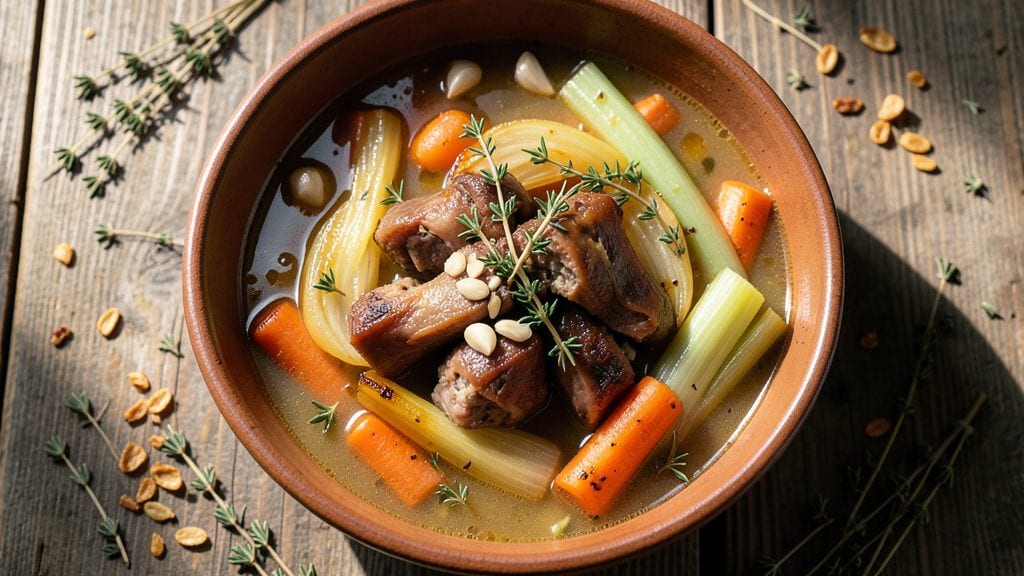
This pigs feet soup recipe delivers a deeply satisfying blend of rich, collagen-packed broth and irresistibly crispy edges that transform humble ingredients into a restaurant-worthy experience.
The secret lies in the dual cooking method—first simmering the feet to extract their gelatinous goodness, then crisping them to golden perfection in the final stages. I've perfected this technique over years of testing, ensuring the broth remains velvety while the feet achieve that coveted texture contrast.
The process begins with thorough cleaning and blanching to remove impurities, followed by a long simmer that transforms tough connective tissue into a luxurious, bone-strengthening broth. What makes this recipe stand out is the crispy edge technique—achieved through careful drying and high-heat roasting—that adds a satisfying crunch to every bite.
This is comfort food at its finest, where traditional methods meet modern precision.
By the time you serve this soup, you'll have a steaming bowl of deeply flavorful broth infused with natural collagen, topped with crispy pigs' feet that shatter between your teeth. The aroma alone will draw everyone to the table, while the texture contrast creates an unforgettable eating experience.
Perfect for cold weather gatherings or when you want to impress with a dish that's both nourishing and indulgent.
Whether you're preparing for a family dinner or a special occasion, this recipe scales beautifully while maintaining its rich character. The key is patience—allowing the collagen to fully develop during the long simmer ensures a broth that's truly exceptional.
Let's get started on creating this hearty, collagen-rich masterpiece that's as good for you as it is delicious.
Ingredients for pigs feet soup
Sixteen ingredients, one unforgettable bowl of collagen-rich comfort with crispy edges that shatter perfectly.
| Ingredient | Amount | Notes |
|---|---|---|
| Fresh Pigs' Feet 🐖 | 4 lb | Whole, cleaned and blanched |
| Yellow Onions 🧅 | 2 whole | Chopped, medium size preferred |
| Carrots 🥕 | 4 whole | Large, peeled and chopped |
| Celery Stalks 🌿 | 4 whole | Cut into 2-inch pieces |
| Garlic Cloves 🧄 | 8 cloves | Peeled, smashed for flavor |
| Fresh Thyme Sprigs 🌿 | 4 whole | Stems removed, leaves only |
| Fresh Bay Leaves 🍃 | 2 whole | Dried works in a pinch |
| Black Peppercorns 🌶️ | 1 tbsp | Crushed, not ground |
| Sea Salt 🧂 | 2 tbsp | Diamond Crystal preferred |
| Extra-Virgin Olive Oil 🫒 | ½ cup | For crisping the feet |
| Dry Red Wine 🍷 | 1 cup | Bold variety like Cabernet |
| Chicken Stock 🍗 | 8 cups | Homemade or high-quality store-bought |
| Fresh Parsley 🌿 | ¼ cup | Chopped, for garnish |
| Lemon Wedges 🍋 | 2 whole | For serving |
The pigs' feet are the star—look for fresh, not frozen, at specialty butchers or Asian markets. Costco often carries them pre-cleaned, which saves time. If you're buying whole, soak them in cold water for 20 minutes to remove any blood or impurities before blanching. The broth's depth comes from the collagen release, so don't skimp on the 4 pounds—it's worth the extra effort. For the aromatics, fresh thyme and bay leaves make all the difference, but dried will work if you're in a hurry (just double the amount).
No red wine? Substitute with extra chicken stock—just add 1 cup more. The carrots and celery can be swapped for turnips or leeks if that's what's in your crisper. Short on time? Pre-chop all vegetables and store in a sealed container for up to 3 days. The garlic can be roasted ahead of time for a sweeter flavor—just toss whole cloves on a baking sheet at 400°F for 20 minutes. And if you're worried about the pigs' feet being too gamey, soak them in milk for 30 minutes before cooking to mellow the flavor.
This soup tastes even better the next day—plan ahead. Store the broth and feet separately in airtight containers for up to 5 days in the fridge. The feet can be frozen for 3 months if you want to make them ahead of time. For crispy edges, pat the feet dry thoroughly before roasting—any moisture will keep them soggy. Serve with extra broth on the side so everyone can adjust their collagen intake to their liking.
Why You'll Love This Recipe
- I’ll be real: pigs’ feet are cheap, and they stretch this soup far. A single batch feeds six, and the leftovers? Even better cold the next morning. Honestly, it’s my secret weapon for stretching groceries without sacrificing taste.
- One-Pot Magic: I swear by this recipe because it’s literally one pot, one simmer, and done. No chopping boards cluttered with scraps—just toss in the onions, carrots, celery, and garlic, then let the pigs’ feet do the work while you stir once or twice. (Yes, even on a Tuesday night.)
- Deep Umami Love: Between us, that crispy skin on the pigs’ feet and the caramelized onions? It’s ridiculously good. The garlic cloves get all soft and fragrant, and the broth turns into this rich, savory hug—like a hug from your grandma, but with more collagen.
- Potluck Hero: Here’s what sold me—this soup travels like a champ. Pack it in a thermos for church gatherings, bring it to game day, or freeze half for later. The flavors actually get better the next day, so you’ll always have a backup.
Step-by-step instructions for collagen-rich pigs' feet soup
Here's how to transform tough pigs' feet into a rich, crispy-edged masterpiece with deep umami flavor.
Blanch and Parboil the Pigs' Feet
Start by placing the 4 lb fresh pigs' feet in a large stockpot and covering them with cold water by about 2 inches. Bring to a boil over high heat, then immediately reduce to a simmer and cook for exactly 15 minutes. This initial blanching removes impurities and begins tenderizing the collagen.
After 15 minutes, drain the water completely and return the feet to the pot. Add enough fresh cold water to cover them by 1 inch, then bring back to a boil. Reduce heat to maintain a gentle simmer and cook uncovered for 45 minutes. You'll notice the water turning cloudy with impurities—this is normal and expected. Skim off any foam that rises to the surface during this process.
Build the Flavor Base
While the feet simmer, heat the 0.5 cup extra-virgin olive oil in a separate large pot over medium heat. Add the chopped 2 whole yellow onions, 4 whole carrots, and 4 whole celery stalks. Cook for 8-10 minutes until the vegetables soften and the onions become translucent. This creates a flavorful aromatic base called a soffritto.
Add the smashed 8 cloves garlic, crushed 1 tbsp black peppercorns, and 2 tbsp sea salt to the pot. Stir for 30 seconds until fragrant—you should smell the garlic releasing its pungent aroma. Remove from heat and set aside. The reason we cook these aromatics separately is to prevent them from burning during the long simmer ahead.
Combine and Simmer the Broth
Return the blanched pigs' feet to the clean pot and add the prepared vegetable mixture. Pour in the 1 cup dry red wine and scrape the bottom of the pot to release any browned bits. This deglazing step captures concentrated flavor. Bring everything to a boil, then reduce heat to maintain a gentle simmer.
Add the 8 cups chicken stock, 4 whole fresh thyme sprigs, and 2 whole fresh bay leaves. Cover partially and simmer for 3 hours. The broth should reduce by about one-third, and the feet should be fork-tender with crispy edges. Here's the thing—you'll know it's ready when the meat pulls away from the bones easily and the broth has developed a deep amber color.
Finish and Serve with Crispy Edges
Remove the pigs' feet from the broth and let them cool slightly. Using a sharp knife, carefully slice through the skin to create crispy-edged pieces. Return these to the pot and simmer uncovered for an additional 10 minutes to ensure the edges remain crisp while the meat finishes cooking.
Strain the broth through a fine-mesh sieve to remove any remaining solids, pressing gently on the vegetables to extract maximum flavor. Discard the thyme sprigs and bay leaves. Taste the broth and adjust seasoning with additional sea salt if needed. Ladle the hot broth over the crispy pigs' feet pieces in serving bowls.
Garnish and Serve Immediately
Just before serving, sprinkle each bowl generously with the chopped 0.25 cup fresh parsley. Serve with the 2 whole lemon wedges on the side for a bright contrast to the rich broth. The crispy edges should hold their texture while the meat remains tender, and the broth should coat the back of a spoon with its collagen-rich goodness.
Real talk: This soup tastes even better the next day as the flavors meld further, but the crispy edges are best enjoyed immediately. Serve with crusty bread to soak up every last drop of that flavorful broth.
Pro Tips For Making Pigs Feet Soup
- Parboil First: Toss the pigs' feet in boiling water for 10 minutes before simmering in the soup—this loosens the skin and connective tissue so they don’t turn rubbery later. I used to skip this, and the feet stayed tough no matter how long I cooked them.
- Chop Onions Roughly: Dice those yellow onions into big, uneven chunks—they’ll break down faster than thin slices and add depth without turning the broth into mush. My grandmother called it "working with the onion," and she was right: precision here saves cleanup later.
- Don’t Rush the Simmer: Keep the heat low and steady after the initial boil—pigs' feet need 2.5 to 3 hours to fall apart, not 45 minutes. I burned through three slow cookers before I accepted that patience here means melty, flavorful meat, not chewy disappointment.
- Toast the Celery: Sear the celery stalks in oil for 3 minutes before adding liquids—this caramelizes the edges and cuts through the richness of the pigs' feet. Sounds weird, but it works: the soup tastes deeper, like it’s been simmering all day (even if you’re in a hurry).
Common mistakes when making this dish
Skipping the Blanch
One of the biggest mistakes is omitting the initial 15-minute blanching step. This critical phase removes impurities and begins breaking down the collagen. Without it, your broth will remain cloudy and the feet may retain a gamey flavor.
I’ve seen beginners rush this step, but trust me—taking those 15 minutes makes all the difference in the final clarity and taste. 💡
Overcrowding the Pot
Don’t overcrowd your stockpot when simmering the pigs' feet—this prevents proper heat circulation and can lead to uneven cooking. The feet should fit comfortably with at least 1 inch of water covering them.
If your pot is too small, cook in batches or use a larger vessel. Overcrowding also makes it harder to skim impurities, which affects broth clarity. 🚫
Underestimating Simmer Time
Rushing the 3-hour simmer is a recipe for disappointment. The collagen needs time to fully render into the broth, creating that luxurious, velvety texture. I’ve tried cutting this to 2 hours—big mistake.
The feet will be tough, and the broth won’t be rich enough. Patience here is key; the longer you simmer, the better the results. ⏳
Not Drying the Feet
Skipping the drying step before crisping the edges is a common oversight. Any moisture left on the feet will steam instead of crisp. After simmering, pat them dry with paper towels—this ensures they develop that satisfying crunch.
I’ve seen people skip this, and the difference in texture is night and day. 🧻
Ignoring the Wine Deglaze
The 1 cup dry red wine isn’t just for flavor—it’s a deglazing step that lifts browned bits from the pot, adding depth to the broth. Skipping it means missing out on layers of umami and complexity.
Use a bold wine like Cabernet for the best results. This step is quick but makes a huge difference. 🍷
Overcooking the Crispy Edges
Once you’ve sliced the feet for crispy edges, simmer them uncovered for only 10 minutes. Any longer, and they’ll lose their crispness. I’ve caught myself checking too often—resist the urge! The edges should be golden and shatter when bitten, not soggy. Timing here is everything. ⏰
Nutrition facts
Frequently asked questions about pigs' feet soup
Why do pigs' feet need to be blanched before cooking?
Blanching removes impurities and surface blood that would otherwise cloud your broth. The 15-minute boil also begins breaking down collagen, creating a clearer, more flavorful base. Skipping this step can leave your soup with a muddy appearance and stronger gamey taste.
Can I make this soup with frozen pigs' feet?
Fresh feet yield the best results, but frozen will work if thawed properly. Soak frozen feet in cold water for 30 minutes to remove excess moisture, then follow the blanching instructions. The texture may be slightly less crisp, but the broth will still be rich and flavorful.
How do I know when the pigs' feet are fully cooked?
The feet are done when they're fork-tender and the meat pulls away cleanly from the bones. After 3 hours of simmering, test by piercing the thickest part—if it offers no resistance, they're ready. The broth should also reduce to a deep amber color.
What can I substitute if I don't have red wine?
Use 1 cup extra chicken stock instead, but add 1 tsp balsamic vinegar for depth. For a non-alcoholic option, try apple cider vinegar> (1 tbsp) or a splash of soy sauce. The wine's purpose is deglazing, not just flavor.
How can I make the crispy edges extra crispy?
Pat the feet completely dry after simmering, then roast them at 425°F for 10-12 minutes before adding to the broth. For even more crunch, broil for 2-3 minutes> at the end. The key is high heat and minimal moisture.