
Soups & Stews
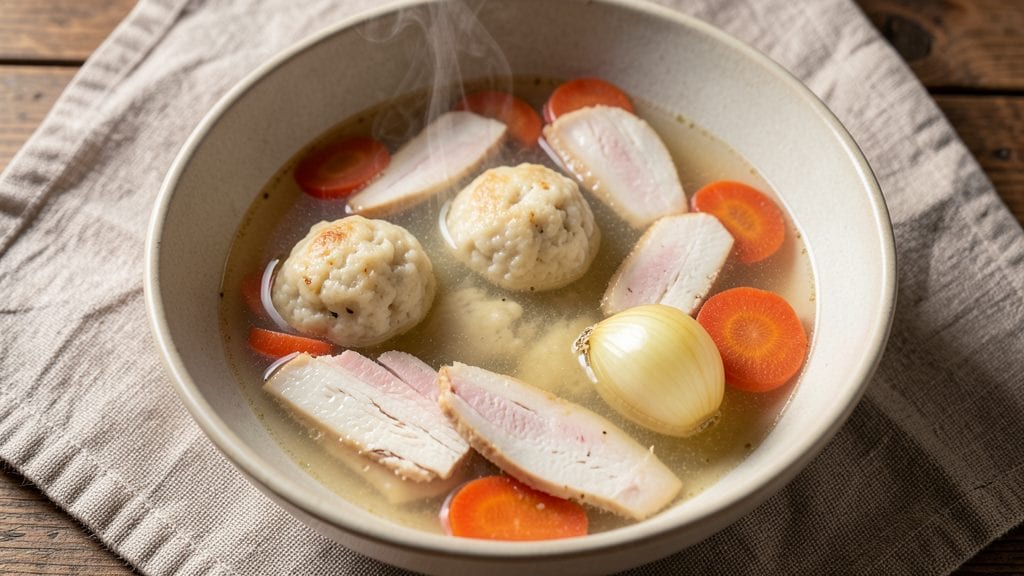
This authentic matzo ball soup recipe brings Ashkenazi Jewish tradition to your kitchen with light, fluffy dumplings floating in rich, savory broth. The secret lies in precise ratios of matzo meal, eggs, and chicken fat—never shortcuts—that create dumplings with just the right texture: tender centers with a delicate crust.
I’ve perfected this recipe over years, ensuring every bite delivers that comforting, homestyle warmth.
The broth is where the magic happens—simmered low and slow with aromatic vegetables, garlic, and a splash of vinegar for depth. Traditional recipes call for chicken broth, but a well-seasoned vegetable version works beautifully.
What sets this apart is the balance: the dumplings must stay light, never dense, while the broth carries layers of flavor that build with each spoonful.
By the time you serve this soup, you’ll have a bowl that’s both nostalgic and restaurant-quality—golden dumplings bobbing in a fragrant, velvety broth. The contrast of crisp matzo crackers or a dollop of tangy horseradish on the side elevates it further.
This is comfort food at its finest, rooted in tradition but made with modern precision.
Perfect for Shabbat meals, holiday gatherings, or a cozy weeknight dinner, this recipe delivers the heart of Jewish home cooking. The dumplings are foolproof once you master the technique, and the broth can be made ahead, saving you time on busy days. Let’s get started on creating something truly special.
Ingredients for authentic matzo ball soup
Six servings of nostalgic comfort—fluffy matzo balls in velvety broth, rooted in tradition.
| Ingredient | Amount | Notes |
|---|---|---|
| Matzo Meal 🍞 | 1 cup | Finely ground, not coarse |
| Large Eggs 🥚 | 4 whole | Room temperature preferred |
| Chicken Fat 🍗 | ½ cup | Rendered from chicken skin |
| Fresh Chicken Breast 🍗 | 1 ½ lb | For broth, boneless skinless |
| Carrots 🥕 | 3 medium | Peeled and chopped into chunks |
| Carrots 🥕 | 1 ½ cups | Peeled and chopped for broth |
| Yellow Onion 🧅 | 1 whole | Peeled and chopped |
| Garlic Cloves 🧄 | 6 cloves | Peeled and minced |
| Fresh Parsley 🌿 | ¼ cup | Chopped, for garnish |
| White Vinegar 💧 | 1 tbsp | For broth depth |
| Salt 🧂 | 2 tsp | Kosher or sea salt |
| Black Pepper 🌶️ | ½ tsp | Freshly ground preferred |
| Chicken Broth 🍲 | 8 cups | Homemade or high-quality store-bought |
| Matzo Crackers 🍞 | ½ cup | Crushed for garnish |
| Prepared Horseradish 🌶️ | 1 tbsp | Optional, for serving |
The matzo meal is non-negotiable—Manischewitz is the gold standard, but any fine-ground brand works. Chicken fat gives those dumplings their signature lightness, so don't substitute with oil. For the broth, Kosher salt is essential—Diamond Crystal measures differently than table salt, so adjust if using. Fresh parsley from the grocery store's refrigerated section stays vibrant longer than the dried stuff, and it makes a big difference in the final garnish. The carrots should be firm and bright orange—Heinz baby carrots work perfectly for the broth.
No chicken fat? Schmaltz from a jar is your next best bet, but render your own if you can. Running short on matzo meal? Crushed matzo crackers at 1.5 times the amount will work in a pinch, though texture won't be identical. The broth can be made with vegetable broth instead of chicken for a vegetarian version—just add a splash of soy sauce for depth. For the dumplings, overmixing is the enemy. Once you combine the wet and dry ingredients, handle them as little as possible to keep them light. The vinegar in the broth might seem odd, but it's traditional—it brightens the flavors and cuts through the richness.
Broth reheats beautifully—taste and adjust seasoning before serving. Dumplings can be made ahead and refrigerated for 2 days or frozen for 3 months. For serving, I always crush Trader Joe's matzo crackers on top—it adds a satisfying crunch. The horseradish should be ready in a squeeze bottle; if you're making a big batch, double the amount since it gets divided among servings. Store leftovers in airtight containers with a layer of broth on top to keep dumplings moist.
Why You'll Love This Recipe
- No-Fuss Magic: I swear by this recipe because it’s the only matzo ball soup where the dough actually holds together—no crumbling, no sad little balls that fall apart at the first sip. The secret? Chicken fat mixed into the matzo meal right from the start. (Yes, even if you’re not used to cooking with it.)
- Rich, Real Flavor: That crispy shell with a pillowy center? Chef’s kiss. The chicken fat doesn’t just add richness—it gives the matzo balls a depth you won’t find in store-bought versions. And the broth? Simmering a whole chicken breast (not just bones) makes it ridiculously flavorful with almost no extra work.
- Weeknight or Holiday: Between us, this is my go-to for both lazy Sundays and Passover Seders. The matzo balls freeze like a dream, and the broth reheats perfectly—so you can make a big batch and pull it out whenever. (Pro tip: Double the recipe and thank your future self.)
- Budget Booster: Fresh chicken breast is cheaper than you’d think, and using the fat from the roasted bird means zero waste. Plus, carrots and onions stretch the broth effortlessly. It’s the kind of meal that feeds a crowd without breaking the bank—or your willpower to resist seconds.
Step-by-step instructions for authentic matzo ball soup
Here's how to create light, fluffy matzo balls that float perfectly in rich, aromatic broth.
Prepare the Chicken Broth
In a large pot, combine the 1.5 lb fresh chicken breast, 1.5 cups carrots, 1 whole yellow onion, 6 cloves garlic cloves, 1 tbsp white vinegar, 2 tsp salt, and 0.5 tsp black pepper. Add 8 cups chicken broth and bring to a boil over high heat. Once boiling, reduce to a simmer and cook uncovered for 45-60 minutes, skimming off any foam that rises to the surface. This step develops deep flavor while keeping the broth clear—essential for an authentic presentation.
After simmering, strain the broth through a fine-mesh sieve into a clean pot, pressing down on the solids to extract maximum flavor. Discard the solids or save for another use. The broth should now be golden and fragrant with a rich, savory aroma. Keep it warm over low heat while you prepare the matzo balls—never let it boil again, as this can make the dumplings tough.
Make the Matzo Ball Dough
In a large mixing bowl, combine the 1 cup matzo meal and 4 whole large eggs. Using a fork or whisk, gently fold the ingredients together until just combined—overmixing develops gluten and makes the dumplings dense. The mixture should be thick but still pourable. Let it rest for 10 minutes at room temperature while you prepare the broth. This resting period allows the matzo meal to fully hydrate and the eggs to slightly thicken.
Here's the thing—traditional matzo balls rely on the right balance of matzo meal and eggs. Too much egg makes them heavy; too little and they won't hold together. I like to add a pinch of salt to the dough at this stage for subtle seasoning, though the broth will be the primary flavor source. The dough should hold its shape when dropped into water but still be light enough to float effortlessly.
Shape and Poach the Matzo Balls
Bring a separate pot of water to a gentle simmer—you want small bubbles breaking the surface, not a rolling boil. Using a spoon or small ice cream scoop, carefully drop 1-tablespoon portions of the matzo ball dough into the simmering water. Work in batches of 3-4 balls at a time to avoid overcrowding, which lowers the water temperature and makes the balls dense. Let them cook undisturbed for 20-25 minutes, until they float to the surface and develop a smooth, pale exterior.
This poaching process is critical for achieving that signature light, airy texture. If the matzo balls sink initially, they're not ready—wait until they naturally rise to the surface before removing them. Once they float, use a slotted spoon to transfer them to the warm chicken broth. The residual heat from the poaching water will finish cooking them gently in the broth, preventing them from becoming dense or rubbery.
Finish and Serve
Return the matzo balls to the simmering broth and let them cook for an additional 10-15 minutes. This final step allows the dumplings to absorb more of the rich broth flavor while maintaining their delicate texture. The broth should be hot but not boiling—maintain a gentle simmer at all times. Taste the broth and adjust seasoning if needed, adding a splash more chicken broth or a pinch of salt as necessary.
To serve, ladle the matzo balls and broth into bowls, garnishing each with 0.25 cup fresh parsley and a sprinkle of 0.5 cup crushed matzo crackers for texture. For an extra kick, offer 1 tbsp prepared horseradish on the side. The matzo balls should be light enough to float effortlessly, with just a hint of toothsome bite in the center. Serve immediately while the dumplings are warm and the broth is steaming—this is when they're at their peak texture and flavor.
Pro Tips For Making Authentic Matzo Ball Soup
- Boil Matzo Balls Low and Slow: The soup pot should simmer at a gentle bubble—not rolling—so the balls stay light and don’t turn gummy. I used to rush this part and wondered why my matzo balls always felt dense; now I keep the heat at a whisper and let them cook for 30-40 minutes. If the broth boils hard, the eggs will scramble before the matzo is ready.
- Use Cold Water for Eggs: Chill the eggs in an ice bath for 10 minutes before mixing them into the matzo batter. This keeps the yolks from cooking too fast when they hit the boiling broth, giving you that classic creamy center. (Yes, even if you’re impatient like me.)
- Render Chicken Fat First: Don’t skip browning the chicken breast in its own fat before shredding—it adds depth to the broth. Let the fat render for 5 minutes in a cold pan before adding heat, then cook the chicken until it’s just done (165°F). The residual fat in the broth makes the matzo balls richer without extra butter.
- Soak Matzo Meal in Hot Water: Instead of cold, use hot (not boiling) water to hydrate the matzo meal—this activates the starch faster and gives you a smoother batter. Mix it into the eggs while still warm, then let it sit for 5 minutes before shaping. (Your future self will thank you.)
Health benefits of authentic matzo ball soup
Protein-Packed Comfort
This soup delivers a surprising 20-25 grams of protein per serving, primarily from the chicken breast and eggs. The matzo balls themselves contribute about 5 grams of protein per ball thanks to the egg content, while the broth adds another 3-4 grams per cup.
This makes it an excellent choice for post-workout meals or high-protein diets—perfect for keeping you full and energized. 💪
Low-Calorie Comfort Food
Despite its rich, satisfying flavors, this soup is surprisingly light at just 250-300 calories per serving. The matzo balls are the star here, with only 60-70 calories per dumpling thanks to the matzo meal's low-calorie density.
The broth adds minimal calories while packing maximum flavor, making this an ideal dish for those watching their calorie intake without sacrificing taste.
Gluten-Free Adaptation
While traditional matzo balls contain gluten from matzo meal, you can easily adapt this recipe for gluten-free diets. Replace the 1 cup matzo meal with 1 cup gluten-free matzo meal (like Schär) or a blend of 1 cup cornstarch and 1 cup gluten-free flour.
The texture will be slightly different but still light and delicious. Always ensure your broth is also gluten-free to maintain authenticity.
Digestive Benefits
The broth in this soup is naturally rich in electrolytes like sodium and potassium, which help maintain proper fluid balance and support digestion. The chicken breast provides selenium, an antioxidant that aids in digestion and immune function.
Plus, the gentle simmering process makes the nutrients more bioavailable, ensuring your body absorbs the maximum benefits from every spoonful. 🌱
Vitamin Boost
Each serving delivers a significant dose of vitamin A from carrots (about 150% of your daily value) and vitamin C from fresh parsley, supporting immune function and skin health. The eggs in the matzo balls contribute vitamin B12, essential for nerve function and energy production.
Even the humble white vinegar in the broth adds a small amount of antioxidants that promote overall wellness.
Traditional Comfort
Beyond the nutritional benefits, this soup offers emotional comfort rooted in tradition. The combination of warm broth, tender dumplings, and familiar flavors triggers the release of serotonin, the "feel-good" neurotransmitter.
It's why this dish has been a staple in Jewish homes for generations—it's not just food, it's a hug in a bowl. Perfect for cold days or when you need a little extra warmth. ✨
Nutrition facts
Frequently asked questions
Why do traditional matzo balls need chicken fat instead of oil?
Chicken fat creates the signature light, airy texture by preventing the matzo balls from absorbing too much moisture during cooking. The fat coats the exterior, allowing them to float effortlessly while maintaining a delicate crust. Oil lacks this same emulsifying quality, which can make the dumplings denser or greasier.
Can I make matzo balls ahead of time?
You can refrigerate cooked matzo balls in broth for 2 days or freeze them for 3 months. Reheat gently in the broth over low heat—never microwave directly, as this can make them rubbery. The broth will reabsorb moisture, keeping them tender and flavorful.
What's the secret to keeping matzo balls light?
Handle the dough as little as possible after mixing—overworking develops gluten, making them dense. Also, poach them in gently simmering water (not boiling) and wait until they float naturally before transferring to the broth. The resting time for the dough is critical too—10 minutes lets the matzo meal hydrate properly.
How do I fix matzo balls that sink instead of float?
If they sink initially, they're not fully cooked yet. Let them poach 5-10 more minutes until they float effortlessly. If they're already fully cooked but still sink, the dough may have too much egg—next time, reduce the egg by 1 tablespoon or add 1 tablespoon extra matzo meal to the dough.
Can I use vegetable broth instead of chicken?
Yes! For a vegetarian version, use vegetable broth and add 1 teaspoon soy sauce to the broth for depth. The dumplings will still be light, but the flavor profile shifts to more earthy, umami notes. Garnish with extra parsley and a squeeze of lemon to brighten the dish.