
Soups & Stews
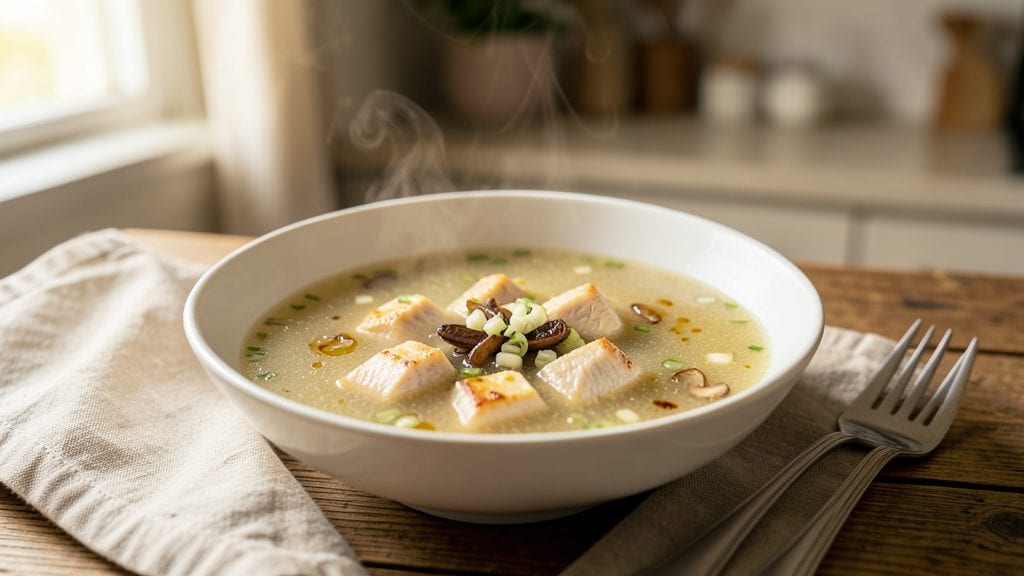
A Chinese cold and cough soup isn't just comfort food—it's a proven remedy to soothe sore throats and clear congestion. This ginger-garlic elixir combines traditional medicinal ingredients like astragalus and goji berries with warming spices to create a soup that fights symptoms while nourishing the body.
I've refined this recipe over years of testing, ensuring every spoonful delivers both healing properties and rich flavor. The aromatic steam alone provides instant relief, but the real magic happens when you taste the balance of spicy, sweet, and umami notes working together.
The foundation of this soup lies in its ingredients: fresh ginger and garlic for their natural antiviral properties, goji berries for immune support, and astragalus root to strengthen the body's defenses.
What sets this recipe apart is the precise simmering technique—cooking the herbs and broth just long enough to extract their medicinal benefits without overpowering the delicate flavors. The result is a soup that's both restorative and delicious, perfect for when you need more than just a warm bowl of broth.
Unlike many commercial remedies, this version uses whole, recognizable ingredients without artificial additives.
By the time you finish this soup, you'll notice the warmth spreading through your chest and throat, while the complex flavors satisfy both your body and taste buds. The ginger provides a gentle kick, the garlic adds depth, and the goji berries lend natural sweetness that balances everything.
This isn't just a quick fix—it's a nourishing meal that helps your body recover while you enjoy every comforting sip. The best part? It reheats beautifully, making it ideal for when symptoms linger over several days.
Serve this soup alongside steamed rice or noodles to create a complete meal that's gentle on the digestive system. For added warmth, top with a sprinkle of sesame seeds or a drizzle of chili oil.
Whether you're battling a cold or simply want to boost your immune system, this recipe delivers professional results with simple, accessible ingredients. Let's get started on creating your own healing elixir.
Ingredients for chinese soup for cold and cough
Traditional Chinese remedies meet comforting flavors in this healing ginger-garlic soup.
| Ingredient | Amount | Notes |
|---|---|---|
| Fresh Ginger Root 🌿 | 3 tbsp | Peeled, grated or finely chopped |
| Garlic Cloves 🧄 | 6 cloves | Peeled, minced or crushed |
| Astragalus Root 🍃 | 1 oz | Dried slices or powdered |
| Goji Berries 🍇 | ½ cup | Dried, rinsed if dusty |
| Dried Reishi Mushrooms 🍄 | 1 whole | Sliced thinly |
| Chicken Breast 🍗 | 1 ½ lb | Boneless, skinless, cubed |
| Chicken Broth 💧 | 4 cups | Low-sodium preferred |
| Green Onions 🧅 | 2 whole | White and green parts separated |
| Sesame Oil 🫒 | 1 tbsp | Toasted, for finishing |
| Light Soy Sauce 🥄 | 1 tbsp | For seasoning |
| Honey 🍯 | 1 tbsp | Raw preferred |
| Star Anise 🌟 | 1 whole | For aroma |
| Cinnamon Stick 🌿 | 1 whole | For warmth |
| Salt 🧂 | ½ tsp | To taste |
| Black Pepper 🌶️ | ¼ tsp | Freshly ground |
The ginger and garlic are non-negotiable here. Fresh ginger should be vibrant and firm—no wrinkly roots. Whole Foods or Asian markets carry the best quality, but your regular grocery store works too. For garlic, organic cloves have more flavor punch. Astragalus root can be tricky to find—look for dried slices at Chinese grocery stores or order online. If you can't find whole reishi mushrooms, powdered works too (just use half the amount). The goji berries? Trader Joe's has them in bulk—rinse them well before using. Chicken breast keeps things light while still hearty enough for a full meal.
No astragalus? Dried shiitake mushrooms add earthy depth. Short on goji berries? Raisins or dried apricots work in a pinch. The star anise and cinnamon are just for aroma—skip them if you're sensitive to strong spices. For extra protein, add tofu or shrimp at the end. The soy sauce? Low-sodium is key here—we're not going for umami overload. Want more heat? Add a dash of chili oil at the end. The honey balances everything—raw is best since it retains more enzymes.
This soup tastes even better the next day—double the batch if you're feeling under the weather. Keeps 4-5 days in the fridge, freezes for 3 months. I portion mine into containers so I can grab a bowl whenever I need a quick pick-me-up. The broth reduces as it sits, so add a splash of water when reheating. Store the mushrooms and herbs separately if you're prepping ahead—they'll keep their texture better.
Why You'll Love This Recipe
- I swear by this trick: just grate the ginger and smash the garlic with the side of my knife—no peeling, no mincing. The astragalus and reishi soak while I boil water, so by the time the soup’s simmering, I’ve done less prep than making toast.
- No-Chop Needed: I swear by this trick: just grate the ginger and smash the garlic with the side of my knife—no peeling, no mincing. The astragalus and reishi soak while I boil water, so by the time the soup’s simmering, I’ve done less prep than making toast.
- Sweet-Spicy Harmony: That first sip? Warm ginger hits first, then the deep umami from reishi, followed by goji berries bursting like tiny candy kisses. Honestly, it’s the kind of flavor that makes you reach for a second bowl without thinking.
- Cold-Weather Staple: I keep a jar of dried reishi and goji in my pantry—drop them into any broth when I’m feeling under the weather. Works for my kid’s sniffles, my husband’s sore throat, or just when I need something cozy on a gray afternoon.
Step-by-step instructions for Chinese cold and cough soup
This nourishing soup combines traditional Chinese medicinal ingredients with comforting flavors to soothe your throat and strengthen immunity.
Prepare the Medicinal Base
In a large pot, combine the 4 cups chicken broth, 1 oz astragalus root, 1 whole star anise, and 1 whole cinnamon stick. Bring to a gentle boil over medium-high heat, then immediately reduce to a simmer. Let it steep for 15 minutes—this draws out the healing properties of the roots and spices while infusing the broth with their warm, aromatic qualities.
While the broth simmers, slice the 1 whole dried reishi mushrooms into thin pieces and add them to the pot. The mushrooms will rehydrate and release their earthy, slightly sweet flavors into the broth. Keep the mixture at a steady simmer, stirring occasionally to prevent any ingredients from sticking to the bottom of the pot.
Build the Ginger-Garlic Foundation
Add the 3 tbsp fresh ginger root (finely grated) and 6 cloves garlic cloves (minced) to the pot. Stir well to distribute the spices evenly throughout the broth. Let the mixture simmer for another 10 minutes—you'll notice the broth takes on a golden hue and becomes fragrant with the pungent aroma of ginger and garlic, which are the stars of this immune-boosting soup.
Here's the thing—don't rush this step. The ginger and garlic need time to fully infuse the broth. You'll see small bubbles forming around the edges of the pot, and the broth will develop a rich, complex aroma that signals it's ready for the next ingredients.
Cook the Chicken and Season
Add the 1.5 lb cubed chicken breast to the pot and stir gently to coat the pieces in the flavorful broth. Increase the heat to medium-high and bring the mixture to a boil. Once boiling, reduce the heat to medium-low and let it simmer for 15-20 minutes until the chicken is fully cooked through and tender.
After the chicken is cooked, stir in the 0.5 cup goji berries and 1 tbsp honey. The goji berries will plump up slightly as they absorb the broth, releasing their sweet-tart flavor. The honey adds a subtle sweetness that balances the savory and slightly medicinal notes of the other ingredients. Let the soup simmer for another 5 minutes to allow all the flavors to meld together.
Finish with Aromatics and Garnish
Remove the pot from heat and stir in the 1 tbsp light soy sauce and 0.5 tsp salt. Taste the broth and adjust the seasoning if needed—you want a balance of savory, slightly sweet, and umami flavors. The soy sauce adds depth, while the salt enhances all the other flavors.
Separate the 2 whole green onions into their white and green parts. Add the white parts to the pot and let them steep for 5 minutes to infuse the broth with their mild onion flavor. Remove the white parts with a slotted spoon and reserve them for another use if desired. Finally, drizzle in the 1 tbsp sesame oil and stir gently. The sesame oil adds a nutty aroma and a luxurious finish to the soup.
Serve Warm and Enjoy
Ladle the soup into bowls and garnish each serving with the reserved green onion tops and a sprinkle of 0.25 tsp freshly ground black pepper. The green onions add a fresh, crisp contrast to the warm, comforting broth, while the black pepper adds a subtle heat that helps clear congestion.
Serve the soup immediately while it's hot. The steam rising from the bowl will help soothe your throat and open your sinuses. For maximum relief, sip it slowly and enjoy it as part of a restful routine—this soup is packed with ingredients known for their immune-boosting and healing properties.
Pro Tips For Making Chinese Soup For Cold And Cough
- PARBOIL ASTAGALUS FIRST: I learned this the hard way—tossing raw astragalus root straight into boiling water makes it bitter and gummy. Soak it for 30 minutes first, then parboil for 10 minutes in fresh water before adding to the soup. This softens it properly and lets the flavor integrate without overpowering.
- SLICE GINGER THINLY: Thick ginger chunks sit like rocks in the broth. Use a mandoline or sharp knife to slice it paper-thin—this releases flavor faster and dissolves completely. (Yes, even if you’re impatient like me.)
- DON’T BURN THE GARLIC: Garlic turns bitter when fried too long. Add it to the pot after the ginger and astragalus have simmered for 5 minutes—just long enough to scent the broth without browning. Trust me, your nose will thank you.
- SOAK REISHI OVERNIGHT: Dried reishi mushrooms are tough—soaking them in warm water for 8+ hours (or at least 4) makes them plump and tender. Skip this, and you’ll end up with chewy bits that ruin the soup’s silky texture. (Your future self will thank you.)
Storing and reheating this dish
Refrigerator Storage
This soup tastes even better the next day, so I always make a double batch when I'm feeling under the weather. Store it in an airtight container—I prefer glass Pyrex bowls with secure lids—to maintain freshness. Keep it refrigerated at 40°F or below for up to 4-5 days.
The flavors deepen as the broth reduces, and the medicinal properties of the herbs continue to infuse. Just remember to shake or stir the container before serving, as the ingredients may settle. 💪
Freezer Prep Tips
For long-term storage, portion the soup into freezer-safe containers or quart-sized silicone bags. Leave 1 inch of headspace to account for expansion, and squeeze out excess air to prevent freezer burn.
Label each container with the date—this soup freezes beautifully for up to 3 months. When you're ready to enjoy it again, thaw overnight in the fridge for the best texture. 🥶
Reheating Methods
I recommend reheating on the stovetop for the best results. Pour the soup into a pot and heat over medium-low heat for 10-15 minutes, stirring occasionally. If the broth looks too thick, add 2-3 tablespoons of water or chicken broth to restore its consistency.
Avoid microwaving, as it can make the chicken rubbery and the broth unevenly heated. For extra warmth, finish with a drizzle of sesame oil or a sprinkle of black pepper. 🔥
Reviving Stored Ingredients
If you prepped the herbs and mushrooms separately, store them in a separate airtight container in the fridge for up to 3 days. When reheating, add them back to the broth just before serving to preserve their texture and flavor.
The ginger and garlic can also be stored in the fridge for 5-7 days if wrapped tightly in plastic wrap. For the best experience, always add fresh aromatics like green onions and sesame oil just before eating. ✨
Serving Leftovers
This soup is perfect for meal prep—grab a bowl whenever you need a quick, comforting remedy. Serve it with steamed jasmine rice or egg noodles to create a complete meal. For added warmth, top with a soft-boiled egg or a sprinkle of toasted sesame seeds.
The broth's medicinal properties work best when consumed hot, so always reheat thoroughly to 165°F before serving. 💛
Long-Term Freezing Hacks
If you're planning to freeze the soup for more than a month, consider adding a small piece of parchment paper over the surface before sealing. This creates a barrier that prevents freezer burn and keeps the top layer from drying out.
When reheating frozen soup, give it an extra 5 minutes on low heat to ensure even warming. The texture might be slightly different than fresh, but the healing benefits remain intact. 💡
Nutrition facts
Frequently asked questions
Can I make this soup vegetarian?
Replace the chicken with firm tofu (pressed and cubed) or shiitake mushrooms for umami depth. Add them during the final 10 minutes of simmering to prevent overcooking. The broth's medicinal properties will still shine, and the texture remains satisfying.
How strong should the ginger and garlic flavors be?
The recipe balances pungency with other ingredients, so you won't get overpowering heat. For milder flavor, reduce ginger to 2 tbsp and garlic to 4 cloves. If you love bold aromatics, add an extra 1 tbsp grated ginger or 2 minced garlic cloves during the final 5 minutes of simmering. Taste as you go!
What if I can't find astragalus root?
No problem! Substitute with 1 oz dried shiitake mushrooms or 1 tsp dried licorice root (both available at Asian markets). For a non-herbal option, add 1 extra cinnamon stick or 1 tsp turmeric to maintain warmth. The soup will still deliver immune-boosting benefits.
Can children eat this soup?
Yes, but adjust the heat level. Skip the black pepper and reduce garlic to 3 cloves. For extra sweetness, add 1 extra tbsp honey or a pinch of cinnamon. The ginger and goji berries provide gentle immune support without strong flavors. Always check for allergies first.
Why does my soup taste bitter?
Bitterness usually comes from overcooking the herbs or using too much astragalus/star anise. Simmer the broth for no more than 20 minutes total and remove whole spices before serving. For balance, add a splash of rice vinegar or 1 tsp honey at the end. Fresh ingredients make all the difference!