
Soups & Stews
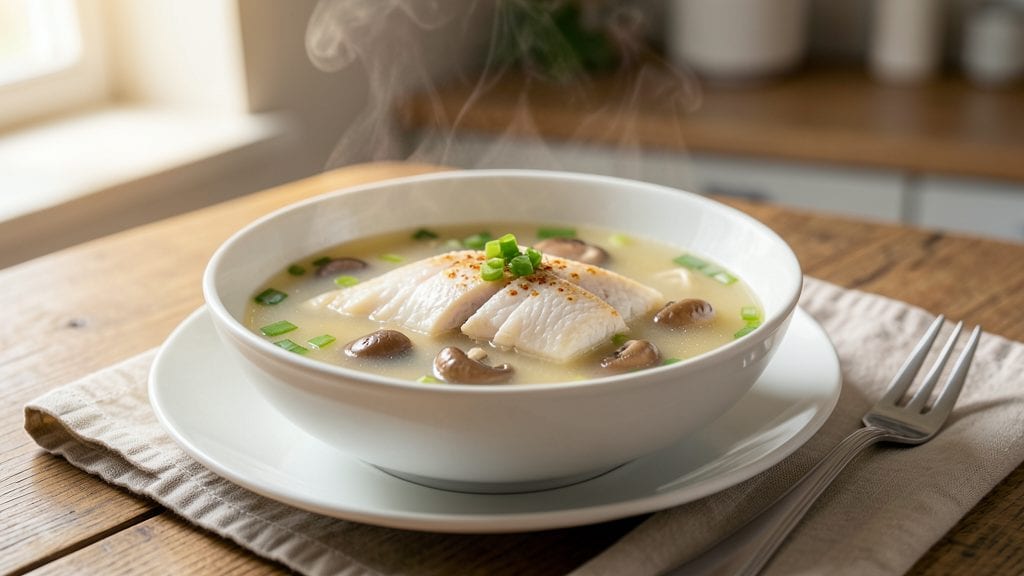
This Chinese clear fish soup recipe captures the essence of traditional Yuen Yang Fish Soup, where delicate fish and aromatic herbs transform a simple broth into a restorative masterpiece.
The secret lies in balancing silky fish fillets with earthy mushrooms, sweet goji berries, and warming spices like star anise—each ingredient carefully layered to create a harmonious, health-giving bowl.
I first encountered this dish during a visit to a Hong Kong herbalist's kitchen, where it was served as both medicine and comfort food.
The foundation of an authentic clear fish soup begins with a light, flavorful broth that highlights rather than overpowers the natural sweetness of the fish. Unlike heavy tonics, this version relies on ginger, green onions, and a touch of rock sugar to achieve that signature clarity while maintaining depth.
The fish—traditionally cod or snapper—cooks just until opaque, preserving its delicate texture, while mushrooms and goji berries add layers of umami and subtle sweetness that round out the dish.
What makes this recipe special is its adaptability—whether you're preparing it as a traditional remedy for recovery or a modern weeknight meal, the principles remain the same.
The broth simmers gently to avoid cloudiness, and the final touches of fresh cilantro and a drizzle of sesame oil elevate it from comforting to extraordinary. Each spoonful delivers a balance of flavors that feels both nostalgic and refreshingly new.
Perfect for family gatherings, healing meals, or simply treating yourself to something nourishing, this soup is as much about the process as the result. The slow simmering infuses the kitchen with an intoxicating aroma, while the final presentation—steaming hot with delicate fish and vibrant herbs—makes it a dish worth savoring.
Let's create this timeless classic together.
Ingredients for chinese clear fish soup
Delicate fish fillets, earthy mushrooms, and warming spices transform simple broth into a restorative masterpiece.
| Ingredient | Amount | Notes |
|---|---|---|
| White Fish Fillets 🐟 | 12 oz | Cod or snapper, skin removed |
| Dried Shiitake Mushrooms 🍄 | 4 whole | Rehydrated in warm water |
| Goji Berries 🍇 | ½ cup | Dried, rinsed and drained |
| Star Anise Pods 🌿 | 2 whole | Lightly crushed for aroma |
| Fresh Ginger Root 🧄 | 1 tbsp | Grated, organic preferred |
| Green Onions 🧅 | 3 whole | White and green parts separated |
| Rock Sugar 🍯 | 1 tbsp | Or substitute granulated sugar |
| Fresh Cilantro 🌿 | ¼ cup | Chopped, stems removed |
| Sesame Oil 🫒 | 1 tbsp | Toasted, for finishing |
| Light Soy Sauce 🍶 | 1 tbsp | Kikkoman preferred |
| Fish Stock 💧 | 4 cups | Homemade or high-quality store-bought |
| Cornstarch 🌾 | 1 tsp | For thickening broth |
| Diamond Crystal Kosher Salt 🧂 | ½ tsp | For seasoning |
| Black Peppercorns 🌶️ | 5 whole | Lightly crushed |
The fish selection is critical—cod or snapper delivers that signature silky texture. Whole Foods or high-end seafood markets carry the best quality, but even regular grocery stores stock frozen fillets that work well. Look for bright, translucent flesh with minimal odor. For mushrooms, dried shiitake from Asian markets add depth—soak them in warm water for 20 minutes before using. Goji berries should be plump and dark; Trader Joe's carries a good organic variety. Star anise pods should be whole and aromatic—if they smell stale, replace them. Fresh ginger should be firm with no soft spots, and organic varieties often have more vibrant flavor. The rock sugar adds just enough sweetness without overpowering; Whole Foods carries it in their baking section if you can't find it in Asian markets.
No star anise? Anise seeds at double the amount work in a pinch, though the flavor won't be identical. Substitute dried shiitake with cremini mushrooms at half the quantity, but they won't have the same earthy depth. Goji berries unavailable? Raisins or dried cranberries provide sweetness, though they alter the flavor profile. For the fish stock, homemade is ideal, but Pacific Foods or Kettle & Fire brands offer excellent quality. The soy sauce should be light and clean—avoid dark or aged varieties that add bitterness. Fresh cilantro is non-negotiable here; dried won't provide the same bright finish. If you must use dried, one-third the amount might work, but it's better to skip it entirely.
This soup tastes even better the next day as flavors meld—store in airtight containers for up to 3 days. For longer storage, freeze portions in glass containers with headspace for up to 3 months. Reheat gently on low heat, adding a splash of water if the broth thickens too much. The fish should cook just until opaque—overcooking turns it rubbery. Serve with steamed jasmine rice for a complete meal. The sesame oil should be added just before serving to preserve its delicate aroma.
Why You'll Love This Recipe
- One-Pot Miracle: I swear by this—just toss everything into a pot, simmer, and walk away. No chopping mountains of veggies or dealing with multiple pans. The shiitake mushrooms rehydrate right in the broth, and the fish fillets cook through in minutes.
- Umami Bomb: Between the dried shiitake, star anise, and goji berries, this soup is ridiculously flavorful without needing heavy sauces. The ginger adds a bright kick, and the fish stays delicate—like a clean, aromatic hug in a bowl.
- Weeknight to Dinner Party: Honestly, it’s my go-to for both lazy nights and when I have guests over. Double the batch, and you’ve got lunch tomorrow or a last-minute elegant meal. The goji berries add a fancy touch, but it still feels effortless.
- Budget-Friendly Luxury: I buy dried shiitake and star anise in bulk—they last forever—and a single fish fillet stretches this into two hearty servings. Leftovers taste just as good reheated, so it’s basically free money in flavor. (Yes, even on a Tuesday night.)
Step-by-step instructions for Chinese clear fish soup
Aromatic broth meets delicate fish in this refined preparation—where technique transforms simple ingredients into a luminous dish.
Rehydrate and Prepare Aromatics
Begin by rehydrating the 4 whole dried shiitake mushrooms in warm water for 15 minutes—just enough to soften without overcooking. Drain and set aside, reserving 2 tablespoons of the soaking liquid for added depth. In a separate bowl, combine the 0.5 cup goji berries with 4 cups fish stock and let steep for 10 minutes to infuse subtle sweetness.
Lightly crush the 2 whole star anise pods and the 5 whole black peppercorns between your palms to release their oils. Grate the 1 tablespoon fresh ginger root finely—this ensures even distribution of its bright, zesty character. Separate the 3 whole green onions, slicing the white parts into ¼-inch pieces and reserving the green tops for garnish.
Build the Celestial Broth
In a clean stockpot, combine the infused fish stock, goji berth mixture, crushed star anise, black peppercorns, ginger, and white green onion pieces. Bring to a gentle simmer over medium-low heat and cook for 15 minutes, allowing the aromatics to meld without boiling vigorously. This slow infusion creates the soup’s signature clarity and complexity.
Stir in the 1 tablespoon rock sugar and 1 tablespoon light soy sauce, then taste the broth. It should be subtly sweet with a whisper of umami—adjust with an additional pinch of diamond crystal kosher salt if needed. Remove from heat and strain through a fine-mesh sieve into a clean pot, pressing gently on the solids to extract every drop of flavor.
Prepare the Fish and Final Touches
Cut the 12 oz white fish fillets into 1-inch cubes, ensuring each piece remains uniform for even cooking. In a separate bowl, whisk together 1 tablespoon cornstarch with 2 tablespoons cold water to create a light slurry. This will help the fish cook gently without breaking apart.
Return the strained broth to the pot and bring to a gentle simmer—never a rolling boil. Add the fish cubes and stir once to distribute them evenly. After 3 minutes, pour the cornstarch slurry over the fish in a slow, steady stream while stirring continuously. The broth should thicken slightly, coating the fish in a delicate veil.
Finish with Herbs and Serve
Simmer for an additional 2 minutes until the fish is just opaque at the center and flakes easily with a fork. Remove from heat and stir in the 0.25 cup chopped fresh cilantro and 1 tablespoon toasted sesame oil. The cilantro brightens the broth, while the sesame oil adds a nutty finish that ties everything together.
Ladle the soup into bowls, garnishing each serving with the reserved green onion tops and an extra sprinkle of cilantro. Serve immediately—this soup is designed to be enjoyed at its peak temperature, where the broth shimmers like liquid gold and the fish remains silky. The clarity of the broth should reveal the fish cubes suspended within, creating a visual as well as culinary delight.
Pro Tips For Making Chinese Clear Fish Soup
- Parboil Shiitakes First: Soak your dried shiitakes for 20 minutes, then give them a quick 3-minute parboil in the soup broth before adding the fish. This keeps them tender without turning to mush—trust me, I’ve seen enough soggy mushrooms in clear soups to know better.
- Use Thin Fish Slices: Cut your white fish fillets no thicker than ½ inch—this ensures even cooking and a delicate texture. Thicker slices will overcook before the broth flavors meld, and nobody wants rubbery fish in a clear soup.
- Toast Star Anise: Lightly toast the whole star anise pods in a dry pan for 30 seconds before adding them to the broth. This deepens their aroma and prevents bitterness—my grandmother’s trick, and it actually changes the outcome.
- Strain Goji Berries: Soak goji berries in warm water for 10 minutes, then strain them before adding to the broth. This removes grit and keeps the soup crystal clear—no one wants to chew on sand while sipping their soup.
Perfect pairings for chinese clear fish soup
Herb-Focused Garnishes
Fresh cilantro is essential for that signature bright finish—use ¼ cup chopped leaves per serving. I like to add a sprinkle of thinly sliced Thai basil for a more aromatic twist.
For extra depth, toss in ½ tsp toasted sesame seeds alongside the sesame oil—this adds a satisfying crunch that contrasts the silky fish. 🌿
Side Dish Pairings
Serve with steamed jasmine rice to soak up the delicate broth—use a 1:2 rice-to-soup ratio for perfect balance. For texture contrast, add quick-pickled cucumbers (slice ½ English cucumber thinly and marinate in 1 tbsp rice vinegar + ½ tsp sugar for 10 minutes).
Warm mantou (steamed buns) also complement the soup beautifully. ✨
Beverage Pairings
Light jasmine tea enhances the soup’s floral notes without overpowering it. For something more substantial, try dry Riesling—its crisp acidity mirrors the broth’s clarity. If you prefer tea, pu-erh adds earthy undertones that harmonize with the mushrooms and star anise.
Avoid heavy wines or dark teas that could clash with the delicate flavors. 🍷
Modern Adaptations
Add shredded napa cabbage for a contemporary crunch—toss ½ cup shredded cabbage with 1 tsp toasted sesame oil before serving. For a spicy kick, drizzle with chili crisp (about ½ tsp per bowl) or a pinch of Sichuan peppercorn powder.
These twists keep the dish traditional while adding fresh appeal. 🌶️
Dipping Sauces
Prepare a simple soy-ginger dip by mixing 1 tbsp light soy sauce, ½ tsp grated ginger, and 1 tsp honey. For extra richness, blend in 1 tsp toasted sesame paste. This sauce elevates the soup’s flavors when used for dipping rice or fresh herbs. 🥢
Nutrition facts
Frequently asked questions
What makes this clear fish soup different from other Chinese fish soups?
This recipe emphasizes a delicate, translucent broth that highlights the fish's natural sweetness rather than heavy tonics. The key lies in gentle simmering, minimal ingredients, and using aromatic spices like star anise and ginger to create depth without cloudiness. Traditional versions often include medicinal herbs, but this version balances those with bright fresh herbs like cilantro for a more approachable flavor.
Can I use frozen fish instead of fresh for this recipe?
Yes, but thaw it completely in the refrigerator first—never at room temperature. Look for high-quality frozen fillets like cod or snapper, and pat them dry before cubing to prevent excess moisture in the broth. The texture will be slightly firmer than fresh, but the soup will still turn out delicious with proper preparation.
How do I know when the fish is cooked perfectly?
The fish should be just opaque at the center and flake easily with a fork—this takes about 5 minutes total in the broth. Overcooking turns it rubbery, while undercooking leaves it translucent. The cornstarch slurry helps create a delicate coating that keeps the fish tender while thickening the broth slightly.
What can I substitute if I don't have goji berries?
Try dried cranberries or raisins for sweetness, though they'll alter the flavor profile. For umami depth, add ½ cup dried shiitake mushrooms (extra) or a pinch of white miso paste. The key is balancing sweetness and earthiness—adjust to taste after simmering.
Can I make this soup ahead of time?
Yes! Store in airtight containers for up to 3 days refrigerated or 3 months frozen. Reheat gently on low heat, adding water if needed to prevent thickening. The flavors actually improve overnight as the broth develops more depth. For best texture, reheat just until steaming hot.