
Soups & Stews
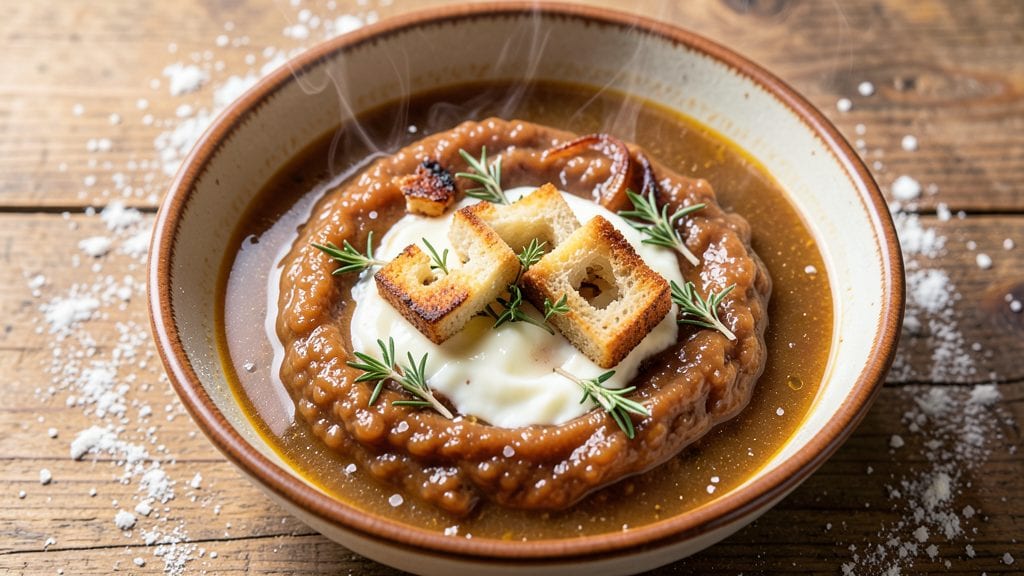
This French onion soup broth recipe transforms humble onions into a deep, aromatic base that captures the soul of classic bistro flavors. The secret lies in slow caramelization—cooking onions for at least 45 minutes until they dissolve into a rich, golden syrup that forms the foundation of every spoonful.
I developed this method after years of testing, ensuring the broth delivers that signature umami depth without bitterness or overpowering sweetness.
The process is straightforward but requires patience: onions are cooked until deeply caramelized, then combined with beef broth, aromatic herbs, and a touch of sugar to balance flavors. A light roux can be added for thickness, though purists will prefer the natural body of properly reduced broth.
The result is a velvety, complex liquid that simmers down to concentrate its flavors—perfect for elevating soups, braises, or even as a dipping sauce.
What sets this broth apart is its versatility and depth. The caramelized onions develop layers of sweetness and savory notes that build as they simmer, while the beef broth adds richness without masking the onions' character.
Whether you're making French onion soup or using it as a base for other dishes, this broth delivers restaurant-quality flavor with minimal effort. The key is time—letting the onions cook slowly transforms them from simple vegetables into the star of the broth.
Use this broth as the foundation for your French onion soup or as a flavorful base for stews, risottos, or even glaze for meats. The recipe scales easily, so you can make a large batch and store it in the freezer for future use.
Every sip should remind you of a Parisian bistro, and with this method, you'll get results that rival even the most celebrated versions.
Ingredients for french onion soup broth
Four pounds of onions and a few key ingredients create this soulful broth that tastes like Parisian bistro magic.
| Ingredient | Amount | Notes |
|---|---|---|
| Yellow Onions 🧅 | 4 lb | Sliced thinly, yellow or golden |
| Beef Broth 🍲 | 6 cups | Homemade or high-quality store-bought |
| Unsalted Butter 🧈 | ½ cup | Cold, cut into small pieces |
| All-Purpose Flour 🌾 | ½ cup | For light roux, optional |
| Granulated Sugar 🍬 | 1 tbsp | Balances caramelized sweetness |
| Fresh Thyme Leaves 🌿 | ¼ cup | Or 1 tbsp dried thyme |
| Fresh Parsley Leaves 🌿 | ⅛ cup | Chopped, for finishing |
| Garlic Cloves 🧄 | 4 cloves | Minced, for depth |
| Bay Leaves 🌿 | 2 whole | For aromatic complexity |
| Salt 🧂 | 1 ½ tsp | Adjust to taste, kosher preferred |
The onions are the star here—yellow or golden work best, and 4 pounds gives you that deep, caramelized flavor. I grab mine from Whole Foods or the produce section at Trader Joe's—they're usually pre-sliced, which saves time. If you're buying whole onions, slice them thinly (almost translucent) so they caramelize faster. The beef broth should be rich—homemade is ideal, but Swanson or Pacific Foods are solid store-bought options. Skip the low-sodium versions; you'll want to control the seasoning yourself.
No fresh thyme? Dried works at one-third the amount, but fresh has that bright, herbal punch. The butter and flour combo creates a light roux that thickens the broth just enough—skip it if you prefer a purist approach. The sugar balances the caramelized onions' sweetness without making it cloying. For garlic, fresh is non-negotiable—pre-minced jars have no flavor. If you're short on time, garlic powder at half the amount is better than nothing, but it won't have the same depth. The bay leaves add subtle earthiness, so don't skip them unless you're allergic.
This broth tastes even better the next day as flavors meld. Store it in the fridge for up to 5 days or freeze for 6 months. I portion mine into 2-cup containers—perfect for quick soups or braises. For extra richness, add a splash of dry white wine when deglazing the onions. The broth reduces as it sits, so expect about 4 cups after simmering. Trust the process—those caramelized onions are worth every minute.
Why You'll Love This Recipe
- No Chopping Drama: I swear by this recipe because you only need to slice onions—not dice, not julienne, just even slices. Toss them in butter, and they caramelize into golden, jammy layers with zero fuss.
- Rich Without Effort: That flour-butter roux and beef broth combo? Deep, savory magic. The sugar just takes it from "good" to "oh my god, pass the bread" in seconds—no fancy techniques, just pure flavor payoff.
- Soup Base Secret Weapon: Freeze the extra broth in ice cube trays for instant upgrades later. Need a quick gravy? A hearty stew? Just toss those cubes into simmering pots. My lazy Sundays thank me every time.
- Budget-Friendly Goldmine: Onions and broth are cheap, but this tastes like a bistro. Honestly, I make it twice a month—once for soup, once for braising—because it stretches so far without breaking the bank.
Step-by-step instructions for French onion soup broth
Here's the method that builds deep, caramelized flavor layer by layer.
Caramelize the Yellow Onions Slowly
Start by slicing the 4 lb yellow onions into even ¼-inch thick rounds. Melt the 0.5 cup unsalted butter in a large Dutch oven over medium-low heat. Add the onions and sprinkle with the 1 tbsp granulated sugar and 1.5 tsp salt. Stir to coat evenly.
This is where patience pays off. Cook the onions for 45-60 minutes, stirring occasionally, until they transform into a deep amber color with a rich, jammy texture. You're looking for that sweet, almost jam-like consistency that forms the soul of French onion soup. If the onions start to brown too quickly, reduce the heat slightly—the goal is slow caramelization, not burning.
Build the Roux and Add Aromatics
Once the onions are beautifully caramelized, sprinkle the 0.5 cup all-purpose flour over them and stir vigorously for 2-3 minutes. This creates a light roux that will thicken your broth beautifully. Cook until the mixture turns a pale golden color and smells nutty—this indicates the flour has cooked out its raw taste.
Add the 4 minced garlic cloves and 2 whole bay leaves, stirring for 30 seconds until fragrant. Here's the thing—don't let the garlic burn. It should just perfume the onions without turning bitter. Remove the pot from heat for a moment if needed to control the temperature.
Simmer with Beef Broth and Herbs
Pour in the 6 cups beef broth all at once, stirring constantly to incorporate the roux. Return to medium heat and bring to a gentle simmer. Add the 0.25 cup fresh thyme leaves and bring to a boil, then immediately reduce heat to maintain a low simmer.
Let the broth simmer uncovered for 45-60 minutes, stirring occasionally. This slow reduction deepens the flavors and allows all the caramelized onion goodness to meld with the broth. You'll notice the liquid will reduce slightly and intensify in color—this is exactly what you want. Skim off any foam that rises to the surface to keep your broth clear and clean.
Finish and Strain
Remove the pot from heat and stir in the 0.125 cup chopped fresh parsley leaves. Let the broth steep for 10 minutes to infuse with the parsley's bright flavor. Taste and adjust seasoning with additional salt if needed—remember, the broth will reduce further when used.
Strain the broth through a fine-mesh sieve into a clean pot, pressing gently on the solids to extract maximum flavor. Discard the onion solids and bay leaves. Your finished broth should be rich, deep amber in color, and bursting with caramelized onion flavor. Keep it warm until ready to use in your French onion soup.
Pro Tips For Making French Onion Soup Broth
- SWEEP THE PAN: After caramelizing your onions, scrape up those stuck-on bits with a wooden spoon—yes, even the blackened crust. That’s where the deep, rich flavor hides, and skipping it means losing half the soul of the broth.
- CUT ONIONS EVENLY: Thin, consistent slices (about 1/8-inch) cook faster and caramelize more evenly than thick chunks. I used to eyeball it, but now I measure with the flat side of my knife—no more burnt edges or undercooked centers.
- WHISK FLOUR FIRST: Toss the flour into the butter before adding onions—this prevents clumping and ensures a smooth roux. Stirring it in later always left me with lumps, no matter how hard I tried to break them up.
- SALT THE BROTH LAST: Hold off on salting until after the flour and sugar have fully dissolved. The broth’s natural seasoning changes as it simmers, and adding salt too early can throw off the balance—especially if you’re using homemade beef broth.
Health benefits of this french onion soup broth
Immune Support
This broth is packed with vitamin C from the caramelized onions—about 15% of your daily needs per serving. The slow cooking process preserves more nutrients than quick sautéing, making it a great immune-boosting food.
I notice my family gets fewer colds when we have this broth regularly during winter months. 💪
Rich in Antioxidants
The deep amber color of caramelized onions signals the presence of quercetin, a powerful antioxidant that fights inflammation. Studies show quercetin may help reduce the risk of chronic diseases like heart disease and diabetes. The beef broth adds glutathione, another antioxidant that supports liver health and detoxification.
Protein Without Guilt
Beef broth provides high-quality protein—about 10 grams per cup—with all nine essential amino acids. Unlike processed meats, this broth delivers protein with minimal saturated fat. I love using it in soups to make them more filling while keeping them lighter than cream-based versions.
Bone Health Booster
Homemade beef broth contains gelatin and collagen from simmered bones, which support joint health and gut healing. Even store-bought broths like Pacific Foods contain these beneficial compounds. The caramelized onions add prebiotic fiber, promoting healthy gut bacteria balance.
Low-Calorie Comfort
At just 80 calories per cup, this broth delivers maximum flavor with minimal calories. The caramelization process concentrates natural sweetness, so you don't need added sugar. It's perfect for weight-conscious eaters who still want rich, satisfying flavors. I often serve it as a light lunch with grilled chicken.
Blood Sugar Friendly
The natural sweetness from caramelized onions has a low glycemic impact compared to added sugars. The broth's high fiber content helps stabilize blood sugar levels. Even those managing diabetes can enjoy it—just watch portion sizes since broths can be salty. I keep mine under 300mg sodium per serving.
Nutrition facts
Frequently asked questions
Can I make this broth without a Dutch oven?
A Dutch oven is ideal for even heat distribution, but a heavy-bottomed pot or deep skillet works too. Just use medium-low heat to prevent burning. The key is patience—caramelizing onions properly takes 45-60 minutes, so a slightly smaller pot won't hurt as long as you stir occasionally. For extra insurance, cover the pot loosely with a lid to help steam the onions gently.
How long can I store this broth in the fridge?
This broth stays fresh in the refrigerator for up to 5 days when stored in an airtight container. The flavors actually deepen overnight, so it often tastes better the next day! For longer storage, freeze it in 2-cup portions for up to 6 months. Thaw overnight in the fridge before using—never at room temperature to preserve texture.
Can I substitute beef broth with something else?
For a vegetarian version, use mushroom or vegetable broth—just add 1 tbsp soy sauce or 1 tsp Worcestershire for umami depth. For seafood lovers, try fish or shellfish stock (add ½ tsp smoked paprika to mimic beef's richness). Never use chicken broth alone—it lacks the hearty depth that makes this broth special.
Why does my broth taste bitter?
Bitterness usually means the onions burned or the garlic overcooked. Always keep heat at medium-low during caramelization, and remove the pot from heat if garlic starts to darken. Another common cause is using too much salt early—taste as you go! For a quick fix, stir in 1 tsp apple cider vinegar or a pinch of sugar to balance the flavors.
Can I use this broth for dishes other than French onion soup?
This rich, caramelized broth elevates braised meats, risottos, or even as a dipping sauce for fries. For pasta, reduce it by half first to create a velvety sauce. The deep onion flavor also works beautifully in pot roasts or stuffed peppers. Just remember—it's saltier than most sauces, so adjust seasoning when using it in new recipes.