
Soups & Stews
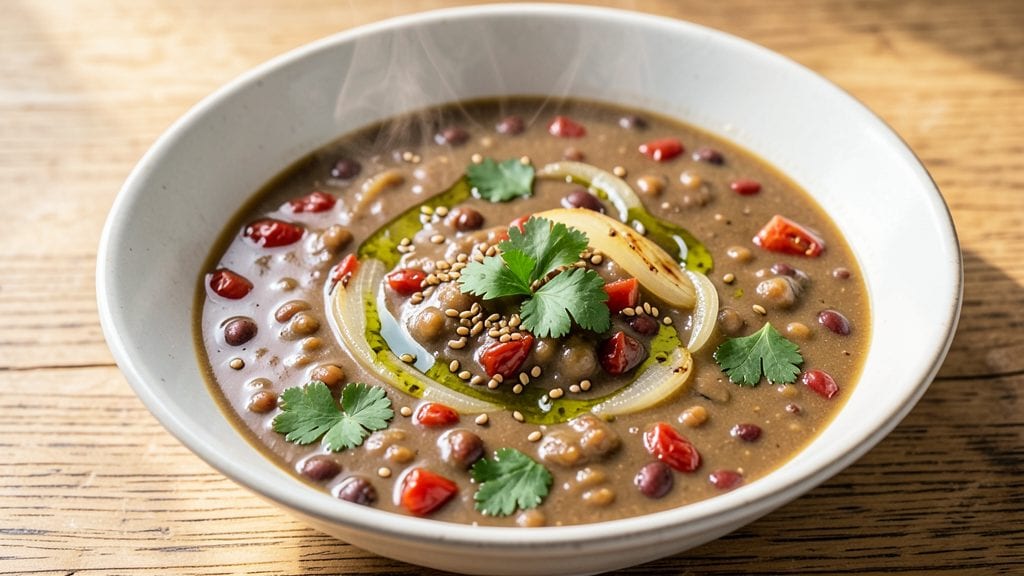
This authentic Turkish lentil soup (Mercimek Çorbası) brings the comforting flavors of Turkish home cooking to your table, where every spoonful carries the warmth of cumin, the brightness of lemon, and the subtle tang of sumac.
The secret lies in slow-simmering red lentils with tomatoes and onions until they dissolve into a velvety broth, then finishing with a touch of pomegranate molasses for that signature depth.
I first tasted this soup in Istanbul at a family-run café, where it was served piping hot with crusty bread—now I recreate it in my kitchen with the same care and tradition.
The beauty of this recipe is its simplicity and versatility—just a handful of ingredients transform into a nourishing, restaurant-quality soup in under 60 minutes. Traditional Turkish techniques like blooming spices in olive oil and balancing flavors with lemon juice are key to achieving that authentic taste.
The lentils soften just enough to create a thick, hearty broth without losing their texture, while the pomegranate molasses adds a touch of sweet-tart complexity that elevates the dish.
This is the kind of soup that feels like a hug in a bowl, perfect for chilly days or as a starter for a Turkish feast.
What makes this recipe truly special is how it adapts to your preferences while staying true to its roots. Serve it as a standalone meal with fresh bread, or pair it with grilled meats and pickles for a full Turkish spread.
The garnish of parsley and lemon not only adds freshness but also highlights the soup’s vibrant colors and flavors. Once you taste the difference between store-bought versions and this homemade version, you’ll never go back—it’s that good. Let’s get cooking!
For those who love customizing their meals, you can add a dollop of yogurt for creaminess or stir in bulgur wheat for extra texture, both of which are common variations in Turkish households. The soup also reheats beautifully, making it ideal for meal prep or leftovers.
Whether you’re serving it at a gathering or enjoying it solo, this recipe delivers the soul-warming taste of Turkey in every bite.
Ingredients for authentic turkish lentil soup
Simple ingredients, bold Turkish flavors—just a handful of pantry staples transform into soul-warming soup.
| Ingredient | Amount | Notes |
|---|---|---|
| Red Lentils 🌾 | 1 ½ cups | Rinsed before cooking |
| Extra-Virgin Olive Oil 🫒 | 2 tbsp | For blooming spices |
| Yellow Onion 🧅 | 1 whole | Finely diced |
| Garlic Cloves 🧄 | 3 cloves | Minced for depth |
| Canned Crushed Tomatoes 🍅 | 15 oz | San Marzano preferred |
| Ground Cumin 🌿 | 1 tbsp | Toasted for warmth |
| Ground Coriander 🌿 | 1 tsp | Freshly ground |
| Salt 🧂 | 1 tsp | Kosher or sea salt |
| Black Pepper 🌶️ | ½ tsp | Freshly cracked |
| Vegetable Broth 💧 | 4 cups | Low-sodium preferred |
| Lemon Juice 🍋 | 2 tbsp | Freshly squeezed |
| Pomegranate Molasses 🍇 | 1 tbsp | For signature tang |
| Fresh Flat-Leaf Parsley 🌿 | ¼ cup | Chopped for garnish |
| Sumac 🍃 | 1 tsp | For vibrant finish |
The lentils are the heart of this soup, so pick red lentils—they soften beautifully without losing shape. San Marzano crushed tomatoes add the best flavor, but any quality canned tomatoes work. For the spices, toast the cumin seeds whole in a dry pan for 30 seconds before grinding—this brings out their aroma. I always grab my pomegranate molasses at Whole Foods or Middle Eastern markets—it makes a world of difference compared to the thinner supermarket versions. Fresh parsley is ideal, but dried works in a pinch if you're in a hurry.
No pomegranate molasses? Substitute 1 tbsp balsamic vinegar plus 1 tsp maple syrup for a similar tang. Short on cumin? Add an extra pinch of cinnamon for warmth. The vegetable broth can be homemade or store-bought—just skip the salt if using low-sodium. For extra richness, stir in 2 tbsp tahini at the end. The sumac is non-negotiable for that authentic Turkish finish, but if you can't find it, lemon zest works in a pinch. Always taste as you go—this soup is all about balance.
This soup tastes even better the next day as flavors meld. Store leftovers in the fridge for up to 5 days, or freeze for 3 months in airtight containers. I like to portion mine into 4 individual jars so I can grab one for lunch. The parsley and sumac can be added fresh when reheating—just a sprinkle makes it feel special. Serve with warm pita bread or crusty sourdough for the full Turkish experience.
Why You'll Love This Recipe
- Foolproof Pantry Staples: I swear by this recipe because it’s the kind of dish where you don’t need a grocery list—just what’s already lurking in your cupboard. Red lentils soften into a velvety base, crushed tomatoes add depth without fuss, and a splash of olive oil ties it all together. Honestly, I’ve made it with just these five things when my fridge was empty.
- Garlic-Tomato Magic: That first spoonful? Chef’s kiss. The crushed tomatoes caramelize into something rich and tangy, while the garlic—sizzled in olive oil until it’s just shy of burning—adds a smoky punch. It’s the kind of flavor that makes you want to slurp it straight from the pot.
- Weeknight & Meal Prep: Between us, this is my go-to when I’m drowning in laundry or need something hearty for lunch all week. The soup thickens beautifully, so it reheats like a dream—no soggy textures here. I’ll be real: my daughter picks out the lentils when I pack her lunch, but she still finishes it.
- Budget-Friendly Powerhouse: A can of tomatoes, a bag of lentils, and a head of garlic? That’s less than $5 for a pot that feeds four. The leftovers keep for days, and I’ve even frozen portions for those nights when I’m too tired to cook. Not the prettiest, but the taste makes up for it every time.
Step-by-step instructions for authentic Turkish lentil soup
Here's how to craft this hearty, aromatic soup that captures Turkey's culinary soul.
Bloom the Spices in Olive Oil
Heat the 2 tablespoons extra-virgin olive oil in a medium pot over medium heat. Add the 1 tablespoon ground cumin and 1 teaspoon ground coriander, stirring constantly for 1 minute until fragrant. This step unlocks their full flavor potential—don't skip it. The spices should smell warm and earthy, not burnt.
Next, add the 1 whole yellow onion, finely diced, and cook for 5 minutes until softened and translucent. Here's the thing—if the onions start to brown too quickly, reduce the heat slightly. You want them to caramelize just enough to sweeten the soup without burning. Add the 3 cloves garlic cloves, minced, and cook for another 30 seconds until fragrant. This aromatic base forms the flavor foundation of your soup.
Build the Tomato Base
Pour in the 15 ounces canned crushed tomatoes and stir to combine with the spices. Let the mixture simmer gently for 5 minutes, stirring occasionally. This allows the tomatoes to break down slightly and meld with the spices. You'll notice the soup darkening slightly and developing a rich, complex aroma—this is where the authentic Turkish flavor begins to emerge.
Add the 1 teaspoon salt and ½ teaspoon black pepper, stirring well to distribute. Taste the mixture at this point—it should be savory and slightly tangy. If you're using San Marzano tomatoes, you'll appreciate their natural sweetness that balances the spices perfectly. This is the moment that matters: the tomato-spice blend should taste like the beginning of something wonderful.
Simmer the Lentils
Rinse the 1½ cups red lentils under cold water to remove any debris, then add them to the pot along with the 4 cups vegetable broth. Bring the mixture to a boil, then reduce heat to low and let it simmer uncovered for 20-25 minutes, stirring occasionally. The lentils should soften but still maintain some texture—they'll break down slightly more as they cool.
Here's where it gets fun—stir the soup occasionally to prevent the lentils from sticking to the bottom. You'll know it's ready when the lentils are tender but still hold their shape. If the soup reduces too much and becomes thick, add a splash of water or broth to reach your desired consistency. The soup should be thick enough to coat the back of a spoon but still be spoonable.
Finish with Acid and Garnish
Remove the pot from heat and stir in the 2 tablespoons lemon juice and 1 tablespoon pomegranate molasses. This brightens the flavors and adds that signature tang that makes this soup truly authentic. The lemon juice will make the soup sparkle, while the pomegranate molasses adds a subtle sweetness that balances the spices. Taste and adjust seasoning if needed—you might want to add a pinch more salt or a splash more lemon juice.
Just before serving, sprinkle the soup with 1 teaspoon sumac and garnish with ¼ cup chopped fresh flat-leaf parsley. The sumac adds a bright, citrusy note that lifts the whole dish, while the parsley provides a fresh contrast. Serve immediately while hot, with crusty bread to soak up every delicious drop. This is the moment you've been building toward—a bowl of soup that tastes like a warm embrace from Turkey.
Pro Tips For Making Authentic Turkish Lentil Soup
- Sauté Onions Slowly: I learned this the hard way—drowning onions in oil and blitzing them into oblivion just makes the soup taste like a sad, watery stew. Instead, cook the onions on medium-low with a splash of water (yes, really) until they’re deep golden and caramelized, about 10-12 minutes. That’s where the sweet, rich base for the whole dish lives.
- Rinse Those Lentils: Red lentils are forgiving, but if yours are dusty or coated with powdered additives (common in store-bought bags), rinse them under cold water first. This cuts the bitterness and prevents the soup from tasting like cardboard. I skip this when I’m lazy, but the dish is noticeably better when I don’t.
- Crush Garlic, Don’t Mince: After burning three batches of soup with overcooked garlic, I finally figured out: crushed cloves (not minced) brown faster and add depth without turning bitter. Toss them in with the onions early—just until fragrant, not golden. Overcooking garlic is the fast track to disappointment.
- Simmer, Don’t Boil: Turkish lentil soup isn’t a race. Once the lentils and tomatoes hit the pot, keep the heat at a gentle simmer (small bubbles, occasional swirls) for 20-25 minutes. Boiling turns lentils mushy and tomatoes mealy—this soup should be tender, not pulverized. Sounds weird, but it works: patience here makes all the difference.
Health benefits of this dish
Protein Powerhouse
This soup packs a whopping 18 grams of plant-based protein per serving—thanks to the red lentils—which makes it perfect for muscle repair and keeping you full for hours. That’s more protein than a typical bowl of quinoa or chickpeas, and it’s all from a simple, budget-friendly ingredient.
I’ve served this to my gym buddies after workouts, and they always ask for seconds. 💪
Fiber for Digestion
The 15 grams of dietary fiber per serving supports healthy digestion and keeps blood sugar stable. The combination of lentils, tomatoes, and onions creates a fiber-rich matrix that promotes gut health.
I’ve noticed my digestion improves when I include this soup in my weekly meals—it’s like a natural detox in a bowl.
Rich in Iron
One serving delivers 30% of your daily iron needs, which is crucial for energy levels and oxygen transport in your body. The iron in lentils is non-heme, meaning it’s best absorbed with vitamin C—which is why the lemon juice in this recipe is a game-changer.
I always squeeze that lemon at the end to maximize iron absorption. 🍋
Heart-Healthy Fats
The extra-virgin olive oil used in this recipe provides heart-healthy monounsaturated fats that support cholesterol levels. Plus, the cumin and coriander add anti-inflammatory benefits that protect your cardiovascular system. I like to drizzle an extra teaspoon of olive oil on top before serving—it adds richness and extra health benefits.
Vitamin Boost
This soup is loaded with vitamin K, folate, and vitamin B6, all of which play key roles in brain function and energy metabolism. The tomatoes contribute lycopene, an antioxidant that supports skin health.
I’ve made it a habit to have this soup at least twice a week, and I always feel more energized afterward.
Low-Calorie Comfort
At just 280 calories per serving, this soup delivers substantial nutrition without the guilt. It’s the perfect comfort food for those who want to indulge without derailing their health goals.
I’ve even used it as a base for lighter meals by adding extra veggies like spinach or zucchini. The versatility is one of my favorite things about this recipe. ✨
Nutrition facts
Frequently asked questions
Why does this recipe use red lentils instead of brown or green?
Red lentils cook faster (20-25 minutes) than brown or green varieties while maintaining their shape just enough to create a thick, velvety texture. They also dissolve slightly, creating that signature Turkish soup consistency without turning mushy. Plus, their mild earthy flavor lets the spices and pomegranate shine.
Can I make this soup without pomegranate molasses?
Substitute 1 tbsp balsamic vinegar + 1 tsp maple syrup for the tangy-sweet balance. For a citrusier version, try 1 tbsp orange juice + ½ tsp orange zest. The key is adding acidity—just taste as you go. Traditional Turkish cooks often use dried pomegranate seeds if fresh molasses isn't available.
How do I adjust the spice level for kids or sensitive palates?
Start by reducing the cumin to ½ tsp and omit the sumac. For extra mildness, add ½ cup extra broth and serve with a dollop of plain yogurt to cool the spices. Kids often love the lemon and parsley—highlight those flavors! The soup's natural sweetness from tomatoes balances any remaining warmth.
Can I add meat to this traditional vegan recipe?
While this is a classic plant-based dish, you could add ½ lb ground lamb or chicken during the simmering stage (after the onions). Brown the meat first in the olive oil, then proceed with the recipe. Traditional Turkish versions are vegetarian, but this adaptation works well for meat lovers. Just reduce the broth to 3 cups since meat releases moisture.
What's the best way to store leftovers?
Let the soup cool completely, then store in airtight containers in the fridge for up to 5 days. For freezing, portion into single-serving jars and freeze for 3 months. Reheat gently on low heat, adding 1-2 tbsp water if too thick. Always add fresh parsley and sumac when reheating—they brighten flavors instantly.