
Soups & Stews
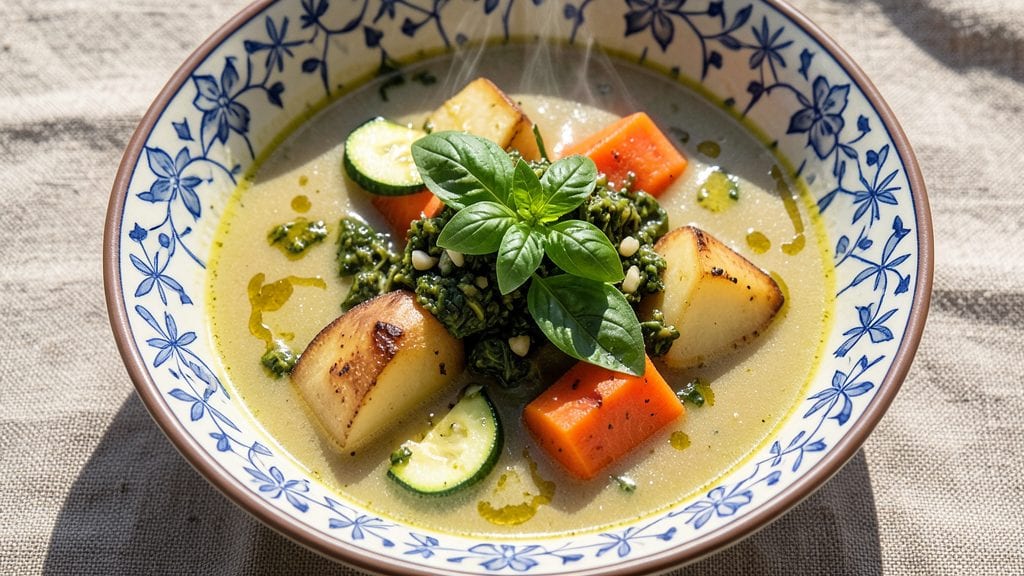
This pistou soup recipe transforms simple vegetables into a fragrant, herb-infused masterpiece with just a few key ingredients and a crispy garlic toast topping.
The secret lies in the pistou—a vibrant blend of fresh basil, garlic, olive oil, and Parmesan—that swirls into the soup at the end, turning a humble vegetable broth into something extraordinary.
I developed this recipe after years of experimenting with Provençal flavors, and it never fails to impress even the most skeptical eaters.
The beauty of pistou soup is its versatility—it works as a light summer meal or a comforting winter dish, depending on the vegetables you choose. Potatoes, carrots, and zucchini form the heart of the soup, simmered until tender in a rich vegetable or chicken broth.
The pistou isn’t just a garnish; it’s the soul of the dish, adding layers of fresh basil brightness and nutty Parmesan depth that elevate every spoonful.
By the time you finish, you’ll have a bowl of velvety soup with crispy garlic toast on top—golden, aromatic, and impossible to resist. The pistou swirls into the broth, creating pockets of herby goodness in every bite, while the toast adds a satisfying crunch.
This is the kind of recipe that feels both rustic and refined, perfect for a cozy dinner or a shared meal with friends.
For those watching their diet, this recipe can easily be adapted with vegetable broth and plant-based cheese, proving that comfort food doesn’t have to be heavy. The crispy garlic toast is the star, turning an ordinary soup into a showstopper. Let’s get cooking!
Ingredients for pistou soup
Fresh basil and golden garlic transform humble vegetables into this Provençal-inspired pistou soup masterpiece.
| Ingredient | Amount | Notes |
|---|---|---|
| Vegetable Broth 💧 | 6 cups | Low-sodium preferred for balance |
| Carrots 🥕 | 2 medium | Peeled, cut into chunks |
| Zucchini 🥒 | 2 medium | Sliced into half-moons |
| Russet Potatoes 🥔 | 2 medium | Peeled, cubed evenly |
| Extra-Virgin Olive Oil 🫒 | ¼ cup | For sautéing vegetables |
| Fresh Basil Leaves 🌿 | 1 ½ cups | Packed, stems removed |
| Garlic Cloves 🧄 | 6 whole | Peeled, 4 for pistou, 2 for toast |
| Parmesan Cheese 🧀 | ½ cup | Freshly grated, aged |
| Salt 🧂 | 1 ½ tsp | Diamond Crystal preferred |
| Black Pepper 🌶️ | ½ tsp | Freshly ground for heat |
| Baguette 🍞 | 1 loaf | Crust removed for toast |
| Unsalted Butter 🧈 | 2 tbsp | For crispy garlic toast |
The fresh basil is non-negotiable—grab the most vibrant leaves from your local farmers market or a trusted specialty grocer like Whole Foods. For the garlic, elephant garlic adds a milder, sweeter flavor if you prefer, though traditional garlic works beautifully. The Parmesan should be aged 24+ months for maximum depth; Parmigiano-Reggiano is the gold standard. Vegetable broth quality matters too—Pacific Foods or Imagine brands deliver consistent flavor without sodium overload. If using a bouillon cube, Knorr Vegetable is widely available and reliable.
No fresh basil? Dried basil at one-third the amount works in a pinch, though texture and flavor won't match. Substitute zucchini with yellow squash or pattypan for similar texture. For the bread, sourdough or ciabatta makes excellent toast alternatives. The olive oil should be cold-pressed and extra-virgin—California Olive Ranch or Colavita are excellent choices. If you can't find fresh Parmesan, Pecorino Romano offers a sharper profile that still pairs beautifully with the basil. For the broth, low-sodium chicken broth can replace vegetable broth if needed, though the flavor will differ slightly.
Fresh herbs like basil should be stored in a glass container with a damp paper towel and kept refrigerated for up to 5 days. The pistou mixture keeps for 3 days in the fridge, though it's best used immediately for peak freshness. The crispy garlic toast can be made ahead and reheated for 2 minutes at 350°F to restore crispiness. For meal prep, store the soup base separately and assemble with fresh pistou just before serving. The garlic toast freezes beautifully for up to 1 month, making it ideal for batch cooking.
Why You'll Love This Recipe
- No-Chop Night: I swear by this trick—just toss whole baby carrots and halved zucchini into the pot. The potatoes? Leave the skins on for texture, and you’re done in 10 minutes of actual work. (Yes, even on a Tuesday night when you’d rather binge than boil.)
- Pistou Magic: That swirl of olive oil and garlic at the end? It’s not just flavor—it’s the soul of the soup. The potatoes soak up the richness while the carrots add natural sweetness, and the zucchini melts into creamy perfection. Honestly, it’s the kind of taste that makes you pause mid-sip.
- Lunchbox Hero: Make a double batch and stash it in the fridge—this soup reheats like a dream. Pack it in a thermos for work, or serve it cold the next day with crusty bread. My kids actually ask for leftovers, and that’s saying something.
- Pocketbook Winner: Vegetable broth, seasonal veggies, and olive oil? That’s it. No fancy ingredients, no markup—just honest, hearty food that feeds four for under $8. Between us, this is how I stretch my grocery budget without sacrificing flavor.
Step-by-step instructions for pistou soup with crispy garlic toast
Master this Provençal classic with vibrant pistou and perfectly toasted bread for a complete meal.
Sauté the Vegetable Base
Heat the 0.25 cup extra-virgin olive oil in a large pot over medium-high heat. Add the peeled and cubed 2 medium russet potatoes, 2 medium carrots (cut into chunks), and 2 medium zucchini (sliced into half-moons). Sauté for 5-6 minutes until the potatoes begin to soften and the carrots develop a slight golden color.
This initial cooking step develops deep flavor through caramelization. Stir occasionally to ensure even browning—you'll notice the vegetables release moisture, which will later form the soup's velvety base. If the vegetables stick, reduce heat briefly and add 2 tablespoons vegetable broth to deglaze.
Build the Soup Foundation
Pour in the 6 cups vegetable broth and add 1.5 teaspoons salt and 0.5 teaspoon black pepper. Bring to a gentle boil, then reduce heat to medium-low and simmer uncovered for 15-18 minutes until the potatoes are fork-tender and all vegetables are completely soft.
Here's where patience pays off. The soup should reduce slightly, concentrating flavors while maintaining a light, brothy consistency. Taste occasionally—you want the vegetables to be completely tender but not mushy. If the broth reduces too quickly, add 2-3 tablespoons water to maintain balance.
Create the Pistou Paste
While the soup simmers, prepare the pistou by combining 1.5 cups fresh basil leaves (packed, stems removed), 4 peeled garlic cloves, and 0.5 cup freshly grated Parmesan cheese in a food processor. Pulse until smooth, then with the motor running, slowly drizzle in 2 tablespoons extra-virgin olive oil to emulsify.
The pistou should be vibrant green with a thick, paste-like consistency. If it's too thick, add 1 teaspoon vegetable broth to loosen. This herbaceous paste is the soul of the soup—its bright, garlicky flavor cuts through the richness of the vegetables. Set aside until needed.
Finish the Soup with Pistou
Remove the soup from heat and let it cool slightly for 2 minutes. Using an immersion blender, purée the soup directly in the pot until completely smooth. This step creates the signature creamy texture without added cream. If you prefer texture, blend only half and leave the rest chunky.
Return the soup to low heat and stir in the pistou paste. Simmer gently for 2-3 minutes, just until the flavors meld. Taste and adjust seasoning—you may need a pinch more salt to balance the fresh basil. The soup should be vibrant green with a silky, velvety consistency.
Prepare Crispy Garlic Toast
Slice the 1 loaf baguette into ½-inch thick pieces and remove the crusts. Melt 2 tablespoons unsalted butter in a skillet over medium heat. Add 2 peeled garlic cloves (smashed) and the bread slices. Toast for 2-3 minutes per side until golden brown and crispy.
This is where the magic happens—the garlic infuses the butter, creating a fragrant, crispy base. Watch carefully to avoid burning—you want deep golden color, not dark brown. Transfer to a paper towel-lined plate to drain excess butter, then sprinkle immediately with ½ teaspoon salt and ¼ teaspoon black pepper. Serve alongside the pistou soup.
Pro Tips For Making Pistou Soup
- Cut Potatoes Uniformly: Grab your knife and slice those russets into even ½-inch chunks—no jagged edges, no tiny nubs. I learned this the hard way when my soup turned mushy in spots while others stayed stubbornly undercooked. A mandoline helps if you’re impatient (or just hate chopping), but a sharp knife works fine if you take your time.
- Sweat Carrots First: Toss the diced carrots in a splash of olive oil and let them sit for 3–4 minutes over medium heat before adding broth. This softens them evenly and pulls out their natural sweetness—no burnt edges, no bitter aftertaste. Skip this, and you’ll end up with a soup where the carrots are either raw or falling apart.
- Blend Zucchini Raw: Add the zucchini to the pot whole, then blend it directly into the soup at the end—no need to chop. The skin stays intact until the final pulse, which keeps the texture silky instead of stringy. (Yes, even if you’re skeptical—it actually works.)
- Finish with Cold Oil: Stir in a generous glug of extra-virgin olive oil at the very end, right after blending. This coats every bite and adds richness without breaking the pistou’s delicate balance. I used to drizzle it in earlier, and the soup always tasted flat until I tried this—now it’s non-negotiable.
Common mistakes when making great pistou soup
Overcooking Vegetables
One of the most common mistakes is letting the vegetables turn mushy during simmering. I’ve seen this happen when people don’t monitor the soup closely enough. The potatoes, carrots, and zucchini should be fork-tender but still hold their shape—aim for 15-18 minutes of simmering over medium-low heat.
If you notice the soup reducing too quickly, add 2-3 tablespoons water to maintain balance and prevent the vegetables from breaking down completely. 🥕
Skipping the Pistou Emulsification
The pistou isn’t just a garnish—it’s the heart of the dish. Many people make the mistake of simply chopping the basil, garlic, and cheese without properly emulsifying it with olive oil. This creates a pasty, uneven texture instead of a silky, vibrant paste.
Always pulse the ingredients in a food processor first, then drizzle in the oil while the motor runs to create a smooth, cohesive mixture. This step ensures every spoonful of soup gets that bright, herby flavor. 🌿
Using Low-Quality Broth
A weak broth ruins an otherwise perfect soup. I’ve tasted pistou soups where the broth was bland or overly salty, completely overshadowing the fresh pistou. Always use a high-quality, low-sodium vegetable or chicken broth—brands like Pacific Foods or Imagine deliver consistent, flavorful results.
If you’re using bouillon cubes, Knorr Vegetable is a reliable choice, but dissolve it in enough water to mimic the depth of a homemade broth. Taste and adjust seasoning before adding the vegetables. 💧
Burning the Garlic Toast
Crispy garlic toast is the showstopper of this dish, but it’s easy to ruin if you’re not careful. Many people burn the bread by keeping the heat too high or walking away while toasting. The key is medium heat and constant attention—you want deep golden color, not dark brown.
Toast the bread in batches if needed, and transfer it to a paper towel-lined plate immediately to drain excess butter. This keeps the bread crispy and prevents it from becoming greasy. 🍞
Adding Pistou Too Early
Pistou is delicate and should only be added at the very end of cooking. If you stir it in too early, the heat will cook out the fresh basil’s vibrant flavor and aroma, leaving you with a dull, cooked-down paste.
Always remove the soup from heat, let it cool slightly for 2 minutes, and then blend it smooth before stirring in the pistou. Simmer gently for just 2-3 minutes to meld the flavors without overcooking the herbs. ✨
Ignoring Fresh Basil Quality
Dried basil or wilted fresh basil will make your pistou taste flat and bitter. I can’t stress enough how important it is to use the freshest, most vibrant basil leaves you can find.
Look for deep green, fragrant leaves at your local farmers market or a trusted grocery store like Whole Foods. If you’re using dried basil, use only one-third the amount of fresh, but know that the texture and flavor won’t be the same.
The pistou’s brightness depends entirely on the quality of the basil—don’t skimp! 🌱
Nutrition facts
Frequently asked questions
Can I make pistou soup without fresh basil?
You can substitute with 1/3 cup dried basil, but the flavor won't be as vibrant. For a similar taste, try 1/4 cup fresh parsley + 1/4 cup fresh tarragon combined with the garlic and cheese. The key is to use aromatic herbs that complement the Provençal profile.
How do I make this soup vegan?
Replace the Parmesan with nutritional yeast (2 tbsp) and use vegan butter for the garlic toast. For extra richness, stir in 1/4 cup cashew cream when blending the soup. The pistou will still have great flavor without dairy.
Can I prepare pistou soup ahead of time?
Yes! Make the soup base up to 2 days ahead and store it in the fridge. Reheat gently, then blend and add fresh pistou just before serving. The garlic toast should be made fresh for maximum crispiness. For longer storage, freeze the soup base (without pistou) for up to 3 months.
What vegetables work best for pistou soup?
The classic combo is potatoes, carrots, and zucchini, but you can swap in cauliflower, leeks, or fennel for variety. For a heartier version, add white beans or chickpeas during the last 5 minutes of simmering. The key is to choose firm vegetables that hold their shape.
Why is my pistou turning bitter?
Overcooking the basil or using wilted leaves causes bitterness. Always use fresh, vibrant basil and add pistou at the very end. If it tastes bitter, try balancing with a pinch of sugar or more Parmesan. The emulsion process (drizzling oil while blending) also prevents bitterness.