
Soups & Stews
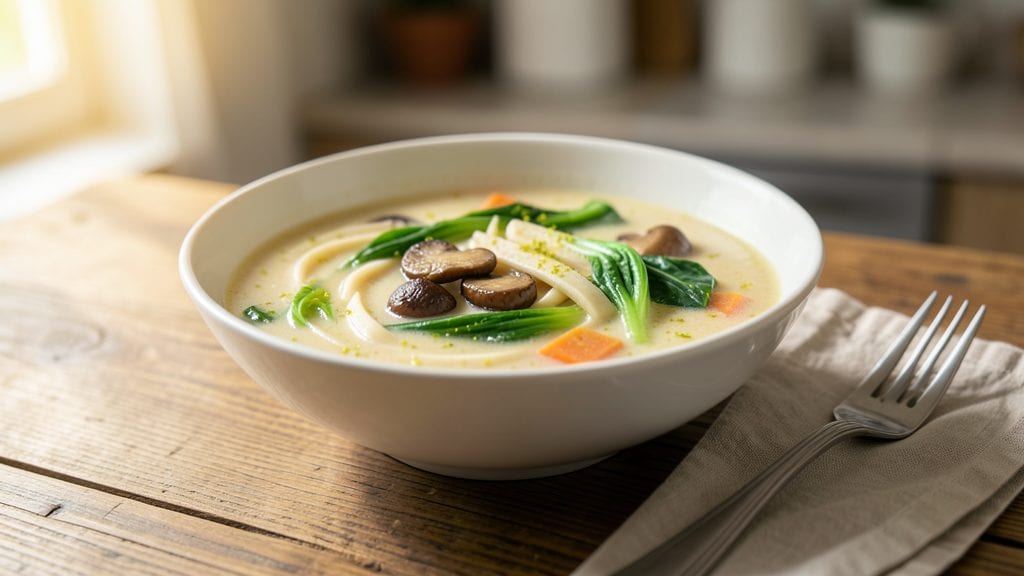
This vegan Asian vegetable soup delivers the comforting balance of umami, brightness, and silky textures that make it a weeknight staple. The secret lies in a layered broth—ginger, lime, and miso create depth while coconut milk adds velvety richness—all anchored by silky tofu and tender vegetables.
I developed this recipe after years of testing vegan soups that either tasted too flat or required specialty ingredients, and this version solves both problems with pantry staples and precise technique.
The broth is where the magic happens: simmered aromatics (garlic, ginger, lemongrass) infuse the liquid, while miso paste adds that signature savory backbone. Silken tofu breaks down into delicate strands, mushrooms absorb the broth’s flavors, and bok choy wilts just enough to retain its crisp texture.
What you’ll end up with is a fragrant, warming soup that’s light enough for summer but hearty enough for winter—perfect for meal prep or an impromptu dinner.
This recipe is designed for home cooks who want restaurant-quality results without shortcuts that compromise flavor. The broth builds complexity over 30 minutes of simmering, while the tofu and vegetables cook in just 10 minutes—meaning you can have a complete meal on the table in under an hour.
The lime zest finish adds a bright contrast that cuts through the richness, and optional chili oil or sesame seeds elevate it further.
Whether you’re serving it as a light lunch or a comforting dinner, this soup adapts to your needs. Double the broth for leftovers, or swap in seasonal vegetables like zucchini or snap peas.
The silky tofu can be replaced with edamame for extra protein, and the coconut milk can be reduced for a lighter broth. Here’s how to make it—professional results, simplified.
Ingredients for asian veg soup
Pantry staples and fresh aromatics create this fragrant vegan soup with restaurant-quality depth.
| Ingredient | Amount | Notes |
|---|---|---|
| Silken Tofu 🍲 | 14 oz | Firm, drained package |
| Vegetable Broth 💧 | 4 cups | Low-sodium preferred |
| Coconut Milk 🥥 | 1 cup | Full-fat for creaminess |
| Carrots | 2 medium | Julienned or thinly sliced |
| Bok Choy 🥬 | 2 whole | Baby or regular, quartered |
| Shiitake Mushrooms 🍄 | 4 whole | Stems removed, sliced |
| Garlic Cloves 🧄 | 4 cloves | Minced or finely chopped |
| Fresh Ginger 🌿 | 1 inch | Thinly sliced, peeled |
| Lemongrass 🌿 | 1 stalk | Bruised, cut into 2-inch pieces |
| White Miso Paste 🍶 | 1 tbsp | High-quality miso preferred |
| Lime Zest 🍋 | 1 tbsp | Freshly grated |
| Lime Juice 🍋 | 1 tbsp | Freshly squeezed |
| Sesame Oil 🫒 | 1 tsp | Toasted, for finishing |
| Sea Salt 🧂 | 1 tsp | Adjust to taste |
| Black Pepper 🌶️ | ½ tsp | Freshly ground |
The miso paste is non-negotiable for that umami backbone—Marukome or Hatsu are my go-tos, but any high-quality white miso works. For the coconut milk, full-fat canned versions like Aroy-D give the best creaminess. The ginger and lemongrass should be bright and fragrant—if they smell musty, grab fresh. Bok choy? Baby bok choy stays crisp longer than the regular kind, but both work. I usually grab mine from the Asian market section, but the regular grocery store produce aisle has them too.
No lemongrass? Substitute 1 tsp lemongrass paste or extra lime juice. Out of miso? Soy sauce or coconut aminos in a pinch, but it won't be the same. The tofu can be swapped for edamame or firm tofu if you prefer more texture. For the mushrooms, shiitake or cremini work best—their meaty flavor holds up to the broth. Carrots can be baby carrots if that's what's in the fridge, but the julienned version cooks faster and looks prettier.
The broth keeps for 5 days in the fridge—make extra for leftovers. The tofu and veggies can be prepped ahead and stored separately for 2 days. Freeze the broth in ice cube trays for quick future meals. The lime zest and sesame oil are best added fresh at the end, but you can store them separately for 1 week in the fridge. This soup tastes even better the next day as the flavors meld.
Why You'll Love This Recipe
- Silken Tofu Magic: I’ll be real—this is the only time I use silken tofu without it feeling like a chore. It blends into the broth so smoothly, adding that creamy texture without overpowering the veggies. Just cube it, simmer it, and let the broth work its magic—no draining, no fuss.
- Umami Bomb: Between the vegetable broth and coconut milk, this soup packs a flavor punch that’s weirdly addictive. The carrots caramelize just enough to add sweetness, while the bok choy wilts into crisp-tender perfection. Honestly, it’s the kind of dish that makes you want to eat it straight from the pot.
- Meal Prep MVP: This soup reheats like a dream—no soggy bok choy or grainy textures here. I make a big batch on Sundays, and by Thursday, I’m still grabbing jars for lunch. Plus, it’s the ultimate "I don’t feel like cooking" dinner when I’m swamped.
- Budget-Friendly Luxury: Coconut milk makes it feel special, but the rest of the ingredients are dirt cheap. Carrots, tofu, and bok choy stretch across multiple servings, and I’ve never once regretted the cost. It’s the kind of recipe that makes frugal eating feel indulgent.
Step-by-step instructions for fragrant ginger-lime broth with silky tofu
Here's how to build this vibrant, umami-packed veggie soup from scratch—simple steps, bold flavors.
Prep and Sauté the Aromatics
First, slice the 2 medium carrots into thin strips and quarter the 2 whole bok choy. Remove stems from the 4 whole shiitake mushrooms and slice them, then mince the 4 cloves garlic cloves and thinly slice the 1 inch fresh ginger. Bruise the 1 stalk lemongrass by pounding it lightly with the side of your knife.
Heat a large pot or Dutch oven over medium heat. Add the sliced shiitake mushrooms and cook for 3-4 minutes until they release their moisture and begin to brown. Add the minced garlic cloves and sliced fresh ginger, cooking for 1 minute until fragrant. Here's the thing—don't let the garlic burn, or it'll turn bitter. Keep stirring until it just smells amazing.
Build the Broth Base
Pour in the 4 cups vegetable broth and bring to a gentle simmer. Stir in the 1 tbsp white miso paste, letting it dissolve completely into the broth. Add the sliced carrots and quartered bok choy, then bring the mixture back to a simmer. Let it cook for 8-10 minutes until the carrots are tender but still hold their shape.
This is where the umami magic happens. The miso paste should be fully incorporated, giving the broth that deep, savory foundation. If you taste it now, you'll notice the broth has a rich, almost nutty flavor—this is your base before we add the bright, citrusy notes.
Add the Silken Tofu and Coconut Milk
Gently fold in the 14 oz silken tofu (leave it in its package until now to keep it intact) and the 1 cup coconut milk. The tofu should soften and blend seamlessly into the broth, creating a naturally creamy texture without needing extra thickeners. Simmer for 5 minutes to let the flavors meld together.
Here's the moment that matters: The broth should now have a velvety appearance with the tofu broken down just enough to create a silky consistency. If the soup looks too thick, add a splash of water or broth to loosen it up. The tofu should be warm but still hold its shape slightly.
Finish with Citrus and Sesame
Remove the pot from heat and stir in the 1 tbsp lime zest and 1 tbsp lime juice. This is where the dish comes alive with bright, zesty notes that cut through the richness of the coconut milk and tofu. Add the 1 tsp sea salt and 0.5 tsp black pepper, then drizzle in the 1 tsp sesame oil. Let the soup sit for 2-3 minutes to let the flavors settle.
Taste and adjust the seasoning if needed—you might want a touch more lime juice for brightness or a sprinkle of extra salt to balance the flavors. The final soup should be fragrant with a perfect harmony of umami, citrus, and herbal notes. The tofu should be silky, the broth vibrant, and the aroma irresistible.
Pro Tips For Making Asian Veg Soup
- Simmer Carrots First: Toss diced carrots into the broth before adding coconut milk—this softens them evenly without turning them mushy later. I learned this the hard way when my soup ended up with rock-hard carrots swimming in a creamy sauce.
- Cut Tofu in Half: Slice silken tofu into ½-inch cubes instead of thin sheets—it holds shape better in hot broth and soaks up flavors without dissolving. (Yes, even if you’re impatient like me, resist the urge to shred it.)
- Stir Coconut Milk Slowly: Whisk the coconut milk into the broth gradually while stirring constantly—dumping it all at once creates a greasy separation. My grandmother swore by this, and she was right: the soup stays silky, not split.
- Blanch Bok Choy Last: Add bok choy only in the final 2 minutes—this keeps its crisp texture instead of wilting into a sad, limp pile. (Your future self will thank you for not overcooking it.)
Serving suggestions for asian veg soup
Garnish Like a Pro
Freshly toasted sesame seeds (about 1 tsp) add a nutty crunch and visual appeal. I like to sprinkle them right before serving—just heat them in a dry pan for 30 seconds until golden and fragrant.
For extra color, add thinly sliced green onions or cilantro leaves (about 2 tbsp) on top. The contrast of bright green against the golden broth makes it look restaurant-worthy. 🌿
Crispy Toppings
Add texture with crispy fried shallots (about 1 tbsp) or toasted nori strips. I buy pre-made fried shallots at the Asian market—they add a delicate crunch that disappears as you eat.
For a spicy kick, drizzle with chili oil (about ½ tsp) or a few drops of Sriracha. The heat cuts through the coconut milk's richness beautifully.
Bread Pairings
Serve with steamed rice noodles or rice cakes (like Mochiko brand) for scooping up every last drop. I also love warm garlic naan or mantou (steamed buns) on the side.
The bread soaks up the fragrant broth while adding a satisfying chew. For a lighter option, offer rice paper rolls filled with extra veggies and tofu.
Dipping Sauces
A small bowl of spicy peanut sauce (mix 1 tbsp peanut butter, 1 tsp soy sauce, ½ tsp sriracha, and 1 tsp lime juice) adds depth. For something simpler, blend 1 tbsp tahini with 1 tsp maple syrup and water to thin.
The nutty, tangy contrast elevates the soup's flavors. Serve in tiny bowls for individual dipping. 🍜
Presentation Tips
Use wide, shallow bowls to showcase the soup's vibrant layers. I like ceramic or stoneware bowls because they stay warm longer and highlight the colors. For a rustic touch, serve in clay pots or cast-iron skillets—they add a cozy, homestyle vibe.
Garnish with a lime wedge on the side for guests to squeeze fresh juice over their bowls.
Meal Prep Serving
When reheating leftovers, add 1 tbsp water or broth per serving to prevent thickening. Stir in a splash of lime juice and a pinch of salt to revive the flavors.
For a quick assembly, keep the broth and veggies separate in the fridge—just reheat the broth, then add the pre-cooked tofu and veggies at the end. This keeps everything fresh-tasting. 💡
Nutrition facts
Frequently asked questions
Can I make this veggie soup without coconut milk?
For a lighter version, replace the coconut milk with an extra ½ cup vegetable broth. If you want creaminess without dairy, try ¼ cup cashew cream (blend soaked cashews with water) or 1 tbsp nutritional yeast for a cheesy note. The soup will still be flavorful—just slightly less rich.
How do I make the tofu extra silky?
Use extra-firm silken tofu instead of regular firm tofu, and keep it refrigerated until the last minute. When adding to the broth, gently break it apart with a spoon rather than chopping—this creates delicate strands. For even silkier results, blend ½ cup tofu with ¼ cup broth before adding to the pot.
What's the best way to store leftovers?
Store the soup in an airtight container in the fridge for up to 4 days. Reheat gently on the stove with a splash of water or broth to restore creaminess. For freezing, portion into ice cube trays (broth only) or freezer-safe bags (with veggies) for easy reheating. The tofu may separate slightly when frozen—just stir when reheating.
Can I add protein beyond tofu?
Yes! Stir in ½ cup cooked edamame or ½ cup chickpeas for extra protein. For meat-eaters, add ½ lb shrimp (cook separately and add at the end) or thinly sliced chicken breast. Just reduce the broth by ½ cup to maintain balance. The soup's flavors will adapt beautifully to these additions.
Why did my soup turn out too salty?
Miso paste and soy sauce (if substituted) are potent flavor boosters. Start with ½ tbsp miso and adjust to taste. If using store-bought broth, opt for low-sodium versions. For salty soups, dilute with ½ cup water or add 1 tbsp coconut milk to balance. Always taste as you go!