
Soups & Stews
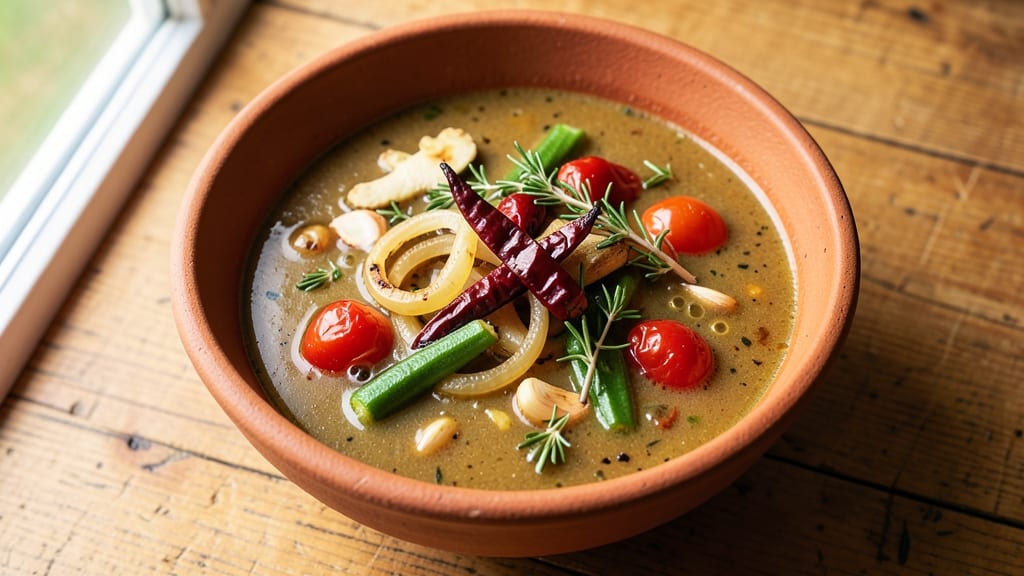
This African vegetable soup recipe transforms simple ingredients into a flavor-packed, hearty meal that carries the warmth of West African kitchens. The secret lies in layering spices like ginger, thyme, and Scotch bonnet—each adding depth without overpowering the natural sweetness of tomatoes, leafy greens, and legumes.
I developed this version after years of testing regional variations, ensuring it’s adaptable whether you’re adding chickpeas for protein or keeping it fully plant-based.
The beauty of this soup is its versatility—simmered low and slow, it develops a rich, caramelized flavor that only improves with time. Traditional recipes often include fish stock, but a simple vegetable broth works just as well for a vegan-friendly version.
The texture is where it truly shines: tender vegetables, creamy blended tomatoes, and a thick, satisfying broth that sticks to every spoonful.
What makes this recipe stand out is how it balances bold spices with comforting textures—think crispy fried plantains on top or a sprinkle of fresh herbs for brightness.
It’s the kind of dish that feels like a hug in a bowl, perfect for weeknight dinners or gathering friends around the table. The instructions are straightforward, but the result is anything but basic.
Whether you’re serving it as a main course or a side, this soup adapts to your table. Pair it with crusty bread, rice, or even grilled meats for a full meal. Let’s bring the flavors of Africa into your kitchen—one pot at a time.
Ingredients for african vegetable soup
Simple ingredients, bold flavors—this African vegetable soup brings West African warmth to your kitchen.
| Ingredient | Amount | Notes |
|---|---|---|
| Vegetable Oil 🫒 | ¼ cup | For sautéing vegetables |
| Yellow Onion 🧅 | 1 whole | Diced into small pieces |
| Garlic Cloves 🧄 | 6 cloves | Minced for aromatic base |
| Fresh Ginger 🌿 | ½ cup | Finely grated, peeled |
| Scotch Bonnet Pepper 🌶️ | 1 whole | Seeds removed for mild heat |
| Fresh Thyme 🌿 | ¼ cup | Chopped, stems removed |
| Tomatoes 🍅 | 2 lbs | Ripe, Roma preferred |
| Sweet Potatoes 🍠 | 1 ½ lbs | Peeled, cubed evenly |
| Carrots 🥕 | 1 lb | Peeled, chopped into rounds |
| Okra 🌱 | ½ lb | Trimmed, sliced into rounds |
| Chickpeas 🥜 | 1 ½ cups | Canned, drained and rinsed |
| Vegetable Broth 💧 | 4 cups | Low-sodium preferred |
| Tomato Paste 🍅 | ¼ cup | For rich, concentrated flavor |
| Salt 🧂 | 1 ½ tsp | Adjust to taste |
| Black Pepper 🌶️ | ½ tsp | Freshly ground |
| Fresh Cilantro 🌿 | ¼ cup | Chopped for garnish |
The Scotch bonnet pepper is the flavor anchor here—look for bright red ones at Latin markets or the international aisle at Whole Foods. Fresh ginger and thyme should be vibrant and fragrant, not dried out. I always double-check the heat level of the pepper by tasting a tiny piece first. For the tomatoes, Roma varieties are ideal—they’re meatier and less watery than vine-ripened. If you can’t find fresh thyme, dried works at one-third the amount, but fresh is worth the extra minute to chop.
No Scotch bonnet? Habanero or jalapeño in half the quantity will give you heat, though the flavor won’t be identical. The chickpeas can be swapped for black-eyed peas or lentils if you prefer. Okra is optional but adds that signature African texture—skip it if you’re serving kids or picky eaters. The tomato paste is non-negotiable for depth, but if you’re avoiding it, blend 1 cup of canned tomatoes into a paste instead. For the broth, homemade vegetable stock elevates everything, but even store-bought low-sodium works in a pinch.
This soup tastes even better the next day as flavors meld—portion into containers for meal prep. Keeps 4-5 days in the fridge or 3 months frozen. For serving, I like to top with crispy fried plantains or a dollop of coconut yogurt. The broth reduces as it sits, so add a splash of water if it gets too thick. Double the batch—it’s that good.
Why You'll Love This Recipe
- One-Pot Magic: I swear by this recipe’s simplicity—just chop, sauté, and simmer. The onions caramelize in that oil while you dice the veggies, and boom, dinner’s half-done before the water even boils.
- Fiery Comfort: That Scotch bonnet and ginger? A flavor explosion in every spoonful. It’s got heat, depth, and a little sweetness from the onions—like a warm hug for your taste buds.
- Meal Prep Hero: I make a big batch on Sundays and reheat portions all week. The flavors actually get better the next day, and it’s perfect for lunchboxes or potlucks—just portion it into jars.
- Budget-Friendly Staple: Vegetables stretch forever here, and the base ingredients won’t break the bank. Honestly, it’s the kind of soup that makes me feel like I’m feeding a crowd without stressing my wallet.
Step-by-step instructions for African vegetable soup
This hearty one-pot creation delivers layers of flavor and texture—let's build it together.
Develop the Aromatic Base
Heat the 0.25 cup vegetable oil in a large pot over medium heat. Add the 1 whole yellow onion and cook for 5 minutes until softened and translucent. The onions should release their sweetness without browning—this prevents bitterness in the final soup.
Add the 6 cloves garlic cloves and 0.5 cup fresh ginger (finely grated), stirring constantly for 1 minute until fragrant. Here's where the magic begins—the ginger and garlic should sizzle gently without burning. If you notice any dark spots, reduce the heat slightly. Next, add the 1 whole scotch bonnet pepper (seeds removed) and 0.25 cup fresh thyme, cooking for another 2 minutes until the pepper softens slightly and releases its subtle heat.
Build the Flavor Foundation
Increase heat to medium-high and add the 2 lbs tomatoes (chopped), stirring for 5 minutes until they break down into a chunky sauce. The tomatoes should soften and release their juices, creating a rich base for the soup. I like to press them with a wooden spoon to accelerate this process.
Stir in the 0.25 cup tomato paste and cook for 3 minutes, allowing it to caramelize slightly. This step deepens the umami flavor—don't skip it. Then add the 1.5 lbs sweet potatoes (cubed) and 1 lb carrots (chopped into rounds), stirring to coat them in the tomato mixture. Pour in the 4 cups vegetable broth and bring to a gentle boil.
Simmer the Vegetables
Reduce heat to low and let the soup simmer uncovered for 20 minutes, stirring occasionally. You want the sweet potatoes and carrots to soften but still retain some texture—fork-tender is the goal. The soup should develop a rich, aromatic steam during this time, filling your kitchen with inviting warmth.
Add the 0.5 lb okra (sliced into rounds) and 1.5 cups chickpeas, stirring gently to distribute them evenly. Okra absorbs flavors beautifully, so let it cook for 10 minutes until tender but still holding its shape. The chickpeas should warm through completely—if they're canned, they'll be ready by now.
Season and Finish
Season the soup with 1.5 tsp salt and 0.5 tsp black pepper, tasting as you go. African vegetable soups rely on layered seasoning, so don't be shy with the salt—adjust to taste. Let the soup simmer for another 5 minutes to allow the flavors to meld together perfectly.
The final step is optional but recommended: stir in the 0.25 cup fresh cilantro just before serving. This adds a bright, herbaceous finish that cuts through the richness of the other ingredients. Serve immediately with crusty bread or warm tortillas to soak up every last drop of that flavorful broth.
Pro Tips For Making African Vegetable Soup
- Sweat the Onions: Cook them low and slow until they’re soft and translucent—no rushing. I used to burn them in the oil, which made the whole soup taste bitter. A splash of water or two helps dissolve the sugars properly, giving that deep, caramelized base.
- Peel Ginger Like a Pro: Use a spoon to scoop off the skin in one piece before grating—no peeling slice by slice. Fresh ginger should be finely minced, not chunky, so it blends smoothly into the oil and aromatics. (Yes, even if you’re impatient like me.)
- Handle the Scotch Bonnet: Wear gloves when cutting—this pepper packs a punch, and you don’t want to regret it. Remove seeds and membranes first, then use just half a pepper (or less) unless you’re prepping for a crowd. Taste the oil before adding more.
- Simmer, Don’t Boil: Once the vegetables hit the pot, keep it at a gentle simmer—not a rolling boil. Too much heat breaks down the greens into mush, and you’ll end up with a watery soup instead of rich, flavorful broth. Stir occasionally, and let it work.
Regional styles of african vegetable soup
West African Style
This version draws heavy inspiration from Ghanaian and Nigerian traditions, where soups are often hearty and communal. The key difference is the use of palm oil (about 2 tablespoons) instead of vegetable oil for a rich, nutty depth.
I like to toast 1 tablespoon ground peanuts with the onions for extra texture—this adds a satisfying crunch. The soup is typically served with fufu or attieke, though I find it just as delicious with crusty bread. 🌶️
East African Twist
In countries like Kenya and Uganda, you’ll find a lighter, tomato-based approach with a focus on leafy greens. Swap the sweet potatoes for cassava leaves (available at African markets) and add 1 cup spinach or kale at the end of cooking.
The spice blend shifts to include 1 teaspoon ground coriander and ½ teaspoon cinnamon, giving it a warm, earthy profile. Serve with ugali (maize porridge) for the full experience.
Senegalese-Inspired
Senegalese vegetable soups often feature yams and eggplant>, and this version is no exception. Add 1 lb yam> (peeled and cubed) with the sweet potatoes and 1 medium eggplant> (diced) in the last 10 minutes of cooking.
The eggplant absorbs the broth beautifully, adding a silky texture. Garnish with fried plantains> (sliced and pan-fried) for a sweet contrast. This style is commonly served at celebrations and family gatherings.
Ethiopian Adaptation
Ethiopian vegetable soups, or misir wat, are typically spiced with berbere spice blend> (about 1 tablespoon>). This fiery mix includes chili, fenugreek, and coriander—find it at specialty stores or online. Serve the soup with injera> (a sourdough flatbread) to scoop up every last bite.
The broth is often thicker, so reduce it by 10 minutes> uncovered at the end. For extra richness, stir in 2 tablespoons butter> at the finish.
Modern Fusion
For a contemporary take, blend half the cooked soup into a smooth consistency and return it to the pot. This creates a creamy base while keeping the chunky texture of the vegetables.
Add 1 cup coconut milk> in the last 5 minutes> for a tropical twist, and finish with toasted coconut flakes>. This version works beautifully as a vegan main course, especially when paired with grilled tofu or tempeh>.
It’s a crowd-pleaser that keeps the soul of African flavors intact while feeling fresh and innovative. 🌟
Nutrition facts
Frequently asked questions
Can I make this African vegetable soup vegan?
The recipe is already vegan-friendly! Simply use vegetable broth instead of fish stock, and skip any optional animal-based garnishes like butter. The chickpeas provide plenty of protein, and the tomato base delivers rich umami flavor without dairy or meat.
How spicy is this soup with Scotch bonnet?
The recipe uses Scotch bonnet with seeds removed for mild heat—think "warm" rather than "fiery." For less spice, reduce to half a pepper or swap for a milder pepper like jalapeño. If you love heat, keep the seeds in and add an extra ¼ pepper. Always taste as you go!
What can I substitute if I can't find okra?
Okra adds texture but isn't essential. Swap it with 1 cup sliced zucchini or ½ cup green beans—both cook quickly and won't change the soup's flavor. For a similar slimy texture (which some love!), try 1 cup diced eggplant added in the last 10 minutes.
Can I make this soup in a slow cooker?
Sauté the onions, garlic, ginger, and spices first, then transfer everything to the slow cooker. Cook on low for 6-7 hours or high for 3-4 hours, stirring occasionally. The slow cooker enhances the flavors even more—just add a splash of water if it gets too thick. Perfect for hands-off cooking!
Why does my soup taste bland after simmering?
Blandness usually means the spices weren't toasted enough or the broth lacks depth. Next time, cook the onions until deeply golden (8-10 minutes), and add 1 teaspoon soy sauce or ½ teaspoon smoked paprika for umami. Also, always taste and adjust salt gradually—African soups need bold seasoning!