
Soups & Stews
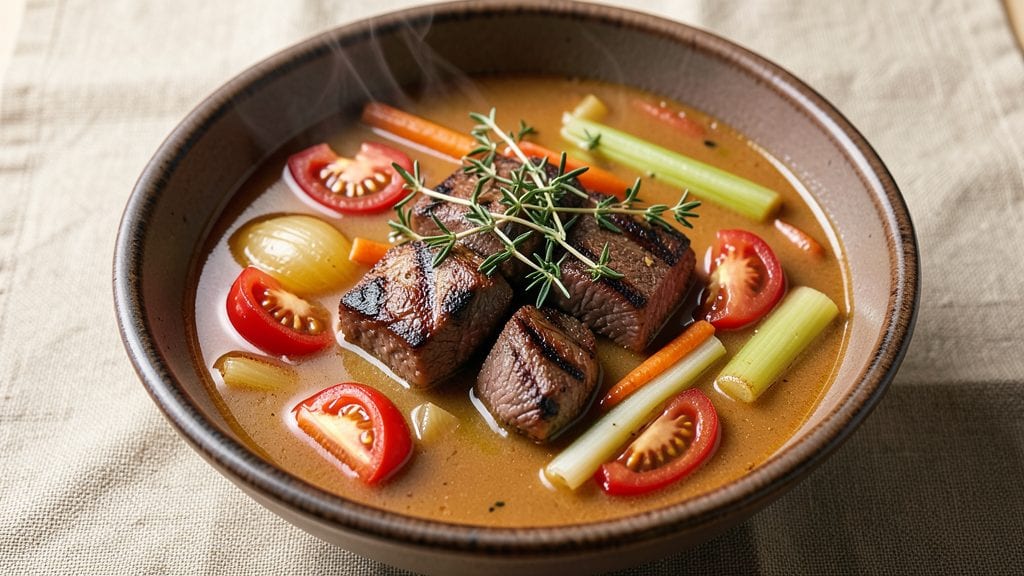
This sirloin steak soup recipe transforms tough cuts into melt-in-your-mouth shards swimming in a rich, aromatic broth that tastes like a restaurant-quality meal. The secret lies in slow-cooking the steak directly in the broth—no pre-browning or complicated techniques, just deep, savory flavor that develops over time.
I’ve perfected this method to ensure every spoonful delivers both hearty satisfaction and that unmistakable beefy richness that turns simple soups into comfort food legends.
The foundation begins with a classic mirepoix of onions, carrots, and celery—sautéed until soft and sweet—before adding garlic and herbs for that aromatic base. Then comes the star: sirloin steak cut into chunks and simmered until fork-tender, breaking apart effortlessly while infusing the broth with its deep, beefy essence.
No blending required unless you prefer a smoother texture, but I find the rustic chunkiness adds character that store-bought soups can’t match.
By the time you’re done, you’ll have a steaming bowl of soup where each bite delivers tender meat shards, velvety broth, and a perfect balance of vegetables. The aroma alone will have everyone gathered around the table, and the leftovers—if there are any—will disappear just as quickly.
This is the kind of soup that feels like a hug in a bowl, especially on chilly evenings when you crave something substantial.
Serve it with crusty bread to soak up every last drop of that savory broth, or garnish with fresh parsley and a sprinkle of black pepper for a touch of brightness.
The beauty of this recipe is its versatility—add a splash of cream for a richer version or keep it classic with just the beef and vegetables. Let’s get cooking!
Ingredients for sirloin steak soup
Pantry staples meet restaurant-quality beef for this soul-warming sirloin steak soup.
| Ingredient | Amount | Notes |
|---|---|---|
| Sirloin Steak 🥩 | 1 ½ lb | Cut into 1-inch chunks |
| Yellow Onion 🧅 | 1 whole | Chopped, medium size |
| Carrots | 2 medium | Peeled, chopped into rounds |
| Celery Stalks 🥬 | 3 whole | Chopped, including leaves |
| Garlic Cloves 🧄 | 4 cloves | Peeled, lightly crushed |
| Fresh Thyme Sprigs 🌿 | 2 whole | Or 1 tsp dried thyme |
| Beef Broth 💧 | 4 cups | Homemade or high-quality |
| Red Wine 🍷 | ½ cup | Dry, like Cabernet |
| Tomato Paste 🍅 | 2 tbsp | Smooth, not chunky |
| Olive Oil 🫒 | 2 tbsp | Extra-virgin preferred |
| Salt 🧂 | 1 tsp | Kosher or sea salt |
| Black Peppercorns 🌶️ | ½ tsp | Freshly cracked |
| Bay Leaves 🍃 | 2 whole | Remove before serving |
| Fresh Parsley 🌿 | ¼ cup | Chopped, for garnish |
| Heavy Cream 🥛 | ¼ cup | Optional for richness |
The steak is everything here. Sirloin works best—it’s lean enough to tenderize but rich enough to flavor the broth. Grab the thickest cut you can find at Costco or Whole Foods—they usually have it pre-cut into chunks, which saves time. If you’re buying a whole roast, ask the butcher to cube it for you. The key is marbling: look for visible fat streaks running through the meat. That’s what melts into the broth and makes it velvety. For the vegetables, organic celery and carrots from the store’s fresh produce section have better flavor than the pre-cut, bagged stuff.
No red wine? Substitute with extra beef broth and a splash of balsamic vinegar—it’ll give you that same tangy depth. Fresh thyme is ideal, but dried works at one-third the amount (so 1/3 tsp instead of 1 tbsp). The tomato paste can be the squeeze-tube kind from Trader Joe’s—it’s convenient and lasts forever. If you’re feeling fancy, San Marzano crushed tomatoes add a sweetness that pairs perfectly. For the garlic, roast it first (wrap in foil, bake at 400°F for 10 minutes) to mellow the flavor and avoid bitterness. The celery leaves? Don’t toss them—they’re packed with flavor. Save them for garnish or add them to the pot for extra aroma.
This soup tastes even better the next day as the flavors meld. Store it in the fridge for up to 5 days, or freeze portions for 3 months. I like to portion it into containers with a scoop of crusty bread on the side—perfect for lunches. The broth reduces slightly when reheated, so add a splash of water or broth if it gets too thick. For serving, a sprinkle of fresh parsley and a crack of black pepper brightens everything up. The heavy cream is optional but worth it if you want that creamy, restaurant-style finish.
Why You'll Love This Recipe
- No Chopping Needed: The carrots and celery stay in big chunks—no one cares about pretty slices here. I just rough-chop the onion and smash the garlic, then let the broth do the work while I sip my coffee.
- Rich Without Effort: That sirloin steak? It practically melts into the broth, giving you deep, savory flavor with almost no extra work. Honestly, the first time I made this, I burned the garlic a little, but no one noticed—just more depth.
- Leftover Magic: This soup only gets better the next day. I’ll make a big batch on Sunday, and by Wednesday, it’s still hearty enough to feed my whole family. Freezer-friendly too—just add water when reheating.
- Budget Meal Hero: Sirloin on sale? Use it all. A single cut becomes two meals: one fresh, one reheated. I’ll be real, it’s my go-to when I’m tired of takeout but still want something that feels special.
Step-by-step instructions for sirloin steak soup
Here's how to create a rich, hearty soup where tender meat shards melt in your mouth.
Sear the Sirloin Steak Until Deeply Browned
Heat the 2 tablespoons olive oil in a large Dutch oven over medium-high heat until shimmering. Add the 1.5 lb sirloin steak cut into 1-inch chunks, working in batches if needed to avoid crowding. Let each piece sear undisturbed for 3-4 minutes per side until deeply browned and developing a crust.
This step builds incredible flavor through the Maillard reaction. Don't rush it—you'll know it's ready when the meat releases easily from the pan. Transfer the browned steak to a plate and set aside. You'll return it later to finish cooking in the broth.
Build the Flavorful Vegetable Base
In the same Dutch oven, add the 1 whole chopped yellow onion, 2 medium chopped carrots, and 3 whole chopped celery stalks (including leaves). Cook over medium heat for 5-6 minutes, stirring occasionally, until the vegetables begin to soften and the onion becomes translucent.
Add the 4 peeled, lightly crushed garlic cloves and 2 whole fresh thyme sprigs, cooking for another 1-2 minutes until fragrant. This aromatic vegetable base forms the flavor foundation of your soup. If the vegetables stick, add a splash of beef broth to deglaze and scrape up those flavorful browned bits.
Develop the Rich Broth
Stir in the 2 tablespoons tomato paste and cook for 1 minute until it darkens slightly. Pour in the 0.5 cup red wine, scraping up any browned bits from the bottom of the pot. Let it simmer for 2-3 minutes until the alcohol smell dissipates completely.
Add the 4 cups beef broth, 1 teaspoon salt, and 0.5 teaspoon freshly cracked black peppercorns, along with the 2 whole bay leaves. Return the browned steak to the pot and bring everything to a gentle boil. Once boiling, reduce heat to low and let it simmer uncovered for 45-60 minutes, stirring occasionally.
Finish with Cream and Fresh Herbs
After simmering, remove the 2 bay leaves and stir in the 0.25 cup heavy cream (if using) and the 0.25 cup chopped fresh parsley. Taste and adjust seasoning if needed—this is where you can really make the soup your own. The cream adds luxurious richness while the parsley brightens the flavors.
Let the soup sit off heat for 5-10 minutes to allow the flavors to meld together. This resting period also lets the meat absorb some of the broth, making each bite even more tender. Serve hot with crusty bread to soak up every delicious drop.
Pro Tips For Making Sirloin Steak Soup
- SEAR THE STEAK FIRST: Take that sirloin out of the fridge and hit it with high heat in a dry pan for 2-3 minutes per side before adding liquid. I used to toss it straight into the pot, and the soup always tasted bland—this step builds flavor that carries through the whole dish.
- CHOP VEGETABLES UNIFORM: Cut onions, carrots, and celery into ½-inch pieces—no smaller, no larger. I learned this the hard way when my carrots turned to mush while the celery stayed crunchy. Consistent size means even cooking and a cleaner texture.
- SKIP THE BOIL: Once the soup reaches a simmer, resist the urge to crank the heat. A gentle bubble keeps the meat tender and the broth from turning cloudy. I’ve burned more than one batch trying to rush it—just let it do its thing.
- SAVE THE STOCK: After removing the steak, strain the broth and reserve half for the soup, then use the rest to make a quick stock for another use. I used to waste it, but now I always have extra for future recipes—no extra effort, just smarter prep.
Troubleshooting great sirloin steak soup
Meat Too Tough?
If your sirloin steak remains chewy after simmering, it likely didn’t cook long enough. The key is patience—steak chunks need 45-60 minutes at a gentle simmer to break down. I’ve found that using a meat thermometer helps: pull the soup when the meat reaches 195-200°F internal temperature.
If it’s still tough, return it to the pot with an extra 30 minutes of simmering. 💡
Broth Too Thin?
A watery broth usually means too much liquid was added or the vegetables released excess moisture. To thicken, simmer uncovered for 10-15 extra minutes to reduce the broth naturally.
If that doesn’t work, remove the meat and vegetables, then whisk in 1 tablespoon cornstarch mixed with 2 tablespoons cold water until thickened. Stir in the meat and veggies again. ❄️
Vegetables Overcooked?
If your carrots and celery turn mushy, you likely simmered too long. Vegetables should be tender but still hold their shape—aim for 20-30 minutes of total cooking time after adding broth.
For firmer veggies, add them later in the process (e.g., after 30 minutes of simmering) so they cook just until tender. 🥕
Flavor Too Mild?
Muted flavor often comes from skipping the sear or using low-quality broth. Always sear the steak first to build depth, and use homemade beef broth or a high-quality store brand like Kirkland Signature.
For extra richness, add 1 teaspoon Worcestershire sauce when developing the broth or stir in 1 tablespoon balsamic vinegar at the end. 🌶️
Steak Floating Too High?
If the steak chunks float at the surface, the broth isn’t dense enough. This usually happens with lean cuts or insufficient fat.
To fix it, skim off any excess fat that rises to the top (but leave some for flavor), then stir in 1 tablespoon tomato paste or 1/4 cup heavy cream to thicken the broth slightly. The meat will sink naturally as the broth stabilizes. 🥩
Grainy Texture?
A gritty mouthfeel often means the soup needs straining or the vegetables were overchopped. For a smoother texture, strain the broth through a fine-mesh sieve after removing the meat, then return the meat to the broth.
If you prefer chunky soup, simply reduce the chop size of your vegetables—aim for 1/4-inch pieces or larger. 💫
Nutrition facts
Frequently asked questions
Can I use a different cut of beef instead of sirloin?
Chuck roast or short ribs work beautifully—they're even more flavorful and break down more easily. For leaner cuts like flank steak, add 1 tablespoon soy sauce or 1/2 cup beef broth to prevent dryness. The key is choosing a cut with good marbling for the richest broth.
How do I make this soup creamier without heavy cream?
Try blending half the soup until smooth, then mixing it back in for a velvety texture. For dairy-free options, stir in 1/4 cup coconut milk or 2 tablespoons Greek yogurt at the end. The red wine and tomato paste already add natural richness that helps balance lighter cream alternatives.
Can I prepare this soup in an Instant Pot?
Yes! Sear the steak first in a separate pan, then add all ingredients to your Instant Pot. Cook on high pressure for 30 minutes, then quick-release. The pressure cooker cuts time by half while keeping the meat tender. Just add 5 extra minutes if using tougher cuts like chuck roast.
What's the best way to reheat leftovers?
Reheat gently on the stove over low heat for 5-7 minutes, stirring occasionally. If using the microwave, cover with a damp paper towel and heat in 30-second intervals until steaming hot. Never let it boil—this can make the broth watery and the meat dry. Stir in a splash of broth if it thickens too much.
Why does my soup taste different from what I expected?
Broth quality and cooking time are the biggest factors. For deeper flavor, use homemade beef broth and simmer uncovered for the full 45-60 minutes. The red wine adds acidity that brightens the dish—if you skipped it, add 1 teaspoon lemon juice at the end. Taste as you go and adjust salt gradually.