
Soups & Stews
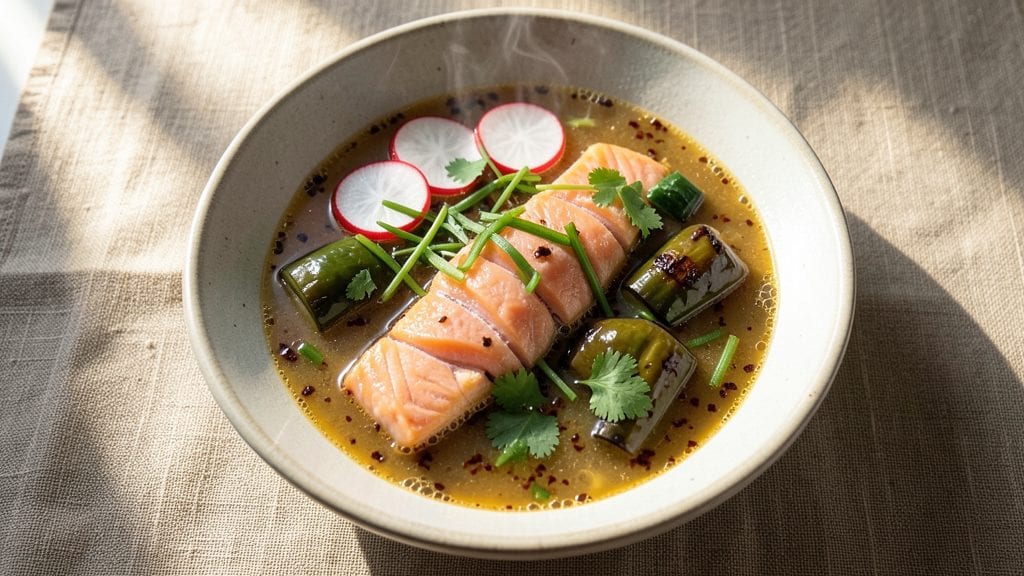
This Salmon Sinigang Soup Recipe brings the comforting tang of Filipino home cooking to your table, where tender salmon swims in a bright tamarind broth. The balance of sour, salty, and savory flavors transforms simple ingredients into a restaurant-worthy dish.
I’ve perfected this recipe over years of testing, ensuring the broth stays vibrant and the fish remains flaky every time.
The foundation of sinigang lies in its tangy broth, made from tamarind blocks, fish stock, and a touch of salted shrimp paste for depth. Vegetables like radish, eggplant, and spinach cook quickly in the simmering broth, absorbing its bold flavors.
The salmon adds a delicate sweetness that contrasts beautifully with the sour notes, creating a harmonious bite.
What makes this recipe special is its simplicity—just a few key ingredients transform into a meal that’s both hearty and refreshing. The tamarind broth infuses the vegetables with a lively sourness, while the salmon’s flaky texture melts in your mouth.
This is comfort food at its finest, perfect for chilly evenings or when you crave a taste of home.
Serve it with steamed rice to soak up every drop of that flavorful broth, or enjoy it as-is with a side of crusty bread. The beauty of sinigang is its adaptability—swap in your favorite vegetables or proteins, but never skip the tamarind. Let’s get cooking!
Ingredients for salmon sinigang soup
Simple ingredients that pack a punch of tangy, savory Filipino comfort in every spoonful.
| Ingredient | Amount | Notes |
|---|---|---|
| Fresh Salmon Fillets 🐟 | 1 ½ lb | Skin-on, boneless, cut into chunks |
| Tamarind Blocks 🍈 | 2 whole | Or 1 cup tamarind paste |
| Fish Stock 💧 | 4 cups | Homemade or quality store-bought |
| Salted Shrimp Paste (Bagoong) 🦐 | 1 tbsp | Or substitute with shrimp paste |
| Radishes 🥕 | 1 lb | Whole, cut into wedges |
| Eggplant 🍆 | 1 lb | Cut into bite-sized chunks |
| Baby Spinach 🌿 | 4 cups | Packed, loosely measured |
| Green Onions 🧅 | ½ cup | Sliced, for garnish |
| Garlic Cloves 🧄 | 6 cloves | Minced for broth |
| Lime Juice 🍋 | ¼ cup | Freshly squeezed |
| Fish Sauce 💧 | 1 tbsp | Red Boat preferred |
| Salt 🧂 | 1 ½ tsp | Adjust to taste |
| White Pepper 🌶️ | ½ tsp | Freshly ground preferred |
| Steamed Jasmine Rice 🍚 | 2 cups | Cooked, for serving |
The tamarind blocks are the soul of this soup—look for soft, pliable blocks at Asian markets or Latin grocery stores. Trader Joe's carries them too, but check the expiration date. If you can't find blocks, tamarind paste works in a pinch, though the texture might be slightly different. The fish stock should be rich and flavorful—homemade is ideal, but store-bought brands like Pacific Foods work fine. For the salted shrimp paste, bagoong isam is traditional, but any shrimp paste will do. The salmon? Fresh is non-negotiable here—ask your fishmonger for fillets with good marbling for extra flavor.
No tamarind? Substitute with 1/4 cup lime juice plus 1 tbsp vinegar—it won’t be identical, but close. Running low on radishes? Daikon radish or even cucumber slices work in a bind. The eggplant can be swapped for zucchini or okra if you prefer. For extra depth, add 1 tbsp of soy sauce to the broth. The fish sauce is key—Red Boat is my go-to, but any good-quality brand will do. If you’re using pre-minced garlic, toast it first in oil to deepen the flavor. The lime juice should be freshly squeezed—bottled juice lacks brightness.
This soup tastes even better the next day as the flavors meld. Store leftovers in the fridge for 3-4 days, or freeze for up to 3 months. I like to portion it into containers so I can reheat just what I need. The broth reduces slightly when refrigerated, so add a splash of water when reheating. Serve with extra lime wedges—they’re perfect for balancing the tang. The rice soaks up all that delicious broth, so make extra if you’re hungry!
Why You'll Love This Recipe
- I’ll be real: my first batch of sinigang was almost too good to reheat. But here’s the secret—it actually gets richer overnight. The next day, I just add a splash of water, and boom: still ridiculously good, still budget-friendly, and still the star of my lunch. No sad, rubbery leftovers here.
- One-Pot Magic: I swear by this recipe when I’m too tired to wash a million dishes—just toss everything into one pot, simmer, and walk away. The tamarind and bagoong do all the heavy lifting while the radishes add that satisfying crunch without extra effort.
- Tamarind Tang Perfection: That first sip? Chef’s kiss. The tamarind’s bright, sour punch balances the richness of the salmon and fish stock, while the bagoong adds this umami depth that makes it impossible to stop slurping. Honestly, it’s the kind of flavor that makes you forget it’s “just soup.”
- Weeknight Crowd-Pleaser: Between us, this is my go-to when friends drop by unannounced or the kids beg for something hearty. The salmon feels special but costs less than steak, and the radishes stretch it into a full meal—no one leaves hungry, and no one asks what’s for dinner next time.
Step-by-step instructions for salmon sinigang soup
Here's how to create a restaurant-quality tamarind broth with perfectly flaky salmon every time.
Prepare the Tangy Tamarind Broth
In a large pot, combine the 4 cups fish stock, 2 whole tamarind blocks, 6 cloves minced garlic, and 1 tablespoon salted shrimp paste (bagoong). Bring to a boil over medium-high heat, then immediately reduce to a simmer for 15 minutes. This lets the tamarind's natural tang develop fully while infusing the broth with aromatic depth.
Here's the thing—don't rush this step. You'll notice the tamarind softens and releases its juices into the broth, creating that signature sour-sweet balance. Strain out the tamarind blocks and garlic after simmering, pressing gently to extract every last drop of flavor. Keep the broth warm over low heat while you prepare the remaining ingredients.
Cook the Vegetables and Salmon
Add the 1 pound radishes (cut into wedges) and 1 pound eggplant (cut into bite-sized chunks) to the simmering broth. Cook for 8-10 minutes until the radishes are tender but still hold their shape and the eggplant is just beginning to soften. You're aiming for vegetables that stay slightly crisp—this prevents a mushy texture in your finished soup.
While the vegetables cook, season the 1.5 pound fresh salmon fillets (cut into chunks) with 1.5 teaspoons salt and 0.5 teaspoon white pepper. Gently add the salmon to the pot and cook for 4-5 minutes until it reaches an internal temperature of 145°F and becomes flaky when tested with a fork. The skin-on pieces will add extra richness to the broth.
Finish with Spinach and Lime
Stir in the 4 cups baby spinach and cook for just 1-2 minutes until wilted but still vibrant green. This quick cooking preserves the spinach's nutrients and bright color. Remove the pot from heat and let it sit for 2 minutes—this resting period allows all the flavors to meld together beautifully.
Finish by stirring in the 0.25 cup lime juice and 1 tablespoon fish sauce. Taste and adjust seasoning—you might need a touch more fish sauce for saltiness or lime juice for acidity. The broth should be tangy, savory, and perfectly balanced. Ladle the hot soup over 2 cups steamed jasmine rice and garnish with 0.5 cup sliced green onions for freshness and color.
Serve Immediately for Maximum Flakiness
Serve the salmon sinigang soup right away while the salmon remains tender and flaky. The tamarind broth will continue to infuse the rice with its signature tang as you eat, creating a harmonious blend of textures and flavors in every spoonful.
Real talk: If you notice the salmon starting to break apart too much after sitting, simply reheat it gently in the broth for 1-2 minutes before serving. This technique ensures you get that perfect flaky texture that makes this dish so special.
Pro Tips For Making Salmon Sinigang Soup
- Simmer Tamarind Slowly: Skip the rush—soak the tamarind blocks in warm water for 30 minutes first, then simmer them on low heat for at least 15 minutes. I learned this the hard way: high heat makes the soup bitter fast, and you’ll regret it when the tang turns harsh instead of bright.
- Skin Salmon Properly: Pat the fillets bone-dry with paper towels before searing—wet skin won’t crisp, and you’ll end up with sad, soggy edges. Flip once, resist the urge to poke, and cook just 3-4 minutes per side until the skin pulls away easily. (Yes, even if you’re impatient like me.)
- Toast the Bagoong: Bloom the shrimp paste in a dry pan for 30 seconds until fragrant—this deepens its umami without burning. Skip this, and your soup will taste flat, like someone forgot the seasoning. (Your future self will notice.)
- Add Radishes Last: Toss the radishes in after the salmon’s done cooking—just 2-3 minutes max. Overcook them, and they’ll turn mushy, ruining the texture. Cold slices? Even better. (I know, I know, but trust the process.)
Wine and beer pairings for this dish
Filipino White Wine Pairings
Sinigang’s bright, tangy tamarind broth pairs beautifully with crisp, acidic white wines from the Philippines. Try Petillante wine from Lambayog Vineyards—its effervescent quality mirrors the soup’s lively broth and cleanses your palate between bites. The natural sweetness in these wines also balances the dish’s sour notes. 🍷
For a more traditional approach, opt for Lambayog’s White Blend, which combines local grape varieties with a touch of citrus. Its bright acidity complements the tamarind without overpowering the delicate salmon flavor. Serve slightly chilled to enhance the refreshing contrast between the warm soup and cool wine.
Light Beer Complements
A light, crisp Filipino lager like San Miguel Light is my go-to pairing for sinigang. Its subtle malt sweetness and mild hop bitterness harmonize with the broth’s tang while letting the salmon’s natural flavor shine. The carbonation also helps cut through the richness of the dish.
For a craft beer option, try a Filipino wheat beer like Lagunitas DayTime (available in the Philippines). Its citrusy notes and light body echo the lime finish in the soup while adding a refreshing twist. Avoid heavy IPAs—they’ll clash with the delicate flavors.
Non-Alcoholic Refreshers
For a non-alcoholic pairing, serve calamansi juice (Filipino lime) mixed with sparkling water. The tartness enhances the tamarind’s sourness, while the bubbles keep the palate fresh. Add a pinch of salt to mimic the soup’s umami depth.
Another great option is hibiscus iced tea (tsokolate)—its natural tartness and floral notes complement the salmon’s sweetness. Serve it cold to contrast the warm soup. Both options are widely available at Filipino markets or can be made at home with simple ingredients. 💧
Nutrition facts
Frequently asked questions
Can I substitute tamarind blocks with something else?
Yes! If you can't find tamarind blocks, use 1/4 cup lime juice plus 1 tablespoon vinegar for a similar tang. For a deeper flavor, try 1 tablespoon tamarind paste mixed with 2 tablespoons water. The texture won't be identical, but it'll work in a pinch.
How do I keep the salmon from turning rubbery?
Cook the salmon for only 4-5 minutes in the broth—it should reach 145°F internally. Remove it as soon as it flakes easily with a fork. Overcooking is the #1 cause of rubbery fish. If reheating leftovers, warm gently for 1-2 minutes to restore flakiness.
What vegetables can I swap in for radish and eggplant?
Try daikon radish or cucumber slices instead of radish. For eggplant, use zucchini, okra, or string beans. Keep portions similar to maintain balance. The key is using vegetables that hold their shape well in broth.
Can I make this soup ahead of time?
Store leftovers in the fridge for 3-4 days or freeze for up to 3 months. The flavors actually improve overnight as the tamarind's tang develops. When reheating, add a splash of water to restore broth consistency. The salmon will be even more tender after resting.
Why does my broth taste too sour?
Balance the tang by adding 1 tablespoon fish sauce or 1 teaspoon sugar to mellow the acidity. The broth should taste both sour and savory. If using tamarind paste, reduce to 1/2 cup (or less) to control sourness. Taste as you go—you can always add more fish sauce or lime later.