
Soups & Stews
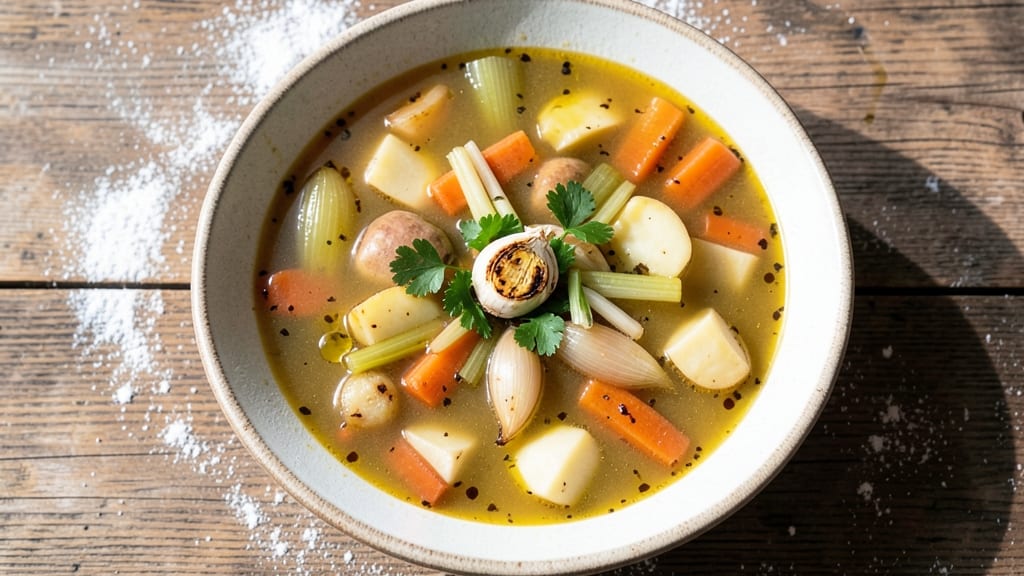
This root veg soup recipe transforms humble winter vegetables into a velvety, caramelized masterpiece that warms both body and soul. The secret lies in slow-cooked aromatics and perfectly balanced sweetness from caramelized onions, creating a depth that elevates simple ingredients.
I developed this after years of testing—each batch reveals how proper technique transforms ordinary roots into something extraordinary.
The foundation begins with sautéing onions until deep golden, then building layers of flavor through celery, carrots, and garlic. A splash of white wine deglazes the pot, infusing the broth with brightness before adding potatoes, parsnips, and turnips for hearty texture.
The soup simmers until vegetables are tender yet retain their shape, ensuring every spoonful delivers both creaminess and satisfying bite.
What sets this recipe apart is the optional caramelized crunch—tossing roasted root vegetables into each bowl adds texture contrast that makes it irresistible. The broth reduces to perfect consistency, rich with umami from vegetable stock and a touch of thyme.
This is comfort food at its finest: nourishing, adaptable, and packed with earthy satisfaction that lingers long after the last bite.
Serve with crusty bread to soak up every last drop, or pair with a simple green salad for balance. The recipe scales effortlessly for crowds, and leftovers reheat beautifully, making it ideal for meal prep.
Whether you're feeding a family or treating yourself, this soup delivers restaurant-quality warmth in your own kitchen.
Ingredients for root veg soup
Earthy vegetables and slow-cooked aromatics create this velvety root soup masterpiece.
| Ingredient | Amount | Notes |
|---|---|---|
| Yellow Onions 🧅 | 2 whole | Thinly sliced for caramelization |
| Celery Stalks 🥬 | 3 whole | Diced, includes leafy tops |
| Carrots 🥕 | 3 whole | Medium, peeled and chopped |
| Garlic Cloves 🧄 | 4 cloves | Minced, fresh preferred |
| Russet Potatoes 🥔 | 1 ½ lb | Peeled, cubed evenly |
| Parsnips 🥕 | 1 lb | Peeled, cut into chunks |
| Turnips 🥬 | 1 lb | Peeled, cubed |
| Vegetable Stock 💧 | 4 cups | Low-sodium preferred |
| Dry White Wine 🍷 | ½ cup | Sauvignon Blanc recommended |
| Fresh Thyme 🌿 | 2 tbsp | Leaves only, chopped |
| Extra-Virgin Olive Oil 🫒 | ½ cup | For sautéing aromatics |
| Salt 🧂 | 1 ½ tsp | Diamond Crystal preferred |
| Black Peppercorns 🌶️ | ½ tsp | Freshly cracked |
| Heavy Cream 🥛 | ½ cup | Full-fat for richness |
| Crusty Bread 🍞 | 4 slices | For serving, optional |
The foundation begins with yellow onions—sauté them until deep golden for that caramelized sweetness that elevates everything. Celery and carrots should be fresh with vibrant color; Whole Foods or local farmers markets offer the best quality. Garlic cloves must be freshly minced (pre-minced loses potency). For the root vegetables, Russet potatoes and parsnips should be firm with no soft spots, while turnips add a subtle peppery note. Vegetable stock forms the heart of the soup—low-sodium versions prevent over-salting, and homemade stock delivers superior depth. White wine should be dry (like Sauvignon Blanc) to balance the earthiness without overpowering.
No white wine? Dry vermouth or extra vegetable stock works in a pinch. Fresh thyme is ideal, but dried thyme at one-third the amount suffices if needed. For the olive oil, California extra-virgin brands like Corto or Pompeian provide the best flavor profile. Heavy cream can be swapped for coconut milk for a dairy-free version, though texture will differ. The salt should be Diamond Crystal kosher—its flaky texture dissolves perfectly without graininess. Black peppercorns must be freshly cracked; pre-ground loses its aromatic punch within weeks.
This soup reheats beautifully—gentle heat on the stove preserves its velvety texture. Store in an airtight container for up to 5 days in the fridge or 3 months frozen. The crusty bread pairs perfectly; sourdough or baguette slices toasted with garlic butter complete the meal. For meal prep, assemble the soup without cream, then stir in just before serving to maintain its luxurious mouthfeel.
Why You'll Love This Recipe
- One-Pot Magic: I swear by this soup—just toss everything (onions, celery, carrots, potatoes) into one pot with broth and let it simmer. No chopping boards to clean, no extra pans, just pure, satisfying simplicity.
- Garlic-Caramel Bliss: That moment when the potatoes soften into creamy perfection while the carrots hold their sweet, bite-sized edge? Add a splash of apple cider vinegar at the end, and you’ve got a balance of rich, tangy, and homey that’ll have you licking the spoon.
- Lunchbox Hero: Between us, this soup is my go-to for meal prep. It reheats beautifully, keeps for days in the fridge, and actually tastes better the next day—especially when I sneak in a handful of leftover greens or a spoonful of yogurt for extra creaminess.
- Pantry Staple Savior: Honestly, I make this when I’m low on groceries or just don’t feel like hauling bags home. Onions, carrots, potatoes? Those are the kind of ingredients that don’t go bad, and this recipe turns them into something hearty enough to feed my whole family without breaking the bank.
Step-by-step instructions for root vegetable soup
Transform humble root vegetables into a velvety, deeply flavorful soup with caramelized depth and creamy richness.
Develop the Aromatic Base
Heat the 0.5 cup extra-virgin olive oil in a large Dutch oven over medium-low heat. Add the 2 whole yellow onions, sliced thinly for even caramelization, and cook for 10 minutes until they soften and begin to turn golden. Here's the thing—patience matters. You want them to develop sweetness, not burn.
Add the 3 whole celery stalks, diced including leafy tops, and the 3 whole carrots, peeled and chopped into ½-inch pieces. Stir occasionally for 8-10 minutes until the vegetables soften and release their natural juices. The mixture should smell intensely aromatic, like a forest floor after rain. This foundational step builds the soup's complex flavor profile.
Build Depth with Wine and Stock
Increase heat to medium-high and add the 4 cloves minced garlic. Stir for 30 seconds until fragrant—don't let it brown, or it will turn bitter. Immediately pour in the 0.5 cup dry white wine, scraping up any browned bits from the bottom of the pot. This deglazing step captures all the caramelized flavors you've built.
Add the 4 cups vegetable stock and bring to a gentle simmer. Stir in the 1.5 tsp salt and 0.5 tsp freshly cracked black peppercorns, then add the 2 tbsp chopped fresh thyme. This is where the soup's earthy character begins to develop. Let it simmer uncovered for 15 minutes to allow the flavors to meld and the liquid to reduce slightly.
Cook the Root Vegetables to Tenderness
Add the 1.5 lb peeled and cubed russet potatoes, 1 lb peeled and chunked parsnips, and 1 lb peeled and cubed turnips to the simmering liquid. The potatoes should be cut into 1-inch cubes for even cooking. Return to a gentle simmer and cook uncovered for 20-25 minutes, stirring occasionally, until all vegetables are fork-tender.
I check for doneness by piercing the largest potato piece with a fork—it should slide in easily with just slight resistance. If the soup appears too thick at this stage, add ½ cup hot water to achieve the proper consistency. The vegetables should be soft but still hold their shape, not mushy, to maintain texture in the finished soup.
Finish with Cream and Garnish
Reduce heat to low and stir in the 0.5 cup heavy cream. Simmer gently for 2-3 minutes until the cream is fully incorporated and the soup reaches a luxurious, velvety texture. Taste and adjust seasoning—you may need a pinch more salt or pepper to balance the cream's richness against the earthy vegetables.
Ladle the soup into bowls and serve immediately with the 4 slices crusty bread on the side. The contrast between the warm, creamy soup and the crisp bread creates the perfect textural experience. For an elegant touch, garnish each serving with a sprinkle of fresh thyme leaves and a drizzle of extra-virgin olive oil.
Pro Tips For Making Root Veg Soup
- SWIM THE POTATOES: Cut Russets into 1-inch chunks—not thin slices—and add them last. They’ll absorb too much liquid if you cook them too long, turning your soup into a watery mess. I learned this the hard way after serving a batch where the potatoes dissolved into mush.
- CHAR THE ONIONS: Walk away from the pan after 5 minutes of cooking onions and celery—you’re not done until they’re deep golden, almost sticky. That’s when the flavors actually meld. I used to rush it, and the soup always tasted flat.
- PEEL GARLIC WRONG: Smash the garlic cloves with the flat of your knife before adding them to the pot. No peeling needed—it’ll soften and infuse flavor faster. (Yes, even if you’re impatient like me.)
- SALT THE WATER: Add 1 teaspoon of salt to the pot before boiling the veggies. It seasons them from the start and keeps the soup from tasting bland even if you forget to salt at the end. My grandmother swore by this, and she was right.
Regional styles of these flavors
French Rustic Style
In France, root vegetable soups often feature butternut squash and leeks alongside traditional roots. I swap the turnips for 1 lb cubed butternut squash and add 2 large leeks, sliced thinly and sautéed with the onions.
A splash of dry vermouth replaces the wine, and the soup finishes with a touch of crème fraîche instead of heavy cream for a lighter texture. 🥕
German Hearty Tradition
German versions of this soup, like Kartoffelsuppe, focus on potatoes and rutabaga with a smoky depth. I replace the parsnips with 1 lb peeled and cubed rutabaga and add 1 smoked sausage (like Thüringer Rostbratwurst), sliced and cooked with the aromatics.
A bay leaf and a pinch of nutmeg elevate the flavor, while a dollop of sour cream adds tangy contrast. 🌶️
Italian Creamy Twist
Italian cooks often transform root soups into creamy minestroni with a touch of Parmigiano-Reggiano. I blend ½ cup of the cooked vegetables (like potatoes and carrots) directly into the soup for a velvety texture, then stir in ½ cup grated Parmigiano at the end.
A handful of wilted spinach adds freshness, and a drizzle of truffle oil before serving takes it to gourmet levels. 🧀
British Comfort Classic
The British version, often called root vegetable stew, skips the cream and relies on roasted root vegetables for texture. I roast 1 lb mixed root vegetables (carrots, parsnips, turnips) at 400°F for 25 minutes before adding them to the simmering broth.
A splash of apple cider vinegar brightens the flavors, and the soup finishes with a sprinkle of fresh parsley. Serve with crusty sourdough for dipping. 🍎
Middle Eastern Spiced Version
For a Middle Eastern twist, I add ground cumin and coriander to the sautéed aromatics, along with 1 tsp harissa paste for heat. The soup includes 1 diced sweet potato and finishes with a swirl of yogurt and a sprinkle of toasted pine nuts.
A squeeze of lemon juice before serving balances the richness with bright acidity. 🌿
American Modern Adaptation
Modern American versions often incorporate sweet potatoes and ginger for a sweet-spicy kick. I add 1 lb peeled and cubed sweet potato with the other roots and infuse the broth with 1-inch fresh ginger, grated.
A drizzle of honey at the end adds depth, and the soup pairs perfectly with cornbread for a Southern-inspired meal. 🍯
Nutrition facts
Frequently asked questions
Can I make this root vegetable soup without wine?
Replace the 0.5 cup dry white wine with ½ cup extra vegetable stock or ½ cup apple cider for a non-alcoholic version. The acidity helps balance flavors, so if using stock, add 1 tsp lemon juice to brighten the broth. The soup will still develop rich, caramelized depth without wine.
How do I adjust the soup for a vegan diet?
Swap the heavy cream for ½ cup full-fat coconut milk or ½ cup cashew cream (blend soaked cashews with water). Use vegetable stock and ensure your thyme and other seasonings are vegan. For extra richness, stir in 1 tbsp nutritional yeast at the end. The texture will be slightly different but still hearty and satisfying!
Why did my soup turn out too thin?
This usually happens when root vegetables release too much liquid while cooking. Simmer uncovered for 10-15 minutes at the end to reduce the broth, or mash ½ cup of the cooked potatoes to thicken naturally. If needed, blend ½ cup of the soup and stir it back in—this creates a velvety consistency without adding extra liquid.
What's the best way to store leftovers?
Let the soup cool completely, then transfer to an airtight container. Store in the fridge for up to 5 days or freeze for 3 months. To reheat, warm gently on the stove over low heat and stir in a splash of water or stock if it thickens too much. The flavors actually improve after resting overnight!
Can I use frozen root vegetables?
Fresh is ideal for texture, but frozen works in a pinch. Thaw and drain excess water before adding to the pot. Frozen vegetables may release more liquid, so you might need to simmer uncovered for 5-10 extra minutes to achieve the right consistency. For best results, use frozen vegetables that haven't been pre-cooked or seasoned.