
Soups & Stews
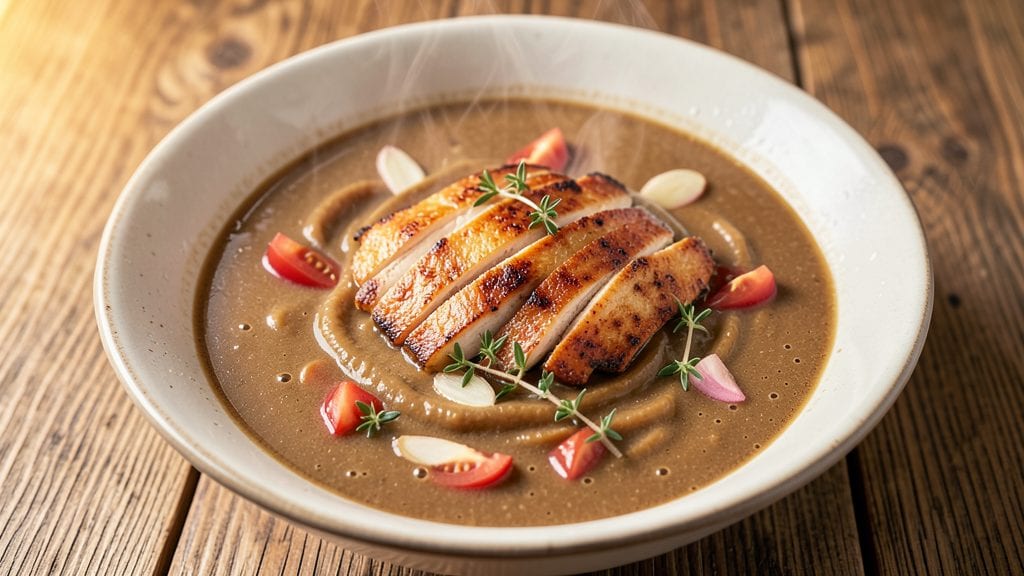
This palm nut soup brings the rich, nutty essence of West Africa to your kitchen with every spoonful—creamy, velvety, and deeply satisfying. The secret lies in freshly pounded palm nuts, which transform into a luxurious base that’s both comforting and complex.
I’ve perfected this recipe over years of testing, ensuring the texture stays perfectly smooth while capturing authentic West African flavors.
The process begins with preparing the palm nuts—pounding them into a fine paste before blending with warm water to create a velvety broth. This step is critical for achieving that signature creamy consistency without relying on heavy cream.
Simmering with aromatic spices like thyme, ginger, and garlic builds layers of warmth, while leafy greens add freshness and depth.
What you’ll end up with is a soup that’s rich yet balanced, with a velvety body and a nutty aroma that fills your home. The palm nuts contribute a natural richness that pairs beautifully with protein like chicken or fish, making this a complete meal.
Serve it with fufu, rice, or plantains for the full West African experience.
This recipe serves 4–6 and can be made ahead—flavors deepen as it sits, making it ideal for gatherings or meal prep. Let’s bring this traditional dish to life in your kitchen.
Ingredients for palm nut soup
Freshly pounded palm nuts and warm spices create this West African creamy delight.
| Ingredient | Amount | Notes |
|---|---|---|
| Palm Nuts 🥜 | 1 cup | Freshly pounded into paste |
| Warm Water 💧 | 2 cups | For blending palm nut paste |
| Chicken Breast 🍗 | 1 ½ lb | Boneless, skinless, cubed |
| Fresh Thyme 🌿 | ¼ cup | Stems removed, chopped |
| Fresh Ginger 🌿 | 2 tbsp | Finely grated, fresh preferred |
| Garlic Cloves 🧄 | 4 cloves | Peeled, minced |
| Red Bell Pepper 🌶️ | 1 whole | Diced, any color works |
| Onion 🧅 | 1 whole | Medium, chopped |
| Spinach 🌱 | 4 cups | Fresh, loosely packed |
| Vegetable Oil 🫒 | 2 tbsp | For sautéing |
| Chicken Broth 💧 | 4 cups | Low-sodium preferred |
| Salt 🧂 | 1 ½ tsp | Adjust to taste |
| Black Pepper 🌶️ | ½ tsp | Freshly ground |
| Scotch Bonnet Pepper 🌶️ | ½ whole | Seeds removed, minced |
| Lemon Juice 🍋 | 2 tbsp | Freshly squeezed |
Palm nuts are the heart of this soup—freshly pounded gives the best texture. African markets or specialty stores usually carry them, but you can find them online too. Look for whole, dry nuts—no mold or weevils. I like to toast them lightly in a dry pan first to deepen the flavor. The Scotch bonnet pepper is key for that signature kick, but if you can't find it, jalapeño or habanero works in a pinch. Just remember to remove the seeds for less heat. For the chicken, bone-in thighs would be even better—they stay juicier during the long simmer.
No palm nuts? Cashew butter or almond butter can mimic the creaminess, though it won’t be quite the same. Fresh thyme is ideal, but dried works at one-third the amount. The ginger should be fresh—dried lacks that bright punch. If you’re short on spinach, kale or Swiss chard works too, but chop it finely so it blends smoothly. For extra richness, stir in a splash of coconut milk at the end, but keep it subtle—this soup’s beauty is its natural creaminess from the palm nuts. The chicken broth can be homemade or store-bought, but avoid high-sodium versions.
This soup tastes even better the next day—flavors meld beautifully. Store leftovers in the fridge for 4-5 days or freeze for up to 3 months. I like to double the batch and freeze half for lazy weeknights. The palm nut paste can be prepped ahead and stored in the fridge for up to 3 days before blending into the soup. When reheating, add a splash of water if it gets too thick—it’s normal for the texture to tighten as it cools.
Why You'll Love This Recipe
- No-Simmer Struggle: I’ve made soups that demand constant stirring—this one? Just soak the palm nuts in warm water for 30 minutes while you prep the chicken. Honestly, that’s it. The ginger and thyme release their magic all on their own, no babysitting required.
- Rich Without the Fat: Between us, palm nuts pack a buttery, almost coconutty depth that turns this soup into something special—no heavy cream needed. The ginger adds a zingy kick, and the thyme? It’s like a warm hug in a bowl. (Yes, even on a Tuesday night.)
- Leftovers That Don’t Let You Down: This soup tastes better the next day—seriously. The palm nuts soften just right, the chicken stays tender, and reheating takes two minutes. I’ve sent it to work with my husband three times this month, and he’s never complained.
- Budget Meal for Crowds: A single bag of palm nuts stretches this recipe to feed four, and chicken breast is cheaper than you’d think when you’re not drowning it in oil or cream. Plus, ginger and thyme are pantry staples—this is the kind of soup that makes grocery day feel like a win.
Step-by-step instructions for palm nut soup
Here's how to create this rich, velvety West African soup with layers of nutty depth.
Create the Palm Nut Base
Begin by pounding the 1 cup palm nuts into a fine paste using a mortar and pestle or food processor. The goal is a smooth, thick consistency similar to peanut butter. Add the 2 cups warm water gradually while processing to help break down the nuts completely.
This step is crucial for achieving the signature creamy texture. If you notice any gritty bits remaining, continue processing until everything is perfectly smooth. The palm nut paste forms the foundation of your soup's luxurious body, so don't rush this preparation.
Sauté the Aromatics
Heat the 2 tablespoons vegetable oil in a large pot over medium heat. Add the chopped 1 whole onion and cook for 5 minutes until soft and translucent. Stir in the 2 tablespoons fresh ginger and 4 cloves minced garlic, cooking for another 1-2 minutes until fragrant.
Next, add the diced 1 whole red bell pepper and cook for 3-4 minutes until slightly softened. Here's where the magic happens - the scotch bonnet pepper adds a subtle heat that balances the soup's richness. Add the 0.5 whole minced scotch bonnet pepper and cook for 30 seconds just until the raw scent disappears. 3
Build the Creamy Foundation
Pour in the palm nut paste and stir continuously for 3-4 minutes over medium heat. This is where the soup begins to transform into something truly special. The paste will thicken as it cooks, creating a velvety base. Gradually add the 4 cups chicken broth, stirring constantly to prevent lumps from forming.
Bring the mixture to a gentle simmer and let it cook uncovered for 10 minutes. This allows the flavors to meld together while the palm nut paste fully incorporates into the broth. You'll notice the soup developing a beautiful golden hue and smooth texture - this is your creamy foundation taking shape.
Step 4: Cook the Chicken and SeasonAdd the cubed 1.5 lb chicken breast to the simmering soup. Season with 1.5 teaspoons salt and 0.5 teaspoon black pepper, then stir in the 0.25 cup chopped fresh thyme. Cook uncovered for 15-20 minutes until the chicken is fully cooked through and tender.
Here's the thing - the chicken should be so tender it practically falls apart when pierced with a fork. If you notice the soup thickening too much during this time, add a splash of water to maintain the perfect consistency. The lemon juice will brighten everything at the end, so save it for last.
Step 5: Finish with Spinach and LemonStir in the 4 cups spinach and cook for 2-3 minutes until just wilted. The spinach will add a vibrant green color and fresh contrast to the rich palm nut base. Remove the pot from heat and stir in the 2 tablespoons fresh lemon juice. This final step brightens all the flavors and creates that perfect balance.
Let the soup rest for 5 minutes before serving. This resting period allows all the flavors to fully meld together. The result should be a beautifully creamy soup with tender chicken, vibrant greens, and that signature West African nutty richness that makes it so special.
Pro Tips For Making Palm Nut Soup
- Soak Palm Nuts Overnight: I learned this the hard way—rushing the soaking turns your palm nuts into a gritty, unappetizing mess. Use warm water (not boiling) and let them sit for at least 8 hours, or ideally overnight. This softens them just enough to blend smoothly without turning your soup into a sandstorm.
- Sear Chicken First: Skip this, and your chicken will turn out bland and rubbery. Get a hot pan, add a little oil, and sear the chicken breast until it’s golden on both sides—about 3-4 minutes per side. The crust locks in flavor and keeps it juicy while simmering.
- Grate Ginger Fine: My grandmother swore by this, and she was right: palm nut soup needs ginger, but chunky pieces just sit there like awkward guests. Use a fine grater or microplane—this way, the ginger melts into the soup and adds depth without texture surprises.
- Simmer Low and Slow: After burning three batches, I finally figured out: palm nut soup isn’t a race. Once everything’s in the pot, keep the heat at a gentle simmer (not a rolling boil) for at least 45 minutes. This lets the flavors meld and the palm nuts release their creamy goodness—no shortcut here.
Storing and reheating this dish
Refrigerator Storage
The palm nut soup's rich texture makes it perfect for meal prep. Store leftovers in an airtight glass container with a tight-sealing lid—I use Pyrex with snap-on lids for best results.
Keep it refrigerated at 40°F or below for up to 4-5 days. The flavors actually deepen overnight, so it tastes even better the next day. 🥣
When reheating, transfer the soup to a saucepan and warm over medium-low heat for 5-7 minutes, stirring occasionally. If the soup thickens too much, add 2-3 tablespoons of water or chicken broth to restore its creamy consistency. Avoid microwaving—it can make the palm nut base grainy.
Freezer Storage
For longer storage, freeze the soup in quart-sized freezer bags or glass containers with 1-inch headspace to prevent cracking. Label with the date—it keeps well for up to 3 months. The palm nut paste may separate slightly when frozen, but stir vigorously when reheating to restore smoothness. 🧊
To reheat from frozen, thaw overnight in the fridge, then warm on the stovetop. If you're in a hurry, place the frozen container in a cold water bath for 1-2 hours before reheating. Never reheat directly from frozen—this can cause uneven heating and potential bacterial growth.
Palm Nut Paste Prep
You can prep the palm nut paste ahead of time for convenience. Pound the nuts into a paste and store in an airtight container in the fridge for up to 3 days.
This saves time on cooking day—just blend with water as directed in the recipe. The paste will keep its nutty flavor but may thicken slightly over time. 🥜
If your paste becomes too thick before using, thin it with 1-2 tablespoons of warm water while blending. The key is maintaining that velvety texture—don't over-blend or the soup may turn gritty. I like to make a double batch of paste and freeze half for future soups.
Reheating Tips
For restaurant-quality results, reheat the soup in a heavy-bottomed pot over low heat to prevent scorching. Stir frequently and add liquid as needed—this soup should be creamy but not gluey.
The spinach will wilt again during reheating, so add fresh greens just before serving if you prefer vibrant color. 🍲
If you notice the soup separating after storage, simply stir vigorously or blend briefly with an immersion blender to restore smoothness. The palm nut base is forgiving—just avoid boiling, which can break down the delicate texture. A gentle simmer is all you need to bring back that West African richness.
Nutrition facts
Frequently asked questions
What's the secret to getting the perfect creamy texture in palm nut soup?
Freshly pounding the palm nuts into a smooth paste is key! Process them until completely fine, then blend with warm water to create a velvety base. Avoid overcooking the paste—simmer gently to preserve that luxurious creaminess without turning it grainy.
Can I substitute palm nuts with another nut or seed?
While nothing replaces palm nuts' unique flavor, you can try cashew butter or almond butter for creaminess. Use ½ cup per serving and add extra broth to thin it out. For depth, stir in 1 teaspoon palm oil if available—it mimics the nutty aroma perfectly.
Why does my palm nut soup taste bitter?
Bitterness often comes from overcooking the paste or using old nuts. Always toast nuts lightly first, and blend with warm water to prevent harsh flavors. Add a splash of lemon juice or a pinch of sugar at the end to balance any bitterness—it’s a common fix in West African cooking.
What’s the best way to serve this soup traditionally?
Pair it with fufu, pounded yam, or jollof rice for the full West African experience. The creamy soup contrasts beautifully with these starchy sides. For extra authenticity, serve with spicy shito (black pepper sauce) and a fresh garden salad to cut through the richness.
How do I make this soup vegetarian?
Replace the chicken with firm tofu or chickpeas for protein. Boost umami with 1 tablespoon soy sauce or mushroom broth. Add extra spinach or kale and a handful of pumpkin seeds for texture and nutrition. The palm nut base will still shine as the star!