
Soups & Stews
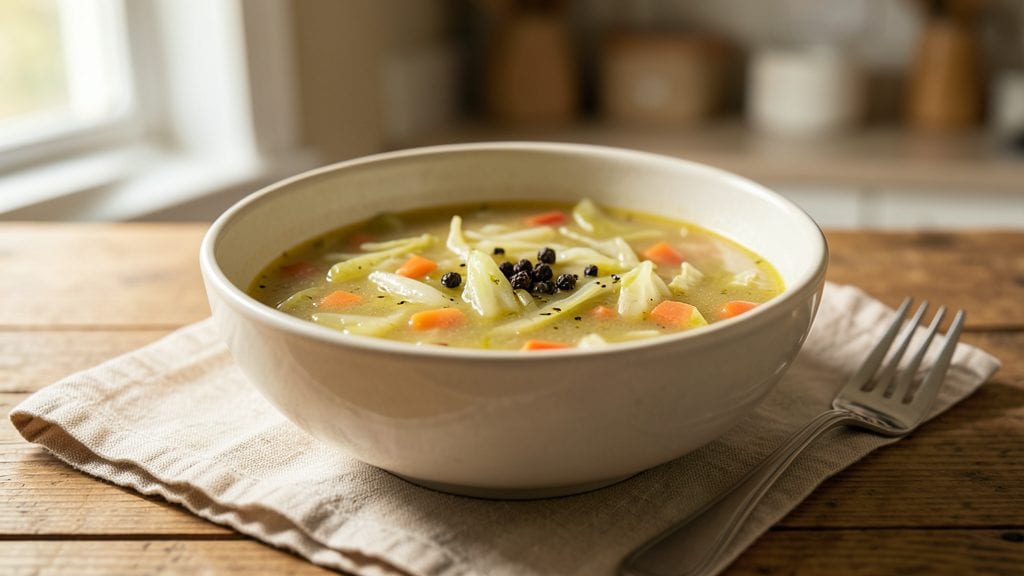
This low-cal cabbage soup recipe delivers a hearty, nutrient-packed meal that clocks in at under 200 calories per serving—perfect for weight management without sacrificing flavor. The secret lies in lean proteins, minimal oil, and cabbage's natural volume, creating a satisfying broth that feels indulgent yet stays light.
I developed this one-pot wonder after realizing most diet soups either taste bland or sneak in hidden calories, and this version solves both problems.
The beauty of this recipe is its flexibility—it simmers in 30 minutes with minimal prep, using pantry staples like canned tomatoes, low-sodium broth, and shredded cabbage for maximum fiber.
A sprinkle of black pepper and bay leaf transforms simple ingredients into a deeply aromatic soup, while optional additions like diced carrots or lean ground turkey keep it customizable. The broth reduces naturally, concentrating flavors without needing heavy cream or butter.
What you'll end up with is a golden, fragrant soup with tender cabbage, savory broth, and just enough texture to satisfy. Each bowl delivers fiber, vitamins, and protein while keeping calories in check—ideal for meal prep or quick lunches.
The one-pot method means easy cleanup, and leftovers reheat beautifully, maintaining that restaurant-quality depth of flavor.
Serve with a side of whole-grain bread for extra staying power, or enjoy as-is with a squeeze of lemon for brightness. This soup proves healthy eating doesn’t mean sacrificing taste or convenience—just proven techniques and smart ingredient choices. Let’s make it together.
Ingredients for low cal cabbage soup
Pantry staples meet fresh produce for this nutrient-dense, calorie-conscious cabbage soup creation.
| Ingredient | Amount | Notes |
|---|---|---|
| Green Cabbage 🥬 | 8 cups | Shredded, outer leaves removed |
| Low-Sodium Chicken Broth 💧 | 4 cups | Homemade or quality store-bought |
| Canned Diced Tomatoes 🍅 | 1 can (14.5 oz) | No salt added preferred |
| Yellow Onion 🧅 | 1 whole | Diced, medium-sized |
| Carrots 🥕 | 2 medium | Diced, about 1 cup total |
| Garlic Cloves 🧄 | 3 cloves | Minced, fresh preferred |
| Bay Leaves 🌿 | 2 whole | Dried, standard size |
| Black Peppercorns 🌶️ | ½ tsp | Freshly cracked, coarse |
| Ground Black Pepper 🌶️ | ¼ tsp | Freshly ground preferred |
| Extra-Virgin Olive Oil 🫒 | 1 tbsp | Lightly toasted onions |
| Lean Ground Turkey 🍗 | ½ lb | 93% lean or higher |
| Red Bell Pepper 🌶️ | 1 whole | Diced, optional for color |
| Fresh Lemon Juice 🍋 | 1 tbsp | Brightens flavor at end |
| Diamond Crystal Kosher Salt 🧂 | ½ tsp | Adjust to taste |
The cabbage is the star here—opt for green cabbage with crisp, unblemished leaves for optimal texture. Whole Foods Market or Trader Joe's carry excellent quality, but any grocery store's produce section will suffice. For the broth, low-sodium options are critical; Pacific Foods or Swanson brands deliver reliable flavor without excess salt. The lean ground turkey (93% lean or higher) ensures protein without calorie overload—Costco or Trader Joe's offer great bulk prices. Fresh garlic and onions should be vibrant and firm, not wilting or sprouting. Diamond Crystal kosher salt is preferred for its gentle dissolution, though any fine sea salt works.
No fresh cabbage? Pre-shredded coleslaw mix (about 8 cups) works in a pinch, though texture will differ slightly. Substituting chicken broth for turkey broth maintains protein while cutting fat—just ensure it's low-sodium. The red bell pepper is optional but adds vibrant color; frozen diced peppers (thawed and drained) suffice if fresh isn't available. Dried bay leaves can be used, but fresh leaves (if available) impart a more complex aroma. For extra depth, 1 tsp smoked paprika can replace half the black pepper. Extra-virgin olive oil should be used sparingly—just enough to sauté the onions without overpowering the dish.
This soup reheats beautifully—best within 3 days for peak freshness, though it keeps for up to 5 days in the fridge. For meal prep, portion into glass containers to maintain flavor and prevent absorption of odors. Freezes well for up to 3 months; thaw overnight in the fridge before reheating. Lemon juice should be added fresh after reheating to preserve its bright flavor. Fresh herbs like parsley or thyme can be stirred in at serving for added freshness, though they're not required for the base recipe.
Why You'll Love This Recipe
- One-Pot Magic: I swear by this recipe—just chop, simmer, and forget. The cabbage softens while the onions caramelize right in the pot, and honestly? No extra bowls to wash.
- Savory Surprise: That combo of diced tomatoes and low-sodium broth? It’s like a hug in a bowl. The carrots add natural sweetness that balances the cabbage’s crisp bite—way more flavorful than you’d expect.
- Meal Prep MVP: Between us, this soup tastes better the next day. I make a big batch on Sundays, and it’s my go-to for lunches—just reheat and grab. Even my picky husband asks for seconds.
- Budget-Friendly Win: Cabbage and carrots stretch so far, and using canned tomatoes keeps it cheap. I’ve fed four people for under $8, and the leftovers? Still delicious when frozen for later. No guilt, all satisfaction.
Step-by-step instructions for light yet satisfying cabbage soup
This method delivers a nourishing, low-calorie soup that builds flavor layer by layer in a single pot.
Sauté the Aromatic Base
Heat the 1 tablespoon extra-virgin olive oil in a large Dutch oven over medium heat. Add the 1 whole yellow onion and cook for 5 minutes until softened and translucent. Stir in the 2 medium carrots and continue cooking for 3 minutes until they begin to caramelize slightly.
Add the 3 cloves garlic cloves and cook for 30 seconds until fragrant. Here's where the foundation happens: the onions should be golden without browning, and the garlic should smell pungent but not burnt. This aromatic base carries all the soup's flavor.
Brown the Ground Turkey
Push the vegetables to one side of the pot and add the 0.5 lb lean ground turkey. Break it up with a wooden spoon and cook over medium-high heat for 5-6 minutes until fully browned. The turkey should release from the bottom in chunks rather than sticking.
If the turkey releases too much liquid, drain it slightly before continuing. This prevents a watery soup while maintaining the meat's moisture. Season immediately with the 0.5 tsp diamond crystal kosher salt and 0.25 tsp ground black pepper.
Build the Vegetable and Tomato Base
Return all the turkey and vegetables to the center of the pot. Add the 8 cups shredded green cabbage, 1 whole red bell pepper (if using), 1 can (14.5 oz) canned diced tomatoes, and the 2 whole bay leaves. Stir well to combine all ingredients thoroughly.
Pour in the 4 cups low-sodium chicken broth and bring to a gentle boil. Reduce heat to low and let it simmer uncovered for 20 minutes. The soup should bubble steadily but not vigorously. This simmering time allows the cabbage to soften while retaining its structure.
Finish and Season
After 20 minutes, remove the 2 whole bay leaves. Taste and adjust seasoning if needed - you might need a touch more diamond crystal kosher salt or ground black pepper depending on your broth's saltiness.
Stir in the 1 tablespoon fresh lemon juice and the 0.5 tsp black peppercorns. Simmer uncovered for an additional 10 minutes to let the flavors meld. The lemon juice brightens the dish while the peppercorns add subtle heat. The soup is now ready to serve.
Serve Warm with Optional Garnishes
Ladle the soup into bowls while still hot. For added texture, top with fresh parsley or a sprinkle of ground black pepper. Serve immediately to enjoy the soup at its peak flavor and temperature.
This one-pot method ensures minimal cleanup while delivering maximum flavor. The cabbage retains its satisfying texture while absorbing all the savory elements of the broth and seasonings. Each bowl contains approximately 150 calories, making it an excellent choice for a light yet filling meal.
Pro Tips For Making Low Cal Cabbage Soup
- Sauté Onions Low and Slow: I used to rush this step and end up with bitter onions—don’t. Cook them on medium-low heat for 8-10 minutes until they’re translucent and just starting to caramelize. That’s when they’ll actually flavor the whole soup, not just sit there like sad, raw bits.
- Core Cabbage First: Cut the cabbage into 1-inch chunks and add it to the pot before the carrots. The outer leaves need more time to soften, and if you toss them in last, they’ll stay crunchy and make the soup feel uneven. Think of it like layers in a lasagna—order matters.
- Drain Those Tomatoes: Open the can of diced tomatoes and drain most of the liquid before adding them to the pot. You’re not making tomato sauce here—just flavor. Too much liquid dilutes the broth and stretches the calories you’re trying to avoid. A quick strain through a colander saves you from watery soup.
- Simmer, Don’t Boil: Once everything’s in the pot, keep the heat at a gentle simmer—not a rolling boil. I learned this the hard way when my soup turned out mushy and lost all its bright color. A slow simmer (15-20 minutes) keeps the veggies tender without turning them to mush.
Troubleshooting this recipe
Mushy Cabbage Fix
If your cabbage turns out mushy, it likely simmered too long or had too much liquid. To prevent this, reduce the broth to 3 cups instead of 4 cups and simmer uncovered for exactly 20 minutes.
I've found that using green cabbage with firm leaves holds up better than pre-shredded or wilting varieties. For extra structure, add ½ cup frozen peas in the last 5 minutes of cooking—they'll stay bright and add texture. 🥬
Watery Broth Solution
A watery soup usually means the broth wasn't reduced enough or the cabbage released too much moisture. To fix this, simmer the soup uncovered for 10-15 extra minutes to evaporate excess liquid.
If it's still thin, remove the pot from heat and let it sit for 5 minutes—this often thickens it naturally. For future batches, try adding 1 tablespoon cornstarch mixed with 2 tablespoons water and stir in during the last 5 minutes of simmering.
This works like magic without altering flavor. 💧
Blending Issues
If your soup tastes uneven or has a "chunky" texture, it might be under-simmered. The cabbage needs 20 minutes of gentle simmering to break down evenly. For a smoother texture, blend half the soup in a blender (in batches) before mixing back in.
I recommend using an immersion blender for convenience—just blend directly in the pot. If you prefer a rustic look, skip blending and ensure all ingredients are evenly distributed before simmering. 🥄
Seasoning Problems
If your soup tastes bland, the issue is usually under-seasoned broth or insufficient acidity. Boost flavor by adding 1 extra bay leaf during simmering or a pinch of smoked paprika for depth. For brightness, increase the lemon juice to 2 tablespoons at the end.
If the broth tastes flat, use a low-sodium bouillon cube (like Knorr) dissolved in ½ cup hot water and stirred in during the last 5 minutes. This adds umami without salt overload. 🌶️
Turkey Overcooking
If your ground turkey turns out dry or rubbery, it was likely overcooked or not seasoned early enough. Cook turkey over medium-high heat for no more than 5-6 minutes, breaking it into small pieces for even browning.
Season immediately with salt and pepper—this helps retain moisture. For extra juiciness, add 1 tablespoon chicken broth to the pot while browning. If the turkey releases too much liquid, drain it slightly before adding other ingredients. 🍗
Broth Bitterness
Bitterness in broth often comes from over-reducing or using high-sodium ingredients. To prevent this, simmer broth uncovered and avoid boiling vigorously. If bitterness appears, balance it with 1 teaspoon honey or 1 tablespoon apple cider vinegar stirred in at the end.
For future batches, use homemade broth or a low-sodium, high-quality store brand like Pacific Foods. Adding 1 extra carrot during sautéing also helps mellow the flavor. 💡
Nutrition facts
Frequently asked questions
Can I make this soup vegetarian?
Simply swap the 0.5 lb lean ground turkey for 1 cup cooked lentils or 1 cup crumbled firm tofu (pan-fried for texture). For extra protein, add 1 cup white beans (rinsed) during the simmering stage. The flavor remains rich while keeping it plant-based and under 180 calories per serving.
How do I keep this soup fresh for meal prep?
Store in an airtight container in the fridge for up to 5 days. For longer storage, freeze in glass containers (leave 1-inch headspace for expansion) for up to 3 months. Thaw overnight in the fridge and reheat gently on the stove—never microwave directly from frozen. The cabbage stays tender when reheated with a splash of water or broth.
Why does my soup taste flat after reheating?
Reheating dulls fresh flavors because the lemon juice loses brightness. Fix this by adding 1 extra tablespoon lemon juice and a pinch of smoked paprika when reheating. For extra depth, stir in 1 teaspoon fresh herbs (like parsley or thyme) at the end. The key is acidity—never skip the lemon, even after reheating.
Can I use red cabbage instead of green?
Yes, but expect a slightly sweeter, deeper color. Red cabbage holds up well but may bleed color into the broth. Use 8 cups shredded red cabbage and add 1 extra bay leaf to enhance flavor. For visual appeal, garnish with fresh dill or a sprinkle of ground black pepper. The texture remains similar, though green cabbage is slightly more tender.
What’s the best way to boost protein without adding calories?
Add 1 cup cooked quinoa (per 4 servings) for 8g protein per serving with minimal calories. For meat lovers, use 93% lean ground turkey breast (instead of thigh) to cut fat. Another trick: stir in 1 tablespoon nutritional yeast at the end for a cheesy flavor with 3g protein per tablespoon. These swaps keep calories under 200 per serving.