
Main Courses
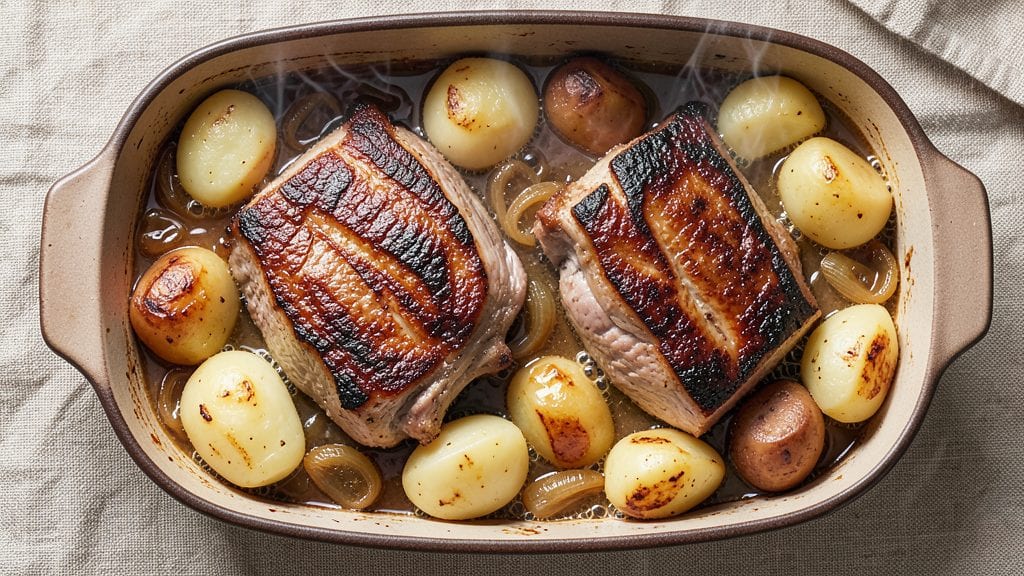
Transforming a simple weeknight dinner into something extraordinary starts with this Lipton Onion Soup Pork Chops and Potatoes recipe—where caramelized onions elevate everything they touch.
Growing up in small-town Georgia, I learned that pork's versatility could turn humble ingredients into a showstopping meal, and this one-pan wonder does just that.
The secret lies in balancing rich, savory flavors with the comforting depth of Lipton's onion soup mix, creating a dish that feels both nostalgic and refined.
This recipe delivers restaurant-quality results with minimal effort—pork chops sear to golden perfection while potatoes roast until crispy on the edges, all bathed in a velvety onion soup sauce that ties every component together.
The beauty of this method is its simplicity: one pan, 30 minutes of active time, and ingredients you likely already have on hand. No fancy techniques required, just precise timing and a few professional tricks I picked up apprenticing under Master Chef Chen.
The star of the show is the caramelized onion base, which builds layers of sweetness and depth that transform ordinary pork chops into something unforgettable. The potatoes develop a satisfying crunch, and the sauce—infused with the umami richness of Lipton's mix—becomes the perfect glue that holds everything together.
This is the kind of meal that turns a simple dinner into a memorable experience, where every bite tells a story of comfort and craftsmanship.
Perfect for feeding a family or impressing guests, this recipe scales beautifully while maintaining its balance of flavors. The pork chops stay tender, the potatoes crisp up just right, and the sauce remains rich without overpowering.
Whether you're cooking for a crowd or treating yourself to a special night in, this one-pan dinner delivers foolproof, restaurant-worthy results every time. Let's get started!
Ingredients for lipton onion soup pork chops and potatoes
Pantry staples meet restaurant-quality technique for this comforting Lipton onion soup pork chop dinner.
| Ingredient | Amount | Notes |
|---|---|---|
| Bone-In Pork Chops 🥩 | 4 whole | 1-inch thick, center-cut preferred |
| Yellow Onions 🧅 | 3 whole | Thinly sliced, about 3 cups |
| Russet Potatoes 🥔 | 2 lb | Cut into 1-inch chunks |
| Lipton Onion Soup Mix 🧂 | 2 tbsp | Granulated, not powdered |
| Unsalted Butter 🧈 | ½ cup | Cold, cubed for browning |
| Beef Broth 💧 | 1 cup | Low-sodium preferred |
| Heavy Cream 🥛 | ½ cup | Full-fat for richness |
| Extra-Virgin Olive Oil 🫒 | 2 tbsp | For potato tossing |
| Garlic Cloves 🧄 | 4 cloves | Minced, for caramelization |
| Fresh Thyme 🌿 | 1 tbsp | Chopped, or 1 tsp dried |
| Diamond Crystal Kosher Salt 🧂 | 1 ½ tsp | For seasoning |
| Ground Black Pepper 🌶️ | ½ tsp | Freshly cracked |
| Granulated Garlic 🧄 | ½ tsp | For potato seasoning |
| All-Purpose Flour 🌾 | 1 tbsp | For dredging pork chops |
The bone-in pork chops are non-negotiable here—they stay juicier longer, and the bone adds depth to the sauce. Look for center-cut chops with even thickness (about 1-inch) from Whole Foods or your local butcher; they'll hold up better to the long cooking time. Yellow onions should be sweet and firm, not sprouting or soft—Hatch or Vidalia varieties caramelize beautifully. The Russet potatoes need to be waxy for that perfect crispy exterior and fluffy interior; organic potatoes from Trader Joe's are my go-to for consistent results. Lipton Onion Soup Mix is the secret weapon—stick with the granulated version for even distribution in the sauce.
No Lipton Onion Soup Mix? Substitute 1 tbsp onion powder + 1 tsp beef bouillon for a similar umami punch, though you'll lose that signature tang. Heavy cream can be swapped for half-and-half (though the sauce will be slightly lighter), or Greek yogurt for a tangier twist. Running out of fresh thyme? Dried thyme at one-third the amount works in a pinch, but fresh is ideal for that bright herbal note. The beef broth should be low-sodium—Swanson or Kitchen Basics are reliable brands. For the potatoes, if you're short on time, frozen baby potatoes (thawed) work perfectly—they're pre-cut and ready to roast.
This dish reheats beautifully—350°F for 10 minutes restores all the magic. Store leftovers in an airtight container for up to 4 days in the fridge, though the pork chops taste best within 2 days. For longer storage, freeze the sauce separately—it keeps for 3 months and can be reheated with a splash of water or broth. The pork chops can be prepped ahead (dredged and refrigerated overnight), saving you time on cooking day. Always season the potatoes right before roasting—their crispiness depends on fresh salt.
Why You'll Love This Recipe
- One-Pan Magic: I swear by this for nights when I’d rather watch TV than scrub pots—just sear the pork chops, toss in diced potatoes and onions, sprinkle that Lipton mix with a splash of water, and let it bubble. The butter melts into everything, turning crispy edges into golden, caramelized perfection while I’m still scrolling my phone.
- Umami Bomb: That onion soup mix isn’t just seasoning—it’s the secret weapon. The pork chops soak up the rich, savory depth while the potatoes absorb the flavor like a sponge, especially when you brown them first. Honestly, the first bite has me reaching for seconds before I even sit down.
- Budget Crowd-Pleaser: Bone-in pork chops stretch further than you’d think, and russets are cheaper than fingerling varieties. A single bag of Lipton mix feeds four, and the leftovers? Even better reheated the next day—just a quick crisp in the oven turns them into crispy, comforting bites. My college roommates still joke about how I fed us all for under $15.
- Leftovers That Don’t Suck: Between us, most recipes turn sad the second day. Not this one. The pork stays juicy, the potatoes hold their shape, and the soup mix’s dried herbs keep everything tasting fresh. I’ll pack these for lunch or freeze portions—no sad, dry meat here. It’s the kind of meal that actually improves with a little time.
Step-by-step instructions for Lipton onion soup pork chops and potatoes
Here's the method: a one-pan wonder where caramelized onions elevate everything.
Prepare the Pork Chops for Maximum Flavor
Pat the 4 whole bone-in pork chops completely dry with paper towels, removing any surface moisture. This ensures a proper sear. Place them on a plate and season both sides generously with 1.5 teaspoons diamond crystal kosher salt and 0.5 teaspoon ground black pepper. Let them sit at room temperature for 15 minutes while you prepare the rest.
In a shallow dish, combine 1 tablespoon all-purpose flour with 0.5 teaspoon granulated garlic. Dredge each pork chop lightly in this mixture, shaking off any excess. This creates a delicate crust that locks in juices while adding depth of flavor. The flour will develop a golden crust when seared, forming the foundation of our rich sauce.
Build the Caramelized Onion Base
Heat 2 tablespoons extra-virgin olive oil in a large Dutch oven over medium heat. Add 3 whole yellow onions, sliced thinly, and cook for 10 minutes without stirring. This initial undisturbed cooking allows the onions to release moisture and begin caramelizing.
After 10 minutes, stir the onions and reduce heat to medium-low. Cook for another 15-20 minutes, stirring occasionally, until they develop a deep golden-brown color with sweet, jammy consistency. This is where the magic happens—the caramelization creates complex flavors that will permeate every component of your meal.
Add 4 minced garlic cloves and 1 tablespoon fresh thyme, cooking for 30 seconds until fragrant. Immediately sprinkle with 2 tablespoons lipton onion soup mix and stir vigorously for 1 minute to toast the spices and enhance their aroma. This step amplifies the savory depth of your dish.
Sear the Pork Chops and Potatoes
Increase heat to medium-high and add 0.5 cup unsalted butter to the Dutch oven. Once the butter foams, carefully add the dredged pork chops. Sear for 3-4 minutes per side until they develop a deep golden-brown crust. Remove the pork chops and set aside on a plate.
In the same pot, add 2 pounds russet potatoes, cut into 1-inch chunks. Toss them with the caramelized onions, scraping up any browned bits from the bottom. Pour in 1 cup beef broth and bring to a simmer. Cover and cook for 15 minutes, stirring occasionally, until the potatoes are tender but still hold their shape.
Complete the Sauce and Finish Cooking
Return the pork chops to the Dutch oven, nestling them among the potatoes. Add 0.5 cup heavy cream and stir gently to combine. Cover and simmer on low heat for 10-12 minutes, until the pork chops reach an internal temperature of 145°F for medium-rare (or 150°F for medium).
The sauce should now be thick and velvety, coating the pork chops and potatoes in a rich, onion-infused glaze. If it appears too thin, uncover and simmer for an additional 2-3 minutes to reduce slightly. Taste and adjust seasoning with additional diamond crystal kosher salt or ground black pepper if needed.
Rest and Serve with Confidence
Transfer the pork chops to a cutting board and let them rest for 5 minutes before slicing. This crucial resting period allows the juices to redistribute throughout the meat, ensuring each bite remains moist and flavorful. Meanwhile, keep the potatoes warm in the Dutch oven.
Slice the pork chops against the grain into ½-inch thick portions and serve immediately over the potatoes. The combination of tender pork chops, caramelized onions, and creamy potatoes creates a harmonious balance of textures and flavors. Garnish with additional fresh thyme if desired, and serve with crusty bread to soak up any remaining sauce.
Pro Tips For Making Lipton Onion Soup Pork Chops And Potatoes
- Sear Pork Chops First: DESCRIPTION: Before adding the soup mix, hit those bone-in chops with a quick sear in butter over medium-high heat—just 2-3 minutes per side until golden. I learned this the hard way: skipping the sear leaves you with bland, soggy pork that’s basically just simmered instead of savory. The crust locks in flavor when the soup mix joins later.
- Dice Onions Evenly: DESCRIPTION: Cut your yellow onions into ¼-inch dice, not thin slices—this prevents them from burning before the potatoes soften. I used to rush this step, and half the batch would turn to mush while the other half stayed raw. Uniform size = consistent cooking.
- Parboil Potatoes Separately: DESCRIPTION: Boil the potatoes for 5 minutes in salted water before adding them to the pork and onions. This ensures they’re tender by the end without turning to glue. Yes, it’s an extra pot, but your dinner won’t be a mushy disaster—trust me.
- Deglaze with Broth: DESCRIPTION: After browning the pork, splash in ½ cup of beef or chicken broth (not water) when adding the soup mix. The extra liquid cuts through the butter’s richness and makes the sauce silkier. I was skeptical until I tried it—now I never skip it.
Essential equipment for great lipton onion soup pork chops and potatoes
Dutch Oven Essentials
A large Dutch oven is non-negotiable for this recipe—it needs to handle searing, roasting, and sauce development in one pan. I swear by my All-Clad Stainless Steel Dutch Oven (5.5-quart size) because it distributes heat evenly and has sturdy handles for one-handed maneuvering.
For budget-conscious cooks, the Cuisinart MultiClad Pro offers similar performance at half the price. 🔥
If you don't own a Dutch oven, a heavy-bottomed stainless steel skillet (like Made In or All-Clad) will work in a pinch, but you may need to transfer components between pans.
The key is even heat distribution—any pan that warps or creates hot spots will lead to uneven cooking or burned onions. Avoid nonstick pans for searing pork chops—they can't handle the high heat needed for proper browning.
Precision Tools
An instant-read meat thermometer (I use the ThermoWorks Thermapen ONE) is essential for perfect pork chops. Bone-in chops should reach 145°F for medium-rare, and the thermometer's accuracy ensures you don't overcook.
For caramelizing onions, a spatula with a long handle (like OXO Good Grips) prevents burns while scraping up those precious browned bits from the bottom of the pan.
Don't skimp on high-quality knives—a Wüsthof Classic or Shun Premier makes quick work of slicing onions and mincing garlic. I also recommend a microplane for garlic to avoid the harsh bite of minced cloves.
For measuring, stainless steel measuring spoons (like OXO Good Grips) ensure accurate portions of the Lipton Onion Soup Mix and other dry ingredients.
Butter and Heat Control
The unsalted butter used for searing requires a heavy-bottomed pan to handle the high heat without burning. I always use Plugrah European-style unsalted butter—its high fat content creates a superior crust on the pork chops.
For heat control, a cast-iron skillet (like Lodge) is ideal if you don't have a Dutch oven, but monitor the heat closely to prevent scorching.
If you're new to Dutch ovens, practice with medium heat for the initial onion cooking. The goal is to develop deep caramelization without burning.
A kitchen torch (like BlowTorch) can help finish caramelized onions if you're short on time, adding a smoky depth that's hard to achieve on the stovetop alone.
Potato Prep Gear
For the potatoes, a sharp chef's knife and cutting board (I prefer Teakha bamboo) make quick work of chopping 2 pounds of Russet potatoes into 1-inch chunks.
A potato masher (like OXO Good Grips) isn't needed here, but a fine-mesh strainer comes in handy if you want to drain any excess liquid from the potatoes before adding them back to the pan.
For storage, glass airtight containers (like Pyrex) preserve the dish's flavors better than plastic. If you're prepping ahead, I recommend storing the dredged pork chops separately from the caramelized onions—this prevents sogginess.
The onions can be caramelized up to 2 days in advance and reheated gently in the Dutch oven before adding the pork chops.
Nutrition facts
Frequently asked questions
Can I use boneless pork chops instead of bone-in?
Yes, but adjust the cooking time slightly. Boneless chops cook faster—aim for 135°F internal temp for medium-rare instead of 145°F. They'll also be more delicate, so handle them gently when searing. The flavor won't suffer, but the bone adds natural depth to the sauce.
What if I don't have a Dutch oven?
Use a heavy stainless steel skillet (like All-Clad) or cast iron. The key is even heat distribution—avoid nonstick pans for searing. For large batches, combine a skillet for chops and a separate pot for potatoes, then finish everything together in the oven at 375°F for 10 minutes.
How can I make this dish ahead of time?
Prep the caramelized onions up to 2 days ahead and store in an airtight container. Dredge pork chops the night before and refrigerate. On cooking day, sear the chops fresh and combine everything in the Dutch oven. The potatoes should be added last to maintain their crispiness.
Why does my sauce turn out watery?
This usually happens when potatoes release too much liquid. After simmering potatoes for 15 minutes, uncover and cook uncovered for 2-3 minutes to reduce the sauce. For extra richness, stir in 1 tablespoon butter at the end or use half-and-half instead of heavy cream.
Can I substitute sweet potatoes for russets?
Sweet potatoes will work, but they have different moisture content. Cut them ½-inch smaller (½-inch chunks instead of 1-inch) and reduce broth by ¼ cup. They'll take 10 minutes less to cook. The flavor will be slightly sweeter, complementing the caramelized onions beautifully.