
Soups & Stews
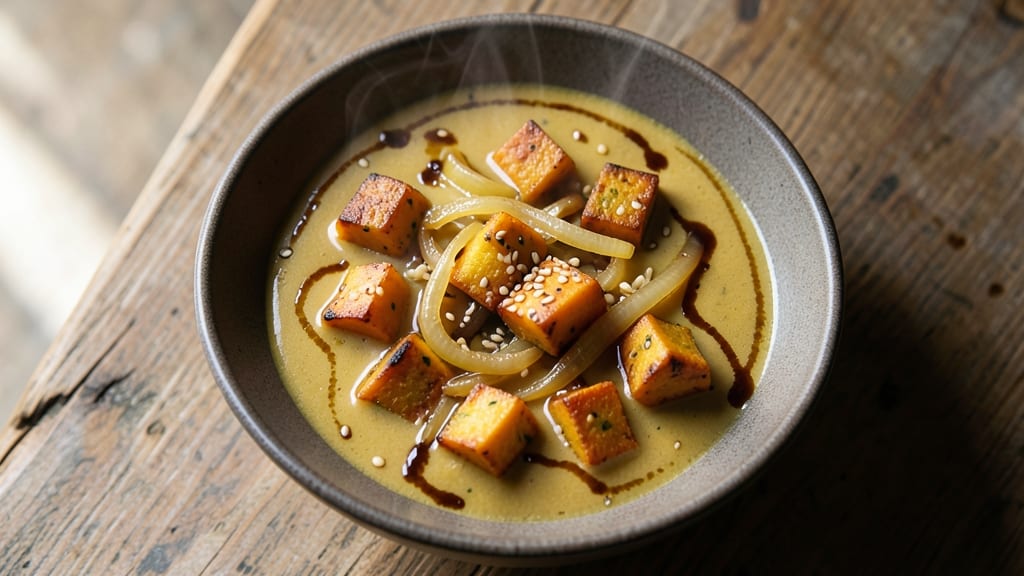
This kabocha squash soup recipe delivers the perfect balance of velvety texture and bold Japanese flavors—creamy yet light, with a satisfying crunch from toasted sesame.
The secret lies in slow-cooking the squash until it yields a naturally sweet, silky puree, then finishing with a touch of umami from soy sauce and a final sprinkle of nutty sesame seeds.
I developed this version after years of testing—it’s rich enough to feel indulgent but light enough for any meal, and the technique works just as well for vegetarian diets as it does with optional protein additions.
The foundation of this soup is simplicity: just five core ingredients—kabocha squash, onion, garlic, vegetable broth, and a splash of soy sauce—transformed into something extraordinary through precise cooking. The squash is roasted first to deepen its natural sweetness, then simmered until tender before blending into a smooth, golden puree.
What sets this apart is the finishing touch: a swirl of toasted sesame oil and a sprinkle of sesame seeds, which adds both texture and aroma that elevate every spoonful. This method ensures restaurant-quality results without requiring special equipment.
What you’ll end up with is a soup that’s velvety smooth yet subtly complex—each bite delivers the sweetness of the squash, the depth of the soy-infused broth, and the nutty crunch of toasted sesame.
The color is a rich, golden hue that looks as inviting as it tastes, and the aroma alone will have everyone gathering around the table. This recipe is equally at home as a light lunch, a comforting dinner, or even a side dish for grilled proteins. The best part?
It’s adaptable—add a poached egg for extra protein, or keep it fully vegetarian for a plant-based masterpiece.
For those who love modern twists, a splash of coconut milk can create a creamier version, while a drizzle of chili oil adds a subtle kick. Pair it with steamed rice or crusty bread to soak up every last drop of that velvety goodness.
Let’s get cooking—this soup is a game-changer for any season.
Ingredients for kabocha squash soup
Five core ingredients transform into a restaurant-quality kabocha squash soup with velvety silk and nutty crunch.
| Ingredient | Amount | Notes |
|---|---|---|
| Kabocha Squash 🎃 | 2 lb | Medium-sized, peeled and cubed |
| Yellow Onion 🧅 | 1 whole | Medium, diced small |
| Garlic Cloves 🧄 | 4 cloves | Peeled and minced |
| Vegetable Broth 💧 | 4 cups | Low-sodium preferred |
| Soy Sauce 🍶 | 2 tbsp | Japanese-style preferred |
| Toasted Sesame Oil 🫒 | 1 tbsp | For finishing |
| Sesame Seeds 🌾 | 2 tbsp | Toasted lightly |
| Extra-Virgin Olive Oil 🫒 | 1 tbsp | For roasting squash |
| Salt 🧂 | 1 tsp | Kosher or sea salt |
| Black Pepper 🌶️ | ½ tsp | Freshly ground |
| Coconut Milk 🥥 | ½ cup | Optional for creaminess |
| Chili Oil 🌶️ | 1 tsp | Optional for heat |
The kabocha squash is the star—look for firm, heavy squash with smooth skin at specialty markets or Asian grocery stores like H Mart or 99 Ranch. A medium-sized squash (about 2 lbs) yields perfect sweetness. If you can't find kabocha, butternut squash works in a pinch, though the flavor will be slightly less complex. The onion and garlic should be fresh, with no soft spots or sprouting. For the vegetable broth, low-sodium versions like Pacific Foods or Imagine brands prevent over-salting. Toast your sesame seeds in a dry pan for about 2 minutes until fragrant—this amplifies their nutty aroma.
No soy sauce? Tamari or coconut aminos work as substitutes, though the flavor will differ slightly. The coconut milk is optional but adds a luxurious creaminess—full-fat canned coconut milk works best, not the carton kind. For heat, chili crisp or sriracha can replace chili oil. If you're short on time, roast the squash in the microwave first (pierce with a fork, microwave 8-10 minutes) before finishing in the oven. The key is patience—rushing the roasting will leave the squash undercooked and grainy in the final puree. For extra depth, a splash of mirin or rice vinegar brightens the broth.
This soup keeps beautifully for 4-5 days in the fridge, though the texture may thicken slightly—just stir in a splash of broth to restore creaminess. For longer storage, freeze portions in airtight containers for up to 3 months. Reheat gently on the stove with a splash of water or broth to prevent scorching. The toasted sesame oil and seeds should be added just before serving to preserve their fresh aroma. Garnish with extra sesame seeds or a drizzle of chili oil for a restaurant-worthy finish. Leftovers reheat beautifully and taste even better the next day as flavors meld.
Why You'll Love This Recipe
- One-Pot Magic: Honestly, this soup is ridiculously simple—I just peel and cube the kabocha, sauté the onions and garlic until they’re golden, then let the broth and soy sauce do the work. No fancy techniques, no last-minute grocery runs. Even if I’m too tired to chop much, this comes together in under 25 minutes.
- Umami Bomb: That first sip? Chef’s kiss. The kabocha’s natural sweetness balances the deep, salty punch of soy sauce, while the caramelized onions and garlic add layers of warmth. It’s the kind of flavor that makes you go back for seconds without even thinking—no heavy cream or weird spices needed.
- Leftovers That Don’t Suck: Between us, most soups turn sad after day two. Not this one. The flavors actually deepened in my fridge—thicker, richer, and just as satisfying reheated. I’ve packed it for lunches, frozen portions for lazy nights, and even blended a batch into a quick pasta sauce. Zero waste, all win.
- Budget Meal for Busy Nights: Kabocha’s cheap, lasts forever, and this recipe uses pantry staples you already own. I’ve made it for date nights (fancy with crusty bread), post-workout meals (extra protein boost), and even as a kid-friendly dinner (they swear it’s "like pumpkin pie soup"). Versatile enough to handle whatever life throws at me.
Step-by-step instructions for kabocha squash soup
Here's the method for creating a perfectly balanced kabocha squash soup with rich depth and textural contrast.
Roast the Kabocha Squash and Aromatics
Preheat your oven to 400°F and line a baking sheet with parchment paper. Toss the 2 lb kabocha squash (peeled and cubed) with 1 tablespoon extra-virgin olive oil, 1 teaspoon salt, and 0.5 teaspoon black pepper. Spread evenly on the baking sheet and roast for 25-30 minutes until the edges are golden brown and the flesh becomes tender when pierced with a fork.
While the squash roasts, dice the 1 whole yellow onion into small pieces and mince the 4 cloves garlic. Add these to the same baking sheet with the squash, tossing lightly to coat with any remaining oil. Return to the oven for an additional 10 minutes until the onion softens and the garlic becomes fragrant. This roasting step develops deep, caramelized flavors that form the soup's foundation.
Simmer the Base Ingredients
Transfer the roasted kabocha squash, onion, and garlic to a large pot. Add the 4 cups vegetable broth and 2 tablespoons soy sauce, bringing everything to a gentle boil. Reduce heat to medium-low and let it simmer uncovered for 15 minutes, stirring occasionally. This allows the flavors to meld while the squash breaks down into a silky texture.
Use an immersion blender to purée the soup directly in the pot until completely smooth. If you prefer a chunkier texture, blend half and leave the rest as is. Taste and adjust seasoning with additional salt or soy sauce if needed. The soup should be rich but not overly salty—kabocha has natural sweetness that balances well with umami.
Finish with Creamy and Crunchy Elements
Stir in the 0.5 cup coconut milk (if using) and 1 teaspoon chili oil until fully incorporated. The coconut milk adds subtle creaminess while the chili oil introduces a gentle heat that complements the sweet squash. Keep the soup warm over low heat while you prepare the topping.
In a dry skillet over medium heat, toast the 2 tablespoons sesame seeds for 2-3 minutes until golden brown and fragrant. Remove from heat and immediately drizzle with 1 tablespoon toasted sesame oil, tossing to coat. This creates a nutty, aromatic crunch that contrasts beautifully with the velvety soup.
Serve with Perfect Presentation
Ladle the soup into bowls and top each serving with 1 teaspoon toasted sesame seeds and an additional drizzle of toasted sesame oil. The seeds should be evenly distributed for both visual appeal and texture. Serve immediately while the soup is hot and the seeds retain their crispness.
This method ensures a harmonious balance of flavors and textures—sweet kabocha, savory broth, creamy coconut milk, and the nutty crunch of toasted sesame. The roasting step is particularly important as it develops the squash's natural sweetness without overpowering the dish's umami depth.
Pro Tips For Making Kabocha Squash Soup
- PEEL THE ONION DRY: Wet onions stick to the pan and burn—especially when you’re sautéing them with garlic for that sweet, caramelized base. Pat the sliced onion and minced garlic cloves completely dry with a paper towel before cooking. Trust me, your soup won’t taste like it’s fighting off a damp basement afterward.
- CUT THE SQUASH SMALL: Big chunks of kabocha take forever to soften, and you’ll end up with a soup that’s more textured than creamy. Cut it into 1-inch cubes—or even smaller if you’re impatient. Smaller pieces cook faster, break down more evenly, and blend into a velvety texture without you having to babysit the pot.
- SIMMER LOW AND COVERED: I used to crank the heat and rush this, but kabocha soup needs patience. Once the broth is simmering, reduce to the lowest heat that keeps tiny bubbles breaking the surface, cover the pot, and let it work for 15-20 minutes. The squash will melt into the broth without turning to mush, and you’ll avoid that sad, watery consistency.
- SALT THE BROTH LAST: Soy sauce is salty, and adding salt to the broth early can make the flavors unbalance as the squash absorbs it unevenly. Wait until the soup is nearly done, then taste and adjust with a splash of soy sauce and a pinch of salt—this way, every spoonful is perfectly seasoned, not just the first one.
Flavor customization for this recipe
Sweet and Spicy Twist
For a bold flavor profile, add 1 teaspoon of gochujang (Korean chili paste) when simmering the broth. This brings a deep, fermented heat that pairs beautifully with kabocha’s sweetness. For extra depth, stir in ½ teaspoon of grated ginger alongside the garlic during roasting.
Top with thinly sliced scallions and a drizzle of chili crisp for a fiery, aromatic finish. 🌶️
Creamy Coconut Variation
Skip the coconut milk in the base recipe and instead blend in ½ cup of silken tofu after puréeing for a lighter, protein-rich creaminess. For a richer version, stir in ¼ cup of coconut cream at the end and finish with a sprinkle of toasted coconut flakes.
This tropical twist works especially well with a side of jasmine rice and a sprinkle of lime zest.
Umami Boost with Mushrooms
Sauté 8 oz shiitake mushrooms, sliced, in a pan with 1 tablespoon sesame oil until golden before adding them to the pot with the squash.
Their earthy flavor deepens the umami profile, making the soup even more satisfying. For extra richness, add 1 tablespoon of miso paste when simmering. 🍄
Herb-Infused Freshness
Stir in 1 tablespoon of chopped fresh thyme or basil during the final 5 minutes of simmering for a bright, herbal note. Garnish with extra fresh herbs and a pinch of flaky sea salt for a lighter, garden-fresh take.
This variation works beautifully as a summer soup when paired with a crisp white wine like Sauvignon Blanc.
Smoky Maple Glaze
For a sweet-and-smoky twist, reduce 2 tablespoons of pure maple syrup with 1 teaspoon of smoked paprika in a small saucepan until thickened. Drizzle this glaze over the finished soup and top with crumbled bacon or crispy fried shallots for a savory-sweet contrast.
This version feels indulgent yet balanced, perfect for a cozy autumn dinner. 🔥
Vegan Protein Addition
Blend in ½ cup of cooked lentils or chickpeas for a hearty, protein-packed version. For extra texture, top with toasted pumpkin seeds or crumbled tempeh. This makes the soup a complete meal, ideal for vegan diets or when serving a crowd.
The lentils add a subtle earthiness that complements the squash’s sweetness perfectly.
Nutrition facts
Frequently asked questions
Can I substitute kabocha squash with butternut squash?
Yes, butternut squash works in a pinch, though the flavor will be slightly less sweet and complex. For the best results, roast the butternut squash until very tender—it needs longer cooking time than kabocha. If using butternut, reduce the broth by ½ cup since it yields more moisture. The texture will still be creamy, but the depth of flavor won't be identical.
Why does my kabocha squash soup taste bitter?
Bitter flavors usually come from over-roasting the squash or using too much soy sauce. To fix it, balance the bitterness with a splash of mirin or a pinch of sugar (just ½ teaspoon). For future batches, reduce roasting time to 20-25 minutes and taste the squash before blending—it should be sweet, not bitter.
How do I make this soup vegan?
This recipe is already vegan-friendly, but you can enhance it further by using vegan coconut milk and ensuring your broth is plant-based. For extra protein, blend in ½ cup cooked lentils or top with crumbled tempeh. Skip the optional chili oil if it contains fish-based ingredients, or use a vegan alternative like chili crisp.
Can I make this soup ahead of time?
Store the finished soup (without the toasted sesame seeds or oil) in an airtight container in the fridge for 4-5 days. Reheat gently on the stove with a splash of broth to restore creaminess. For longer storage, freeze portions for up to 3 months. Always add the sesame toppings fresh to preserve their aroma and crunch.
What's the best way to reheat leftovers?
Reheat slowly on the stove over low heat with a splash of water or broth to prevent scorching. If using the microwave, stir halfway through to ensure even heating. For extra richness, stir in a pat of vegan butter or a drizzle of coconut milk before serving. The texture may thicken slightly—thin with more broth if needed.