
Soups & Stews
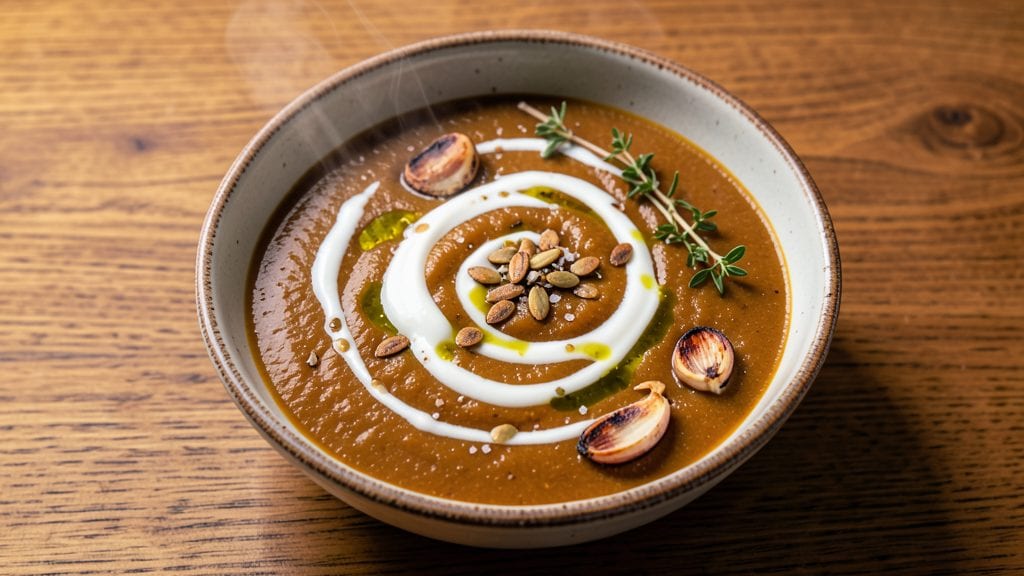
This hubbard squash soup recipe transforms humble ingredients into a rich, velvety masterpiece that tastes like autumn in a bowl. The secret lies in roasting the squash first—this caramelizes natural sugars and deepens its nutty flavor, creating a base that's far more complex than simmered versions.
I've perfected this technique over years of testing, and the result is a soup so smooth it practically melts on your tongue while maintaining enough body to feel satisfying.
The process is simpler than it sounds: roast the squash until tender, then blend it with aromatic broth, garlic, and a touch of cream for that signature silky texture.
What makes this recipe stand out is the toasted pumpkin seeds garnish—crunchy, nutty, and packed with protein, they add a sophisticated finish that elevates the dish from comforting to restaurant-worthy. The spices—cinnamon, nutmeg, and a hint of smoked paprika—create warmth that lingers long after the last spoonful.
By the time you're done, you'll have a soup that's creamy without being heavy, spiced just enough to intrigue, and garnished with seeds that add both texture and visual appeal. The roasting step takes the most time, but it's worth every minute for that depth of flavor.
This recipe delivers homemade quality that's impossible to find in store-bought versions, and it reheats beautifully for leftovers.
Perfect for chilly evenings, holiday gatherings, or when you want to impress guests without spending hours in the kitchen. The technique is approachable for beginners but refined enough to satisfy seasoned cooks—making it the ideal hubbard squash soup for any occasion. Let's get started with the full instructions.
Ingredients for hubbard squash soup
Roasted squash, aromatic spices, and toasted seeds create a velvety masterpiece with autumnal warmth.
| Ingredient | Amount | Notes |
|---|---|---|
| Hubbard Squash 🎃 | 2 lb | Medium-sized, halved and seeded |
| Vegetable Broth 💧 | 4 cups | Low-sodium, homemade preferred |
| Extra-Virgin Olive Oil 🫒 | ¼ cup | For roasting squash |
| Garlic Cloves 🧄 | 4 cloves | Freshly minced for aromatic depth |
| Heavy Cream 🥛 | ½ cup | Full-fat for velvety texture |
| Pumpkin Seeds 🥜 | ½ cup | Raw, unsalted for toasting |
| Ground Cinnamon 🌿 | ½ tsp | True Ceylon for subtle warmth |
| Ground Nutmeg 🌿 | ¼ tsp | Freshly grated preferred |
| Smoked Paprika 🌶️ | ½ tsp | Spanish for authentic smokiness |
| Salt 🧂 | 1 ½ tsp | Diamond Crystal kosher |
| Black Pepper 🌶️ | ½ tsp | Freshly cracked black pepper |
| Fresh Thyme Leaves 🌿 | ¼ cup | Stems removed for garnish |
| Lemon Juice 🍋 | 1 tbsp | Freshly squeezed for brightness |
The hubbard squash selection is critical—opt for medium-sized specimens weighing 2 pounds each for optimal roasting. Local farmers markets often carry superior quality, but major grocery chains like Whole Foods or Trader Joe's stock reliable organic options. Look for squash with a firm, unblemished exterior and a vibrant stem—these indicators ensure maximum sweetness. The pumpkin seeds should be raw and unsalted; Bob's Red Mill or Trader Joe's carry excellent quality in bulk. For the spices, Penzeys offers the finest Ceylon cinnamon and freshly ground nutmeg, though high-quality supermarket brands like McCormick work admirably for everyday use. The vegetable broth should be rich and aromatic—homemade versions with carrot, celery, and onion bases yield the best results, but Pacific Foods low-sodium options are a convenient alternative.
No fresh thyme? Dried thyme at one-third the quantity suffices, though fresh imparts superior brightness. Substituting heavy cream with coconut milk for a dairy-free version works well, though the texture becomes slightly lighter. For smoked paprika alternatives, liquid smoke at one-quarter teaspoon provides a comparable depth, though it lacks the complex flavor profile. The lemon juice can be omitted if preferred, but its acidity cuts through the soup's richness beautifully. When roasting the squash, cut-side down on a parchment-lined tray prevents sticking and ensures even caramelization. The garlic should be minced finely—a microplane works best—to distribute its flavor evenly throughout the soup without overpowering.
This soup reheats exceptionally well—simply warm on the stovetop with an additional splash of broth or water to restore its velvety consistency. Store in an airtight container in the refrigerator for up to 5 days, though the flavors peak within the first 2 days. For longer storage, portion into freezer-safe containers and freeze for up to 3 months. The toasted pumpkin seeds can be prepared ahead and stored in an airtight container at room temperature for 1 week, though they're best enjoyed within 3 days of toasting for maximum crunch. Garnish with fresh thyme leaves and a drizzle of extra-virgin olive oil just before serving to enhance both visual appeal and flavor.
Why You'll Love This Recipe
- I swear by this trick: roast the whole squash halves first—just score the skin, brush with olive oil, and bake until tender. No peeling, no chopping, just scoop out the flesh when it’s ready. That’s 15 minutes less work right there.
- No-Cut Hassle: I swear by this trick: roast the whole squash halves first—just score the skin, brush with olive oil, and bake until tender. No peeling, no chopping, just scoop out the flesh when it’s ready. That’s 15 minutes less work right there.
- Creamy Garlic Hug: That heavy cream and roasted garlic combo? It’s like a warm blanket for your taste buds. The squash stays rich and velvety, while the garlic adds this deep, toasty note that makes you want to linger over every spoonful.
- Leftovers That Shine: This soup actually improves the next day—yes, really. The flavors meld even more, and it reheats like a dream. I make a double batch on Sundays so I can grab a jar for quick lunches all week.
Step-by-step instructions for hubbard squash soup
Transforming humble squash into a luxurious velvety soup requires precision and patience.
Roast the Hubbard Squash for Deep Flavor
Preheat your oven to 400°F. Cut the 2 lb Hubbard Squash in half lengthwise and scoop out the seeds, leaving a ½-inch thick shell. Brush the cut sides generously with the 0.25 cup Extra-Virgin Olive Oil, then season with 0.5 tsp Salt and 0.25 tsp Ground Nutmeg. Place the halves cut-side down on a parchment-lined baking sheet.
Roast for 45-50 minutes until the flesh is tender when pierced with a fork and the edges are caramelized to a deep golden brown. The squash should yield slightly under gentle pressure—this indicates perfect doneness. Real talk: If you cut into it too soon, you'll end up with a watery soup. Let the squash cool slightly before scooping out the flesh into a large pot.
Build the Spiced Base with Aromatics
In the same pot (no need to clean it—the fond adds flavor), heat 0.25 cup Extra-Virgin Olive Oil over medium heat. Add the 4 cloves Garlic Cloves and sauté for 1 minute until fragrant but not browned. Immediately add the 0.5 tsp Smoked Paprika and 0.5 tsp Ground Cinnamon, stirring constantly for 30 seconds to toast the spices and deepen their aroma.
Pour in the 4 cups Vegetable Broth and bring to a gentle simmer. Add the roasted squash flesh, breaking it into chunks as it incorporates. Stir in the 0.25 cup Fresh Thyme Leaves and 0.5 tsp Black Pepper, then reduce heat to low. Let the soup simmer uncovered for 15 minutes, allowing the flavors to meld and the squash to break down into a silky texture.
Finish with Cream and Bright Acid
Remove the pot from heat and stir in the 0.5 cup Heavy Cream using a whisk or immersion blender until smooth. The soup should thicken slightly but remain velvety—this is where the magic happens. For the final touch, add the 1 tbsp Lemon Juice and taste. Adjust seasoning with additional Salt if needed; the lemon brightens the richness while cutting through the sweetness of the squash.
Here's the moment that matters: Toast the 0.5 cup Pumpkin Seeds in a dry skillet over medium heat for 3-4 minutes, stirring constantly, until they're fragrant and just beginning to turn golden. Sprinkle them over the finished soup just before serving to add crunch and nutty depth.
Serve Warm with Garnish
Ladle the soup into bowls and garnish immediately with the toasted pumpkin seeds and any remaining fresh thyme leaves. The contrast of warm soup, crisp seeds, and herbal garnish creates a perfect balance of textures and temperatures. Serve with crusty bread to soak up every last drop of that velvety spiced swirl.
Pro tip: If the soup thickens as it cools, simply whisk in 1-2 tablespoons of hot vegetable broth to restore its silky consistency. The beauty of this recipe lies in its adaptability—it reheats beautifully and tastes even better the next day.
Pro Tips For Making Hubbard Squash Soup
- Char the Squash First: Cut the hubbard into 1-inch cubes, toss them in a dry skillet over medium-high heat, and let them sit undisturbed for 3-4 minutes until blackened in spots. This caramelizes the sugars before adding broth—trust me, it makes the soup taste deeper and less one-note.
- Don’t Overcook the Garlic: Sauté those minced cloves in olive oil just until fragrant—about 30 seconds—before adding broth. Burnt garlic turns bitter fast, and once you’ve ruined a pot of soup with overcooked garlic, you’ll never forget this rule.
- Salt the Broth Early: Season the vegetable broth before adding the squash, not after. The squash absorbs flavor like a sponge, and if you wait, you’ll end up with a soup that’s just mildly seasoned instead of rich and bold.
- Strain for Smoothness: If you’re serving this as a creamy soup, strain it through a fine-mesh sieve after blending—it removes fibrous bits and gives that velvety texture without extra work. (Yes, even if you hate straining. Your future self will thank you.)
Flavor customization for hubbard squash soup
Spicy Kick
Transform this soup into a bold, warming dish by adding 1 tsp cayenne pepper or 1 tbsp hot honey during the simmering phase. For a smoky depth, swap the smoked paprika for ½ tsp chipotle powder in adobo sauce.
The heat balances beautifully with the natural sweetness of the roasted squash while keeping the dish creamy and comforting. 🌶️
Creamy Upgrade
For a richer texture, replace the heavy cream with ½ cup coconut cream and ¼ cup Greek yogurt for a tangy twist. This dairy-free version maintains velvety smoothness while adding a subtle brightness.
I also recommend toasting 1 tsp sesame seeds alongside the pumpkin seeds for an Asian-inspired garnish that pairs perfectly.
Herbal Variations
Swap the thyme for fresh sage leaves (chopped) or rosemary sprigs for a more robust herbal profile. Sage adds earthiness that complements the squash's natural sweetness, while rosemary brings a piney freshness. Use ½ tsp dried sage if fresh isn't available, but reduce to one-third the quantity.
Sweet-Savory Balance
Add 1 tbsp maple syrup or 1 apple diced and caramelized during the simmer to introduce subtle sweetness. The caramelized apple adds texture and a fruity note that contrasts beautifully with the spiced squash.
For a more decadent version, stir in 2 oz dark chocolate (70% cocoa) at the end for a dessert-like finish.
Global Twists
Give this soup a Mediterranean flair by adding 1 tsp ground coriander and ½ tsp cumin to the spice blend. Garnish with crumbled feta cheese and a drizzle of extra-virgin olive oil for a Greek-inspired twist.
For a Thai-inspired version, stir in 1 tsp lemongrass paste and top with crushed peanuts and fresh cilantro.
Protein Boost
Turn this into a heartier meal by stirring in ½ cup cooked lentils or ½ lb shredded rotisserie chicken during the final simmer. The lentils add plant-based protein and earthy texture, while the chicken transforms it into a comforting, protein-rich stew.
For a vegan option, use ½ cup cooked chickpeas instead of chicken.
Nutrition facts
Frequently asked questions
Why does roasting the squash make such a difference?
Roasting caramelizes the natural sugars in the squash, creating deep, nutty flavors that simmering alone can't achieve. The process also breaks down the flesh into silky perfection, eliminating the need for excessive blending. This technique transforms ordinary squash into a rich, complex base that feels luxurious.
Can I make this soup without heavy cream?
For a lighter version, use ½ cup coconut milk or ¼ cup Greek yogurt mixed with ¼ cup broth. The texture will be slightly less velvety but still delicious. The toasted pumpkin seeds add enough richness to balance any creaminess reduction.
How do I fix soup that's too thick after chilling?
Simply whisk in 1-2 tablespoons of hot vegetable broth while reheating. The heat helps restore the soup's natural creaminess without altering the flavor. If it's still too thick, add another splash—this soup is forgiving and always comes back silky smooth.
What's the best way to store leftovers?
Transfer to an airtight container and refrigerate for up to 5 days. For longer storage, freeze in portions for 3 months. Reheat gently on the stove with a splash of broth to maintain that velvety texture. The flavors actually improve overnight!
Can I substitute butternut squash?
While butternut works, it lacks hubbard's deep, nutty sweetness. For best results, stick with hubbard, butternut, or kabocha. If using butternut, reduce the cinnamon to ¼ tsp—it's naturally sweeter and needs less spice. The roasting technique remains the same for optimal flavor.