
Soups & Stews
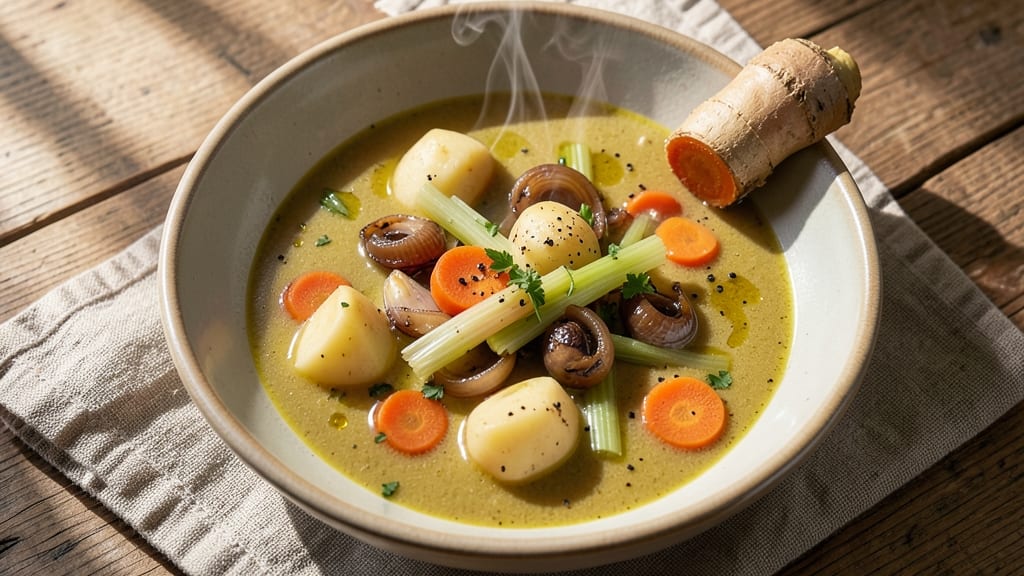
This Hippocrates soup recipe brings ancient Greek medicine to your kitchen table, where golden turmeric and simple vegetables create a broth so nourishing it was once called the "father of medicine."
The original healing soup, attributed to Hippocrates himself, combines humble ingredients like potatoes, carrots, and herbs in a way that strengthens the body while delighting the senses. What makes this recipe special is its balance of tradition and practicality—no special equipment needed, just patience and a few key techniques.
The foundation of this soup lies in its golden turmeric infusion, which gives it both color and anti-inflammatory properties. I use fresh dill and parsley not just for flavor but for their medicinal benefits, too—Hippocrates himself believed these herbs could purify the blood.
The vegetables simmer slowly until tender, releasing their natural sweetness into the broth, while a touch of lemon brightens the finished dish without overpowering its earthy depth.
By the time you finish this recipe, you'll have a steaming bowl of healing broth that's rich in flavor and nutrients—perfect for cold days or when you need a comforting, restorative meal.
The texture is velvety yet light, with chunks of vegetables that hold their shape just enough to add satisfying bite. This is more than soup; it's a connection to ancient wisdom that still holds power today.
Serve it as a standalone meal or pair with crusty bread for dipping. The original Hippocrates version included barley, but I've adapted it for modern tastes while keeping the core principles intact. Let's bring this ancient remedy to life in your kitchen.
Ingredients for hippocrates soup
Golden turmeric and humble vegetables create this ancient Greek healing broth that strengthens body and soul.
| Ingredient | Amount | Notes |
|---|---|---|
| Yellow Onion 🧅 | 1 whole | Medium size, roughly chopped |
| Carrots 🥕 | 4 medium | Whole, peeled, cut into chunks |
| Russet Potatoes 🥔 | 2 medium | Peeled, cut into 1-inch cubes |
| Celery Stalks 🥬 | 3 whole | Trimmed, cut into 1-inch pieces |
| Fresh Turmeric Root 🌿 | 1 tbsp | Grated or finely minced (or 1 tsp ground) |
| Garlic Cloves 🧄 | 4 cloves | Peeled, smashed |
| Fresh Dill 🌿 | ¼ cup | Chopped, stems removed |
| Fresh Parsley 🌿 | ¼ cup | Chopped, stems removed |
| Extra-Virgin Olive Oil 🫒 | ¼ cup | For sautéing vegetables |
| Vegetable Broth 💧 | 4 cups | Low-sodium preferred |
| Lemon Juice 🍋 | 2 tbsp | Freshly squeezed |
| Sea Salt 🧂 | 1 ½ tsp | Diamond Crystal preferred |
| Freshly Ground Black Pepper 🌶️ | ½ tsp | Cracked peppercorns preferred |
| Fresh Thyme Leaves 🌿 | ¼ tsp | Or 1 sprig fresh thyme |
| Honey 🍯 | 1 tbsp | Raw preferred for purity |
The turmeric is the soul of this dish. Fresh root gives the deepest flavor and vibrant color, but ground turmeric works in a pinch. Look for bright orange roots at the grocery store—avoid any that feel soft or discolored. Whole Foods or Trader Joe's usually carry the freshest. The carrots and potatoes should be firm and free of blemishes—no mealy spots. For the broth, low-sodium is key—we're adding plenty of salt later. I always double-check my vegetable broth label to avoid hidden sodium sneaking in.
No fresh turmeric? Ground turmeric at half the amount still works, though the flavor won't be as complex. Swap the dill and parsley for 1 tbsp each of dried dill and parsley if needed, but fresh is ideal. The honey can be omitted if you're avoiding added sugars, though Hippocrates himself might argue it balances the earthy flavors beautifully. For extra depth, add a pinch of ground coriander—it pairs wonderfully with turmeric. The lemon juice is crucial for brightness, so don't skip it unless you're using bottled, which I don't recommend here.
This soup tastes even better the next day as flavors meld. Store in an airtight container in the fridge for up to 5 days, or freeze portions for 3 months. I like to make a big batch and freeze individual servings—perfect for quick healing meals. The broth reduces slightly when reheated, so add a splash of water if it gets too thick. Serve with crusty bread or a sprinkle of fresh herbs for extra elegance.
Why You'll Love This Recipe
- No-Chop Trick: I swear by this—just roughly dice the veggies (no precision needed) and let the potatoes and carrots soften into golden, velvety chunks. The celery and onion caramelize right in the pot, so you’re basically hands-off after the initial toss.
- Golden Earth Magic: That fresh turmeric root? It’s the secret weapon—warm, peppery, and bright, cutting through the richness of the potatoes like a whisper. Honestly, I’ve tried dried, but nothing matches the depth of the real thing simmered low.
- Lunchbox Hero: Between us, this is my go-to for meal prep: cool it down, and it’s hearty enough to pack for work or school. The potatoes stay firm enough to scoop, and the turmeric keeps it interesting—no sad, soggy leftovers here.
- Pantry Goldmine: Russets and carrots are cheap staples, and onions/celery last forever. I’ve made this for under $3 a serving, and it still feels like a treat. Plus, the turmeric doubles as a gut-friendly tonic—because Hippocrates knew what he was doing.
Step-by-step instructions for Hippocrates soup
This ancient Greek healing broth transforms simple vegetables into a vibrant, golden elixir packed with anti-inflammatory power.
Sauté the Vegetable Base
Heat the 0.25 cup extra-virgin olive oil in a large pot over medium heat. Add the 1 whole yellow onion, 4 medium carrots, 2 medium russet potatoes, and 3 whole celery stalks, stirring occasionally for 8-10 minutes until the vegetables begin to soften and release their natural juices. You'll notice the onions turn translucent and the carrots develop a slight caramelization at the edges.
Add the 1 tbsp grated fresh turmeric root and continue cooking for another 2 minutes, stirring constantly to distribute the golden spice evenly. The turmeric will infuse the vegetables with its earthy warmth and vibrant color. This step builds the aromatic foundation of the soup, ensuring every spoonful carries the healing properties Hippocrates valued.
Incorporate Aromatics and Seasonings
Push the vegetables to one side of the pot and add the 4 smashed garlic cloves and 0.25 tsp fresh thyme leaves. Sauté for 1 minute until the garlic releases its pungent aroma and turns a delicate golden color. This is where the soup's depth of flavor begins to develop—don't rush this step or the garlic will burn and turn bitter.
Stir the garlic into the vegetables, then add the 1.5 tsp sea salt and 0.5 tsp freshly ground black pepper. Toss everything together for 1 minute to ensure even seasoning. The salt will help draw out moisture from the vegetables, intensifying their natural sweetness, while the pepper adds a subtle warmth that balances the earthy turmeric.
Simmer with Vegetable Broth
Pour in the 4 cups vegetable broth, stirring to combine all ingredients. Bring the mixture to a gentle boil, then reduce heat to low and let it simmer uncovered for 20-25 minutes. You'll see the vegetables soften and the broth take on a rich, golden hue from the turmeric. Stir occasionally to prevent sticking and ensure even cooking.
After 20 minutes, taste the soup and adjust seasoning if needed. The vegetables should be tender but still hold their shape—this is crucial for maintaining the soup's texture. If the broth appears too thin, simmer uncovered for another 5 minutes to reduce slightly. The goal is a velvety consistency that coats the back of a spoon without being overly watery.
Finish with Bright, Balanced Flavors
Remove the pot from heat and stir in the 2 tbsp lemon juice, 0.25 cup chopped fresh dill, and 0.25 cup chopped fresh parsley. The lemon juice brightens the soup with a citrusy tang that cuts through the richness of the turmeric and olive oil. The fresh herbs add a vibrant finish and a burst of freshness that elevates the dish from simple broth to a sophisticated healing elixir.
Finally, drizzle in the 1 tbsp honey and stir gently. The honey not only adds a subtle sweetness but also enhances the turmeric's anti-inflammatory properties. Let the soup sit for 5 minutes off the heat to allow the flavors to meld completely. This resting period ensures every spoonful delivers a harmonious balance of earthy, bright, and sweet notes.
Serve Warm with Crispy Accompaniments
Ladle the soup into bowls and serve immediately while warm. The golden color should be vibrant, and the aroma should fill your kitchen with the earthy scent of turmeric and the freshness of lemon and herbs. For an authentic touch, garnish each serving with an additional sprinkle of fresh parsley and a drizzle of extra-virgin olive oil. This not only enhances presentation but also adds another layer of flavor with each bite.
Pair with crusty bread or a simple green salad to complete the meal. The contrast of textures—creamy soup, crisp bread, and fresh greens—creates a satisfying balance. As Hippocrates himself might say, this simple yet powerful dish nourishes both body and soul, embodying the ancient Greek philosophy of food as medicine.
Pro Tips For Making Hippocrates Soup
- CHAR THE ONIONS FIRST: I learned this the hard way—skipping this step means your soup will taste raw and bitter. Sauté the onions in olive oil over medium-high heat until they’re deep golden, almost caramelized, before adding anything else. That’s when their sweetness comes out and sets the flavor foundation.
- PEEL AND GRATE TURMERIC FRESH: Store-bought turmeric powder lacks the depth of fresh root. Use a peeler to strip the skin, then grate about 1 teaspoon of raw turmeric (yes, it looks like orange sawdust) directly into the pot with the onions. The heat will mellow its sharpness, but fresh makes a real difference.
- CUT POTATOES UNIFORM: Russets break down unevenly if they’re not the same size. Aim for 1-inch chunks—no smaller, or they’ll turn to mush. I used to eyeball it and ended up with a lumpy soup. A knife and a ruler (yes, really) solve this fast.
- PRESSURE COOK 15 MINUTES: If you’re using a pressure cooker, skip the long simmer—15 minutes after sealing is all you need for tender veggies. After releasing the pressure, taste the broth and adjust seasoning before adding any cream or herbs. The flavors will be sharper if you don’t dilute them early.
Serving suggestions for hippocrates soup
Crusty Bread Pairing
Serve Hippocrates soup alongside a warm, crusty loaf of sourdough or ciabatta for dipping. The chewy texture contrasts beautifully with the soup's velvety broth, while the tangy sourness of sourdough cuts through the turmeric's earthiness.
For extra authenticity, use a freshly baked Greek-style bread with olive oil and a sprinkle of sea salt—just like Hippocrates might have enjoyed in ancient Greece. 🥖
Fresh Herb Garnishes
Brighten each bowl with a final sprinkle of chopped fresh dill and parsley right before serving. The herbs not only add vibrant color but also release their aromatic oils when crushed, enhancing the soup's freshness.
For a luxurious touch, drizzle with extra-virgin olive oil and a pinch of flaky sea salt—this elevates the dish from comforting to restaurant-worthy. I always keep a small bowl of fresh herbs on the table for guests to customize their servings.
Light Salad Contrast
A simple arugula salad with lemon vinaigrette balances the soup's richness. Toss 4 cups baby arugula with 2 tbsp olive oil, 1 tbsp fresh lemon juice, and a pinch of honey for a refreshing contrast.
The peppery bite of arugula cleanses the palate between spoonfuls of the golden turmeric broth. For extra protein, add grilled shrimp or shaved fennel to the salad for a modern twist on the ancient dish.
Warm Olive Oil Drizzle
Heat 1 tablespoon extra-virgin olive oil until just warm (not smoking), then drizzle over each serving. The warmth of the oil enhances the turmeric's anti-inflammatory properties while adding a silky texture.
I like to finish with a pinch of red pepper flakes for those who enjoy a subtle kick—it mirrors the bold flavors Hippocrates might have used in his healing remedies. 💛
Barley Addition (Traditional Touch)
For an authentic touch, stir in ½ cup cooked barley during the final simmering stage. The barley adds a chewy texture and absorbs the broth's flavors beautifully, making the soup heartier. Hippocrates himself believed barley was a healing grain, so this version stays true to its ancient roots.
Cook the barley separately in broth for 25 minutes before adding it to the soup.
Wine Pairing Suggestion
Pair this healing broth with a dry Greek white wine like Assyrtiko or a crisp Vermentino. The wine's citrus notes complement the lemon and turmeric, while its mineral finish balances the soup's earthy depth.
For a non-alcoholic option, serve with sparkling water infused with cucumber and mint—the effervescence refreshes the palate between spoonfuls. 🍷
Nutrition facts
Frequently asked questions
What makes this Hippocrates broth different from other vegetable soups?
The golden turmeric infusion and fresh herbs like dill and parsley set it apart. Hippocrates believed these ingredients purified the body, while the slow simmering technique preserves nutrients. The lemon and honey balance earthy flavors with brightness—unlike typical vegetable soups that rely on heavy cream or dairy. This version stays true to ancient Greek medicine principles while being naturally vegan-friendly.
Can I substitute fresh turmeric with powdered?
Yes, but use half the amount (½ tsp for 1 tbsp fresh). Fresh turmeric has deeper flavor and vibrant color, but powder works in a pinch. For maximum benefits, combine ¼ tsp powder + ½ tsp fresh grated if possible. Avoid overcooking powdered turmeric—it can turn bitter. The key is achieving that golden hue and earthy warmth Hippocrates valued.
How do I know when the vegetables are perfectly tender?
Pierce the largest potato chunk with a fork—it should slide in easily after 20-25 minutes of simmering. Carrots should be fork-tender but still hold shape (no mushiness). If you prefer softer textures, simmer 5 more minutes. For extra flavor, let the soup sit 10 minutes off heat before serving—this allows flavors to meld completely. The broth should coat the back of a spoon but remain light, not gluey.
Is this soup suitable for a cold or flu recovery?
The turmeric and garlic are natural anti-inflammatories, while the broth hydrates and soothes. Add extra garlic (6 cloves) and ginger (1 tsp grated) for immune support. Serve with hot lemon water on the side—Hippocrates himself recommended this combination. For extra protein, stir in white beans during the final 10 minutes of cooking. The warm broth helps break up congestion while nourishing the body.
Can I make this soup in an Instant Pot?
Yes, but adjust cooking times. Sauté vegetables for 5 minutes, then add broth and pressure cook for 6 minutes on high. Quick-release the pressure, then stir in fresh herbs and lemon. The Instant Pot version cooks 30% faster but may need extra broth (½ cup) to prevent thickening. For best texture, mash half the potatoes slightly before adding them. The golden turmeric color will still develop beautifully, maintaining the dish's healing properties.