
Soups & Stews
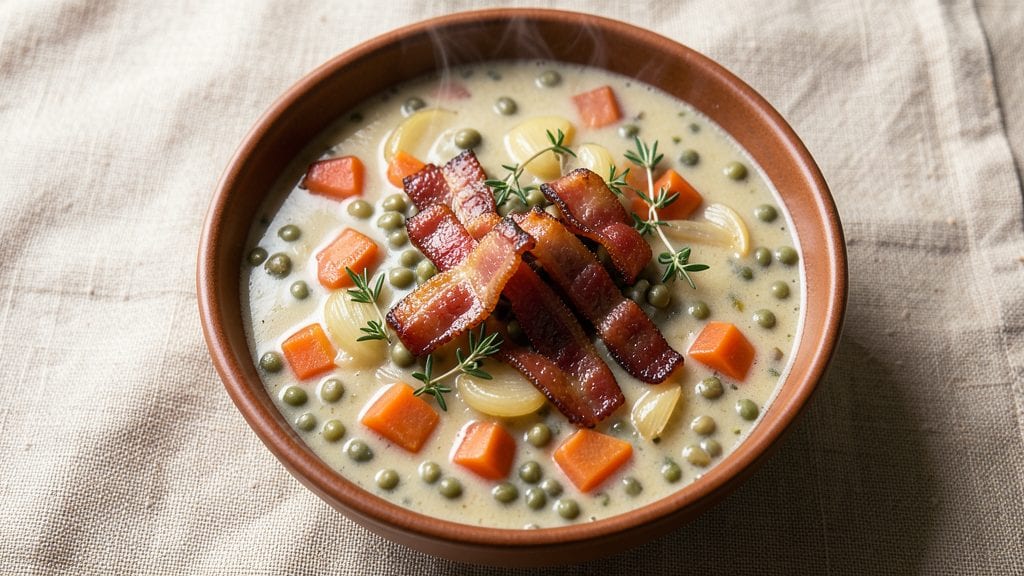
This French Canadian pea soup recipe brings the hearty flavors of Quebec kitchens to your table—where smoky bacon and fragrant thyme transform simple split peas into a deeply satisfying one-pot meal.
The secret lies in slow simmering, which develops rich, earthy notes that define traditional soups from this region, while crispy bacon adds a savory depth that makes every spoonful irresistible.
What sets this recipe apart is its balance of rustic technique and approachable execution—no special skills required, just patience and a few key ingredients.
The onions caramelize slowly for natural sweetness, the split peas break down into a creamy texture, and the bacon renders its fat to create a velvety base. A touch of bay leaf and thyme ensures that authentic French Canadian aroma that transports you straight to a countryside bistro.
By the time you serve this soup, you’ll have a steaming bowl of golden, aromatic pea soup with tender bacon pieces floating throughout. The texture is velvety yet hearty, the flavors complex yet comforting, and the simplicity of the ingredients makes it perfect for both weeknight dinners and holiday gatherings.
It’s the kind of dish that tastes even better the next day, when the flavors have fully melded.
For those who prefer a vegetarian version, simply swap the bacon for smoked tofu or mushrooms—though I’d argue the smoky bacon is worth keeping for that unmistakable French Canadian character. Serve with crusty bread to soak up every last drop of that rich, thyme-infused broth. Let’s get cooking!
Ingredients for french canadian pea soup
Twelve simple ingredients transform into a deeply aromatic French Canadian pea soup.
| Ingredient | Amount | Notes |
|---|---|---|
| Smoked Bacon 🥓 | 6 oz | Thick-cut for crispy edges |
| Yellow Onions 🧅 | 1 whole | Yellow or red preferred |
| Garlic Cloves 🧄 | 4 cloves | Freshly minced for aroma |
| Split Peas 🌾 | 1 ½ cups | Dried, soaked overnight |
| Carrots 🥕 | 2 medium | OR 0.75 cup diced (standardized) |
| Fresh Thyme 🌿 | 1 tbsp | Leaves only, chopped fine |
| Bay Leaves 🍃 | 2 whole | Dried, standard size |
| Chicken Broth 💧 | 4 cups | Low-sodium preferred |
| Apple Cider Vinegar 🍎 | 1 tbsp | For brightness |
| Salt 🧂 | 1 ½ tsp | Kosher or sea salt |
| Black Pepper 🌶️ | ½ tsp | Freshly cracked |
| Heavy Cream 🥛 | ½ cup | Full-fat for richness |
| Butter 🧈 | 2 tbsp | Unsalted, for finishing |
The bacon is non-negotiable for that authentic smoky depth—thick-cut from Costco or Trader Joe's gives the best crispy edges. Look for applewood-smoked if available, though hickory works too. Onions should be yellow or red for natural sweetness; skip the sweet varieties. The split peas are the star—dried from a bulk bin (like at Whole Foods) keeps them fresher longer than canned. Carrots can be baby or regular; orange or purple varieties add visual interest without changing flavor. Fresh thyme is ideal, but dried works at one-third the amount—just crush the leaves between your fingers to release the oils.
No bacon? Smoked tofu or mushrooms (like shiitake) replicate the umami depth, though the texture won't be identical. Substitute vegetable broth for chicken broth if vegetarian, but add an extra 1 tbsp soy sauce to compensate for lost richness. Apple cider vinegar can be swapped for white wine vinegar or lemon juice, though the flavor profile shifts slightly. Heavy cream is optional—half-and-half or coconut milk work in a pinch, but the soup will be lighter. For a dairy-free version, omit the cream and stir in 1 tbsp nutritional yeast at the end for a cheesy note. The butter at the finish is crucial; European-style butter (like Plugrá) adds more flavor than standard American brands.
This soup tastes even better the next day as flavors meld—reheats beautifully in a pot or microwave. Store in an airtight container for 4-5 days in the fridge or 3 months frozen. For freezing, portion into individual containers so you can thaw just what you need. The bacon can be cooked ahead and stored separately for up to 1 week. Fresh thyme keeps for 5-7 days wrapped in damp paper towels, but dried thyme lasts 6-12 months in a cool, dark place. Make a double batch—leftovers make perfect lunches or a quick soup for another night.
Why You'll Love This Recipe
- No-Chop Night: I swear by this recipe when I’m too tired to even think about dicing—just crumble bacon, rough-chop onions, and toss everything in one pot. The carrots and split peas soften with minimal fuss, and honestly? That’s my kind of magic.
- Smoky-Sweet Magic: The bacon’s smoky depth meets the natural sweetness of caramelized onions and garlic, while the split peas add a creamy, earthy body. It’s the kind of flavor that makes you want to slurp it straight from the pot—no apologies.
- Leftover Goldmine: This soup only gets better after a day or two in the fridge. The flavors meld into something richer, and it reheats like a dream. I make a double batch on Sundays because it’s my go-to for lazy lunches all week.
- Budget-Friendly Feast: A pound of bacon and a bag of split peas stretch to feed four (or five if you’re like me and sneak extra servings). It’s the kind of hearty meal that fills you up without draining your wallet—perfect for when you need nourishment on a dime.
Step-by-step instructions for French Canadian pea soup
This method delivers rich, smoky depth with tender peas and crispy bacon in one pot.
Cook the Bacon and Build the Base
Cut the 6 oz smoked bacon into ¼-inch pieces and cook in a large Dutch oven over medium heat until the edges are deep golden brown and crispy, about 8-10 minutes. Use a slotted spoon to remove the bacon, leaving the rendered fat in the pot.
In the same pot, add the 1 whole yellow onion, chopped into ½-inch pieces, and cook for 5 minutes until softened and translucent. Add the 4 cloves garlic cloves, minced, and stir for 30 seconds until fragrant but not browned. This step develops the foundation of your soup's flavor profile.
If the onions begin to stick, add 1 tablespoon apple cider vinegar to deglaze the pan and scrape up any browned bits. These caramelized bits hold concentrated flavor that will infuse the entire soup.
Sauté Vegetables and Add Split Peas
Add the 2 medium carrots, peeled and diced into ½-inch pieces, to the pot. Cook for 4 minutes until they begin to soften slightly. Stir in the 1 tablespoon fresh thyme and 2 whole bay leaves, then pour in the 4 cups chicken broth. Bring the mixture to a gentle boil over medium-high heat.
Reduce heat to low and add the 1.5 cups split peas. The peas should be fully submerged in the broth. Cover the pot and let it simmer for 45 minutes, stirring occasionally to prevent sticking. The peas should begin to soften and swell as they cook.
Here's the thing—don't peek too often. Every time you lift the lid, you release steam and extend cooking time. Instead, trust the timer and let the peas develop their natural sweetness.
Season and Finish with Cream and Butter
After 45 minutes, taste the soup and adjust seasoning with 1.5 teaspoons salt and 0.5 teaspoon black pepper. The broth should be well-seasoned but not overly salty. If the peas still feel firm, continue simmering for another 10-15 minutes until they're tender but not mushy.
Remove the 2 whole bay leaves and stir in the 0.5 cup heavy cream and 2 tablespoons butter. The cream will add richness while the butter contributes a velvety texture. Simmer for an additional 5 minutes to allow the flavors to meld together. The soup should coat the back of a spoon with a smooth, creamy consistency.
Return the crispy bacon to the pot and stir gently to distribute it evenly. The bacon will melt slightly, releasing its smoky essence into the soup. This final step ensures each spoonful delivers layers of flavor—crispy, creamy, and herbaceous.
Rest and Serve Warm
Let the soup rest off the heat for 5 minutes before serving. This allows the flavors to settle and the cream to fully incorporate, resulting in a more cohesive taste. Serve immediately while warm, as the cream will continue to thicken slightly as it cools.
For an authentic French Canadian touch, garnish each bowl with an extra sprinkle of fresh thyme and a drizzle of the rendered bacon fat from the pot. The contrast of the crispy bacon against the creamy soup creates a satisfying balance of textures.
Pro Tips For Making French Canadian Pea Soup
- CRISP THE BACON LOW: French Canadian pea soup needs that smoky depth, but don’t rush the bacon—cook it slow over medium heat until the fat renders completely and the edges turn deep mahogany. I used to crank the heat and end up with greasy bits floating in the soup. Save the crispy bits for garnish; they’re the best part.
- SOAK THE PEAS 1 HOUR: Split peas absorb like sponges, and skipping the soak means a soup that’s either gluey or undercooked. Toss them in cold water for at least an hour (or overnight if you’re ahead)—this guarantees they cook evenly and don’t turn to mush. Yes, it’s an extra step, but your future self will notice the difference.
- DON’T SKIP THE ONION SWEAT: The onions are the flavor base, so take your time here. Cook them until they’re soft, golden, and just starting to caramelize—about 15 minutes on low heat. I learned this the hard way: raw onion chunks make the soup taste dull, no matter how much garlic you add.
- UPGRADE WITH A BAY LEAF: Sounds weird, but it works: Tuck a single bay leaf into the pot while the peas simmer. It adds a subtle herbal note that balances the smokiness and sweetness of the carrots. Remove it before serving—no one needs to see it, but the soup will taste richer. (I was skeptical until I tried it.)
Storing and reheating your leftovers
Refrigerator Storage
Transfer your French Canadian pea soup to an airtight container (I love Pyrex glass containers with snap-on lids) once it’s cooled to room temperature—no longer than 2 hours after cooking. Store it in the fridge at 40°F or below for up to 4-5 days.
The flavors actually deepen overnight as the thyme and bacon infuse further into the broth. 💫
Freezer Prep
For long-term storage, portion the soup into quart-sized freezer-safe bags or glass containers, leaving ½-inch headspace for expansion. Seal tightly to prevent freezer burn, and label with the date.
This soup freezes beautifully for up to 3 months, retaining its creamy texture and rich flavors when thawed properly. I always freeze individual servings for quick lunches.
Thawing Methods
To thaw, transfer the frozen soup to the fridge overnight—never thaw at room temperature—or use the microwave defrost setting for 2-3 minutes on 50% power.
Stir occasionally to distribute heat evenly. Once thawed, reheat gently on the stovetop over low heat to preserve the cream’s texture and avoid curdling.
Reheating Perfection
For the best results, reheat your soup on the stovetop in a heavy-bottomed pot over medium-low heat. Add 2-3 tablespoons of water or broth to prevent sticking, and stir frequently.
Bring to a gentle simmer (not a boil) for 8-10 minutes, then adjust seasoning with a pinch of salt or black pepper—reheated soup often needs a little extra brightness. 🔥
Microwave Shortcut
If you’re in a hurry, microwave individual portions in a microwave-safe bowl covered with a damp paper towel. Heat on 70% power for 2-3 minutes, stir, then continue in 30-second intervals until reaching 165°F.
Add a splash of water or broth if the soup looks too thick after reheating.
Reviving Texture
If your reheated soup seems too thick, stir in 1-2 tablespoons of warm water or broth to restore its creamy consistency. For extra richness, top with a dollop of sour cream or a pat of butter before serving.
The key is patience—rushing reheating can break down the cream’s velvety texture, so take your time! ⏳
Nutrition facts
Frequently asked questions
Why does this recipe use split peas instead of green peas?
Split peas are the traditional choice for French Canadian pea soup because they break down into a creamy, velvety texture when simmered slowly. Unlike fresh or frozen peas, they release their starches into the broth, creating that signature rich consistency. Plus, they're more affordable and widely available dried.
Can I make this soup without bacon for a vegetarian version?
Swap the bacon for smoked tofu or shiitake mushrooms to maintain that smoky depth. For extra umami, add 1 tbsp soy sauce to the broth. The soup will still be hearty and flavorful—just without the crispy bacon edges that define the classic version.
How do I know when the split peas are fully cooked?
The peas should be tender but not mushy—like al dente pasta. After 45 minutes of simmering, they'll start to soften. Test by tasting one: it should break down easily between your teeth but still hold its shape. If they're still firm, cook another 10-15 minutes with the lid off to evaporate excess moisture.
What's the secret to getting that authentic French Canadian aroma?
The combination of fresh thyme, bay leaves, and smoked bacon creates that signature scent. Don't skip the thyme—it's the herb that truly transports you to Quebec kitchens. For extra depth, add a pinch of ground allspice or a strip of orange peel while simmering.
Can I make this soup in an Instant Pot or pressure cooker?
Yes, but with adjustments! Sauté the bacon, onions, and carrots first, then add all remaining ingredients (except cream and butter) and cook on high pressure for 10 minutes. Release pressure naturally, then stir in the cream and butter. The texture will be slightly different—more rustic—but still delicious. Pressure cooking reduces the simmering time significantly.