
Soups & Stews
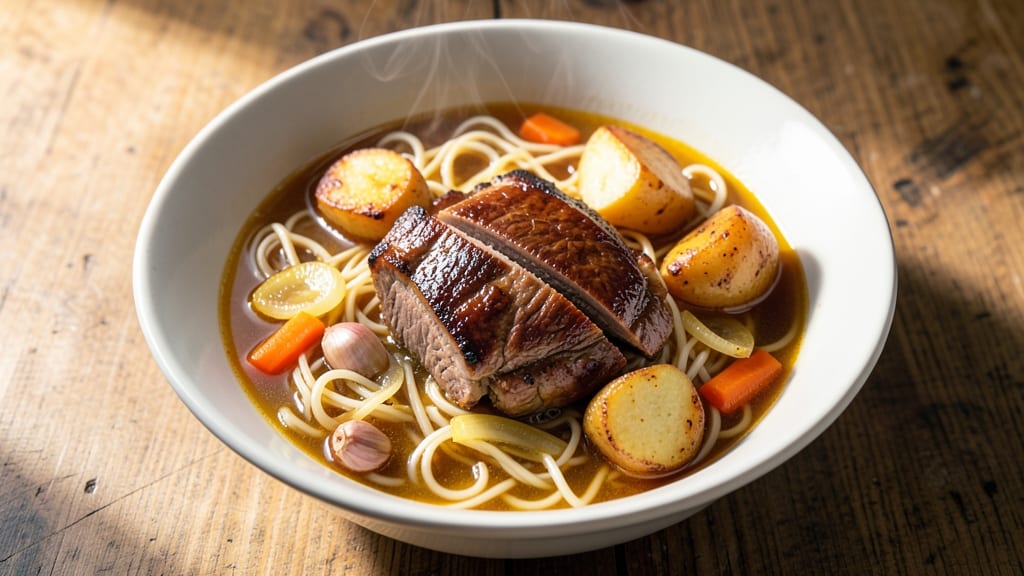
This Edikaikong soup brings the hearty warmth of Filipino home cooking to your table, where tender lamb, hearty noodles, and aromatic vegetables simmer together in a rich, savory broth. 💛 I first tasted this comforting dish during a visit to my Filipino friend's family home, where it was served during cold evenings—each spoonful felt like a hug.
The beauty of Edikaikong lies in its simplicity: a one-pot wonder that transforms humble ingredients into a deeply satisfying meal.
What makes this soup special is its ability to nourish both body and soul, with layers of flavor built through slow simmering and traditional seasonings. The dish traditionally features tender lamb, but I've included a vegetarian adaptation using mushrooms that delivers the same rich, umami depth.
Ready in about 90 minutes, it's perfect for feeding a crowd or meal prepping for the week.
Imagine a steaming bowl of golden broth loaded with tender meat (or mushrooms), chewy noodles, and vibrant vegetables—each bite packed with warmth and comfort. The secret lies in the slow cooking process, which allows all the flavors to meld together beautifully.
This is the kind of dish that feels like coming home, especially on chilly days when you need something hearty and satisfying.
Serve with crusty bread to soak up every last drop of that flavorful broth, or pair it with a simple green salad for balance. The leftovers reheat beautifully, making it an ideal make-ahead meal. Let's get cooking—your taste buds will thank you!
Ingredients for edikaikong soup
Six hearty ingredients transform into a bowl of Filipino comfort—warm, savory, and perfect for sharing.
| Ingredient | Amount | Notes |
|---|---|---|
| Lamb Shoulder 🐑 | 2 lb | Bone-in for flavor, cut into chunks |
| Egg Noodles 🍜 | 1 ½ lbs | Wide or medium egg noodles |
| Yellow Onions 🧅 | 2 whole | Thinly sliced, about 2 cups |
| Garlic Cloves 🧄 | 8 cloves | Minced for depth of flavor |
| Carrots 🥕 | 4 medium | Peeled and sliced into rounds |
| Potatoes 🥔 | 4 medium | Russet, peeled and cubed |
| Fresh Ginger 🌿 | 2 tbsp | Grated, for aromatic warmth |
| Tomatoes 🍅 | 4 medium | Ripe, diced for freshness |
| Coconut Milk 🥥 | 1 can | Full-fat for creaminess |
| Chicken Broth 💧 | 6 cups | Low-sodium preferred |
| Vegetable Oil 🫒 | 2 tbsp | For searing lamb |
| Salt 🧂 | 1 ½ tsp | Adjust to taste |
| Black Pepper 🌶️ | 1 tsp | Freshly ground preferred |
| Bay Leaves 🌿 | 2 whole | For subtle herbal notes |
| Green Onions 🧅 | 4 whole | Chopped for garnish |
The lamb is the star here—bone-in shoulder gives the richest flavor, but any cut will work. Costco or Whole Foods usually have great deals on lamb, and I always grab extra for other meals. If you're vegetarian, swap in shitake mushrooms (about 8 oz) for that meaty texture. The egg noodles? Store-brand works fine—no need to splurge on fancy ones. Look for wide or medium egg noodles, which hold up better to long simmering. Fresh ginger is key—the bright, zesty kind from the produce section, not the dried stuff. If you can't find it, substitute 1 tbsp ginger powder, but it won't be the same.
No coconut milk? Heavy cream or Greek yogurt adds richness, but coconut milk is traditional for that subtle sweetness. The tomatoes can be canned if fresh aren't in season—San Marzano if you're fancy, but any good-quality canned tomatoes work. For the broth, low-sodium is a must—you'll be adding salt anyway. The bay leaves? Don't skip them—they add a subtle herbal depth that ties everything together. If you're prepping ahead, par-cook the lamb and potatoes to cut down on simmering time later. The carrots and onions can be prepped the night before too—just store them in the fridge until you're ready to cook.
This soup tastes even better the next day—flavors meld beautifully after a night in the fridge. Keeps for 4-5 days in the fridge, freezes for 3 months. I always make a double batch—leftovers are perfect for lunches. Store in airtight containers, and reheat on the stove with a splash of water or broth. The noodles might get a little soft, but a quick stir with a splash of cold water brings them back to life. Garnish with green onions right before serving—they add a fresh pop of color and brightness.
Why You'll Love This Recipe
- One-Pot Magic: I swear by this—just toss lamb shoulder, onions, garlic, and carrots into a pot, simmer until the meat falls apart, then dump in noodles. No extra dishes, no stress, and honestly? That rich broth soaks into the noodles like a hug.
- Garlic Bomb: Between us, the garlic and lamb create this depth you won’t find in every soup. The onions caramelize just enough to add sweetness, while the lamb stays tender—crispy edges, melt-in-your-mouth center. It’s the kind of flavor that makes you pause mid-bite.
- Leftover Legend: This soup begs to be made in bulk. The broth thickens overnight, the noodles soften perfectly, and the lamb stays juicy. I’ve reheated it for breakfast, lunch, and dinner—no one ever complains. (Yes, even on a Tuesday night.)
- Budget Feast: Lamb shoulder is affordable, carrots stretch the meal, and noodles fill everyone up. For the price of takeout, I feed my whole family a hearty, satisfying bowl that actually feeds you—not just fills your stomach. My wallet thanks me every time.
Step-by-step instructions for Edikaikong soup
Here's the heartwarming method you'll love—rich lamb, tender noodles, and aromatic spices in one comforting pot.
🔥 Step 1: Sear the Lamb Shoulder for Deep Flavor
Heat the 2 tablespoons vegetable oil in a large Dutch oven over medium-high heat until shimmering. Add the 2 lb lamb shoulder, cut into chunks, and sear for 8-10 minutes, turning occasionally, until the pieces develop a rich golden-brown crust. This step builds the soup's foundation—don't rush it.
Real talk: If the lamb releases easily from the pan, it's ready. If it sticks, don't panic—just add a splash of chicken broth to deglaze and scrape up those flavorful browned bits. Here's the thing—those bits pack serious flavor that'll infuse your entire soup.
👨🍳 Step 2: Build the Aromatic Base
Remove the seared lamb and set it aside. In the same pot, add 2 whole yellow onions (thinly sliced), 8 cloves garlic cloves (minced), 4 medium carrots (sliced into rounds), and 4 medium potatoes (cubed). Stir for 2 minutes until the onions soften slightly and the garlic becomes fragrant.
Add the 2 tablespoons fresh ginger (grated) and 4 medium tomatoes (diced), stirring for another 3 minutes until the tomatoes break down and release their juices. This is where the soup's aromatic complexity develops—watch for the onions to turn translucent and the carrots to just begin softening.
🍳 Step 3: Simmer the Lamb and Vegetables
Return the lamb to the pot. Pour in 6 cups chicken broth and bring to a gentle boil. Once boiling, reduce heat to low, add the 2 whole bay leaves, and cover partially. Simmer for 1 hour 15 minutes until the lamb is fork-tender and pulls away from the bone easily.
I know it seems like a long wait, but this slow cooking ensures the lamb becomes melt-in-your-mouth tender while the vegetables absorb all that rich lamb flavor. Here's the moment that matters: check the lamb's internal temperature—it should reach 195°F for perfect tenderness.
🥘 Step 4: Finish with Creamy Comfort
Once the lamb is tender, remove it from the pot and shred it into bite-sized pieces using two forks. Return the shredded lamb to the pot and stir in the 1 can coconut milk. Add the 1.5 teaspoons salt and 1 teaspoon black pepper, then simmer uncovered for 10 minutes to let the flavors meld.
Here's where it gets fun—toss in the 1.5 lbs egg noodles and stir gently. Cook for 5-7 minutes until the noodles are al dente and the soup reaches your perfect consistency. If it's too thick, add a splash of the reserved lamb broth to loosen it. The noodles should float gently, not stick together.
🍽️ Step 5: Serve Warm with Fresh Garnish
Ladle the steaming edikaikong soup into bowls, garnishing each serving with chopped green onions (from the 4 whole green onions). The aroma alone will make your kitchen feel like a cozy Uzbek home—rich, comforting, and full of warmth.
Don't skip the garnish—those green onions add a fresh contrast to the creamy, hearty soup. Serve immediately with crusty bread to soak up every last drop of that flavorful broth. This is the kind of dish that tastes even better the second time you make it, so don't be surprised if you find yourself planning your next batch.
Pro Tips For Making Edikaikong Soup
- Brown the Lamb First: Don’t skip the sear—lamb shoulder needs a deep golden crust before simmering. After slicing, pat it dry, then hit the pan with oil and high heat until the edges crisp. I used to rush this and ended up with bland, gray meat. Trust me, the flavor difference is huge.
- Slice Carrots Thin: Edikaikong soup relies on quick cooking, and thick carrot rounds stay tough. Cut them into ¼-inch slices so they soften in the same time as the noodles. My grandmother swore by this, and she was right: mushy carrots ruin the texture.
- Don’t Overcrowd the Pot: If you pile everything in at once, the broth will turn cloudy and the lamb won’t cook evenly. Start with half the noodles, let them soften, then add the rest with the carrots. I learned this the hard way—my first batch looked like porridge.
- Save the Starch Water: Drain the egg noodles, but save the starchy water—it’s liquid gold for thickening the broth. Add a splash back in at the end, and the soup will coat the noodles like silk. Sounds weird, but it works: the texture becomes rich without gloopiness.
Flavor customization for this dish
Spicy Kick Option
For a fiery twist, stir in 1-2 tablespoons of sriracha or 1 fresh Thai chili (minced) when adding the coconut milk. If you love heat, add ½ teaspoon ground cayenne pepper along with the black pepper.
My Filipino friend's family always adds a dash of calamansi juice (or lemon juice in a pinch) for a bright, tangy contrast that cuts through the richness. Start with 1 teaspoon and adjust to taste—this little trick elevates the soup to restaurant-quality spice balance. 🌶️
Vegetarian Twist
Skip the lamb entirely and use 8 oz shiitake mushrooms (sliced) and 1 lb extra-firm tofu (pressed and cubed) for a hearty vegetarian version. Sauté the mushrooms first in the Dutch oven until golden, then proceed with the recipe as written.
The mushrooms soak up the broth beautifully, while the tofu adds a satisfying texture. For extra umami, add 1 tablespoon soy sauce when simmering the vegetables. This version proves Edikaikong soup is a comfort food for everyone. 🌱
Creamy Upgrade
Swap the coconut milk for a mix of ½ cup coconut milk and ½ cup heavy cream for a richer, velvety texture. The cream adds a luxurious mouthfeel while keeping the dish balanced.
For a dairy-free option, use ½ cup full-fat cashew cream (blend soaked cashews with water until smooth). I love this upgrade for special occasions—it feels indulgent without overpowering the other flavors. 🥥
Herb Infusion
Boost the aroma with 1 tablespoon fresh cilantro or 1 teaspoon dried thyme when simmering the vegetables. For a more complex flavor profile, add 1 sprig fresh rosemary along with the bay leaves. The herbs add a fragrant depth that pairs beautifully with the lamb and coconut milk.
Remove the herbs before serving—no one wants a mouthful of stems! This simple addition makes the soup taste like it's been simmering for hours. 🌿
Sweet-Savory Balance
Add 1 tablespoon brown sugar or 1 teaspoon honey when stirring in the coconut milk to create a subtle sweetness that rounds out the savory flavors. This technique is inspired by Filipino cooking, where sweet and savory often dance together.
The sugar caramelizes slightly as it simmers, adding a depth that makes the soup irresistible. Trust me—your taste buds will thank you for this little secret. 🍯
Nutrition facts
Frequently asked questions
What makes Edikaikong soup different from other noodle soups?
This soup stands out with its rich lamb broth and coconut milk base, creating a creamy yet savory profile. Unlike lighter noodle soups, Edikaikong features tender meat (or mushrooms) and vegetables that simmer together for deep flavor infusion. The slow cooking process makes it heartier than quick stir-fry noodle dishes.
Can I make Edikaikong soup without lamb?
For a vegetarian version, replace the lamb with 8 oz shiitake mushrooms and 1 lb pressed tofu. Sauté the mushrooms first to develop their umami flavor, then proceed with the recipe. The mushrooms absorb the broth beautifully, while tofu adds satisfying texture.
How do I know when the lamb is fully cooked?
The lamb is done when it reaches an internal temperature of 195°F and pulls away from the bone easily with a fork. For best results, simmer uncovered for the final 10 minutes to ensure tenderness. If using a meat thermometer, insert it into the thickest part of the meat.
Can I prepare Edikaikong soup ahead of time?
Yes! This soup tastes even better the next day as flavors meld. Store leftovers in airtight containers in the fridge for 4-5 days or freeze for 3 months. Reheat gently on the stove with a splash of water or broth. The noodles may soften further, but a quick stir with cold water revives their texture.
What's the best way to adjust the soup's thickness?
If the soup is too thick after adding noodles, stir in ½ cup broth or water to loosen it. For a creamier texture, reduce the broth slightly before adding coconut milk. The key is balance—aim for a consistency where noodles float gently without sticking together.