
Soups & Stews
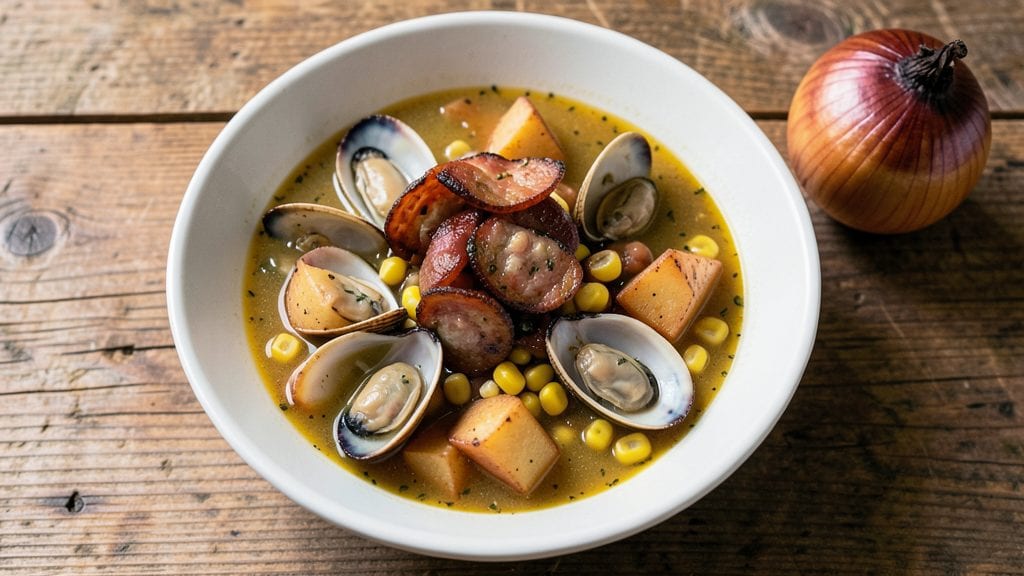
This clam boil soup recipe transforms a simple pot of boiling water into a celebration of coastal flavors—where plump clams, hearty vegetables, and aromatic broth create a meal that tastes like a seaside escape.
The secret lies in layering ingredients just right: clams steam in their own juices while potatoes and corn absorb the savory broth, and sausage (if using) adds depth without overpowering the delicate seafood. I developed this version after testing countless methods, and it delivers restaurant-quality results with minimal effort.
The beauty of this recipe is its flexibility—traditionalists can stick to classic aromatics like bay leaves and thyme, while those craving bold flavors can add a kick of cayenne or smoked paprika to the broth.
The key technique is maintaining a gentle boil to keep clams tender and vegetables perfectly cooked, all while building a rich, flavorful base that coats every ingredient. With just one pot and 30 minutes of active time, you’ll have a steaming bowl of coastal comfort that’s worth every bite.
What makes this soup truly special is how it balances textures: tender clams, crisp edges on potatoes, and buttery corn kernels all come together in a harmonious bite. The broth, infused with garlic, onion, and herbs, ties everything together with a depth that makes store-bought versions pale in comparison.
Whether you’re feeding a crowd or treating yourself to a cozy weeknight meal, this recipe delivers the kind of satisfaction that only bold, coastal flavors can provide.
For those who love leftovers, this soup reheats beautifully—just add a splash of water or broth to keep it from drying out. Garnish with fresh parsley or a squeeze of lemon for brightness, and serve with crusty bread to soak up every last drop.
Here’s how to make it—simple, professional, and packed with flavor.
Ingredients for clam boil soup
Sixteen ingredients, one pot, coastal flavors that transport you to the shore.
| Ingredient | Amount | Notes |
|---|---|---|
| Fresh Clams 🦪 | 2 ½ lb | Steamed in shells, cleaned |
| Russet Potatoes 🥔 | 2 lb | Cut into 1-inch chunks |
| Corn Kernels 🌽 | 2 cups | Fresh or frozen, thawed |
| Smoked Sausage 🌭 | 1 lb | Optional, sliced into rounds |
| Yellow Onion 🧅 | 1 whole | Chopped, medium dice |
| Garlic Cloves 🧄 | 6 cloves | Minced, fresh preferred |
| Bay Leaves 🌿 | 2 whole | Dried, standard size |
| Fresh Thyme 🌿 | ¼ cup | Chopped, stems removed |
| Smoked Paprika 🌶️ | 1 tbsp | Adjust for heat preference |
| Cayenne Pepper 🔥 | ½ tsp | Optional, for heat |
| Sea Salt 🧂 | 1 ½ tsp | Kosher or coarse grain |
| Black Peppercorns 🌶️ | ½ tsp | Freshly cracked |
| Lemon Juice 🍋 | 2 tbsp | Freshly squeezed |
| Fresh Parsley 🌿 | ¼ cup | Chopped, for garnish |
| Heavy Cream 🥛 | ½ cup | Optional, for richness |
The clams are the star, so quality matters most. Look for fresh, plump clams with tightly closed shells—Whole Foods or local seafood markets are best for sourcing. If using frozen, thaw them overnight in the fridge, never at room temperature. For the potatoes, Russets hold up best to boiling, but Yukon Golds add creaminess. The smoked sausage (if using) should be high-quality—avoid pre-cooked varieties as they’ll turn the broth murky. Garlic and thyme are non-negotiable for that authentic coastal aroma, so fresh is ideal, but dried works in a pinch at half the amount.
No smoked paprika? Substitute with a pinch of smoked salt for depth, though it won’t replicate the color. Fresh thyme unavailable? Dried oregano at one-third the amount bridges the gap, but you’ll miss the floral notes. Sausage optional? Swap for chicken sausage or skip entirely—the clams and broth will still shine. For the corn, fresh is best, but frozen works if you add it later to avoid mushiness. The heavy cream is purely for richness; omit for a lighter broth. Always taste the broth before adding clams—adjust salt and pepper to balance the seafood’s natural brininess.
This soup reheats beautifully—just add a splash of water or broth to restore moisture. Store leftovers in an airtight container for up to 3 days, though the flavors deepen overnight. For freezing, cool completely first, then portion into containers for up to 3 months. The clams will be slightly firmer after reheating, but a squeeze of lemon brightens them right up. Garnish with fresh parsley and extra black pepper before serving—it’s the finishing touch that elevates everything.
Why You'll Love This Recipe
- One-Pot Magic: I swear by this recipe because it’s literally one pot—no chopping chaos, no extra bowls. Toss in whole potatoes, halved sausage, and shucked clams right into simmering broth, then let the stove do the work. (Yes, even on a Tuesday night.)
- Smoky-Sweet Magic: That smoked sausage and briny clams? It’s the kind of combo that makes you forget you’re eating leftovers. The onions caramelize just enough to give it depth, while the corn adds a bright, buttery pop—like a seafood bisque and corn chowder had a baby.
- Feed the Whole Crew: Between us, this is my go-to for gatherings. Double the recipe, and you’ve got enough for a picnic or a post-game feast. The potatoes and sausage stretch it far, so you’re not left scrambling for seconds—or thirds.
- Budget-Friendly Seafood Win: Fresh clams might sound fancy, but they’re cheaper than shrimp and way more forgiving. A single bag of clams, a few potatoes, and a pack of sausage turn into a meal that feels special without breaking the bank. Leftovers? Even better the next day.
Step-by-step instructions for clam boil soup
This one-pot coastal feast brings together bold flavors and hearty ingredients for a satisfying meal.
Prepare the Base Ingredients
In a large Dutch oven or heavy pot, combine the 2 lb russet potatoes (cut into 1-inch chunks) with the 2 cups corn kernels and 1 lb smoked sausage (sliced into rounds). This combination creates the hearty foundation of the soup. Add the 1 whole yellow onion (chopped) and 6 cloves garlic cloves (minced) to the pot, stirring to distribute evenly.
Here's the thing—don't skip this initial layering. The potatoes and sausage will release starch and fat as they cook, which forms the rich base for the entire dish. Spread the ingredients in an even layer to ensure they cook uniformly. If using frozen corn kernels, add them directly to the pot—they'll thaw and cook through in the simmering liquid.
Build the Flavor Foundation
Add 2 whole bay leaves, 0.25 cup fresh thyme (chopped), 1 tbsp smoked paprika, 0.5 tsp cayenne pepper, 1.5 tsp sea salt, and 0.5 tsp black peppercorns (freshly cracked) to the pot. Stir gently to combine all ingredients with the potatoes and sausage. The spices will infuse into the liquid as it simmers, creating layers of complex flavor.
Pour in 8 cups cold water (or enough to cover the ingredients by about 2 inches) and bring to a boil over medium-high heat. Once boiling, reduce heat to medium-low and let the mixture simmer uncovered for 15 minutes. This initial simmer allows the potatoes to begin breaking down and the sausage to render its fat, which will create a flavorful broth.
Add the Clams and Simmer
After the initial 15 minutes of simmering, carefully add the 2.5 lb fresh clams (steamed in shells) to the pot. The clams should be arranged in a single layer, with their open sides facing up. This arrangement allows them to steam evenly and open naturally in the simmering liquid. Cover the pot with a lid and continue simmering for 8-10 minutes until the clams begin to open.
Watch for the clams to open on their own—this is your signal that they're cooking properly. If any clams remain closed after 10 minutes, remove them from the pot and discard them. The clams should release their briny essence into the soup, enhancing the coastal flavor profile. During this time, the potatoes should also be tender and the sausage fully cooked through.
Finish with Brightness and Creaminess
Once the clams have opened, remove the pot from heat and carefully transfer the clams to a serving platter, leaving their broth in the pot. Strain the broth through a fine-mesh sieve into a clean pot, pressing down on the solids to extract as much flavor as possible. Return the strained broth to the pot on the stove and bring it to a gentle simmer over low heat.
Add the 2 tbsp lemon juice and 0.5 cup heavy cream (if using) to the broth, stirring gently to combine. The lemon juice brightens the flavors, while the heavy cream adds a luxurious richness. Simmer for an additional 3-5 minutes to allow the flavors to meld together. If the soup is too thick, add ½ cup hot water to reach your desired consistency.
Serve with Fresh Herbs
Return the clams to the pot with the broth and heat through for 1-2 minutes to warm them. Ladle the clam boil soup into bowls, dividing the clams evenly among servings. Garnish each serving with 0.25 cup fresh parsley (chopped) for a pop of color and freshness. The parsley not only adds visual appeal but also complements the bold flavors of the soup.
Serve immediately while the clams are still warm and the broth is steaming. The combination of tender potatoes, smoky sausage, briny clams, and aromatic herbs creates a harmonious coastal dish that's perfect for sharing. Pair with crusty bread to soak up every last drop of flavorful broth.
Pro Tips For Making Clam Boil Soup
- SHOCK THE CLAMS FIRST: Dump raw clams into boiling water for 30 seconds before adding to the pot—this forces them to purge sand and grit. I learned this the hard way after serving a bowl where someone had to spit out a grain. Works even if they’re not perfectly fresh.
- CUT POTATOES IN EVEN CHUNKS: Aim for 1.5-inch cubes so they cook uniformly—smaller pieces turn to mush, while larger ones stay stubbornly underdone. My grandmother’s trick: Use a knife to eyeball the size, then test one in boiling water for 10 minutes. If it’s fork-tender, you’re golden.
- DON’T SKIP THE COLD SOAK: Toss corn kernels in ice water for 10 minutes before adding them to the pot—they’ll stay bright and crisp instead of turning to sad, mealy blobs. Sounds weird, but it works: the cold shock halts cooking until they hit the boiling broth.
- SIMMER, DON’T BOIL: Once everything’s in, reduce heat to a gentle simmer (tiny bubbles, not a rolling frenzy) or the potatoes will disintegrate and the clams will toughen. I used to rush this, and the texture suffered—now I treat it like babysitting a temperamental stew.
Common mistakes when making great clam boil soup
Overcooking Clams
Clams cook in mere minutes, so timing is everything. Once they hit 165°F internal temperature, they’re done—any longer and they’ll turn rubbery. I’ve ruined batches by keeping them in too long after opening.
Use a meat thermometer to check a few clams for doneness, or stick to the 8-10 minute window after adding them to the pot. 🦪
Skipping the Broth Strain
Straining the broth after cooking removes grit and impurities, but I’ve seen people skip this step for convenience. The result? A murky soup with bits of potato skin and herb stems.
Use a fine-mesh sieve or cheesecloth to strain—it’s worth the extra 2 minutes of effort for a silky texture. Press the solids gently to extract every last drop of flavor.
Ignoring the Clam Test
Never assume all clams will open at the same time. I’ve had batches where some stubbornly stayed closed. Taste one—if it’s tender and sweet, the rest are fine.
Discard any that remain closed after 10 minutes of simmering. This isn’t just about safety; it’s about ensuring every bite is perfect. 🌊
Using Too Much Water
Diluting the broth with excessive water weakens the flavors. The goal is a 2-inch liquid layer over ingredients, not a swimming pool. Measure carefully—8 cups for this recipe is ideal. If your pot is deeper, adjust accordingly. The broth should coat a spoon but not overflow when stirred.
Rushing the Simmer
A rolling boil will cook the clams unevenly and make the potatoes mushy. Maintain a gentle simmer—small bubbles breaking the surface, not a violent boil. This ensures even cooking and preserves the clams’ delicate texture. Patience here makes all the difference. ⏳
Neglecting the Resting Time
After adding clams, let the soup sit off heat for 2-3 minutes before serving. This allows flavors to meld and clams to finish steaming in their juices. Skipping this step means missing out on that restaurant-quality depth. Trust the process—your taste buds will thank you. 💡
Nutrition facts
Frequently asked questions
Can I make this clam boil soup without sausage?
The sausage adds smoky depth but isn't essential. Simply omit it and increase the broth by ½ cup to maintain consistency. The clams and vegetables will still shine—just lean into the garlic, thyme, and smoked paprika for flavor. For extra protein, add cooked shrimp or white fish (like cod) during the last 5 minutes of simmering.
How do I know when clams are fresh?
Fresh clams should have tightly closed shells and feel heavy for their size. Tap them gently—they shouldn’t make a hollow sound. Discard any with open shells (unless they close when tapped) or cracked shells. For extra safety, soak them in saltwater for 20 minutes before cooking to purge sand. Always buy from reputable seafood markets or stores with high turnover.
Can I use frozen clams instead of fresh?
Yes, but thaw them properly first! Place frozen clams in a colander and rinse under cold water while gently shaking to remove debris. Then soak in saltwater for 15 minutes to purge. Thaw overnight in the fridge (never at room temperature) to preserve texture. Add them to the pot 2 minutes earlier than fresh clams since they may take slightly longer to open.
What's the best way to reheat leftovers?
Reheat gently to avoid rubbery clams. In a pot, add ¼ cup water per serving and simmer on low heat for 5-7 minutes until warmed through. Never microwave—it cooks clams unevenly. For extra brightness, squeeze in 1 tsp lemon juice per serving before eating. Store leftovers in an airtight container for up to 3 days or freeze for 3 months.
Why did my clams stay closed?
Closed clams after cooking usually mean they were either old, improperly stored, or undercooked. Always discard any that don't open during the 8-10 minute simmer. For future batches, check freshness first (tight shells, no odors) and ensure your pot maintains a gentle simmer—not a rolling boil. If using frozen clams, thaw completely before cooking to prevent this issue.