
Soups & Stews
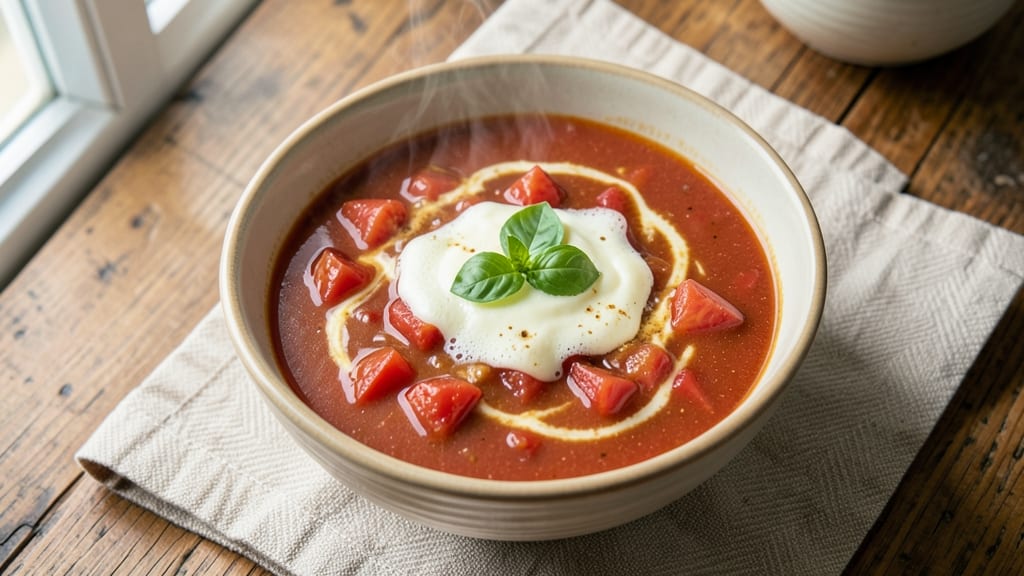
This canned diced tomato soup recipe proves you don’t need fresh tomatoes to create restaurant-quality comfort in minutes—just a pantry staple and precise technique. The secret lies in balancing acidity, sweetness, and creaminess while simmering just long enough to develop depth without losing texture.
I’ve perfected this method after years of testing shortcuts that still deliver professional results, and it never fails to impress.
The beauty of this approach is its adaptability—whether you’re prepping for a weeknight dinner or doubling for leftovers, the foundation remains the same. A simple roux thickens the base while preserving the natural flavor of the canned tomatoes, and optional additions like cream or herbs elevate it further.
What you’ll end up with is a velvety, aromatic soup with just the right balance of tangy and sweet notes.
Perfectly seasoned and smooth enough to sip straight from a bowl, this soup pairs beautifully with grilled cheese, crusty bread, or a sprinkle of fresh basil. The best part?
It comes together in 20 minutes without sacrificing depth or texture. Let’s get cooking—this is the kind of meal that turns a simple pantry staple into something extraordinary.
For those who prefer extra richness, a splash of heavy cream or a pat of butter at the end adds luxurious body, while a pinch of sugar or a splash of balsamic vinegar can fine-tune the balance.
The recipe scales effortlessly, making it ideal for meal prep or feeding a crowd. Here’s how to make it perfectly every time.
Ingredients for canned diced tomato soup
Pantry staples and precise technique transform simple canned tomatoes into restaurant-quality soup.
| Ingredient | Amount | Notes |
|---|---|---|
| Canned Diced Tomatoes 🍅 | 2 cans | 28 oz each, San Marzano preferred |
| Unsalted Butter 🧈 | 4 tbsp | Cold, cut into small cubes |
| All-Purpose Flour 🌾 | 2 tbsp | For roux, Diamond Crystal preferred |
| Heavy Cream 🥛 | 1 cup | Full-fat for optimal creaminess |
| Vegetable or Chicken Broth 💧 | 2 cups | Low-sodium preferred |
| Granulated Sugar 🍯 | 1 tsp | Balances acidity |
| Dried Thyme 🌿 | ½ tsp | Or 1 tbsp fresh thyme leaves |
| Garlic Cloves 🧄 | 3 cloves | Peeled and roughly chopped |
| Salt 🧂 | ½ tsp | Kosher or sea salt |
| Black Pepper 🌶️ | ¼ tsp | Freshly ground preferred |
| Balsamic Vinegar 🍷 | 1 tbsp | Optional, for depth |
| Fresh Basil Leaves 🌿 | ¼ cup | Chopped, for garnish |
| Parmesan Cheese 🧀 | ¼ cup | Freshly grated, for garnish |
The canned tomatoes are the foundation, so San Marzano makes all the difference if you can find them—they’re sweeter and less acidic than standard brands. Most grocery stores carry them, but Whole Foods or Italian markets often have the best selection. If you’re using regular diced tomatoes, drain them well to avoid excess liquid. The butter and flour create a simple roux that thickens the soup beautifully—never skip this step, as it prevents a watery texture. For the broth, low-sodium options give you better control over seasoning, and you can always add more salt later.
No heavy cream? Half-and-half or whole milk works in a pinch, though the texture will be slightly lighter. Fresh thyme is ideal, but dried thyme at one-third the amount suffices when fresh isn’t available. The garlic can be minced or even pressed through a garlic press for convenience. For extra richness, a pat of butter stirred in at the end adds luxurious body without curdling. If you prefer a sharper flavor, a splash of red wine vinegar can replace the balsamic. The balsamic vinegar is optional but adds a sophisticated depth that elevates the soup from ordinary to extraordinary.
This soup reheats beautifully—simply warm on the stove with a splash of broth or water to thin it out if needed. Store leftovers in an airtight container in the refrigerator for up to 5 days, though it’s best enjoyed within 3 days for peak freshness. For meal prep, double the batch and freeze portions in 4-ounce containers—they thaw quickly and maintain their velvety texture. Garnish with fresh basil and Parmesan just before serving to keep the flavors vibrant.
Why You'll Love This Recipe
- Pantry Magic: I swear by this recipe—no fresh tomatoes, no fancy prep. Just open a can, melt butter, and stir. That’s it. The canned tomatoes give it a deep, consistent flavor without the mess of peeling or chopping.
- Rich Without Effort: The heavy cream and roux (butter + flour) make this velvety smooth, but honestly, it’s the canned tomatoes that steal the show. Sweet, tangy, and just thick enough—no lumps, no fuss. My kids ask for seconds before I even finish serving.
- Leftovers That Shine: This soup tastes even better the next day. I make a big batch on Sundays, and by Wednesday, it’s still rich and comforting. Freeze half if you’re feeling extra—just reheat and add a splash of broth. No sad, watery soup here.
- Budget Meal, Big Impact: Canned tomatoes and broth are cheap, but the heavy cream and butter make it feel special. It’s my go-to when I’m broke but still want to eat well. Plus, it’s the only soup I make that actually feels like a treat.
Step-by-step instructions for canned diced tomato soup
A rich, velvety tomato soup comes together effortlessly with pantry staples and precise technique.
Melt Butter and Create a Smooth Roux
In a large, heavy-bottomed pot, melt the 4 tablespoons unsalted butter over medium heat. Once the butter has fully melted and begins to foam, add the 2 tablespoons all-purpose flour all at once. Stir continuously with a wooden spoon for 2-3 minutes until the mixture turns a pale golden color and smells nutty.
This roux forms the foundation of your soup, thickening the sauce and adding depth of flavor. If the roux darkens too quickly, reduce the heat slightly—it should cook gently without browning. The moment it reaches that perfect pale gold, you're ready for the next step.
Cook Tomatoes and Aromatics Until Fragrant
Pour in the 2 cans canned diced tomatoes (with juices) and stir to combine with the roux. Add the 2 cups vegetable or chicken broth, 1 teaspoon granulated sugar, 0.5 teaspoon dried thyme, 0.5 teaspoon salt, and 0.25 teaspoon black pepper. Bring the mixture to a gentle simmer over medium-low heat. Meanwhile, finely chop the 3 cloves garlic and the 0.25 cup fresh basil leaves (reserve a few leaves for garnish).
Once simmering, stir in the garlic and cook for 5 minutes until the tomatoes begin to break down slightly and the mixture thickens. The garlic should be fragrant but not browned—this ensures a sweet, aromatic base without bitterness. Taste the soup at this stage; adjust seasoning if needed, as canned tomatoes can vary in acidity.
Add Cream and Simmer for Creamy Texture
Reduce the heat to low and gradually whisk in the 1 cup heavy cream. Stir constantly for 3-4 minutes until the soup thickens slightly and the cream is fully incorporated. The soup should coat the back of a spoon smoothly—this indicates the perfect consistency for a luxurious, velvety texture. If the soup is too thick, thin it with a splash of warm broth; if too thin, simmer uncovered for another 2-3 minutes to reduce slightly.
Here's where the magic happens: the cream adds richness while balancing the acidity of the tomatoes. Avoid boiling the soup at this stage—gentle heat preserves the cream's velvety quality. If you notice any skin forming on the surface, stir it back in or skim it off before serving.
Finish with Balsamic and Garnish
Remove the pot from heat and stir in the 1 tablespoon balsamic vinegar. This step adds a subtle tang that brightens the soup and rounds out the flavors. Return the soup to low heat for just 1 minute to meld the balsamic, then turn off the heat. Ladle the soup into bowls, dividing the 0.25 cup freshly grated Parmesan cheese evenly among them. Garnish each serving with the reserved chopped basil leaves.
The balsamic vinegar might seem like an afterthought, but it transforms the soup by adding complexity—think of it as the secret weapon that elevates pantry ingredients to restaurant-quality. Serve immediately while warm, with crusty bread to soak up every last drop of that creamy, aromatic broth.
Pro Tips For Making Canned Diced Tomato Soup
- Cook the Flour First: Melt the butter over medium heat, then add the flour and stir like you’re trying to win a race—keep it moving for 1-2 minutes until it’s golden and smells nutty. I used to rush this step and wondered why my soup tasted flat; this is where the depth starts.
- Drain and Rinse Tomatoes: Open the can, dump the tomatoes into a colander, and rinse them under cold water to wash away excess salt and pulp. The juice left behind is watery and dulls the flavor—this keeps the soup bright and balanced.
- Temper the Cream: Before stirring in the heavy cream, ladle a small cup of the hot soup into it first and whisk until smooth. Adding cold cream straight to hot soup turns it grainy, and nobody wants a lumpy tomato soup.
- Simmer, Don’t Boil: Once everything’s combined, reduce the heat to low and let it bubble gently for 10-15 minutes. Boiling burns the tomatoes and makes the soup taste bitter—this slow simmer builds flavor without wrecking it.
Best sauces and condiments for this dish
Creamy Upgrades
For extra richness, stir in 2 tablespoons sour cream or 1 tablespoon crème fraîche at the end—these add tangy depth without curdling.
If you prefer a lighter option, swap the heavy cream for ½ cup coconut milk (full-fat for best texture) and a splash of ½ cup evaporated milk for a dairy-free version. I often keep a small batch of this creamier version in the fridge for quick lunches. 🥛
Acidity Balancers
A pinch of sugar or a splash of vinegar can work wonders if your tomatoes taste too sharp. For a refined touch, add 1 teaspoon maple syrup or ½ teaspoon honey> to the roux before adding tomatoes.
If you prefer acidity, stir in 1 teaspoon red wine vinegar> or ½ teaspoon lemon juice> at the end. The key is to taste as you go—adjust gradually to avoid overpowering the natural tomato flavor.
Umami Boosters
For deeper savory notes, stir in 1 teaspoon soy sauce> or ½ teaspoon Worcestershire sauce> when adding the broth. A splash of 1 tablespoon fish sauce> (trust me, it’s subtle!) or 1 teaspoon miso paste> dissolves beautifully into the creamy base.
These additions elevate the soup from simple to restaurant-worthy without overpowering the tomatoes. 🍜
Herb and Spice Infusions
Fresh herbs transform this soup instantly. Add 1 teaspoon dried oregano> or ½ teaspoon smoked paprika> to the roux for warmth, or stir in 1 tablespoon chopped fresh parsley> at the end for brightness.
For a Middle Eastern twist, sprinkle ½ teaspoon ground cumin> and top with toasted pine nuts>. The herbs should complement, not dominate—the tomatoes are the star, after all.
Cheese Variations
Parmesan is classic, but don’t stop there. Swap it for Pecorino Romano> for saltier bite or Gruyère> for nutty depth. For a vegan option, use nutritional yeast> (½ cup) and a sprinkle of smoked paprika> to mimic the umami.
I love adding crumbled feta> at the end for a briny contrast—just fold it in gently to avoid breaking the creamy texture.
Texture Add-Ins
Crunchy elements add dimension. Stir in ½ cup cooked lentils> or ½ cup diced roasted potatoes> for heartiness, or top with toasted breadcrumbs> for a crisp finish. For a smoky touch, add ½ teaspoon liquid smoke> to the broth or top with crumbled bacon>.
These additions turn a simple soup into a full, satisfying meal. 🥓
Nutrition facts
Frequently asked questions
Can I make this soup without heavy cream?
For a lighter version, swap the heavy cream with ½ cup coconut milk (full-fat for best texture) or ½ cup evaporated milk. If you prefer dairy-free, use ½ cup Greek yogurt stirred in at the end. The soup will still be flavorful but slightly less rich.
How do I fix my soup if it's too acidic?
Add ½ teaspoon sugar or 1 teaspoon maple syrup to balance the acidity. For a more refined touch, stir in ½ teaspoon honey or a splash of balsamic vinegar. Taste as you go—start small to avoid overpowering the tomato flavor.
Can I use tomato paste instead of canned diced tomatoes?
Yes, but adjust the liquid ratio. Use ¼ cup tomato paste mixed with 1 cup warm water to replace the canned tomatoes. Add the paste to the roux first and stir well before adding broth. The texture will be slightly thicker, so thin with extra broth if needed.
How long can I store leftovers?
Store leftovers in an airtight container in the fridge for up to 5 days. For best flavor, reheat gently on the stove with a splash of broth or water. Freeze portions in 4-ounce containers for up to 3 months—thaw overnight in the fridge before reheating.
What's the best way to serve this soup?
Pair it with grilled cheese sandwiches, crusty bread, or toasted baguette slices. For extra flair, top with crumbled feta, toasted breadcrumbs, or a drizzle of olive oil. The creamy texture makes it perfect for dipping too!