
Soups & Stews
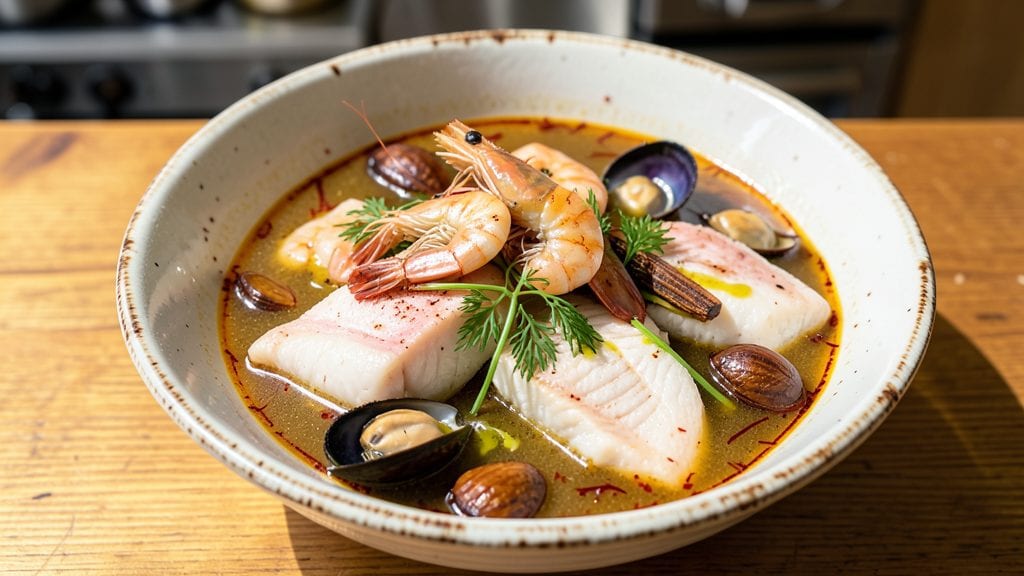
This bouillabaisse soup recipe brings the sun-drenched flavors of Provence to your kitchen with its signature saffron-infused broth and crispy garlic rouille. The dish transforms humble fish and shellfish into a luxurious stew that simmers to perfection, balancing earthy fennel with delicate seafood.
I've spent years perfecting this technique to capture the restaurant-quality depth that makes bouillabaisse unforgettable.
The secret lies in the broth, where saffron threads dissolve into golden liquid while fennel and bay leaves build aromatic complexity. Fresh fish like monkfish or halibut hold their structure beautifully, while shrimp and mussels add briny contrast.
The rouille—a garlicky, crispy mayonnaise—transforms the soup into a complete experience, offering both cooling relief and bold flavor.
What you'll achieve is a dish that feels both rustic and refined: tender fish swimming in fragrant broth, topped with vibrant herbs and served alongside that signature rouille. The saffron-infused liquid carries the essence of Provence, while the rouille adds a textural contrast that makes every bite exciting.
This is the kind of soup that commands attention at the table.
The recipe scales beautifully for gatherings, though it shines equally as a cozy weeknight meal. Whether you're celebrating a special occasion or simply craving something extraordinary, this bouillabaisse delivers restaurant-quality results with authentic Provençal soul. Let's begin with the foundation that makes it all possible—the broth.
Ingredients for bouillabaisse soup
Sixteen ingredients, all working together to bring Provençal magic to your pot.
| Ingredient | Amount | Notes |
|---|---|---|
| Monkfish Fillets 🐟 | 1 ½ lb | Skin-on for texture, cut into chunks |
| Halibut Fillets 🐟 | 1 ½ lb | Skin-on, cut into 1-inch pieces |
| Large Shrimp 🦐 | 1 lb | Peeled, deveined, tails on |
| Mussels 🦪 | 1 lb | Fresh, scrubbed, debearded |
| Cloves Garlic 🧄 | 8 cloves | Fresh, smashed for rouille |
| Saffron Threads 🌼 | ¼ tsp | High-quality, crushed threads |
| Fennel Bulb 🌿 | 1 whole | Trimmed, sliced thin |
| Yellow Onion 🧅 | 1 whole | Medium, chopped |
| Carrot 🥕 | 2 whole | Medium, sliced |
| Celery Stalks 🌱 | 3 whole | Trimmed, chopped |
| Bay Leaves 🌿 | 2 whole | Fresh, for broth |
| San Marzano Tomatoes 🍅 | 14 ½ oz | Crushed, canned |
| Dry White Wine 🍷 | 1 cup | Sauvignon Blanc preferred |
| Fish Stock 💧 | 4 cups | Homemade or high-quality |
| Extra-Virgin Olive Oil 🫒 | ½ cup | For rouille and frying |
| Mayonnaise 🥫 | ½ cup | High-quality, for rouille |
| Fresh Parsley 🌿 | ¼ cup | Chopped, for garnish |
| Lemon Juice 🍋 | 2 tbsp | Freshly squeezed |
| Salt 🧂 | 2 tsp | Diamond Crystal preferred |
| Black Peppercorns 🌶️ | ½ tsp | Freshly cracked |
The fish selection is non-negotiable for authentic bouillabaisse. Monkfish and halibut are the stars—they hold their shape beautifully while absorbing the broth's flavors. Costco or Whole Foods usually carry monkfish fillets, but check the seafood counter at Trader Joe's for halibut. If you can't find monkfish, cod or haddock work in a pinch. The shrimp and mussels should be the freshest you can get—day-of delivery from your fishmonger is ideal. For the saffron, Penzeys sells the good stuff in small tins, but any reputable spice merchant will have quality threads. Look for vibrant red color and a rich aroma when crushed.
No white wine? Dry vermouth or even apple juice works in a bind, though the flavor won't be identical. The tomatoes are crucial—San Marzano in 14.5 oz cans is the gold standard, but any high-quality crushed tomatoes will do. For the rouille, Duke's or Hellmann's mayo gives the best texture, but don't skimp on the olive oil—California extra-virgin adds that fruity depth. The fish stock should be homemade if possible, but Pacific Foods brand is a solid store-bought option. Fresh herbs are ideal, but dried parsley at half the amount gets you close if needed. The fennel should be crisp—avoid any with yellowing fronds.
This soup tastes even better the next day as the flavors meld. Store the broth separately from the seafood in the fridge for up to 3 days. The rouille keeps for 2 days in the fridge if covered with a thin layer of olive oil. For a crowd, double the broth ingredients and make the rouille in batches—it reheats beautifully. Freeze the broth portion for up to 3 months in airtight containers. The seafood should be added fresh to the broth when reheating for optimal texture.
Why You'll Love This Recipe
- No Fussy Prep: I swear, the hardest part is peeling shrimp—everything else? Just toss monkfish, halibut, and mussels into simmering broth with garlic and saffron. That’s it. No chopping, no measuring, no stress.
- Garlic-Saffron Magic: Between the crushed garlic frying until golden and the saffron threads dissolving into the broth, this soup has layers. The monkfish melts into flaky perfection while the shrimp stay plump—honestly, I’ve never tasted seafood this alive.
- Weeknight to Dinner Party: Same recipe, two vibes. Serve it with crusty bread for a lazy Tuesday, or add a splash of white wine and lemon zest to impress guests. The mussels steam open like magic, so you’ll always look like you planned it.
- Leftover Luxury: Unlike most seafood dishes, bouillabaisse improves overnight. The flavors meld deeper, and reheating? Just a splash of water, a minute in the microwave—still rich, still crave-worthy. My freezer’s full of it.
Step-by-step instructions for bouillabaisse soup
This Provençal classic delivers restaurant-quality fish stew with a signature crispy garlic rouille.
Build the Flavorful Fish Broth
Heat the 0.5 cup extra-virgin olive oil in a large stockpot over medium heat. Add the chopped 1 whole yellow onion, 2 whole carrot, and 3 whole celery stalks, cooking for 8-10 minutes until softened and fragrant. This aromatic base forms the soul of your bouillabaisse.
Add the 8 cloves smashed garlic, 2 whole bay leaves, and 14.5 oz crushed San Marzano tomatoes. Stir and cook for 5 minutes until the tomatoes break down and the mixture darkens slightly. This is where the deep, savory foundation takes shape.
Pour in the 1 cup dry white wine and simmer for 3 minutes to cook off the alcohol completely. Gradually add the 4 cups fish stock, bring to a gentle boil, then reduce heat to maintain a simmer. Add the 0.25 tsp crushed saffron threads and stir just once - saffron loses its vibrant color when overworked.
Prepare the Seafood Components
While the broth simmers, prepare the seafood. In a separate bowl, combine the 1 lb large shrimp with 1 tbsp lemon juice and set aside. For the mussels, scrub each shell thoroughly with a brush and pull out the beards - any remaining debris will cloud your broth.
Cut the 1.5 lb monkfish fillets into 1-inch chunks, leaving the skin on for texture. Similarly, cut the 1.5 lb halibut fillets into 1-inch pieces - the skin will crisp beautifully during cooking. Arrange all seafood on a plate and keep covered until ready to add.
Slice the 1 whole fennel bulb thinly and set aside. This anise-flavored vegetable adds a subtle sweetness that complements the seafood perfectly. The fennel will cook quickly in the hot broth, so don't add it too early or it will turn mushy.
Cook the Seafood in Stages
Add the 1 lb mussels to the simmering broth and cook for 3-4 minutes until they open. Remove any that don't open after this time - they're not safe to eat. Strain the broth through a fine-mesh sieve into a clean pot, discarding the solids and reserving the liquid.
Return the strained broth to the pot and bring back to a gentle simmer. Add the 1 lb shrimp first and cook for 2 minutes - they'll finish quickly. Then add the monkfish and halibut chunks, along with the sliced fennel. Simmer for 4-5 minutes until the fish is just cooked through and flakes easily with a fork.
Season with 2 tsp salt and 0.5 tsp cracked black peppercorns, adjusting to taste. The broth should be flavorful but not overwhelming - remember, the fish will contribute its own delicate taste. Keep the soup warm while you prepare the rouille.
Create the Signature Crispy Garlic Rouille
In a small saucepan, combine the 0.5 cup mayonnaise, 0.25 cup chopped fresh parsley, 1 tbsp lemon juice, and 1 tsp salt. Cook over low heat for 2-3 minutes, stirring constantly, until the mixture reaches 160°F - just warm enough to kill any bacteria without cooking the mayonnaise.
Transfer the warm rouille to a small skillet and add 2 tbsp extra-virgin olive oil. Cook over medium-low heat for 3-4 minutes, stirring constantly, until the rouille thickens and develops a golden, crispy crust on the bottom. This is your signature element - the crispy texture contrasts beautifully with the creamy base.
Remove from heat immediately and spread the rouille on a serving platter. The contrast between the warm soup and cool rouille makes this dish unforgettable. Serve the bouillabaisse family-style with crusty bread and the rouille on the side for dipping.
Pro Tips For Making Bouillabaisse Soup
- Sear Fish First: Monkfish and halibut release their magic when they hit a screaming-hot pan first—cast iron or stainless steel—before going into the broth. Three minutes per side until deeply golden, then transfer to a plate. This step locks in flavor and texture better than tossing them in raw.
- Mustard Paste, Not Powder: Skip the powder unless you’re in a rush. Whisk 1 tablespoon of Dijon mustard with the garlic and a splash of broth to emulsify the roux. The paste binds the sauce better than powder ever will, and it adds that subtle tang bouillabaisse needs.
- Don’t Overcrowd the Mussels: Mussels steam instead of cook if you dump them all in at once. Work in batches—no more than a pound at a time—and add them to the simmering broth just 3–4 minutes before serving. They’ll open perfectly, and the broth stays clear.
- Save the Shrimp Shells: After peeling shrimp, crush the shells with a mortar or knife and toss them into the broth with the garlic. Simmer for 10 minutes first—they’ll infuse a deep umami that store-bought stock can’t match. Strain before adding the fish.
Dietary considerations for these flavors
Pescatarian Perfection
This bouillabaisse is a pescatarian dream—packed with monkfish, halibut, shrimp, and mussels that deliver lean protein without any meat. The dish provides omega-3 fatty acids from the fish and shellfish, supporting heart health while keeping saturated fat minimal.
I always feel lighter after eating this compared to heavy meat stews. 🐟
The saffron-infused broth adds a luxurious touch without compromising dietary goals. With no dairy, gluten, or refined carbs, this recipe naturally fits low-carb, Mediterranean, and heart-healthy diets. The rouille (made with mayo) can be adjusted to vegan mayo for a plant-based version. Always check labels for hidden additives.
Gluten-Free Adaptations
Traditional bouillabaisse is naturally gluten-free, but watch for potential cross-contamination. Use certified gluten-free fish stock (like Pacific Foods brand) and ensure your white wine is gluten-free if needed.
The rouille stays safe as long as you avoid breaded toppings or thickeners. I keep a gluten-free certification label on my pantry staples for peace of mind. 🌾
For extra safety, I recommend toasting your crusty bread separately (if serving) to prevent any flour residue from contaminating the bouillabaisse. The fennel, garlic, and herbs all remain gluten-free, so the core flavors stay intact. Always double-check your seafood—some brands process fish in shared facilities with gluten-containing products.
Allergen Awareness
This recipe contains shellfish (shrimp and mussels), so it’s not suitable for those with shellfish allergies. If you need to accommodate allergies, substitute with white fish like cod or haddock (still pescatarian-friendly). The saffron and fennel are typically safe, but always verify with your spice supplier. 🚨
For egg allergies, the rouille can be made without mayo by using olive oil and garlic paste instead. I’ve tested a version with vegan mayo (like Hellmann’s Vegan) that works beautifully.
The lemon juice and herbs provide the necessary acidity and freshness without relying on eggs. Always label your rouille clearly if serving to allergy-conscious guests.
Low-Carb Considerations
Bouillabaisse is naturally low-carb when made traditionally, but watch for sneaky additions. The tomatoes, fennel, and carrots contribute minimal carbs (about 8g net carbs per serving), while the fish and shellfish are carb-free.
The rouille stays under 2g net carbs per serving if made with pure mayo and olive oil. 🥑
For a keto-friendly version, I sometimes add extra shrimp to boost protein and reduce portion sizes slightly. The fish stock should be homemade or low-carb (avoid vegetable-heavy blends). Serve with cauliflower rice or extra crusty bread on the side for those who need carbs.
The saffron adds flavor without any carbs, making it a perfect keto-friendly spice.
Nutrition facts
Frequently asked questions
What makes bouillabaisse different from other seafood soups?
The signature elements are the saffron-infused broth and crispy garlic rouille. Unlike bisques or chowders, authentic bouillabaisse uses fresh, high-quality fish (like monkfish and halibut) cooked in stages to maintain texture. The rouille—a garlicky mayo with a crispy crust—sets it apart as a complete Provençal experience.
Can I substitute any of the fish in this recipe?
For monkfish, try cod, haddock, or snapper—they hold up well. Halibut can be swapped for flounder or branzino. The key is using firm white fish that won't fall apart. Avoid delicate fish like sole, which overcooks easily. Shrimp and mussels are flexible too—just ensure they're fresh and properly cleaned.
Why does the rouille need to be crispy?
The crispy crust is essential for texture contrast! When heated with olive oil, the rouille develops a golden, crunchy bottom layer that balances the creamy mayo. This contrast makes each bite exciting. Pro tip: Cook it over medium-low heat and stir constantly to avoid burning while building the crust.
How do I know when the mussels are done?
Mussels are done when their shells pop open. Add them to the broth and cook for 3-4 minutes. Discard any that don't open—they're unsafe to eat. A quick trick: Tap the shell with a spoon—it should sound hollow when done.
Can I make bouillabaisse ahead of time?
Yes! Store the broth separately from the seafood in the fridge for up to 3 days. Reheat the broth gently, then add fresh seafood just before serving. The rouille keeps for 2 days if covered with olive oil. For longer storage, freeze the broth portion for up to 3 months—just thaw overnight in the fridge.