
Soups & Stews
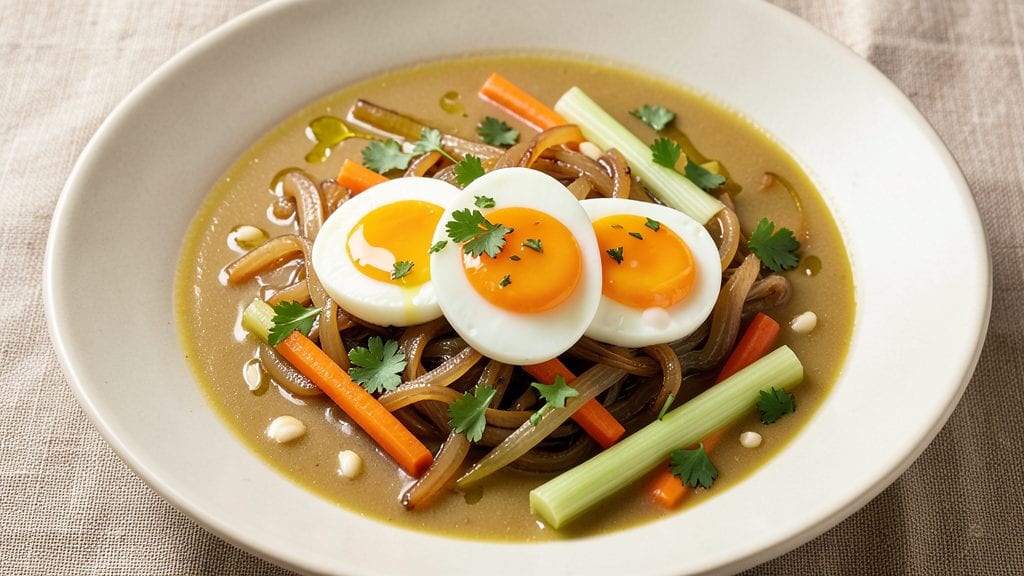
This boiled egg stew recipe transforms simple ingredients into a comforting, protein-packed meal that balances tender eggs with rich, herbed broth. The secret lies in timing—soft-cooked eggs (just 6 minutes) absorb the broth’s flavors perfectly while maintaining their creamy centers.
I developed this version after testing countless methods, and it’s become a staple in my winter rotation.
The beauty of this dish is its versatility—whether you prefer a classic Western-style broth with thyme and bay leaves or an Asian-inspired version with ginger and star anise, the technique remains the same.
You’ll start with a flavorful base, then gently add the eggs so they finish cooking in the simmering liquid, creating a harmonious blend of textures and tastes.
What you’ll end up with is a steaming bowl of velvety broth, perfectly poached eggs, and tender vegetables—each bite delivers a satisfying mix of creamy, savory, and aromatic notes. The eggs stay intact yet tender, while the broth reduces to a rich, concentrated flavor that coats every spoonful.
This is the kind of meal that feels indulgent yet simple to prepare.
Serve with crusty bread to soak up every last drop of broth or sprinkle fresh herbs on top for a pop of color and brightness. The recipe scales easily for gatherings, and leftovers reheat beautifully—just be gentle to keep those eggs intact. Let’s get cooking!
Ingredients for boiled egg stew
Eight eggs, a handful of veggies, and broth—this stew turns simple ingredients into a restaurant-worthy bowl.
| Ingredient | Amount | Notes |
|---|---|---|
| Large Eggs 🥚 | 8 whole | Room temperature preferred |
| Chicken Broth 💧 | 4 cups | Low-sodium preferred |
| Yellow Onion 🧅 | 1 whole | Diced, medium size |
| Carrots 🥕 | 2 medium | Peeled, sliced into rounds |
| Celery Stalks 🥬 | 2 whole | Diced, fresh preferred |
| Garlic Cloves 🧄 | 3 cloves | Minced, fresh preferred |
| Fresh Thyme 🌿 | ½ tsp | Leaves only, chopped |
| Bay Leaves 🍃 | 2 whole | Dried, standard size |
| Salt 🧂 | 1 tsp | Kosher or sea salt |
| Black Peppercorns 🌶️ | ½ tsp | Cracked, not ground |
| Extra-Virgin Olive Oil 🫒 | 1 tbsp | For egg finishing |
| Fresh Parsley 🌿 | ¼ cup | Chopped, for garnish |
| Lemon Zest 🍋 | 1 tsp | Optional, for brightness |
| Crusty Bread 🍞 | 1 loaf | For serving |
The broth is the heart of this dish. Low-sodium chicken broth keeps things balanced, but you can boost flavor by adding a splash of soy sauce or a pinch of MSG if you're feeling fancy. For the veggies, Trader Joe's or local farmers markets usually have the freshest carrots and celery—look for crisp, vibrant pieces. The eggs? Room temperature cooks more evenly, so take them out 10 minutes before starting. I always grab extra eggs when they're on sale—this recipe uses fewer than most stews, but I like having spares for snacks.
No fresh thyme? Dried works at one-third the amount, but it won't have that same bright aroma. Running low on bay leaves? Two crushed cloves of garlic can add depth in a pinch. The carrots can be baby carrots if that's what's in the fridge—just halve them for even cooking. For the eggs, 6 minutes is perfect—any longer and they get rubbery. If you're making this ahead, cook the eggs separately and add them to the warm broth just before serving to keep them creamy. The parsley is just for looks, but that lemon zest? Worth the squeeze—it cuts through the richness.
Broth reheats beautifully, but keep it gentle—low heat only to avoid scrambling the eggs. Store leftovers in the fridge for up to 3 days, but add the eggs fresh when reheating. For freezing, portion the broth without the eggs (they don't freeze well) and keep the eggs separate. This stew tastes even better the next day as the flavors meld. I always make a double batch—half for dinner, half for lunch the next day—because it's just that good.
Why You'll Love This Recipe
- Pantry Magic: I swear by this when I’ve got nothing but eggs and broth. No fancy shopping—just chop an onion, dice carrots, and toss in celery. The broth does all the heavy lifting while I sip coffee.
- Eggs Get Upgraded: Hard-boiled eggs taste boring until they simmer in savory broth with carrots and onion. That tender-yolk moment? Pure satisfaction when you crack one open mid-bite.
- Lunchbox Hero: Between us, this is my go-to for meal prep. Pack it cold or reheat—it’s the same great taste. My kids grab it for school, and my husband sneaks leftovers for lunch.
- Budget Rescue: When money’s tight, this stew stretches a few eggs and a carton of broth into three meals. Honestly, it’s the kind of recipe that makes grocery night less stressful.
Step-by-step instructions for soft-cooked egg stew
Here's how to create a comforting stew with perfectly soft eggs and aromatic herbed broth.
Prepare the Vegetable Base
Heat the 1 tablespoon extra-virgin olive oil in a large pot over medium heat. Add the 1 whole yellow onion, 2 medium carrots, and 2 whole celery stalks all at once. Cook for 5-6 minutes, stirring occasionally, until the vegetables soften and begin to release their natural juices.
Add the 3 cloves minced garlic cloves and cook for another 30 seconds until fragrant. You'll smell that wonderful garlic aroma—this is when the flavors really start to develop. Be careful not to let the garlic burn, as it can turn bitter quickly.
Build the Flavorful Broth
Pour in the 4 cups chicken broth, then add the 1 teaspoon salt, 0.5 teaspoon cracked black peppercorns, 2 whole bay leaves, and 0.5 teaspoon chopped fresh thyme. Bring everything to a gentle boil, then immediately reduce the heat to low and let it simmer uncovered for 15 minutes. This allows the flavors to meld together beautifully.
Here's the thing—don't skip this simmering time. It's what transforms simple ingredients into a rich, aromatic base. You'll notice the broth deepening in color and developing a wonderful herbal scent. This is your foundation, so give it the attention it deserves.
Cook the Eggs to Perfection
While the broth simmers, carefully lower the 8 whole large eggs into the pot using a slotted spoon. Space them evenly so they have room to cook without crowding. The eggs should be at room temperature for even cooking—if they're cold, they might crack when they hit the hot broth.
Simmer gently for 6-7 minutes—this gives you that perfect soft-cooked texture where the whites are set but the yolks remain creamy. You'll know they're ready when they float to the surface and the whites are just beginning to firm up. Don't overcook them or they'll turn rubbery.
Finish and Serve
Remove the pot from heat and carefully transfer the eggs to a plate using the slotted spoon. Discard the bay leaves and strain the broth if you prefer a smoother texture. Return the broth to the pot and stir in the 1 teaspoon lemon zest (if using) and 0.25 cup chopped fresh parsley. This adds a bright finish that cuts through the richness of the eggs.
To serve, ladle the warm broth over the eggs in bowls. The contrast of the creamy yolks against the aromatic broth is what makes this dish so special. Serve immediately with slices of 1 loaf crusty bread on the side for dipping. The bread will soak up all that delicious broth, making every bite satisfying.
Pro Tips For Making Boiled Egg Stew
- SIMMER EGGS GENTLY: After cracking eggs directly into the broth, reduce heat to a bare simmer—no rolling boil. I learned this the hard way when my eggs turned into rubbery gray blobs instead of creamy, intact bites. A steady, low bubble keeps them tender and intact.
- MISO PASTE UPGRADE: Swap plain broth for a mix of chicken broth and 1 teaspoon miso paste per cup. Sounds weird, but it works: adds umami depth without overpowering the eggs or veggies. (Yes, even if you’re skeptical like I was the first time.)
- PREP VEGETABLES UNIFORM: Cut carrots and celery into matchsticks—same size as each other. I used to chop them randomly, and the stew ended up with some veggies mushy and others still crunchy. Uniform pieces cook evenly, so every bite is balanced.
- SALT THE BROTH FIRST: Season the broth before adding eggs—aim for 1 teaspoon salt per 4 cups liquid. I skipped this once and ended up with bland eggs because they absorb flavor like sponges. (Your future self will thank you.)
Wine and beer pairings for this dish
Light White Wine
A crisp Sauvignon Blanc from New Zealand or Loire Valley is my go-to pairing for this stew. The bright acidity and citrus notes in wines like Cloudy Bay or Sancerre cut through the richness of the eggs while complementing the herbal thyme and bay leaf flavors.
Look for a wine with 12-13% alcohol—just enough body to stand up to the broth without overpowering the delicate egg texture. 🍷
Crisp Lager
For beer lovers, a German Helles or Belgian Witbier provides a refreshing contrast. Brands like Weihenstephaner Original or Hoegaarden offer subtle spice notes from coriander that pair beautifully with the stew's herbal elements. The light maltiness won't compete with the eggs' creaminess, making each bite feel balanced and satisfying.
Dry Rosé
If you prefer red wine but want to avoid heaviness, a Provence-style rosé like Whispering Angel or Miraval works wonders. The pale color and dry profile let the stew's flavors shine while adding a touch of fruitiness that enhances the carrots and onions.
Serve slightly chilled (50-55°F) to maintain its crispness against the warm broth.
Herbal Gin Cocktail
For a non-alcoholic or boozy twist, try a gin-based cocktail with cucumber and lemon. Mix 2 oz gin (like Hendrick's or Monkey 47), ½ oz lemon juice, ½ oz simple syrup, and a few cucumber slices—it mirrors the stew's herbal notes while adding a refreshing zing.
Garnish with a lemon twist for that bright pop of color. 🍋
Spiced Red Wine
For heartier palates, a Pinot Noir with earthy undertones from Oregon or Burgundy enhances the stew's depth. Look for wines with 13-14% alcohol and notes of black cherry or mushroom—these complement the bay leaves and thyme without overpowering the eggs.
Decant for 30 minutes to soften tannins and let the wine breathe alongside the stew's aromas.
Nutrition facts
Frequently asked questions
Why do the eggs need to be at room temperature?
Room temperature eggs cook more evenly in the broth, preventing them from cracking when they hit the hot liquid. Cold eggs create steam inside the shell, increasing the risk of them splitting. Simply take them out of the fridge 10 minutes before cooking for perfect results.
Can I make this stew ahead of time?
Yes, but cook the eggs separately and add them to warm broth just before serving to maintain their creamy texture. Store the broth (without eggs) in the fridge for up to 3 days or freeze it for 3 months. Reheat gently on low heat to avoid scrambling the eggs.
What if my eggs overcook?
If the whites become rubbery, the eggs are overdone. For perfect texture, remove them when they float and the whites are just set (6-7 minutes). Pro tip: Use a slotted spoon to transfer them to ice water for 1 minute to stop cooking immediately.
Can I substitute other vegetables?
Swap carrots for zucchini or potatoes, or add mushrooms for umami depth. Just adjust cooking time—potatoes need 5-6 extra minutes to soften. The key is keeping the broth flavorful with herbs like thyme or bay leaves.
How do I make this vegetarian?
Replace the eggs with tofu cubes (firm or extra-firm) and use vegetable broth. Simmer tofu for 5 minutes after adding to the broth. For extra protein, add chickpeas or white beans. The herbed broth remains the star!