
Soups & Stews
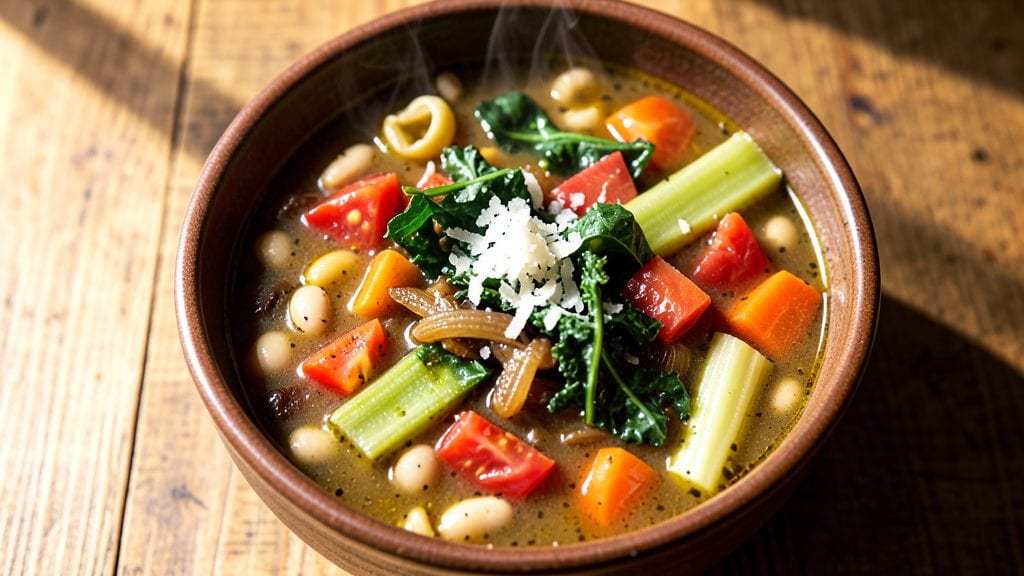
Bobby Flay’s minestrone soup recipe brings hearty Italian tradition to your kitchen with bold flavors and restaurant-quality depth. This rustic herb-infused version transforms simple ingredients into a rich, aromatic broth that simmers with caramelized vegetables, tender beans, and perfectly al dente pasta—just like Bobby’s signature dishes.
The secret lies in slow-sautéed aromatics and a well-balanced blend of fresh herbs that elevate every spoonful.
What sets this recipe apart is Bobby’s professional touch: a two-stage simmer that develops deep, complex flavors without overcooking the vegetables, and a final herb finishing that adds brightness.
It’s the kind of soup that feels like a hug in a bowl—comforting yet refined, with enough flexibility to adapt for vegetarians or meat lovers. The result is a perfectly balanced dish where each ingredient plays its part without overpowering the others.
By the time you’re done, you’ll have a golden, fragrant soup with tender beans, crisp-tender vegetables, and pasta that’s just shy of perfect—al dente, so every bite has texture.
The broth is rich enough to stand alone but light enough to let the vegetables shine, all tied together with a sprinkle of fresh herbs that make it taste fresh from a Roman trattoria. This is the kind of recipe that becomes a staple in your rotation.
Whether you’re serving it as a weeknight family meal or bringing it to a potluck, this minestrone delivers restaurant-quality results with minimal fuss. The best part? Leftovers taste even better the next day as the flavors meld further. Let’s get cooking—your kitchen will smell like Italy in minutes.
Ingredients for bobby flay minestrone soup
Simple, vibrant ingredients that transform into restaurant-quality minestrone with deep Italian flavors.
| Ingredient | Amount | Notes |
|---|---|---|
| Extra-Virgin Olive Oil 🫒 | ½ cup | High-quality, fruity variety |
| Yellow Onion 🧅 | 1 ½ cups | Diced, medium dice size |
| Carrots 🥕 | 1 ½ cups | Diced, uniform size |
| Celery Stalk 🌿 | 3 whole | Diced, including leaves |
| Garlic Cloves 🧄 | 4 cloves | Minced, fresh preferred |
| Canned Diced Tomatoes 🍅 | 28 oz | San Marzano preferred |
| Vegetable Broth 💧 | 4 cups | Low-sodium preferred |
| Canned Cannellini Beans 🌱 | 15 oz | Drained and rinsed |
| Ditalini Pasta 🍝 | 1 cup | Uncooked, al dente |
| Fresh Parsley 🌿 | ¼ cup | Chopped, flat-leaf preferred |
| Fresh Basil 🌿 | ¼ cup | Chopped, for finishing |
| Fresh Rosemary 🌿 | 1 tbsp | Chopped, fresh preferred |
| Bay Leaves 🌿 | 2 whole | Dried, removed before serving |
| Kosher Salt 🧂 | 1 ½ tsp | Diamond Crystal preferred |
| Black Pepper 🌶️ | ½ tsp | Freshly ground |
The olive oil sets the foundation—California Gold or Bertolli are my go-tos for that fruity depth. Onions, carrots, and celery should be diced uniformly (about 1/4-inch pieces) for even cooking—Trader Joe's pre-chopped veggie mix works in a pinch. Garlic matters here: freshly minced adds complexity, while jarred garlic tastes flat. For the tomatoes, San Marzano cans from Costco or Whole Foods are worth the splurge—they're sweeter and less acidic. Fresh herbs? Local farmers markets have the best parsley and basil, but grocery store bunches work if you use them within 2 days.
No San Marzano tomatoes? Crushed tomatoes with a pinch of sugar bridge the flavor gap. Out of fresh rosemary? Dried at half the amount works, but it lacks that piney aroma. The vegetable broth can be swapped for water plus 1 tsp bouillon powder, though homemade broth (even just veggie scraps simmered) makes a world of difference. For the beans, white beans from a can are fine, but dried cannellini soaked overnight adds texture. Pasta? Whole wheat ditalini adds fiber, but regular holds up better if you're reheating leftovers.
This soup tastes even better the next day—4-5 days in the fridge, 3 months frozen. I like to portion it into glass containers for easy reheating. The herbs? Add them last—fresh parsley and basil brighten up the dish right before serving. For extra richness, stir in 1 tbsp cream or grated Parmesan at the end. Leftovers reheat beautifully—just add a splash of water or broth to loosen it up.
Why You'll Love This Recipe
- One-Pot Magic: I swear by this recipe because it’s that simple—just a pot, a knife, and 15 minutes of chopping onions, celery, and carrots in that classic Bobby Flay holy trinity. No blender, no fuss, just a simmering pot of flavor while you do whatever else needs doing. (Between us, I’ve burned toast while making this and still ended up with a bowl of gold.)
- Garlic Kiss: That moment when you toss in fresh garlic cloves and let them sizzle in olive oil? Chef’s kiss. The recipe balances it perfectly—enough to wake up your taste buds without overpowering the earthy carrots or the crisp bite of celery. Honestly, I’ve made minestrone before, but this version? It’s the one my picky husband actually finishes.
- Leftovers That Shine: This soup tastes better the next day—like a cozy hug in a bowl. I make a big batch on Sundays, and by Wednesday, it’s still hearty enough to feed the family (or my book club, or my overly dramatic cat who “needs” soup too). Freeze half if you’re feeling extra, and you’ve got a weeknight savior for days.
- Budget-Friendly Hero: Onion, carrots, celery, garlic—these are the ingredients that don’t break the bank but make everything taste like you slaved over it. I’ll be real: my grocery bill stays sane, but my dinner table feels fancy. Plus, stretch it with beans or pasta, and you’ve got a meal that’s both filling and kind to your wallet. (Yes, even on a Tuesday night.)
Step-by-step instructions for Bobby Flay's minestrone soup
Here's how to craft a rich, herb-infused minestrone with al dente pasta and layers of flavor.
Sauté the Vegetable Base
Heat the 0.5 cup extra-virgin olive oil in a large Dutch oven over medium heat. Add the 1.5 cups diced yellow onion, 1.5 cups diced carrots, and 3 diced celery stalks (including leaves). Cook for 8-10 minutes until the vegetables soften and release their natural juices, stirring occasionally.
Here's where the foundation happens: the vegetables should be tender but not browned. You're building flavor, not caramelizing. If the oil starts to smoke, reduce the heat slightly. I like to press down gently on the vegetables with a wooden spoon to help them break down evenly.
Add Aromatics and Tomatoes
Stir in the 4 minced garlic cloves and cook for 30 seconds until fragrant—don't let it brown or it'll turn bitter. Add the 28 oz canned diced tomatoes (with juices), 4 cups vegetable broth, 1.5 tsp kosher salt, and 0.5 tsp black pepper. Bring to a gentle boil, then reduce heat to medium-low.
Let the mixture simmer uncovered for 15 minutes until the flavors meld. You'll notice the broth deepens in color and aroma—this is when the magic happens. The tomatoes should break down slightly, creating a velvety texture. I always taste at this stage to adjust seasoning before adding the beans.
Incorporate Beans and Herbs
Add the 15 oz drained cannellini beans, 1 tbsp chopped fresh rosemary, and 2 whole bay leaves. Simmer for another 10 minutes to let the beans warm through and the herbs infuse the broth. The beans should be heated completely but still hold their shape—don't overcook them or they'll turn mushy.
This is where the rustic character comes through. The rosemary adds piney depth, while the bay leaves contribute subtle earthiness. I like to stir occasionally and taste—each spoonful should be developing that complex, herby profile we're aiming for.
Cook the Pasta Al Dente
Add the 1 cup uncooked ditalini pasta and cook for 8-10 minutes, stirring occasionally, until al dente. The pasta should have a slight bite to it—it'll finish cooking in the hot soup. You'll know it's ready when it floats to the surface and has just a tiny bit of resistance when bitten.
Don't overcrowd the pot—if needed, cook the pasta in batches. The key is to maintain the soup's consistency. I like to use tongs to stir gently, ensuring each pasta piece gets coated in the flavorful broth. The pasta should absorb just enough liquid to be tender but still hold its shape.
Finish with Fresh Herbs and Serve
Remove the 2 bay leaves and stir in the 0.25 cup chopped fresh parsley and 0.25 cup chopped fresh basil. Let the soup sit off heat for 5 minutes to allow the flavors to meld completely. Taste and adjust seasoning if needed—the fresh herbs should brighten the dish and balance the richness.
Ladle the minestrone into bowls and serve immediately. Each spoonful should deliver a perfect balance of creamy beans, al dente pasta, and herb-infused broth. The soup should be hearty enough to stand alone but light enough to enjoy on a chilly day. Pair with crusty bread to soak up every last drop of that flavorful broth.
Pro Tips For Making Bobby Flay Minestrone Soup
- SWEAT THE VEGETABLES: Bobby Flay sweats onions, carrots, and celery until they’re soft and glossy—about 8-10 minutes on medium-low. I used to rush this, but lingering here builds flavor. Keep the heat steady; if it browns too fast, you’re burning instead of sweating.
- Mince Garlic Fine: No big cloves here—mince the garlic into tiny pieces so it blends seamlessly into the soup. I learned this the hard way: whole cloves just sit there like tiny rocks. A sharp knife or garlic press makes this easy.
- SAVOR THE OIL: Don’t just toss in olive oil—heat it until it shimmers (about 2 minutes) before adding onions. This jumpstarts the flavor and prevents the soup from tasting raw. (Yes, even if you’re impatient like me.)
- STIR THE POT: Minestrone scalds easily. Stir every 5 minutes once the broth comes to a boil to keep it from sticking or burning at the bottom. I skip this, and suddenly I’m scraping burnt bits off the pan. Not worth it.
Troubleshooting this recipe
Mushy Vegetables
If your carrots, celery, or onions turn mushy during cooking, it’s likely from over-simmering or too much liquid. The key is gentle heat—keep the soup at a steady simmer (180-190°F), not a rolling boil.
I’ve found that covering the pot for the first 10 minutes helps trap steam and tenderize the vegetables evenly, then uncovering to let flavors concentrate. Also, avoid adding all the broth at once—start with 3 cups and add the remaining 1 cup later to maintain texture. 🌱
Pasta Too Soft
Overcooked pasta ruins the al dente texture that makes this soup shine. The trick is adding pasta when the soup is already hot and cooking it for just 8-10 minutes—it’ll finish cooking in the residual heat.
I like to test a piece by biting it: it should have a slight resistance. If your pasta turns to mush, try undercooking it by 1-2 minutes next time and letting it sit off heat for 5 minutes to absorb flavors without overcooking. 🍜
Broth Too Thin
A watery minestrone happens when too much liquid is added or the vegetables release excess moisture. To fix this, simmer uncovered for an extra 5-10 minutes to reduce the broth naturally.
If it’s still too thin, remove the pot from heat and let it sit for 15 minutessauté the vegetables longer (10-12 minutes) to draw out moisture before adding broth. A 1:1 ratio of broth to vegetables works best. 💧
Beans Too Starchy
Rinsing canned beans thoroughly removes excess starch, but if your soup still feels gummy, it’s likely from overcooking. Simmer beans for only 5-7 minutes after adding them—any longer and they’ll break down.
For a creamier texture without starchiness, blend ½ cup of the soup (with beans) and stir it back in. I also recommend using low-sodium canned beans to avoid added thickeners. 🌿
Flavor Too Mild
If your minestrone tastes bland, it’s usually due to insufficient seasoning or weak broth. Boost flavor by toasting the spices: dry-toast 1 tsp each of cumin and fennel seeds in the olive oil for 30 seconds before adding vegetables.
For depth, deglaze the pot with 2 tbsp red wine after sautéing the aromatics. A final touch of lemon zest or grated Parmesan adds brightness. 🌶️
Herbs Lose Flavor
Fresh herbs wilt quickly in hot soup, so add them last—just before serving. If you must add them earlier, stir in 1 tbsp at a time and let the soup sit off heat for 5 minutes to preserve their aroma.
For extra punch, blanch the herbs in boiling water for 10 seconds before chopping and adding. Dried herbs work in a pinch, but fresh is non-negotiable for Bobby Flay’s signature brightness. ✨
Nutrition facts
Frequently asked questions
Can I make this minestrone soup vegetarian?
This recipe already works well without meat, but you can enhance it by adding 1 cup of sautéed mushrooms or 1 diced zucchini with the other vegetables. For extra protein, stir in 1 cup of cooked lentils or 1 block of crumbled tofu when adding the beans. The herbs and tomatoes will give it that rich, savory depth even without meat.
How do I adjust the spice level for kids?
For a milder version, reduce the black pepper to ¼ tsp and skip the rosemary or use ½ tsp dried basil instead. Omit the garlic entirely if needed—it adds a lot of flavor but can be strong for little ones. Taste the broth before adding the beans to check the seasoning. A splash of ½ cup coconut milk at the end also makes it creamier and gentler on sensitive palates.
Can I prep this soup ahead of time?
This minestrone tastes even better the next day! Cook everything up to the pasta stage, then refrigerate the broth and vegetables in an airtight container for up to 3 days. When ready to serve, reheat the soup and add the pasta fresh to maintain its al dente texture. For freezing, portion the complete soup (including pasta) and freeze for up to 3 months. Thaw overnight in the fridge and reheat gently on the stove.
What’s the secret to Bobby Flay’s herb finishing?
Bobby’s trick is using a mix of fresh parsley, basil, and rosemary in the right proportions: parsley for brightness, basil for sweetness, and rosemary for depth. Chop them finely and add them just before serving so they stay vibrant. For extra flair, make a quick herb oil by blending ¼ cup olive oil with 1 tbsp chopped herbs and drizzle it over the finished soup. This adds a luxurious touch without overpowering the dish.
Can I substitute ditalini pasta with another type?
Ditalini’s small shape holds up well in soups, but you can swap it for small shells, orzo, or even broken spaghetti. Avoid large pasta like penne, as it can make the soup too thick. If using a different shape, reduce the cooking time by 1-2 minutes to prevent overcooking. For a gluten-free option, use chickpea or lentil pasta—just check the package for al dente cooking times.