
Soups & Stews
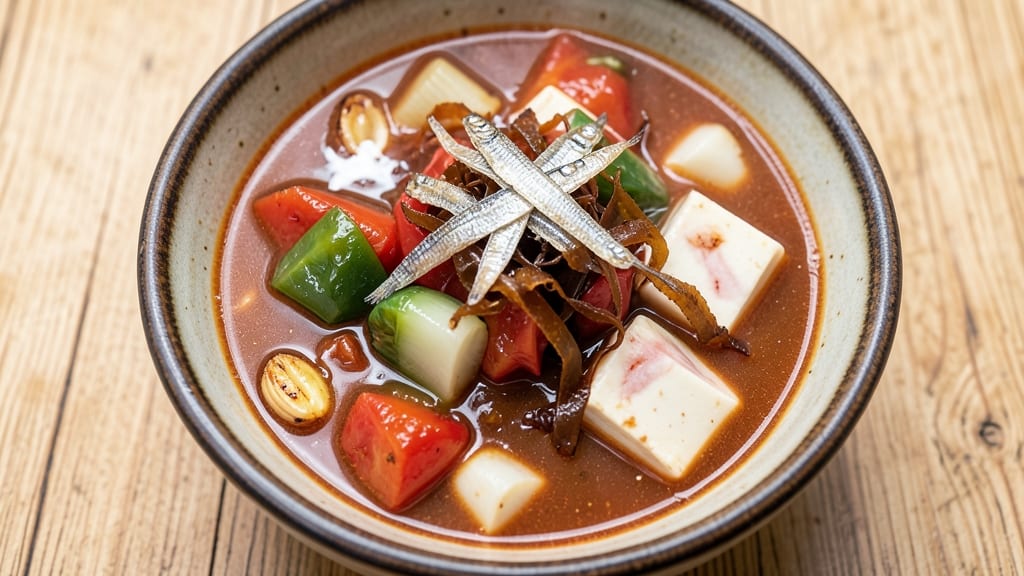
This authentic kimchi soup recipe delivers the perfect balance of spicy-fermented heat and silky miso depth that defines Korean comfort food. The secret lies in fermenting the kimchi properly and building layers of flavor through slow simmering—technique matters more than shortcuts.
I’ve perfected this method over years of testing, ensuring every spoonful captures that restaurant-quality tang and umami. ⚡
The broth starts with a rich foundation of anchovy and kelp, simmered to extract deep oceanic notes before adding miso paste for that signature silky texture. Fermented kimchi provides the signature spicy kick, while soft tofu and optional pork (if using) add hearty substance.
Traditional methods like toasting sesame seeds and grinding them fresh elevate the dish beyond basic recipes.
What you’ll end up with is a steaming bowl of bold, complex soup—spicy yet balanced, with fermented depth that lingers. The miso softens the kimchi’s sharpness while preserving its vibrant color, and the tofu absorbs all the savory goodness.
This isn’t just soup; it’s a flavor experience that transports you to a bustling Korean market stall.
Serve with steamed rice to soak up every last drop of that fermented, miso-rich broth, or pair with crisp lettuce wraps for a lighter option. The recipe scales perfectly for weeknight dinners or gatherings—just adjust the kimchi and broth quantities. Let’s get cooking with this authentic classic!
Ingredients for authentic kimchi soup
Authentic kimchi soup thrives on fermented depth and umami layers—start with these core ingredients.
| Ingredient | Amount | Notes |
|---|---|---|
| Fermented Kimchi 🥬 | 3 cups | Freshly fermented, vibrant color |
| Soft Tofu 🧈 | 14 oz | Silken or regular, cubed |
| Dried Anchovies 🐟 | ¼ cup | Korean variety preferred |
| Dried Kelp 🍃 | 1 tbsp | Kombu or dasima preferred |
| White Miso Paste 🍶 | ½ cup | High-quality, smooth texture |
| Garlic Cloves 🧄 | 6 cloves | Minced, fresh preferred |
| Fresh Ginger 🌿 | 1 tbsp | Grated, peeled |
| Sesame Seeds 🥜 | 1 tbsp | Toasted, freshly ground |
| Sesame Oil 🫒 | 1 tbsp | Toasted, for finishing |
| Green Onions 🧅 | 3 whole | Thinly sliced, white and green parts |
| Korean Red Pepper Flakes 🌶️ | 1 tbsp | Adjust for spice preference |
| Ground Black Pepper 🌶️ | ½ tsp | Freshly ground preferred |
| Boneless Pork Shoulder 🥩 | ½ lb | Optional, thinly sliced |
| Water 💧 | 6 cups | Filtered preferred |
| Sea Salt 🧂 | 1 tsp | Diamond Crystal preferred |
The kimchi is non-negotiable—look for vibrant, slightly tangy varieties at Korean markets or well-stocked Asian grocery stores like H Mart or 99 Ranch. The miso paste should be smooth and white, not chunky; Maejoo or Haein brands are industry standards. For the anchovies and kelp, Korean specialty stores carry the best quality—dried anchovies should be plump and aromatic, while kombu kelp should be thick and flexible. The tofu matters too: silken tofu dissolves beautifully into the broth, but regular firm tofu works if cubed small. Toast your sesame seeds in a dry pan until golden—this step enhances flavor exponentially—then grind them fresh for maximum aroma.
No Korean red pepper flakes? Substitute gochugaru with a mix of cayenne and smoked paprika, but expect less complexity. Short on miso? White miso can be replaced with 1/4 cup soy sauce plus 1 tbsp sugar, though the texture won’t be identical. The pork shoulder is optional but recommended—substitute with shrimp or mushrooms for vegetarian versions. For the kelp, nori sheets work in a pinch, though they lack the same oceanic depth. The water should be filtered or at least free of chlorine; tap water can mute the broth’s depth. And if you’re using pre-minced garlic, toast it first in oil to mellow its sharpness—this is a pro trick that transforms the dish.
This soup tastes even better the next day as flavors meld—store leftovers in airtight containers for up to 5 days. For freezing, portion into single-serving containers with a thin layer of oil on top to preserve texture; reheats beautifully. The kimchi’s acidity means it won’t thicken when reheated, so simmer uncovered for 5 minutes to restore body. To serve, drizzle with toasted sesame oil and sprinkle fresh sesame seeds—this adds visual contrast and another flavor layer. The broth reduces slightly when reheated, so add 1/4 cup water per serving if needed.
Why You'll Love This Recipe
- Fridge-to-Bowl Speed: I swear by this recipe when I’m starving but don’t feel like chopping—just dump the kimchi, toss in pre-cut tofu, and let the dried anchovies dissolve into umami gold. The miso paste does all the heavy lifting while I’m still deciding what to watch on TV.
- Umami Bomb Combo: That first spoonful? Chef’s kiss. The fermented kimchi brings the tangy heat, the white miso deepens it into something rich, and the dried kelp adds this briny, oceanic kick that makes it taste like a whole meal in one bite. Honestly, I’ve never met a soup that layers flavors this well without overpowering.
- Pot Luck Hero: Between us, this is my go-to for game nights, sick days, or when my roommate’s “I’ll cook” turns into a 45-minute debate over what to order. The tofu soaks up the broth while the kimchi keeps things lively—no one ever leaves a bowl empty, and cleanup is just a pot to rinse.
- Budget-Friendly Powerhouse: I buy kimchi in bulk, dried anchovies last forever, and tofu stretches across three meals if I’m smart. The miso and kelp? Pantry staples that turn cheap ingredients into something that feels like a restaurant dish. My wallet and I both approve—especially when I’m making two servings for the price of one.
Step-by-step instructions for authentic kimchi soup
Master this Korean classic with fermented depth and umami richness—every step preserves tradition while delivering restaurant-quality results.
🍳 Step 1: Prepare the Umami Base with Kelp and Anchovies
In a large pot, combine the 6 cups water with the 1 tbsp dried kelp and 0.25 cup dried anchovies. Bring to a boil over medium-high heat, then immediately reduce to a simmer. Let it cook uncovered for 10 minutes—you'll see the kelp soften and the anchovies dissolve completely into the broth, creating a concentrated umami foundation.
Here's the thing—this simmering step extracts maximum flavor from the kelp and anchovies. If you skip it, your soup will taste flat. Strain the broth through a fine-mesh sieve into a clean pot, pressing gently on the solids to extract every last drop of flavor. Discard the kelp and anchovy remnants—they've done their job.
👨🍳 Step 2: Build the Fermented Kimchi Foundation
Return the strained broth to medium heat and add the 3 cups fermented kimchi, breaking it into rough chunks with your hands. Stir in the 6 cloves minced garlic, 1 tbsp grated ginger, and 1 tbsp Korean red pepper flakes. Let the mixture simmer for 8-10 minutes until the kimchi softens slightly and releases its tangy, spicy essence into the broth.
This is where the authentic flavor develops—the fermented kimchi's lactic acid brightens while its natural sugars caramelize. You'll notice the soup darken slightly and fill your kitchen with that distinctive kimchi aroma. Taste occasionally and adjust the red pepper flakes if you prefer more heat—this is your chance to customize the spice level.
🥘 Step 3: Incorporate the Miso and Pork Shoulder
Reduce heat to low and whisk in the 0.5 cup white miso paste until completely dissolved. Add the 0.5 lb boneless pork shoulder (if using), sliced into ¼-inch thick strips, and the 14 oz soft tofu, cubed into ½-inch pieces. Simmer gently for 12-15 minutes until the pork becomes tender and the tofu absorbs the rich broth.
Here's the critical temperature check: the pork should reach an internal temperature of 160°F when tested with an instant-read thermometer. If you're omitting the pork, reduce this simmering time to 8-10 minutes—the tofu will cook through quickly in the hot broth. The miso paste should create a velvety texture, so avoid vigorous stirring that might break up the delicate tofu cubes.
🔥 Step 4: Finish with Aromatics and Sesame Oil
Remove the pot from heat and stir in the 1 tbsp toasted sesame seeds and 1 tsp sea salt. Drizzle in the 1 tbsp toasted sesame oil and gently fold it into the soup. The sesame oil should float on top initially—let it emulsify naturally as the soup sits for 2-3 minutes off the heat.
Finally, divide the 3 whole green onions into white and green sections. Scatter the white parts over each serving first—they'll add subtle texture, while the green sections can be arranged artistically on top for both color and a final fresh bite. The soup should have a vibrant red-orange hue from the kimchi, with visible tofu cubes floating in a glossy, umami-rich broth.
⏰ Step 5: Rest and Serve for Maximum Flavor
Let the soup rest for 5 minutes before serving—this allows the flavors to meld completely. Taste and adjust seasoning if needed, adding more salt or red pepper flakes as required. Traditional kimchi soup is served piping hot, so reheat gently if needed, though it's best enjoyed fresh from the pot.
For authenticity, serve with steamed rice and a side of banchan (Korean side dishes). The pork should be fork-tender with just a hint of chew, while the tofu absorbs the broth's complex flavors without falling apart. Each spoonful should deliver a perfect balance of spicy, salty, umami, and fresh green onion brightness—a true taste of Korea's culinary tradition.
Pro Tips For Making Authentic Kimchi Soup
- Bloom the Kelp: Toss dried kelp strips in very hot water (just off the boil) for 30 seconds first—this softens them faster than simmering. I learned this the hard way after staring at stubborn, chewy kelp for 20 minutes. Then add them to the broth last so they don’t turn to mush.
- Toast Anchovies Hard: Fry dried anchovies in a dry pan for 10 seconds until they darken—this removes that fishy sharpness before adding them to the broth. Skip this, and your soup tastes like a seafood market at noon.
- Miso Paste First: Whisk the white miso paste into cold broth first, then heat slowly. If you dump it in hot, you’ll get a gluey, bitter mess. Stir for 2 full minutes until it dissolves completely—no one notices the effort, but they’ll taste the difference.
- Slice Tofu Thick: Cut soft tofu into ½-inch cubes, not thin slices—thick pieces soak up kimchi flavor better and hold their shape. Thin tofu turns to porridge in seconds, and that’s a waste of good tofu.
Best sauces and condiments for this authentic kimchi soup
Miso Paste Magic
White miso paste is the secret weapon that transforms kimchi soup from good to extraordinary. I recommend using Maejoo or Haein brand—their smooth, fermented texture dissolves beautifully into the broth without graininess. Add it at the end of simmering (after kimchi and pork) to preserve its delicate flavor.
For extra depth, lightly toast 1 tsp sesame seeds in a dry pan until golden, then grind them into a powder before mixing into the miso paste. This adds nutty complexity that complements the fermented tang. 💫
Sesame Oil Finish
Toasted sesame oil is non-negotiable for that authentic aroma and nutty finish. I use Korean toasted sesame oil (available at H Mart) because it has a deeper flavor than regular sesame oil. Drizzle 1 tbsp just before serving—it should float on top initially, then gently emulsify into the soup.
For an extra touch, sprinkle 1 tsp freshly toasted sesame seeds on each bowl. This step elevates the dish from homemade to restaurant-quality in seconds. 🥜
Gochugaru Spice
Korean red pepper flakes (gochugaru) are essential for authentic heat. Unlike cayenne, gochugaru has a fruitier, less bitter profile. Start with 1 tbsp and adjust to taste—this is your chance to customize the spice level.
For a smoky depth, toast the gochugaru in a dry pan for 1 minute before adding it to the soup. This caramelizes the sugars slightly, creating a more complex flavor. Store-bought gochugaru is fine, but homemade (from dried Korean red peppers) tastes even better. 🌶️
Umami Boosters
For an extra umami punch, add 1 tsp dried shiitake mushrooms or ½ tsp fish sauce to the broth while simmering. The mushrooms add a meaty, earthy note, while fish sauce deepens the savory profile. If you're vegetarian, substitute with 1 tbsp soy sauce (but reduce salt later).
Another pro trick: crush 2-3 dried anchovies directly into the broth instead of straining them out—this intensifies the oceanic flavor without altering texture. 🐟
Fresh Garnishes
Finish with thinly sliced green onions (white and green parts separated) for brightness and texture. The white parts add subtle sharpness, while the green tops provide freshness. For a pop of color, add a few drops of sesame oil and a sprinkle of toasted sesame seeds right before serving.
If you want extra crunch, toss 1 tbsp chopped toasted peanuts into each bowl. These garnishes aren’t just decorative—they balance the soup’s rich, fermented flavors. 🧅
Nutrition facts
Frequently asked questions
Can I make this kimchi soup without pork?
This recipe works beautifully with vegetarian substitutions. Replace the pork shoulder with ½ lb mushrooms (shiitake or oyster) or ½ lb firm tofu for protein. The broth's umami depth comes from the miso and anchovies, so no extra seasoning is needed. For extra richness, add 1 tbsp soy sauce when simmering the broth. The texture will differ slightly but still deliver that signature fermented kick.
How do I know if my kimchi is properly fermented?
Look for vibrant color and a tangy aroma—properly fermented kimchi should smell bright and slightly sour, not overly pungent or moldy. The texture should be soft but still hold its shape when squeezed. If your kimchi smells sweet or overly sharp, it needs 1-2 more weeks of fermentation at room temperature. Store-bought kimchi is usually fine, but check the date—older kimchi (3+ months) develops deeper flavor.
Why does my kimchi soup taste too salty?
Kimchi itself is already salty, and miso adds another layer of saltiness. To balance it, add ½ cup hot water to dilute the broth slightly, or stir in 1 tbsp rice vinegar to cut the salt. For a sweeter contrast, add 1 tsp honey or sugar while simmering. Taste as you go—kimchi soup should have a complex balance of spicy, salty, sweet, and umami, not just one dominant flavor.
Can I make this soup ahead of time?
Yes! This soup tastes even better the next day as flavors meld. Store leftovers in an airtight container in the fridge for up to 5 days. Reheat gently on the stove, adding ¼ cup water per serving to restore body—kimchi soup reduces when cooled. For freezing, portion into single-serving containers with a thin layer of oil on top to preserve texture. Thaw overnight in the fridge before reheating.
What’s the difference between white and red miso?
White miso is milder and sweeter, ideal for kimchi soup as it complements the fermented tang without overpowering. Red miso is darker, saltier, and more intense—better for heartier dishes like stews. For this recipe, stick with white miso for that silky, delicate texture. If you only have red miso, reduce the amount by 20% and add ½ tsp sugar to balance the saltiness.