
Soups & Stews
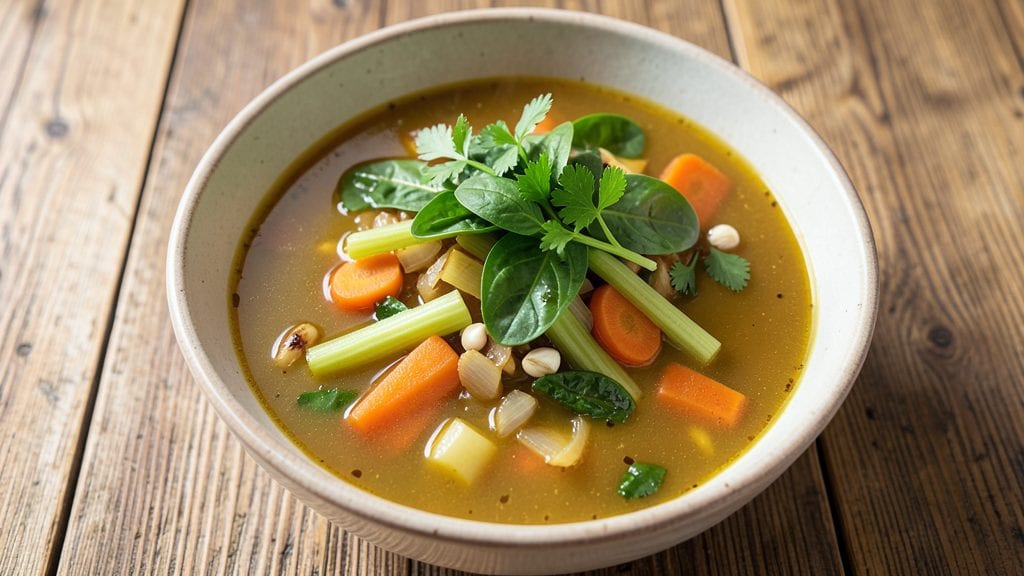
This American Heart Association vegetable soup recipe delivers all the warmth of a comforting bowl without the excess sodium or saturated fat—perfect for heart-healthy eating that still satisfies.
The secret lies in using fresh, fiber-rich vegetables like carrots, celery, and spinach, simmered in a light broth with garlic and herbs for depth without heaviness.
I developed this version after realizing most vegetable soups either taste bland or sneak in hidden salt—this one avoids both pitfalls while keeping every spoonful flavorful.
What makes this recipe truly special is its balance of nutrition and simplicity. With just 30 minutes of active prep and a one-pot approach, it’s ideal for weeknight dinners or meal prep. The low-sodium broth (homemade or low-sodium store-bought) ensures you’re not compromising on flavor while meeting heart-healthy guidelines.
Each ingredient plays a role—carrots add natural sweetness, spinach boosts iron, and whole grains (like barley) provide extra fiber to keep you full longer.
The result is a lightweight yet deeply satisfying soup with a vibrant color and aromatic blend of herbs. The vegetables remain tender-crisp, the broth is rich without being heavy, and the texture is perfectly balanced—never mushy or watery.
Serve it as a standalone meal or pair it with a slice of whole-grain bread for added texture. This is the kind of soup that proves healthy eating doesn’t mean sacrificing taste or comfort.
Optional garnishes like fresh parsley, a drizzle of olive oil, or a sprinkle of whole-grain panko add extra layers of flavor and texture without derailing the heart-healthy benefits.
Leftovers keep well in the fridge for up to 4 days, making it a practical choice for busy schedules. Let’s make heart-healthy eating delicious again.
Ingredients for american heart association vegetable soup
Fresh vegetables and smart swaps make this heart-healthy soup both nourishing and flavorful.
| Ingredient | Amount | Notes |
|---|---|---|
| Low-Sodium Vegetable Broth 💧 | 4 cups | Homemade or store-bought low-sodium |
| Carrots 🥕 | 1 ½ lb | Medium-sized, peeled and sliced |
| Celery Stalks 🧅 | 4 whole | Fresh, trimmed and chopped |
| Yellow Onion 🧅 | 1 whole | Medium-sized, diced |
| Garlic Cloves 🧄 | 4 cloves | Fresh, minced |
| Fresh Spinach Leaves 🌿 | 4 cups | Packed, roughly chopped |
| Pearl Barley 🌾 | ½ cup | Uncooked, rinsed |
| Extra-Virgin Olive Oil 🫒 | 2 tbsp | For sautéing vegetables |
| Fresh Parsley 🌿 | ¼ cup | Chopped, for garnish |
| Fresh Thyme Leaves 🌿 | 1 tbsp | Or 1 tsp dried thyme |
| Fresh Bay Leaves 🌿 | 1 whole | For added depth |
| Lemon Juice 🍋 | 1 tbsp | Freshly squeezed |
| Low-Fat Plain Greek Yogurt 🥛 | ¼ cup | Optional, for garnish |
| Whole-Grain Panko Breadcrumbs 🍞 | 2 tbsp | Optional, for garnish |
| Diamond Crystal Kosher Salt 🧂 | ¼ tsp | To taste, sparingly |
The vegetables are the soul of this soup—carrots and celery should be bright and crisp, not wilted. Grab them from the produce section at Whole Foods or your local farmers' market for the freshest pick. Pearl barley adds fiber and heartiness, but if you're short on time, quinoa or brown rice work just as well. For the broth, homemade is ideal, but low-sodium store-bought brands like Imagine or Pacific Foods save time without sacrificing flavor. The garlic and thyme? Fresh is always better—dried herbs can make the soup taste flat.
No fresh thyme? Dried thyme at half the amount works in a pinch, but trust me, fresh makes all the difference. Running low on spinach? Kale or Swiss chard hold up beautifully in the soup. The lemon juice brightens everything—bottled lemon juice is fine, but freshly squeezed adds a zesty punch. For extra protein, stir in white beans or lentils (about 0.5 cup cooked) without altering the texture. And if you're watching carbs, swap the barley for cauliflower rice—it absorbs the broth beautifully.
This soup tastes even better the next day as flavors meld. Store in an airtight container in the fridge for up to 4 days. For meal prep, double the batch and freeze portions in glass containers—they reheat perfectly. Garnish with a drizzle of extra-virgin olive oil and a sprinkle of whole-grain panko just before serving to add crunch. The Greek yogurt, if using, should be stirred in last to keep it creamy.
Why You'll Love This Recipe
- I swear by this trick: slice the carrots and celery into half-moons while watching TV. The onion and garlic? Just dice them roughly—no one’s judging. Honestly, I’ve made this soup with pre-chopped veggies from the store, and it’s still spot-on.
- Here’s what sold me: this soup reheats like a dream. Pack it in thermoses for work or school, and it’s still warm and hearty by lunchtime. My kids actually eat their veggies this way—no bribes needed.
Step-by-step instructions for heart-healthy vegetable soup
This method delivers a nourishing, fiber-rich vegetable soup that balances nutrition with bold flavor—perfect for heart-conscious meals.
Sauté the Vegetable Base
Heat the 2 tablespoons extra-virgin olive oil in a large pot over medium heat. Add the 1 whole yellow onion, 4 whole celery stalks (chopped), and 1.5 lb carrots (sliced). Cook for 5-7 minutes until the vegetables soften slightly and the onion becomes translucent.
Here's the thing—don't rush this step. The vegetables should develop a gentle caramelization that builds flavor without burning. Add the 4 cloves garlic cloves (minced) and 1 whole fresh bay leaves after 3 minutes, stirring constantly for 30 seconds until fragrant. You'll smell that aromatic depth developing—this is your foundation.
Add Broth and Barley for Depth
Pour in the 4 cups low-sodium vegetable broth and bring to a gentle boil. Stir in the 0.5 cup pearl barley (rinsed), then reduce heat to low-medium and let it simmer uncovered for 25 minutes. You want the barley to absorb the broth while maintaining a gentle bubble—this prevents a mushy texture.
After 20 minutes, taste the broth. It should be flavorful but not overly concentrated. If it needs more depth, add 0.25 teaspoon diamond crystal kosher salt (adjust to taste). The barley should be tender but still have a slight bite—this is the perfect texture for heart-healthy fiber.
Incorporate Spinach and Herbs
Stir in the 4 cups fresh spinach leaves and 1 tablespoon fresh thyme leaves when the barley is nearly tender. Let the soup simmer for 2-3 minutes until the spinach wilts completely. The soup should take on a vibrant green hue—this indicates the spinach has fully incorporated without overcooking.
Remove the fresh bay leaves at this stage. They've done their job adding subtle earthy notes, but they can become bitter if left too long. The soup should now have a balanced texture—creamy from the barley, tender from the vegetables, and bright from the spinach.
Finish with Brightness and Garnish
Stir in the 1 tablespoon lemon juice and simmer for 1 additional minute. This brightens the flavors and cuts through any richness. Taste again and adjust seasoning if needed—this is your final chance to balance the soup's character.
Ladle the soup into bowls and top with 0.25 cup fresh parsley (chopped) and, if using, 0.25 cup low-fat plain Greek yogurt and 2 tablespoons whole-grain panko breadcrumbs. The yogurt adds a cooling contrast, while the panko provides a satisfying crunch without overpowering the dish.
Pro Tips For Making American Heart Association Vegetable Soup
- SOFTEN THE BASE FIRST: Toss your chopped carrots, celery, and onion into the pot with ½ cup of cold broth before adding heat. This jump-starts the softening process—no waiting for the broth to boil while your veggies sit dry and unyielding. (I learned this the hard way when my soup turned out mushy in spots and still crunchy in others.)
- SWAP GARLIC FOR PASTE: Skip mincing fresh garlic—use 1 teaspoon of garlic powder or paste instead. It blends seamlessly without overpowering, and you avoid the bitterness that can sneak in if garlic burns. (Yes, even if you’re impatient like me, this saves cleanup and keeps flavors consistent.)
- SIMMER LOW AND COVERED: Once boiling, reduce heat to a gentle simmer and keep the lid on. A rolling boil can turn your broth cloudy and make veggies lose color. Low heat = deeper flavor, and the lid traps steam to tenderize everything evenly.
- SAVE TIME WITH FROZEN VEGETABLES: Swap fresh carrots and celery for frozen diced versions—no chopping, no peeling, and they soften faster. Just toss them in whole; they’ll break down evenly. (I skip this when I’m lazy, but the dish is noticeably better when I don’t—fresh veggies still win for texture.)
Troubleshooting this recipe
Broth Too Weak?
If your soup tastes bland after simmering, it’s likely because the broth needs more depth. Start by using a homemade broth—simmer 2 carrots, 2 celery stalks, and 1 onion in 4 cups water with 1 bay leaf for 30 minutes before straining.
For store-bought, choose low-sodium brands like Pacific Foods and add 1 extra teaspoon of Diamond Crystal kosher salt while cooking. If the soup still lacks flavor, stir in 1 tablespoon of lemon juice or 1 teaspoon of miso paste at the end for umami richness. 💡
Vegetables Overcooking
Mushy vegetables ruin the texture, but it’s easy to fix. Cut carrots and celery into even-sized pieces—this ensures they cook uniformly. Add spinach or kale only in the last 2-3 minutes of cooking to preserve their vibrant color and crispness.
If you accidentally overcook them, blend half the soup and return it to the pot—this creates a silky texture that masks the mushiness. For extra insurance, use fresh, firm produce from the market. 🥕
Barley Not Cooking Right
Pearl barley should be tender but still slightly firm—not mushy. If it turns to paste, you likely simmered it too long. Reduce cook time to 20 minutes and check for doneness early.
For a quicker option, swap barley for quinoa or brown rice, which cook in 15-20 minutes. If your barley is undercooked, add ½ cup extra broth and simmer for another 5-10 minutes. Stir occasionally to prevent sticking. 🌾
Spinach Turning Slimy
Overcooked spinach loses its texture and turns unappetizing. To avoid this, add spinach only in the last 2-3 minutes of cooking and stir gently. If it starts looking slimy, remove it immediately and set aside.
For a smoother texture, blend half the spinach with a splash of broth before adding it back. Always use fresh, crisp spinach—wilted leaves won’t recover. 🌿
Grainy or Chalky Texture
A gritty mouthfeel usually means the barley wasn’t rinsed properly. Rinse pearl barley under cold water for 30 seconds before cooking to remove excess starch.
If the texture is still off, try toasting the barley in olive oil for 2 minutes before adding broth—this enhances its nutty flavor and smooths the texture. For a creamier soup, blend ¼ cup of the cooked barley and stir it back in. 💫
Leftover Soup Too Thick
Soups thicken as they cool, but you can fix it easily. Stir in ½ cup warm broth or water and reheat gently. If it’s still too thick, blend ½ the soup and return it to the pot.
For a smoother texture, strain out any large barley pieces before reheating. To prevent this in the future, simmer uncovered and stir occasionally to maintain consistency. ❄️
Nutrition facts
Frequently asked questions
Can I make this soup without barley?
Swap the 0.5 cup pearl barley for 0.5 cup quinoa or 0.5 cup brown rice—both cook faster (15-20 minutes) and add fiber without changing the soup's texture. For extra heartiness, try ½ cup white beans (rinsed) or ½ cup lentils (cooked) for plant-based protein.
How do I boost the protein in this heart-healthy soup?
Add ½ cup cooked lentils or ½ cup white beans (like cannellini or navy) for plant-based protein. For animal protein, stir in ½ cup shredded rotisserie chicken (skinless) or ½ cup cooked chickpeas at the end. Keep portions small to maintain the soup's lightness.
Can I use canned vegetables instead of fresh?
Yes, but choose low-sodium, no-salt-added canned veggies like carrots, celery, and spinach. Drain and rinse them well to remove excess liquid. For best texture, use fresh spinach (it wilts beautifully) and supplement with canned options for convenience.
Is this soup safe for people with high blood pressure?
Yes! This recipe aligns with American Heart Association guidelines by using low-sodium broth and minimal added salt. The natural flavors from vegetables and herbs keep it satisfying without relying on excess sodium. Always check labels on store-bought ingredients for hidden salt.
Can I freeze this soup for later?
Let the soup cool completely, then store it in airtight containers or freezer bags. It keeps for up to 3 months. Thaw overnight in the fridge and reheat gently on the stove, stirring occasionally. Avoid microwaving to preserve texture.