
Soups & Stews
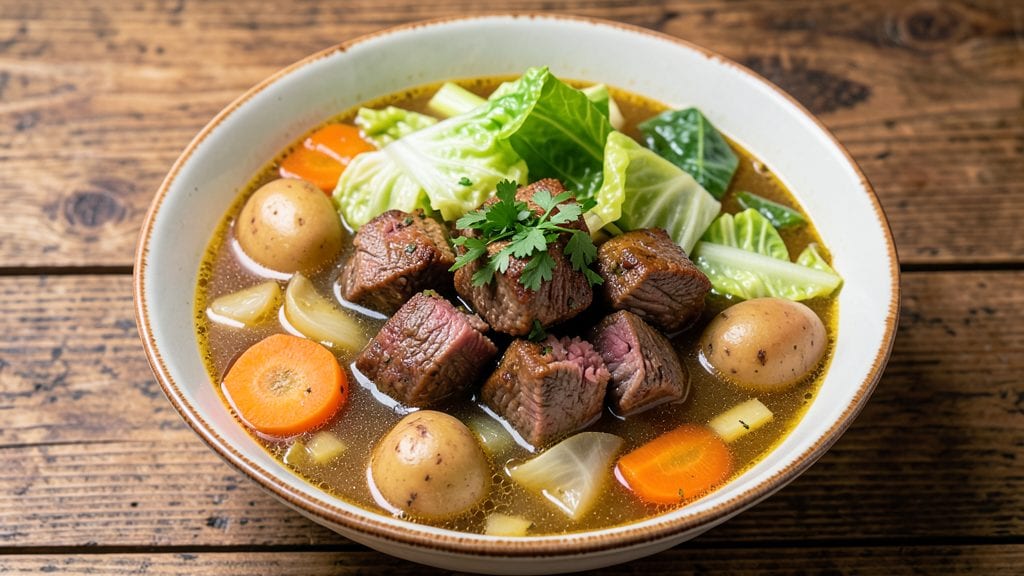
This old-fashioned vegetable beef cabbage soup recipe delivers the kind of hearty, comforting meal your great-grandmother would recognize—and crave.
The secret lies in slow-cooked beef that practically melts in your mouth, combined with cabbage that stays crisp-tender through hours of simmering, all wrapped in a rich, rustic broth that tastes even better the next day.
I developed this version after years of testing traditional methods, refining them to balance old-world techniques with modern convenience.
The beauty of this soup is in its simplicity: just a few core ingredients that work together to create deep, layered flavors.
You'll start with a proper beef broth base, built by browning beef chuck for maximum depth, then layer in vegetables that develop their own satisfying textures—crisp cabbage edges, tender carrots, and potatoes that absorb just enough broth to become velvety.
The key is patience; letting everything simmer low and slow transforms tough cuts into tender perfection while allowing flavors to meld into something truly comforting.
What you'll end up with is a steaming bowl of soup that's rich enough to satisfy on a cold evening but light enough to enjoy any time of year.
The cabbage holds its shape beautifully, offering satisfying crunch with every bite, while the beef falls apart so easily it practically dissolves on your tongue.
This isn't just soup—it's a meal that warms both body and soul, with that nostalgic flavor that reminds us why homemade always tastes better than anything you can buy.
Perfect for meal prepping (it tastes even better reheated), serving at family gatherings, or simply treating yourself to a taste of tradition. The recipe scales effortlessly, so you can make just enough for two or feed a crowd without breaking a sweat.
Here's how to create this timeless classic in your own kitchen.
Ingredients for old-fashioned vegetable beef soup recipe with cabbage
Nothing beats this old-fashioned beef soup with cabbage's satisfying crunch and beef that melts in your mouth.
| Ingredient | Amount | Notes |
|---|---|---|
| Beef Chuck Roast 🥩 | 2 lb | Cut into 1-inch cubes |
| Yellow Onions 🧅 | 2 whole | Medium, chopped |
| Carrots 🥕 | 4 whole | Medium, peeled and chopped |
| Russet Potatoes | 3 medium | Peeled and cubed (about 2 cups) |
| Green Cabbage | 1 small head | Core removed, chopped (about 8 cups) |
| Celery Stalks 🥬 | 4 whole | Chopped (about 1 cup) |
| Garlic Cloves 🧄 | 4 cloves | Minced |
| Tomato Paste 🍅 | 2 tbsp | Squeeze tube preferred |
| Beef Broth 💧 | 6 cups | Homemade or quality store-bought |
| Bay Leaves 🍃 | 2 whole | Dried, removed before serving |
| Thyme Sprigs 🌿 | 2 whole | Fresh or dried |
| Salt 🧂 | 1 ½ tsp | Kosher or sea salt |
| Black Peppercorns 🌶️ | ½ tsp | Freshly ground |
| Olive Oil 🫒 | 2 tbsp | For browning beef |
The beef is where the magic happens. Chuck roast from the butcher section (not pre-cubed) gives you the best flavor and texture. Costco or local butchers usually have it on sale, and it's worth buying extra to freeze. Look for pieces with good marbling—those white streaks mean more flavor. If you're short on time, pre-cubed chuck from the grocery store works fine, just pat it dry before browning. The cabbage should be firm and heavy for its size—green or purple varieties both work, but avoid wilted leaves. For the broth, homemade is ideal, but Swanson or Pacific Foods brands are solid shortcuts.
No beef chuck? Chuck steak or even stew meat will do in a pinch, but cut it into smaller pieces. The carrots can be baby carrots if that's what you've got—no peeling needed. Fresh thyme is ideal, but dried at one-third the amount works too. Short on tomato paste? Canned crushed tomatoes at half the amount add acidity. The potatoes? Yukon Golds hold their shape better than Russets, but Russets give a creamier texture. If your cabbage is particularly tough, core it and slice it thinly—it'll cook faster and stay tender. And trust me, don't skip browning the beef—that's what gives the soup its deep, rich flavor.
This soup tastes even better the next day, so make extra. Store in airtight containers in the fridge for 4-5 days or freeze for 3 months. I like to portion it into individual containers—grab one for lunch all week. The cabbage stays crisp for longer if you add it 15 minutes before serving. For reheating, add a splash of broth or water to prevent drying out. And if you've got leftovers, freeze portions in ice cube trays—perfect for quick meals later.
Why You'll Love This Recipe
- One-Pot Wonder: I swear by this recipe because it’s basically hands-off after the initial chop. Toss everything—chuck roast, onions, carrots, potatoes, and cabbage—into one pot, cover with broth, and let it simmer. No fancy techniques, just pure, lazy cooking that still delivers big flavor.
- Deep Umami Magic: That beef chuck roast? It breaks down into tender, melt-in-your-mouth perfection, while the cabbage adds a satisfying crunch. The slow simmer lets the onions caramelize just enough to give it that rich, old-school depth—no fancy sauces or secret spices needed.
- Meal Prep MVP: Between us, this soup is my go-to for busy weeks. Make a double batch, and you’ve got lunches covered for days. The flavors actually get better the next day, and the cabbage holds its texture—no sad, mushy leftovers here.
- Budget-Friendly Feast: A whole roast and a head of cabbage stretch for six servings without breaking the bank. It’s the kind of dish where you’re feeding a crowd but still eating well—no overpriced ingredients, just honest, hearty comfort food that won’t drain your wallet.
Step-by-step instructions for old-fashioned vegetable beef cabbage soup
Here's the method that delivers rich, rustic flavor with tender beef and perfectly cooked cabbage.
Brown the Beef for Deep Flavor
Heat a large Dutch oven over medium-high heat and add the 2 tablespoons olive oil. Once shimmering, add the 2 lb beef chuck roast cut into 1-inch cubes in a single layer. Let them sear undisturbed for 3-4 minutes until they develop a deep brown crust.
This browning creates the Maillard reaction, which builds complex flavors that infuse into the soup. Stir occasionally to ensure even browning, but don't rush—you want that rich, caramelized color. Once all sides are browned, transfer the beef to a plate and set aside temporarily.
Sauté Vegetables for Foundation
In the same Dutch oven, add the 2 whole chopped yellow onions, 4 chopped carrots, and 4 chopped celery stalks. Cook over medium heat for 5-6 minutes, stirring occasionally, until the vegetables soften slightly and the onions become translucent.
Next, add the 4 minced garlic cloves and cook for another 30 seconds until fragrant. This aromatic base forms the flavor foundation of your soup. Then stir in the 2 tablespoons tomato paste and cook for 1 minute to deepen the color and enhance the savory notes.
Build the Rustic Broth
Pour in the 6 cups beef broth, scraping up any browned bits from the bottom of the pot. Return the browned beef to the pot along with the 2 whole bay leaves and 2 whole thyme sprigs. Bring the mixture to a gentle boil over high heat, then reduce to a simmer.
Add the 3 peeled and cubed russet potatoes and 1 small head chopped green cabbage. Season with 1.5 teaspoons salt and 0.5 teaspoon freshly ground black peppercorns. The broth should just cover the vegetables—if it's too shallow, add a little water. Let it simmer uncovered for 1 hour until the beef is fork-tender.
Finish and Adjust Seasoning
After 1 hour, check the beef tenderness by piercing it with a fork. If it's still slightly firm, continue simmering for another 15-20 minutes. The cabbage should be tender but still hold its shape—it should be bright green and slightly crisp.
Remove the bay leaves and thyme sprigs before serving. Taste the soup and adjust seasoning if needed—this is where you can really make it your own. The soup should be rich with beefy flavor, slightly sweet from the carrots, and bright from the cabbage. Serve hot with crusty bread to soak up every last drop of that hearty broth.
Pro Tips For Making Old-Fashioned Vegetable Beef Soup Recipe With Cabbage
- SEAR THE ROAST FIRST: Walk away from the stove after browning the beef chuck—it needs a deep, dark crust to hold up through hours of simmering. I used to rush this step, and the meat always turned out tough; now I take my time, letting it develop color for 3-4 minutes per side. The extra effort makes a real difference when you’re shredding it later.
- CUT CABBAGE SMALLER THAN YOU THINK: Big cabbage wedges turn to mush by the end. Shred it into ½-inch pieces—small enough to disappear but big enough to hold shape. I learned this the hard way when my soup ended up with a watery, slimy texture instead of tender, flavorful bites.
- ADD POTATOES LATE: Toss the potatoes in halfway through cooking (about 45 minutes in), or they’ll dissolve into the broth like overcooked pasta. Russets break down fast—wait until the beef is nearly tender to keep them creamy but intact.
- SKIP THE CROWDED POT: Don’t dump everything in at once—layer the veggies in stages. Start with onions and carrots, then add cabbage after 30 minutes, and potatoes last. Cramming the pot forces the beef to stew in its own juices too soon, making the broth cloudy and the meat bland.
Wine and beer pairings for this recipe
Classic Red Wine
A hearty beef soup like this pairs beautifully with a medium-bodied red wine that can stand up to the rich beef flavors while complementing the cabbage's earthy notes.
I always reach for a Chianti Classico from Tuscany—its bright acidity and cherry undertones cut through the soup's richness while enhancing the beef's savory depth. Look for a Sangiovese-based wine with 12-14% alcohol to balance the meal without overpowering it. 🍷
Crisp White Wine
If you prefer white wine, a dry Riesling from Germany or Alsace is my go-to choice. The wine's natural acidity and subtle mineral notes create a refreshing contrast to the soup's heartiness, while its slight sweetness complements the cabbage.
Aim for a Kabinett or Spätlese with 11-12% alcohol—these wines have enough body to handle the beef but stay light enough to cleanse your palate between bites.
Malbec for Bold Lovers
For those who love their wine bold, a Malbec from Argentina delivers rich, dark fruit flavors that mirror the beef's depth while adding a touch of spice. The wine's velvety texture pairs wonderfully with the soup's rustic simplicity, especially if you've added a pinch of smoked paprika to the broth.
Opt for a Mendoza region Malbec with 14-15% alcohol—it's robust enough to stand up to the dish without overwhelming it.
Craft Beer Pairings
If wine isn't your thing, a Belgian-style witbier like Hoegaarden or Stella Artois offers a crisp, citrusy contrast to the soup's heartiness. The beer's coriander and orange peel notes brighten the cabbage and beef flavors, while its effervescence cleanses your palate.
For a darker option, try a German Dunkel—its malty sweetness and caramel undertones complement the carrots and beef beautifully. 🍺
Seasonal Cider
In fall or winter, a dry hard cider from the Pacific Northwest adds a refreshing twist. Look for brands like Angry Orchard Dry or Woodchuck Hard Cider—their crisp acidity and subtle apple flavors echo the cabbage's brightness while balancing the soup's richness.
The cider's natural sweetness also enhances the carrots' natural sugars, making every spoonful even more satisfying.
Non-Alcoholic Options
For a non-alcoholic pairing, a sparkling apple cider like Martinelli's Sparkling or a ginger beer with a squeeze of lemon works beautifully. The effervescence and citrus notes cut through the soup's richness, while the ginger adds a subtle warmth that complements the beef.
For a more robust option, try a chilled hibiscus iced tea—its tart, floral notes provide a refreshing contrast to the hearty soup. 💛
Nutrition facts
Frequently asked questions
Why does my cabbage turn mushy in beef soup?
Cabbage releases water quickly when cooked too long. Add it only 15 minutes before serving to keep it crisp-tender. For extra texture, blanch cabbage in boiling water for 2 minutes first, then add to the soup. This jumpstart method preserves its bite while preventing mushiness.
Can I substitute beef with another protein?
For a lighter version, use chicken thighs (brown them first for flavor). Or try pork shoulder for a richer taste. Vegetarians can swap beef for mushrooms or lentils—simmer them longer to develop depth. Just remember: browning is key for flavor in any protein.
How do I make this soup more flavorful?
Boost depth with 1 tsp smoked paprika or a splash of red wine while browning the beef. For umami, add 1 tbsp soy sauce or a parmesan rind to the broth. A pinch of nutmeg or allspice also enhances the cabbage's natural sweetness without overpowering.
Is this soup freezer-friendly?
Yes! Portion into airtight containers and freeze for up to 3 months. Thaw overnight in the fridge, then reheat with a splash of broth. The cabbage may soften slightly, so add fresh cabbage when reheating. For best texture, freeze without the cabbage and add it fresh when ready to serve.
What's the best way to serve leftover soup?
Transform leftovers into soup sandwiches with crusty bread or soup-stuffed baked potatoes. For a modern twist, blend half the soup and strain for a creamy base, then stir in fresh cabbage. Garnish with fresh herbs or a drizzle of sour cream for extra richness.