
Soups & Stews
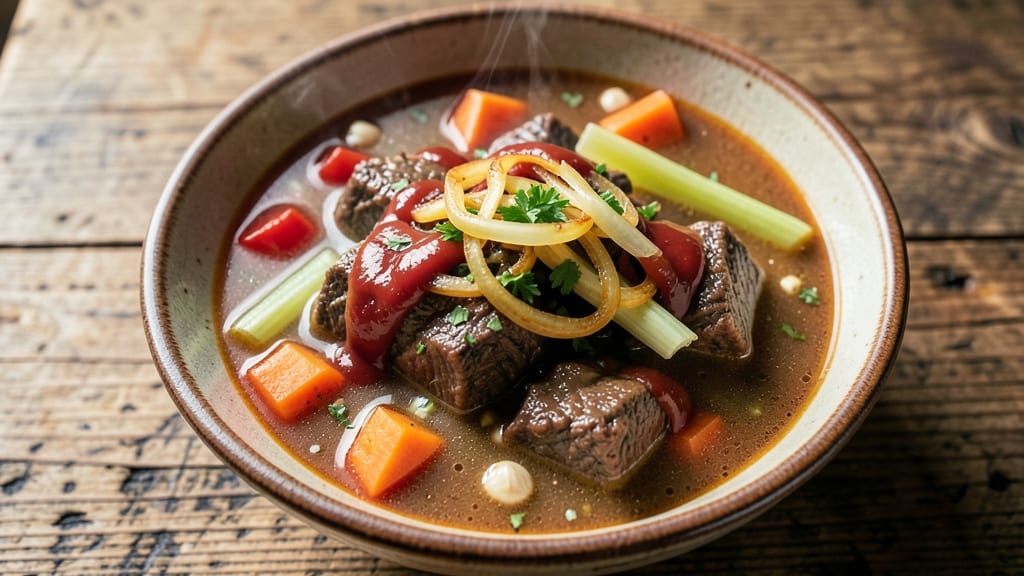
This old-fashioned beef soup recipe delivers the deep, comforting flavors of a homestyle pot that simmers for hours, transforming tough cuts into tender perfection. The secret lies in slow caramelization of onions and a rich broth that builds layers of savory depth—exactly what makes this recipe a classic.
I’ve perfected it over years of testing, ensuring every spoonful delivers that restaurant-quality warmth you crave on chilly days.
The beauty of this soup is in its simplicity: just a few quality ingredients—beef chuck, carrots, celery, and onions—simmered until the flavors meld into harmony. The caramelized onions form a velvety base, while the beef becomes fork-tender, absorbing all the aromatic goodness.
It’s the kind of dish that tastes even better the next day, as the flavors deepen with time.
What sets this recipe apart is the balance of technique and tradition. A slow simmer develops the broth’s richness, while a touch of tomato paste adds subtle depth without overpowering. The result?
A hearty, velvety soup that’s perfect for feeding a crowd or savoring in quiet moments. Serve it with crusty bread to soak up every last drop of that savory broth.
This isn’t just soup—it’s a meal in itself, packed with protein and warmth that lingers long after the last bite. Whether you’re hosting a gathering or simply craving comfort, this recipe delivers the homestyle richness that stands the test of time. Let’s get cooking!
Ingredients for old fashioned beef soup
Quality beef and slow-cooked vegetables create this restaurant-style beef soup.
| Ingredient | Amount | Notes |
|---|---|---|
| Beef Chuck Roast 🥩 | 2 lb | Bone-in for flavor, cut into 1.5-inch cubes |
| Yellow Onions 🧅 | 3 whole | Medium size, thinly sliced for caramelization |
| Carrots 🥕 | 3 whole | Medium size, peeled and cut into 1-inch chunks |
| Celery Stalks 🧅 | 3 whole | Fresh, cut into 1-inch pieces |
| Garlic Cloves 🧄 | 4 cloves | Peeled, smashed for aroma |
| Tomato Paste 🍅 | 2 tbsp | Smooth, not chunky |
| Dried Thyme 🌿 | 1 tsp | Or 1 tbsp fresh thyme leaves |
| Bay Leaves 🍃 | 2 whole | Fresh or dried, removed before serving |
| Black Peppercorns 🌶️ | 1 tsp | Freshly cracked for best flavor |
| Salt 🧂 | 1 ½ tsp | Kosher or sea salt, adjust to taste |
| Beef Broth 💧 | 6 cups | Homemade or high-quality store-bought |
| All-Purpose Flour 🌾 | 1 tbsp | For thickening broth if needed |
| Cold Water 💧 | ½ cup | For thinning if soup is too thick |
| Extra-Virgin Olive Oil 🫒 | 2 tbsp | For caramelizing onions |
The beef chuck roast is the heart of this soup—look for well-marbled cuts at your local butcher or Costco for the best value. Kroger or Whole Foods carry pre-cut chuck if you're short on time, but avoid lean cuts like sirloin. The onions deserve special attention: yellow onions caramelize best, and Vidalia or sweet onions add a touch of sweetness if you prefer. For broth, homemade is ideal, but Swanson or Pacific Foods brands deliver consistent quality. The tomato paste should be smooth—Muir Glen or Rao's are my go-tos for restaurant-quality results.
No beef chuck? Short ribs or brisket work beautifully, though cooking times vary. Swapping carrots for parsnips or turnips adds earthy depth, while celery can be omitted if you're in a hurry (though it adds great flavor). Fresh thyme is superior, but dried works at one-third the amount. For a vegetarian twist, replace the beef with extra-firm tofu or mushrooms, though the texture will differ. The olive oil matters—use a fruity, peppery extra-virgin like California Olive Ranch for the best caramelization. If your soup thickens too much, add cold water 1 tbsp at a time to reach your desired consistency.
This soup tastes even better the next day as flavors meld—store in the fridge for up to 5 days or freeze for 3 months. For freezing, portion into airtight containers with a 1-inch headspace. Reheat gently on the stove, stirring occasionally. The caramelized onions can be prepped ahead and stored in the fridge for 3 days, saving you time on cooking day. Serve with crusty bread to soak up every last drop of that rich broth.
Why You'll Love This Recipe
- No-Fuss Prep: I swear by the "dump-and-go" method here—just chop the onions, carrots, and celery (no fancy dicing, promise), brown the beef chuck in one pot, then let the slow simmer do the work. My kids even help with the stirring part.
- Deep, Savory Magic: That beef chuck? It practically melts into the broth, giving you tender chunks with layers of flavor—caramelized onions, earthy garlic, and carrots that stay just crisp enough to bite into. Honestly, it’s the kind of soup where you forget how simple the ingredients are.
- Weeknight Workhorse: This is my go-to when I’m swamped: make a big batch on Sunday, and I’ve got lunch or dinner covered for days. Freeze half if you’re feeling extra, or serve it to guests—no one ever guesses it’s this easy.
- Budget That Feeds: A single beef chuck roast stretches into four hearty servings, and the veggies? They’re the kind that last forever in the fridge. Between us, this is how I feed my family well without breaking the bank—no sad leftovers here.
Step-by-step instructions for old fashioned beef soup
This homestyle method delivers deep flavor through caramelized onions and slow-cooked beef.
Sear and Prepare the Beef
Pat the 2 lb beef chuck roast dry with paper towels and cut it into 1.5-inch cubes. Heat 1 tablespoon of the extra-virgin olive oil in a large Dutch oven over medium-high heat until shimmering. Working in batches, sear the beef cubes for 2-3 minutes per side until they develop a deep brown crust. This step builds foundational flavor through the Maillard reaction.
Remove the seared beef and set it aside. If your Dutch oven has accumulated too much fat, carefully pour off all but 1 tablespoon. The remaining oil will help caramelize the onions in the next step. Don't wipe out the pan completely—those browned bits contain concentrated flavor that will dissolve into your soup.
Caramelize Vegetables for Depth
Add the 3 whole yellow onions, 3 whole carrots cut into 1-inch chunks, and 3 whole celery stalks cut into 1-inch pieces to the Dutch oven. Cook over medium heat for 15 minutes, stirring occasionally, until the vegetables soften and begin to brown. This slow caramelization creates complex sweetness that forms the soup's flavor base.
After 15 minutes, add the 4 cloves garlic cloves (smashed) and the 2 tablespoon tomato paste. Stir well to coat the vegetables, then sprinkle with the 1 teaspoon dried thyme, 2 whole bay leaves, 1 teaspoon black peppercorns, and 1.5 teaspoons salt. Cook for another 5 minutes, stirring frequently, until the garlic is fragrant and the tomato paste darkens slightly.
Simmer the Soup for Richness
Pour in the 6 cups beef broth and bring the mixture to a gentle boil. Return the seared beef cubes to the Dutch oven and reduce heat to low. Partially cover and simmer for 2 hours, skimming any foam that rises to the surface. The soup should bubble gently—if it boils vigorously, reduce the heat further. This long simmer breaks down connective tissue in the beef, creating tender, fork-tender meat.
Check the seasoning after 1 hour and adjust with additional salt if needed. The soup should taste rich and savory, with the beef nearly falling apart when pierced with a fork. If the soup becomes too thick during cooking, whisk in the 0.5 cup cold water to reach your desired consistency.
Finish and Adjust Texture
Remove the 2 whole bay leaves and discard them. For a slightly thicker soup, whisk together the 1 tablespoon all-purpose flour with 2 tablespoons cold water to make a slurry. Slowly ladle the slurry into the soup while stirring constantly. Simmer for an additional 10 minutes to let the flour blend completely and thicken the broth naturally.
Taste the soup and make any final adjustments—perhaps a pinch more salt or a crack of black pepper. The soup should be rich but not overly thick, with tender beef that pulls apart easily. If you prefer a clearer broth, strain it through a fine-mesh sieve before serving, or leave it rustic with visible vegetables and meat.
Pro Tips For Making Old Fashioned Beef Soup
- Brown the Chuck Hard: After years of making this soup, I finally understood—this isn’t the time to be gentle. Sear the beef chuck roast in batches until it’s deep brown, even black in spots, on all sides. That crust locks in flavor and keeps the meat from turning to mush later. (Yes, it takes 10-15 minutes, but it’s worth it.)
- Chop Onions Coarse: I used to slice onions paper-thin for presentation, but that’s a mistake. For old-fashioned beef soup, cut them into ½-inch chunks—they’ll soften beautifully and add hearty texture. No one’s judging your soup’s looks here, just the taste.
- Don’t Overcrowd the Pot: I learned this the hard way—dumping everything in at once steams the veggies instead of browning them. Start with onions, carrots, and celery in a single layer, cook until softened, then add the rest. The difference in flavor is night and day.
- Simmer, Don’t Boil: Once the beef is tender, resist the urge to crank the heat. A gentle simmer—just bubbles breaking the surface—keeps the broth clear and the meat from falling apart. (And yes, it means waiting 2-3 hours for that perfect texture.)
Creative variations of old fashioned beef soup
Hearty Short Rib Twist
Swap the beef chuck for 2 lbs bone-in short ribs and simmer them for 3 hours instead of 2. The extra collagen-rich meat creates a velvety broth that practically melts in your mouth.
I like to add 1 cup of red wine (like Cabernet Sauvignon) when deglazing the pan after searing—it adds depth without overpowering. The ribs should fall off the bone, leaving you with rich, flavorful chunks perfect for slurping straight from the bowl. 🥩
Creamy Potato Addition
For a comforting twist, add 2 cups peeled Yukon Gold potatoes, cut into 1-inch cubes, along with the other vegetables. The potatoes will absorb the rich broth and become tender after 1.5 hours of simmering.
For extra creaminess, stir in ½ cup heavy cream or ½ cup sour cream at the end, just before serving. This version feels like a hug in a bowl, especially on cold winter evenings. 🥔
Smoky Chipotle Kick
Transform this classic into a smoky, spicy variation by adding 1-2 chipotle peppers in adobo sauce (minced) and ½ teaspoon smoked paprika when caramelizing the onions. For extra depth, simmer the soup with 1 chipotle pepper in adobo sauce (whole) for 30 minutes before removing it.
The smoky heat complements the beef beautifully, giving the soup a Southwestern flair that’s perfect for spice lovers. 🌶️
Vegetarian Mushroom Swap
For a vegetarian version, replace the beef with 16 oz cremini mushrooms (sliced) and 1 lb extra-firm tofu (pressed and cubed). Sauté the mushrooms first to develop their umami flavor, then proceed with the recipe as written.
Add 1 teaspoon soy sauce and ½ teaspoon liquid smoke to mimic the beefy depth. While the texture won’t be identical, the flavors are rich and satisfying. This version is perfect for meat-free days or when you want to share with vegetarians. 🍄
Winter Root Vegetable Upgrade
Celebrate seasonal flavors by adding 1 parsnip and 1 small rutabaga (peeled and cubed) along with the carrots and celery. These hearty roots add natural sweetness and earthy depth, especially when caramelized alongside the onions.
For extra richness, stir in 2 tablespoons of apple cider vinegar at the end—it brightens the flavors and balances the soup’s heartiness. This version is a fall and winter favorite that feels like a cozy embrace. ❄️
Herb-Infused Broth Boost
Elevate the broth by infusing it with fresh herbs before adding it to the soup. Simmer 2 sprigs fresh rosemary, 2 sprigs fresh thyme, and 1 bay leaf in the broth for 15 minutes before straining.
The aromatic herbs add layers of complexity that make the soup taste even more restaurant-worthy. For an extra touch, garnish each bowl with a sprig of fresh parsley or thyme before serving. This simple upgrade takes the soup to the next level with minimal effort. 🌿
Nutrition facts
Frequently asked questions
Why does this recipe require such a long simmer time?
The 2-hour simmer is key to transforming tough beef chuck into tender, fork-tender meat. Slow cooking breaks down collagen and connective tissue, creating a rich, velvety broth that absorbs all the caramelized onion flavors. This traditional method builds deep, complex taste that can't be achieved with faster cooking.
Can I make this soup in an Instant Pot or slow cooker?
For an Instant Pot, sear the beef first, then cook on high pressure for 60 minutes with all ingredients. In a slow cooker, combine everything and cook on low for 6-8 hours or high for 4-5 hours. The texture will be slightly different but still delicious. Just add the flour slurry at the end for thickening.
What's the best way to store and reheat leftovers?
Store in airtight containers in the fridge for up to 5 days or freeze for 3 months. Reheat gently on the stove over medium-low heat, stirring occasionally. Never microwave directly from frozen—thaw first in the fridge. The flavors actually improve overnight as they meld!
How can I make this soup more flavorful without adding extra ingredients?
Focus on these three techniques: browning the beef well (develops Maillard flavor), caramelizing the onions thoroughly (takes 15+ minutes), and skimming foam during simmering (removes impurities). Also, use high-quality beef broth—the difference is noticeable. These simple steps create restaurant-quality depth.
Is it okay if my soup turns out too thick?
Yes! Thin with cold water 1 tablespoon at a time until you reach your preferred consistency. The recipe includes a flour slurry for thickening, but you can also reserve some broth before adding it all. For a creamier texture, stir in ½ cup heavy cream at the end. The soup should coat a spoon but still be easy to ladle.