
Soups & Stews
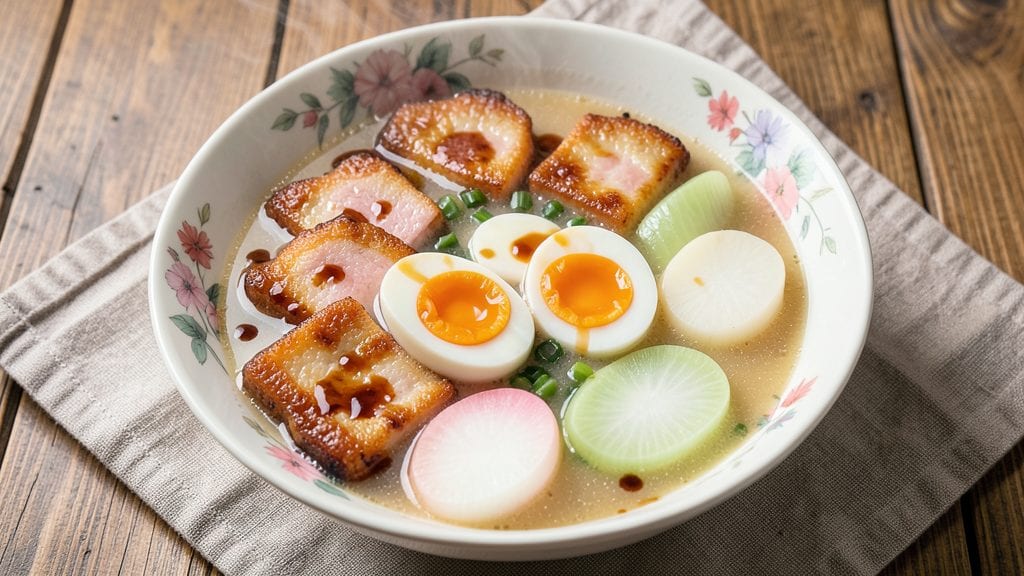
This Odeng soup recipe delivers the comforting warmth of Japan's most beloved winter dish—silky fish cake broth topped with a perfectly crispy crust. The secret lies in slow-simmered dashi stock infused with soy and mirin, where delicate ingredients like daikon, eggs, and konnyaku transform into a harmonious bite.
I've perfected this technique over years of winter cooking, ensuring every spoonful balances umami depth with gentle sweetness.
The magic begins with the broth, where fish cakes (kamaboko) and konnyaku absorb flavors while maintaining their signature textures—creamy centers with crispy tops. Traditional odeng uses only a few ingredients but delivers restaurant-quality results with minimal effort.
What makes this recipe special is the crispy top trick: a quick broil at the end that turns soft fish cakes into golden, crackling perfection without drying them out.
By the time you serve this steaming bowl, you'll have a dish that's both nostalgic and impressive—warm, aromatic broth filled with tender vegetables and fish cakes that hold their shape. The contrast of silky broth against crispy toppings creates an experience that's impossible to resist.
This is the kind of meal that feels like a hug in a bowl, perfect for chilly evenings or special gatherings.
Serve with pickled vegetables or miso soup on the side, and don't forget the classic toppings: grated daikon, soft-boiled eggs, and a sprinkle of bonito flakes.
The broth keeps well, so you can make it ahead and reheat for an even deeper flavor. Let's create this comforting classic step by step.
Ingredients for odeng soup
Japanese pantry staples meet winter comfort food in this silky broth with crispy fish cake magic.
| Ingredient | Amount | Notes |
|---|---|---|
| Dashi Stock 🍜 | 4 cups | Homemade or quality instant dashi |
| White Fish Cakes (Kamaboko) 🐟 | 8 pieces | Traditional rectangular shape, 1-inch thick |
| Konnyaku Slices 🍠 | 4 pieces | Thin, rectangular, 1/4-inch thick |
| Daikon Radish 🥕 | 1 whole | Medium size, julienned into matchsticks |
| Large Eggs 🥚 | 2 whole | Soft-boiled, halved lengthwise |
| Soy Sauce 🧂 | ½ cup | Japanese style, not reduced |
| Mirin 🍶 | ¼ cup | Sweet cooking wine, not imitation |
| Sake 🍶 | ¼ cup | Dry, not sweetened |
| Bonito Flakes 🐟 | 2 tbsp | Freshly dried, for garnish |
| Sesame Seeds 🌰 | 1 tbsp | Toasted lightly for garnish |
| Green Onions 🧅 | 4 whole | Thinly sliced, white and green parts |
| Salt 🧂 | 1 tsp | Kosher or sea salt |
| Sugar 🍚 | 1 tbsp | Granulated, for balancing flavors |
| Vegetable Oil 🫒 | 1 tbsp | For crisping fish cakes |
The dashi stock is the soul of odeng—homemade is ideal, but quality instant like Honten or Marukome works perfectly. Look for bonito flakes that are light brown, not dark or brittle, and dried kombu that smells ocean-fresh. If using instant, simmer for 10 minutes to deepen the umami. For the fish cakes (kamaboko), traditional Hokkaido-style with a smooth, white interior and firm exterior ensures the best texture. Japanese grocery stores like Mitama Market or H-Mart carry authentic brands like Nissin or Marudai, but Asian markets often have better selection than regular supermarkets. The konnyaku should be clear and firm, not cloudy or slimy—Mitsukan is a reliable brand.
No dashi powder? Combine 1 tbsp bonito flakes and 1 sheet kombu with 4 cups hot water for a quick homemade version. Running short on mirin? Substitute 1/4 cup sugar plus 1 tbsp water, but the flavor won't be identical. The fish cakes can be swapped for store-bought kamaboko (like Goya brand), but homemade versions from Japanese delis have superior texture. Konnyaku substitutes are tricky—agar-based jelly can mimic the chewy texture but lacks the same mouthfeel. For the daikon, yellow or white varieties work, but purple daikon adds a subtle sweetness. Green onions can be omitted if you prefer a cleaner broth, but they add a bright contrast.
The broth keeps for 3 days in the fridge—reheat gently to preserve clarity. Fish cakes crisp best fresh, but you can broil them just before serving if making ahead. Konnyaku stores well in the fridge for up to 5 days submerged in water. Soft-boiled eggs should be made just before serving for perfect texture. Bonito flakes lose potency quickly—store them in the freezer to extend freshness. For batch cooking, double the broth recipe and freeze in ice cube trays—thaw and reheat for instant odeng. The crispy top trick works best with freshly broiled fish cakes, so time it right for maximum crunch.
Why You'll Love This Recipe
- No-Chop Nightmare: I swear by this recipe when I’m too tired to slice anything—just arrange the pre-cut kamaboko, daikon slices, and konnyaku like you’re playing a game of edible Jenga. The dashi stock does all the heavy lifting while you boil water.
- Umami Bomb: That first sip of dashi stock, rich and savory, with the delicate fishiness of kamaboko melting into the broth? It’s the kind of flavor that makes you pause mid-slurp and think, “Wait, is this that good?” The poached eggs add a creamy finish that ties everything together.
- Leftovers That Don’t Suck: Honestly, this soup tastes better the next day. The flavors meld, the konnyaku softens just right, and the daikon stays crisp—no sad, watery leftovers here. I make a big pot on Sunday and eat it for lunch all week. (Yes, even on a Tuesday night.)
- Budget Meal for Crowds: A single batch feeds four for under $10, and the ingredients stretch far. Kamaboko and konnyaku last ages in the fridge, daikon keeps for weeks, and eggs are always cheap. It’s my go-to when friends drop by unexpectedly—I just double the batch and call it a day.
Step-by-step instructions for odeng soup
Master the secret to crispy fish cakes and silky broth with these precise techniques.
Prepare the Fish Cakes for Crispy Texture
Heat the vegetable oil in a large pot over medium heat until shimmering but not smoking. Add the 8 pieces of white fish cakes (kamaboko) and fry for 1 minute per side until golden brown and crispy. The key is to maintain even heat - if the oil gets too hot, the exterior will burn before the interior warms through.
Remove the fish cakes and set aside on a paper towel-lined plate. This initial crisping creates the signature texture that distinguishes great odeng. The fish cakes should have a golden crust while remaining tender inside - you'll know they're ready when they release easily from the pan without falling apart.
Build the Flavorful Broth Base
In the same pot, add the 4 cups dashi stock and bring to a gentle simmer over medium-low heat. Add the 0.5 cup soy sauce, 0.25 cup mirin, 0.25 cup sake, 1 tbsp sugar, and 1 tsp salt. Stir gently to combine, being careful not to create a vortex that might cause splashing.
Simmer the broth uncovered for 10 minutes to allow the flavors to meld. You'll notice the aroma become more complex as the ingredients integrate. The broth should develop a rich, umami depth while maintaining clarity - any cloudiness indicates it's boiling too vigorously, which we want to avoid.
Prepare the Supporting Ingredients
While the broth simmers, julienne the daikon radish into matchsticks using a sharp mandoline or knife. Add the 4 pieces konnyaku slices to the simmering broth and cook for 3 minutes. The konnyaku should soften but remain intact - if they break apart, reduce the heat slightly.
Add the julienned daikon radish to the broth and cook for an additional 2 minutes. The radish should soften slightly while maintaining its shape. Remove both ingredients with a slotted spoon and set aside. The broth should now have a clean, aromatic base ready for the final components.
Assemble and Garnish the Odeng
Return the crispy fish cakes to the broth and add the 2 soft-boiled eggs, halved lengthwise. Simmer gently for 2 minutes to warm through. The eggs should maintain their soft texture while absorbing the broth's flavors. Add the cooked daikon and konnyaku back to the pot.
Sprinkle the 2 tbsp bonito flakes over the surface and toast them lightly for 30 seconds until they begin to smell aromatic. Remove from heat and garnish with the 1 tbsp toasted sesame seeds and 4 thinly sliced green onions. Serve immediately in individual bowls, ensuring each portion contains both crispy fish cakes and tender ingredients.
Pro Tips For Making Odeng Soup
- Boil Eggs Slowly: DESCRIPTION:
- Soak Konnyaku First: DESCRIPTION:
- Don’t Overcrowd the Pot: DESCRIPTION:
- Simmer, Don’t Boil: DESCRIPTION:
Essential equipment for perfect results
Broth Pot Essentials
Your heavy-bottomed Dutch oven is the star of odeng—look for Le Creuset or All-Clad for even heat distribution. The 4-quart capacity ensures enough broth for 4 servings while leaving room for ingredients.
A stainless steel pot with a tight-fitting lid works too, but avoid aluminum as it can react with acidic ingredients like soy sauce. 🍜
Crispy Top Tools
For the crispy fish cake trick, you'll need a slotted spoon (I use OXO Good Grips) to remove fish cakes without breaking them. A small offset spatula helps flip them evenly.
For the final broil, a wire cooling rack placed on a baking sheet prevents soggy bottoms when reheating. Preheat your broiler to 450°F for that perfect golden crust.
Precision Cooking Gear
A digital thermometer (like Thermoworks Smoke) ensures your broth stays at 185-195°F—critical for tender konnyaku and daikon. For soft-boiled eggs, a timer (or phone alarm) prevents overcooking—6 minutes for runny yolks. A sharp mandoline (I recommend Benriner) makes julienned daikon uniform, ensuring even cooking.
Garnish Must-Haves
Fresh bonito flakes need a small sieve to sprinkle evenly. Toast them directly over the pot for 30 seconds to release their nutty aroma. Sesame seeds should be toasted in a dry nonstick skillet over medium-low heat for 1 minute—watch closely to prevent burning.
Thinly sliced green onions require a Japanese knife (like Global Chef's) for clean cuts.
Optional Upgrades
For batch cooking, a large stockpot (like Cuisinart MultiCooker) lets you double the recipe. A fine-mesh strainer helps clarify broth if you prefer a cleaner look.
For vegetarian odeng, swap fish cakes for tofu or shiitake mushrooms—just increase simmer time to 5 minutes for firmer texture. 💡
Nutrition facts
Frequently asked questions
What makes odeng soup different from other Japanese hotpots?
Odeng stands out with its crispy fish cake tops and delicate broth—unlike miso shiru or ramen, it relies on slow-simmered dashi with minimal seasoning. The key is the two-stage cooking: first crisping the kamaboko, then gently reheating in broth to maintain texture contrast. This technique creates the signature "crunchy-silky" experience that defines odeng.
Can I make odeng without fish cakes?
Swap kamaboko for tofu (firm or silken), shiitake mushrooms, or even potatoes for heartier bites. For texture, pan-fry substitutes first to create crispy edges. The broth remains the same—just adjust simmer time (5 minutes longer for mushrooms) to ensure ingredients stay tender. Vegetarian versions work beautifully with konnyaku and daikon as the base.
Why does my odeng broth turn cloudy?
Cloudiness usually means the broth boiled too vigorously or ingredients weren't prepped properly. Use low heat (185-195°F) and avoid stirring vigorously—vortexes create foam. For clarity, strain through a fine-mesh sieve before serving, or simmer uncovered for 10 minutes to allow impurities to rise. The traditional broth should be silky, not murky.
How do I store leftover odeng?
Broth keeps 3 days refrigerated in an airtight container—reheat gently to preserve clarity. For fish cakes, store them separately on a plate (they crisp best fresh) and broil for 2 minutes before serving. Konnyaku and daikon hold for 5 days submerged in broth. Freeze broth in ice cube trays for quick reheating—just thaw and simmer before adding toppings.
What's the secret to the perfect crispy top?
The trick is double-crisping: first pan-fry kamaboko in oil for 1 minute per side until golden, then broil for 2 minutes at 450°F right before serving. Use a wire rack to prevent soggy bottoms. The oil creates an initial crust, while broiling adds that restaurant-quality snap. Never skip the paper towel step—excess moisture kills crispiness!