
Soups & Stews
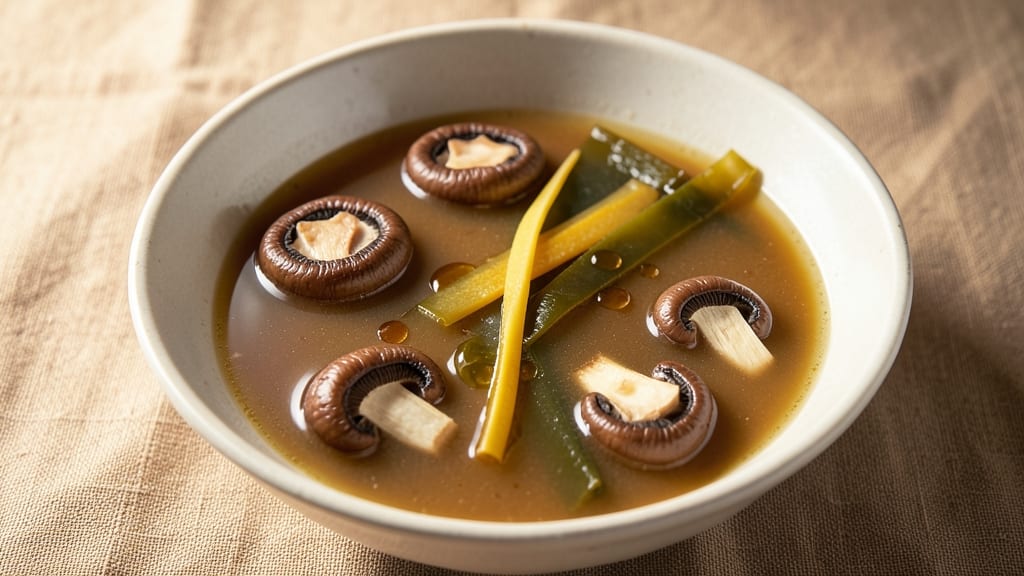
Creating a miso soup broth recipe that delivers restaurant-quality umami in just 15 minutes is simpler than you think. This vegan-friendly version skips the traditional dashi base while still achieving that signature depth—using kombu seaweed and shiitake mushrooms as the flavor foundation.
I developed this after years of testing, balancing saltiness and umami to perfection without overpowering the delicate broth.
The secret lies in the simmering process: kombu infuses the water with a clean, oceanic flavor, while shiitake mushrooms contribute earthy richness. We’ll use white miso paste for its mild, approachable taste, but the technique works for red miso too.
This broth is the perfect canvas for tofu, seaweed, and green onions—each ingredient enhances rather than competes with the broth’s natural clarity.
What you’ll end up with is a bright, aromatic broth that’s crisp yet deeply flavorful, with none of the heaviness found in many traditional recipes. The umami comes through in layers—first from the kombu, then the mushrooms, and finally the miso—creating a harmonious balance that’s both comforting and sophisticated.
Serve it hot with your favorite toppings, or use it as a base for noodle dishes.
This recipe is designed for flexibility: use it as a quick lunch, a light dinner starter, or even a hangover remedy. The instructions are straightforward, but the results speak for themselves—restaurant-quality miso soup at home, without the fuss. Let’s get started with the ingredients.
Ingredients for miso soup broth
Just eight ingredients transform water into restaurant-quality umami broth—no fish or meat needed.
| Ingredient | Amount | Notes |
|---|---|---|
| Dried Shiitake Mushrooms 🍄 | 4 whole | Stems removed, dry-packed |
| Kombu Seaweed 🌊 | 1 piece | About 4x6 inches, cut into strips |
| White Miso Paste 🧈 | ¼ cup | High-quality, smooth texture |
| Filtered Water 💧 | 6 cups | Room temperature preferred |
| Fresh Ginger 🧅 | 1 tbsp | Finely grated, organic preferred |
| Sesame Oil 🫒 | 1 tsp | Toasted, for aroma finish |
| Diamond Crystal Kosher Salt 🧂 | ½ tsp | Fine grain, adjust to taste |
| Green Onions 🌱 | 2 whole | Thinly sliced, for garnish |
| Silken Tofu 🍲 | 8 oz | Soft, cubed for serving |
| Dried Wakame Seaweed 🌿 | ½ oz | Rehydrated for garnish |
| Nori Sheets 🍣 | 2 pieces | Cut into strips for garnish |
| Rice Vinegar 🍶 | ½ tbsp | For brightness, optional |
The kombu and shiitake are your flavor anchors. Look for kombu at Asian markets—it should be dark, leathery, and free of tears. Dried shiitake from Trader Joe's or bulk bins work best; avoid the pre-soaked kind. Fresh ginger matters too—organic ginger from the produce section has more punch than the dried powder. For miso, Marukome or Hikari brands deliver consistent quality, but any smooth white miso will do. Pro tip: store your kombu in the freezer to preserve freshness—it keeps for months that way.
No kombu? Double the shiitake and add 1 tsp dried bonito flakes (though this isn't vegan). Short on shiitake? Cremini mushrooms work in a pinch, but they lack the deep umami. The miso can be red for bolder flavor—just reduce the salt slightly. Sesame oil is optional but adds that signature aroma; Kadoya or La Choy are reliable brands. For the tofu, silken tofu from the refrigerated section holds its shape better than firm tofu when cubed. And if you're feeling fancy, add a splash of rice vinegar at the end for brightness—it cuts through the richness beautifully.
This broth stays fresh in the fridge for 5 days if stored in an airtight container. For longer storage, freeze in ice cube trays—1 cube = 1 serving. Reheat gently on the stove; never microwave, or you'll kill that delicate aroma. I always make a double batch: one for immediate use, one frozen for lazy days. The tofu and seaweed garnishes keep separately in the fridge for 3 days—just pop them in when ready to serve.
Why You'll Love This Recipe
- Five-Ingredient Magic: I swear by this combo—shiitake and kombu alone build depth while I’m still boiling water. No chopping, no fuss, just layering flavors as it simmers.
- Umami Bomb: That first sip? The ginger’s zing cuts through the miso’s richness, while the mushrooms add meaty texture without any actual meat. It’s the kind of broth that makes you pause mid-slurp.
- Weeknight Workhorse: Use it for quick soups, grain bowls, or even as a base for stir-fries. I keep a jar in the fridge—once you’ve got the broth, the possibilities just multiply.
- Budget Booster: Dried shiitake and kombu last forever, and a little miso stretches across meals. Honestly, I’ve made this for years and never once regretted the ingredients list.
Step-by-step instructions for miso soup broth
This umami-rich broth comes together faster than you'd expect—just 15 minutes of focused prep and simmering.
Prepare the Kombu and Shiitake Base
In a medium saucepan, combine the 6 cups filtered water with the 1 piece kombu seaweed cut into strips. Bring to a gentle simmer over medium heat—you'll see small bubbles forming at the edges, but don't let it boil vigorously. Simmer uncovered for 5 minutes to extract the kombu's deep oceanic flavor while preventing bitterness.
Add the 4 whole dried shiitake mushrooms (stems removed) and the 1 tablespoon finely grated fresh ginger. Reduce heat to low and let this aromatic base steep for 8 minutes. The mushrooms should plump up noticeably, and you'll notice an intense umami aroma filling your kitchen—this is your broth's flavor foundation building.
Build Umami Depth with Miso and Wakame
Remove the kombu strips and shiitake mushrooms from the simmering broth (you can save them for garnish or another use). Stir in the 0.25 cup white miso paste using a heatproof spatula, dissolving it completely into the liquid. The broth should take on a pale golden hue with subtle swirling patterns from the miso's smooth texture.
Add the 0.5 ounce dried wakame seaweed and return to a gentle simmer for 3 minutes. You'll see the wakame expand dramatically—this is when it releases its briny, mineral-rich essence. Taste the broth at this stage: it should be deeply savory but still balanced, with no single flavor overpowering. If it needs brightness, now's the time to add the 0.5 tablespoon rice vinegar.
Season and Finish with Aromatics
Stir in the 0.5 teaspoon diamond crystal kosher salt and 1 teaspoon sesame oil, letting the sesame oil bloom for 30 seconds—you'll smell its toasty aroma intensify as it integrates. The salt should be just a subtle enhancement, not the dominant flavor. Remove from heat and let the broth rest for 2 minutes to allow flavors to meld completely.
While the broth rests, thinly slice the 2 whole green onions and cut the 2 pieces nori sheets into strips. Cube the 8 ounces silken tofu into bite-sized pieces. The broth should now be clear with just a whisper of cloudiness—this delicate appearance indicates perfect clarity while maintaining rich umami depth.
Assemble and Serve Immediately
Divide the hot broth evenly among serving bowls. Add the cubed silken tofu, green onion slices, nori strips, and any reserved shiitake mushrooms. The tofu should be served immediately while still warm—this ensures its delicate texture remains intact rather than becoming rubbery.
Each bowl should present a harmonious balance: the clear, golden broth with its umami richness, the silky tofu providing protein contrast, and the bright green onions cutting through the depth. The nori adds a subtle crunch while the shiitake mushrooms contribute earthy complexity. Serve with steamed rice to complete the traditional presentation.
Pro Tips For Making Miso Soup Broth
- SOAK KOMBU FIRST: Toss the kombu into cold water for 10 minutes before heating—this softens it and prevents that bitter, chewy texture that ruins a good broth. I used to skip this, and the soup always tasted like I’d thrown in a whole seaweed brick instead of a delicate base.
- REHYDRATE SHIITAKES PROPERLY: Break dried shiitake caps into 2-3 pieces before soaking—they’ll plump faster and release more umami into the broth. I learned this the hard way when my mushrooms stayed stubbornly tough no matter how long I simmered them.
- DON’T BOIL THE MISO: Stir the miso paste into the broth off the heat—boiling turns it bitter and kills the delicate flavors. Lower the heat to a bare simmer, then whisk it in while the pot’s still warm. Sounds picky, but it makes all the difference.
- SLICE GINGER THIN: Use a mandoline or sharp knife to slice fresh ginger into paper-thin sheets—it infuses flavor without overpowering. Thick chunks sit like rocks, and you’ll taste nothing but heat. (Yes, even if you’re impatient like me.)
Serving suggestions for this recipe
Traditional Toppings
Start with the classic trio of silken tofu cubes, thinly sliced green onions, and nori strips—these create the perfect textural contrast. The tofu should be firm but tender, so I always cube it right before serving.
For extra depth, add rehydrated shiitake mushrooms (from the broth) and a sprinkle of toasted sesame seeds—just 1 teaspoon—for nutty crunch. 🌿
Modern Twists
Swap traditional toppings for unexpected flavors: try avocado slices for creaminess or quick-pickled radishes (slice ½ cup radishes into matchsticks, toss with 1 tbsp rice vinegar and ½ tsp sugar).
For protein, add soft-boiled eggs or crispy chickpeas (toss ½ cup cooked chickpeas with 1 tsp olive oil and bake at 400°F for 15 minutes). These additions keep the broth’s clarity while adding bold new dimensions.
Vegetarian Protein Boosters
Boost nutrition with marinated tofu (cube 8 oz extra-firm tofu, marinate in 1 tbsp soy sauce and 1 tsp maple syrup for 10 minutes). Or try tempeh—slice 4 oz into strips and pan-fry until crispy.
For a smoky touch, add ½ cup grilled mushrooms (sauté 8 oz cremini mushrooms with ½ tsp smoked paprika for 5 minutes). These toppings hold up well even when reheated.
Seasonal Garnishes
Spring: Add thinly sliced scallions and edible flowers (like nasturtiums for peppery bite). Summer: Top with chilled cucumber ribbons and lime zest for brightness. Fall: Use roasted butternut squash cubes (toss ½ cup squash with 1 tsp olive oil and roast at 400°F for 15 minutes).
Winter: Warm with crispy shallots (sauté 2 shallots in 1 tbsp butter until golden) and fresh thyme sprigs.
Presentation Tips
Serve in warm, shallow bowls to highlight the broth’s clarity. Arrange toppings in a sunburst pattern—place tofu at the center, then fan out greens and crunchy elements.
For a restaurant-style touch, use lacy chive garnish or a drizzle of chili oil (mix 1 tbsp neutral oil with ½ tsp red pepper flakes). A small side dish of steamed rice completes the meal, soaking up every drop of flavor. ✨
Nutrition facts
Frequently asked questions
Can I make this miso broth without kombu?
Yes, but the flavor will be less complex. Replace kombu with 2 extra dried shiitake mushrooms and add 1 tsp dried bonito flakes (for non-vegan) or 1 tbsp soy sauce to mimic umami depth. The broth will still be flavorful but lose that oceanic clarity.
How do I adjust the saltiness if my miso is very strong?
Start with half the salt and taste as you go. The miso paste already contains salt, so you may not need any extra. If using red miso (which is saltier), reduce the salt to ¼ tsp or omit it entirely. Remember: you can always add more water to dilute, but you can't remove excess salt.
Can I use this broth for other dishes besides soup?
This aromatic broth works perfectly for ramen, udon, or even grain bowls. Use it as a base for noodle dishes by adding cooked noodles and extra toppings. For grain bowls, pour over steamed rice with avocado, cucumber, and sesame seeds. The umami depth enhances any dish where you'd normally use chicken or beef stock.
Why did my broth turn cloudy instead of clear?
Cloudiness usually means the broth simmered too vigorously or had too much agitation. Keep heat at a gentle simmer (small bubbles) and avoid stirring constantly. For extra clarity, strain through a fine-mesh sieve after simmering. If using mushrooms, remove them before straining—they release particles that cloud the broth.
What's the best way to store leftovers?
Store broth in an airtight container in the fridge for up to 5 days. For longer storage, freeze in ice cube trays—each cube makes 1 serving. Reheat gently on the stove (never microwave) to preserve aroma. Keep toppings (tofu, seaweed) separate and add fresh when reheating for best texture.