
Soups & Stews
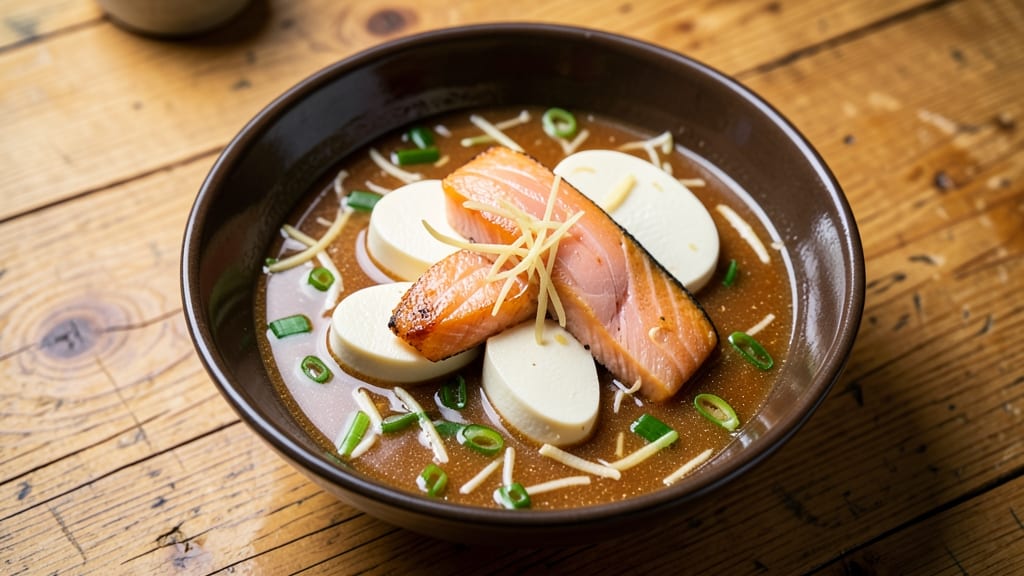
This miso salmon soup recipe transforms simple ingredients into a deeply satisfying bowl of umami-kissed broth and perfectly flaky fish. The secret lies in balancing sweet and salty miso paste with fresh herbs and aromatic vegetables, creating a broth that's rich yet light enough to let the salmon shine.
I developed this recipe after years of experimenting with Japanese home-style soups, and it's now a staple in my weekly rotation.
The beauty of this soup is its versatility—it works as a comforting weeknight meal or an elegant dish for guests. You'll start with a foolproof broth base that simmers for just 20 minutes, then gently poach the salmon until it reaches tender perfection.
The result is a harmonious blend of textures: silky broth, delicate fish, and optional additions like silky tofu or fresh greens for extra depth.
What makes this recipe special is how the miso paste transforms the broth into something truly extraordinary—deeply savory with just a hint of sweetness. The salmon absorbs these flavors while staying moist and flaky, creating bites that melt in your mouth.
Each spoonful delivers layers of umami, balanced by the brightness of fresh herbs and the subtle crunch of vegetables.
Serve this soup with steamed rice or crusty bread to soak up every last drop of that aromatic broth. The recipe scales easily for larger gatherings, and leftovers taste even better the next day as the flavors continue to develop. Let's create this comforting bowl of flavor together.
Ingredients for miso salmon soup
Simple ingredients that transform into a deeply satisfying bowl of umami-kissed broth and flaky salmon.
| Ingredient | Amount | Notes |
|---|---|---|
| Salmon Fillets 🐟 | 2 whole | Skin-on, center-cut preferred |
| White Miso Paste 🍶 | 2 tbsp | Sweet or awase miso preferred |
| Dashi Powder 💧 | 1 tbsp | Or 1 cup dashi stock |
| Fresh Ginger 🧅 | 1 tbsp | Finely grated, peeled |
| Green Onions 🧅 | 2 whole | White and green parts separated |
| Silken Tofu 🧈 | 8 oz | Firm or extra-firm preferred |
| Low-Sodium Chicken Broth 💧 | 4 cups | Homemade or quality store-bought |
| Sesame Oil 🫒 | 1 tsp | For finishing, not cooking |
| Rice Vinegar 🍶 | 1 tbsp | For brightness |
| Soy Sauce 🥢 | 1 tbsp | Light or regular preferred |
| Fresh Parsley 🌿 | ¼ cup | Chopped for garnish |
| Steamed Jasmine Rice 🍚 | 2 cups | Cooked, for serving |
| Sea Salt 🧂 | ½ tsp | For seasoning |
| White Sesame Seeds 🌰 | 1 tsp | For garnish |
The miso paste is the heart of this soup, so invest in quality. Miso Katsu or Marukome are reliable brands—avoid the powdered versions, which lack depth. Fresh ginger should be vibrant and firm, not wrinkled or sprouting. For the dashi, Hondashi powder is convenient, but homemade kombu and bonito dashi delivers superior flavor. The salmon should be center-cut for even cooking, and skin-on ensures it stays moist. If your fishmonger doesn't carry it, Wild Planet or Vital Choice brands are excellent frozen alternatives.
No white miso? Red miso at half the amount adds richer color but similar depth. Short on dashi? Substitute with 1 cup kombu broth—simmer 1 piece of kombu in 4 cups water for 10 minutes. The tofu can be cubed or left whole, but silken tofu dissolves beautifully into the broth. For extra umami, add 1 tsp fish sauce with the soy sauce. The green onions should be white parts only for broth, green parts reserved for garnish. If you can't find jasmine rice, short-grain white rice works equally well—just cook it slightly firmer.
This soup tastes even better the next day as flavors meld. Store in an airtight container for up to 4 days in the fridge. For freezing, portion into single-serving containers—reheat gently with a splash of water to restore texture. The sesame oil and parsley should be added fresh before serving. To save time, prep all ingredients before starting—grate the ginger, slice the tofu, and measure everything. The salmon will cook in just 8-10 minutes, so have your rice ready to serve immediately.
Why You'll Love This Recipe
- One-Pot Magic: I swear by this recipe when I’m too tired to scrub a million dishes. Just toss the salmon, miso, and dashi in one pot—no chopping, no fuss—while the ginger and onions simmer into that rich, umami broth. The broth even sticks to the pan like a dream, so cleanup is basically nonexistent.
- Umami Bomb: That first spoonful of miso and dashi? It’s like a flavor explosion in your mouth. The white miso adds this deep, savory sweetness, while the dashi gives it that clean, oceanic brightness—plus, the ginger cuts through it all with a little kick. Honestly, it’s the kind of taste that makes you forget takeout exists.
- Office Lunch Hero: Between us, this soup is my go-to for meal prep. The salmon stays tender, the broth thickens perfectly when reheated, and it’s packed in containers by Wednesday. Add a sprinkle of green onions on top, and suddenly you’ve got a lunch that feels fancy but takes zero effort to assemble.
- Budget-Friendly Luxury: Salmon can be pricey, but here’s the trick: a single fillet stretches into two servings when you turn it into soup. The miso and dashi stretch even further, so you’re basically getting restaurant-quality flavor for half the cost. Plus, the leftovers? Even better the next day—if there are any. (Spoiler: there won’t be.)
Step-by-step instructions for miso salmon soup
Here's how to create a rich, aromatic broth with perfectly flaky salmon every time.
Prepare the Broth Base
In a medium saucepan, combine the 4 cups low-sodium chicken broth, 1 tablespoon dashi powder, and 1 tablespoon finely grated fresh ginger. Bring to a gentle simmer over medium heat for 5 minutes, allowing the flavors to meld. The broth should develop a subtle umami aroma—this is where the foundation of your soup begins.
While the broth simmers, whisk the 2 tablespoons white miso paste into a smooth paste using 2 tablespoons of the hot broth. This prevents clumping and ensures even distribution. Return this miso mixture to the simmering broth and stir continuously for 2-3 minutes until fully dissolved. The broth should now have a deeper golden hue and a more pronounced savory scent.
Cook the Salmon and Tofu
In a separate skillet, heat 1 tablespoon soy sauce and 1 tablespoon rice vinegar over medium-high heat until just steaming. Add the 2 whole salmon fillets, skin-side down, and cook for 3-4 minutes until the skin is crisp and the flesh begins to flake easily when tested with a fork. Flip gently and cook for another 2 minutes—the salmon should reach an internal temperature of 125°F for perfect flakiness.
Remove the salmon and set aside. In the same skillet, add the 8 ounces silken tofu, cut into ½-inch cubes, and cook for 2-3 minutes until lightly golden. Transfer the tofu to the broth and add the cooked salmon fillets, breaking them into larger flakes with a fork. The broth should now be infused with rich salmon flavor and silky tofu texture.
Finish and Garnish
Return the broth to a gentle simmer and let it cook for 5 minutes to allow the salmon juices to fully incorporate. Taste and adjust seasoning with ½ teaspoon sea salt if needed—this soup should balance sweet, salty, and umami notes. Remove from heat and stir in 1 teaspoon sesame oil for a delicate nutty finish.
Divide the 2 cups steamed jasmine rice among bowls and ladle the hot soup over the rice. Garnish with sliced green onions (white and green parts separated) and ¼ cup chopped fresh parsley. Sprinkle with 1 teaspoon white sesame seeds just before serving to add texture and visual appeal. The soup should be served immediately while the salmon remains flaky and the broth retains its warmth.
Pro Tips For Making Miso Salmon Soup
- Simmer Salmon Slowly: White miso needs time to melt into the broth properly—don’t rush it. Poach the salmon at a gentle simmer (just below a full boil) for 4-5 minutes per side, or it’ll turn rubbery. I learned this the hard way when I tried to speed it up and ended with fish that tasted like shoe leather.
- Grate Ginger Fine: Skimping on ginger prep means missing its bright kick. Use a microplane or fine grater for the peel and flesh—no need to peel it at all if you’re lazy, but make it tiny. Bursting whole slices into the broth just makes you wait for flavor.
- Dissolve Miso Properly: Stirring miso directly into hot broth ruins its texture—always whisk it into a splash of cold water first to create a paste, then add to the simmering liquid. Otherwise, you’ll end up with clumpy, bitter chunks instead of a silky, umami-rich base.
- Toast Dashi First: Bloom the dashi powder in the pot for 30 seconds over medium heat before adding liquid—it deepens the flavor without extra effort. Sounds weird, but it works: the powder caramelizes slightly, giving the broth a richer, more complex taste. (Your future self will notice the difference.)
Wine and beer pairings for miso salmon soup
Japanese Sake Pairings
For an authentic experience, reach for a dry junmai sake like Dassai 23 or Gekkeikan Sake Junmai. The crisp acidity and clean finish cut through the soup's richness while complementing its umami depth. Serve slightly chilled (45-50°F) to enhance the miso's sweetness and the salmon's delicate flavor.
I always keep a bottle of Hakkaisan Junmai Daiginjo on hand for special occasions—its floral notes elevate the dish to restaurant-quality. 🍶
Crisp White Wine Options
A dry Riesling from Germany, such as Dr. Loosen Blue Slate, brings bright acidity that mirrors the soup's ginger and rice vinegar notes. The wine's mineral finish also pairs beautifully with the salmon's natural oils.
For something lighter, try a Sauvignon Blanc from New Zealand like Oyster Bay—its citrus and herbaceous qualities harmonize with the parsley and green onions. Avoid oaky Chardonnays, which can overwhelm the dish. 🍷
Light Beer Complements
Opt for a Japanese lager like Asahi Super Dry or Sapporo Premium—their clean, crisp profiles won't compete with the soup's complex flavors. For a craft option, a Belgian witbier such as Hoegaarden adds subtle spice and citrus that brighten the miso's depth.
Avoid heavy IPAs or stouts, which would overpower the delicate salmon and tofu. Serve beer at 40-45°F for the best balance. 🍺
Non-Alcoholic Alternatives
For a refreshing non-alcoholic match, try sparkling yuzu soda—its citrusy effervescence cleanses the palate between spoonfuls. Another great choice is hibiscus iced tea (brewed with dried hibiscus flowers), which offers tartness that complements the soup's umami.
I also love serving cucumber-mint infused water with a squeeze of lime for a light, refreshing contrast. 💧
Serving Temperature Tips
Always serve alcoholic pairings slightly chilled (40-50°F) to enhance the soup's delicate flavors. For sake and wine, use Riedel Vinum glasses—their shape directs aromas toward your nose, intensifying the experience. Beer should be served in tulip-shaped glasses to preserve its carbonation and highlight its subtle hop notes.
Pro tip: Let your drink and soup reach room temperature together for 10 minutes before serving to create the perfect harmony. ⏰
Nutrition facts
Frequently asked questions
Can I substitute white miso with red miso in this recipe?
Yes, but use only 1 tablespoon of red miso instead of 2 tablespoons of white miso to avoid overpowering the delicate salmon flavor. Red miso has a deeper, earthier taste that works well but should be used sparingly. For a milder version, try mixing both types—1.5 tablespoons white and 0.5 tablespoons red.
How do I prevent the salmon from becoming dry in the soup?
Cook the salmon separately in a skillet for just 3-4 minutes per side until it reaches 125°F internally, then flake it into the broth. This ensures it stays moist while infusing the soup with flavor. Avoid overcooking—salmon continues cooking slightly when added to hot broth.
Can I make this soup ahead of time?
Store the soup (without rice) in an airtight container in the fridge for up to 4 days. The flavors deepen over time, making it even more delicious. Reheat gently on the stove, adding a splash of water to restore silky texture. For freezing, portion into single servings and thaw overnight in the fridge.
What can I add to make this soup more filling?
For extra heartiness, add ½ cup cooked soba noodles or ½ cup cooked quinoa per serving. You could also include ½ cup chopped shiitake mushrooms sautéed with the tofu for added earthiness. Both options work beautifully with the umami-rich broth.
Why did my miso paste clump in the broth?
Miso clumps when added directly to hot liquid. Always whisk it into a smooth paste with 2 tablespoons of warm broth first, then stir it into the simmering pot. This ensures even distribution and prevents grainy texture. If it clumps anyway, strain the broth through a fine-mesh sieve.